Formula 1’s Triumph Over COVID-19: A Blueprint for Restarting Global Sports
In a significant milestone for global sports, Formula 1 successfully conducted its inaugural tests for the Austrian Grand Prix, confirming that all COVID-19 tests administered to personnel associated with the event returned negative results. This comprehensive testing initiative, carried out in the crucial week leading up to the season opener, marked a triumphant step in F1’s ambitious plan to safely resume racing amidst the ongoing global pandemic.
The confirmation of zero positive cases brought a collective sigh of relief across the paddock and among fans worldwide, signalling that Formula 1’s meticulously crafted health and safety protocols were effective. This achievement was not merely about getting a race started; it represented a beacon of hope for other major sports grappling with the complexities of restarting their seasons responsibly. The success in Austria set a vital precedent, demonstrating that with stringent measures, dedication, and significant logistical effort, international sporting events can indeed proceed safely.
The Scale of the Operation: Unprecedented Testing Efforts
Formula 1’s statement revealed the immense scale of its preventative measures. Over a seven-day period, specifically between June 26th and July 2nd, a staggering 4,032 drivers, team members, and other essential personnel underwent testing for the Coronavirus. The fact that every single one of these tests came back negative speaks volumes about the collective adherence to the strict guidelines and the effectiveness of the pre-event screening processes. This wasn’t a small-scale operation; it involved individuals from diverse nationalities, travelling from various locations, converging in one place under immense scrutiny.
Such an extensive testing regime required seamless coordination, significant resources, and an unwavering commitment from all stakeholders. From logistics planning for testing facilities at the circuit to ensuring efficient processing of samples and rapid delivery of results, every detail was crucial. The ability to manage such a large volume of tests without a single positive case instilled crucial confidence, not only within the F1 community but also among local authorities and public health officials overseeing the event.
Transparency and Competition Integrity: F1’s Communication Strategy
In its official announcement, Formula 1 underscored its commitment to transparency, stating, “The FIA and Formula 1 are providing this aggregated information for the purposes of competition integrity and transparency.” This approach ensures that the overall health status of the paddock is publicly known, fostering trust and accountability. However, the statement also clarified a vital aspect of their communication policy: “No specific details as to teams or individuals will be provided by the FIA or Formula 1 and results will be made public every seven days.”
This balanced strategy is paramount. While the public has a right to understand the safety of the event, individual privacy remains protected. Furthermore, by releasing aggregated data on a weekly basis, F1 maintains a consistent and reliable flow of information without compromising competitive fairness or creating unnecessary speculation around specific teams or personnel. This method reinforces the integrity of the competition, ensuring that the focus remains on the racing, secure in the knowledge that comprehensive health checks are continually being performed.
The Rigour of Continuous Monitoring: Testing Every Five Days
The commitment to safety extends far beyond the initial pre-event screening. Formula 1 has mandated that all staff present at events undergo repeat COVID-19 testing every five days. This proactive and continuous monitoring strategy is a cornerstone of the “F1 bubble” concept, designed to rapidly identify and isolate any potential cases, thereby preventing broader outbreaks within the paddock.
This rigorous schedule ensures a dynamic assessment of health status, significantly reducing the window of opportunity for an asymptomatic carrier to unknowingly transmit the virus. It demonstrates an understanding that a single negative test is only a snapshot; sustained vigilance is critical. This commitment to frequent testing is a testament to F1’s dedication to safeguarding the health of everyone involved, allowing the championship to proceed with a greater degree of assurance.
Lessons Learned: From Australia’s Cancellation to Austria’s Success
The journey to the successful Austrian Grand Prix restart was not without its painful lessons. The abrupt cancellation of the season-opening race in Australia in March served as a stark reminder of the virus’s disruptive potential. That event was called off at the eleventh hour after a McLaren team member tested positive for COVID-19, sending shockwaves through the F1 community and the wider sporting world. The chaotic scenes in Melbourne, with fans arriving at the circuit only to be turned away, underscored the urgent need for robust and ironclad protocols.
This difficult experience became a catalyst for change, driving the FIA and Formula 1 to develop the comprehensive safety framework now in place. The procedures implemented for Austria, including multi-stage testing, strict social distancing, and limited paddock access, were directly informed by the challenges faced in Australia. McLaren team principal Andreas Seidl highlighted this layered approach, explaining how his team underwent testing in the UK before flying and again immediately upon arrival in Austria. “We flew out with the team on Wednesday morning, got to the airport here next to the track. Then, as you know, the entire team got tested straightaway again, here at the at the track after the all the negative tests, which we did already on Monday in the UK. The results were again all negative which is good. So it allowed us to simply get straight into it.” This meticulous process, from departure to arrival and throughout the event, embodies the “new normal” for Formula 1.
A Global Challenge: Parallels in Other Sports
The Formula 1 paddock’s pristine bill of health for the Austrian Grand Prix stands in stark contrast to events unfolding in other prominent sports. This highlights the universal challenge posed by COVID-19, where even the most meticulous planning can be tested. For instance, just days before F1’s successful restart, seven-time NASCAR Cup champion Jimmie Johnson returned a positive test, forcing him to miss a pivotal event at Indianapolis and postpone his planned IndyCar test for Ganassi. Similarly, former Formula 1 driver Felipe Nasr also tested positive ahead of IMSA’s race at Daytona, sidelining him from the competition.
These incidents in other racing series underscore the very real and pervasive threat of the virus, validating Formula 1’s extremely cautious and rigorous approach. They serve as a powerful reminder that no sport or individual is immune, making F1’s achievement of zero positive tests even more significant. It demonstrates that while the risk is ever-present, proactive and consistent measures can mitigate its impact and allow events to proceed safely.
The F1 Bubble: A Multi-Layered Approach to Safety
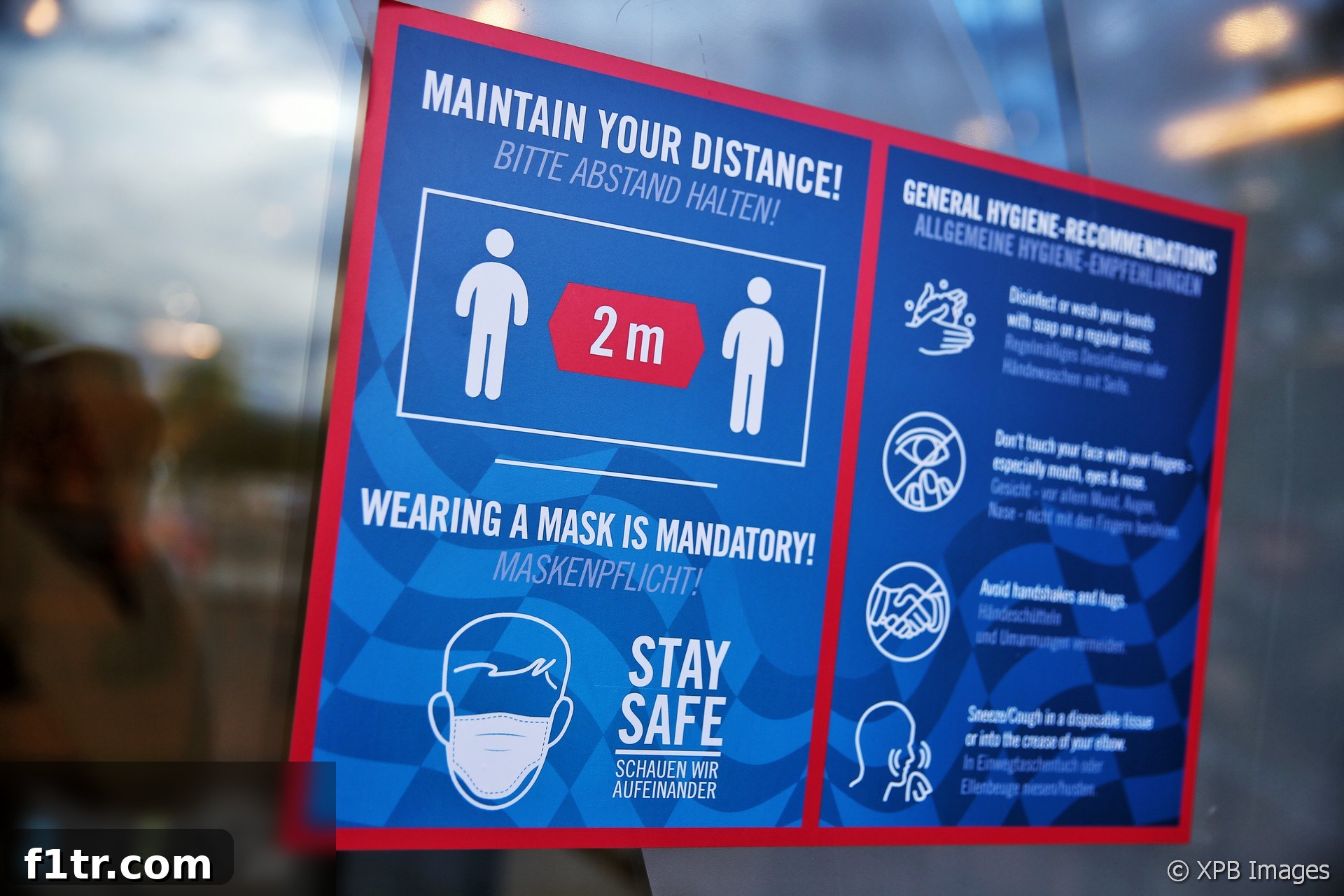
Beyond just testing, Formula 1 has implemented a comprehensive “bio-secure bubble” strategy. This involves a multitude of measures designed to minimize interaction and potential transmission risk. Personnel are divided into smaller, self-contained “bubbles” within the paddock, with limited cross-bubble interaction. Mandatory face masks are worn at all times, social distancing rules are strictly enforced, and non-essential personnel have been drastically reduced. Dedicated transportation routes and segregated zones further minimize external contact.
Teams have also adopted internal protocols, creating their own micro-bubbles within their larger F1 team structure, often limiting contact between different departments. These layers of protection, from pre-event screening to on-site vigilance and strict behavioural guidelines, create an environment where the risk of transmission is significantly lowered, allowing the sport to operate in as safe a manner as possible. The success of the Austrian Grand Prix served as a real-world validation of this multi-layered defence system.
The Road Ahead: Sustaining the Momentum
The successful execution of the Austrian Grand Prix under these stringent conditions provided a vital blueprint for the remainder of the heavily revised 2020 Formula 1 calendar. It demonstrated that racing can indeed continue, offering a crucial lifeline to teams, sponsors, and broadcasters, and providing much-needed entertainment to millions of fans globally. However, the F1 community remains acutely aware that vigilance cannot waver. Each subsequent race will require the same level of commitment, discipline, and adherence to protocols.
The ongoing challenge will be to maintain these high standards across multiple events, adapting to different venues and local regulations, while simultaneously battling the relentless nature of the COVID-19 pandemic. The initial triumph in Austria, however, has provided invaluable confidence and a clear path forward, showcasing Formula 1’s remarkable ability to innovate and adapt in the face of unprecedented adversity, setting a new benchmark for global sporting events in a challenging era.