For many years, the pinnacle of motorsport, Formula 1, has presented a formidable challenge to aspiring midfield teams dreaming of championship glory. What once seemed like a metaphorical glass ceiling preventing them from reaching the top has, over time, solidified into what many describe as a reinforced concrete barrier, almost impenetrable for new challengers.
A look back at the competitive landscape reveals a stark contrast. In the decade spanning 2002 to 2011, Formula 1 witnessed a healthy diversity at the sharp end of the grid. During this period, a remarkable seven different teams managed to clinch a top-three finish in the constructors’ championship on at least one occasion: Scuderia Ferrari, Williams Racing, McLaren, BAR/Brawn GP, Renault F1 Team, BMW-Sauber, and Red Bull Racing. This era showcased a dynamic environment where teams, with the right combination of talent, resources, and innovation, could genuinely rise to challenge the established giants.
However, the subsequent decade, leading up to 2022, painted a very different picture. The competitive field narrowed significantly, with only five teams consistently occupying the coveted top three positions in the constructors’ standings: Mercedes-AMG Petronas F1 Team, Red Bull Racing, Scuderia Ferrari, McLaren, and Williams. This consolidation at the top indicates a period where bridging the gap from the midfield to the front of the field became increasingly challenging, with Mercedes, Red Bull, and Ferrari establishing an almost iron-grip over the premier positions. This trend underscored a growing concern within the sport about competitive balance and the ability for new contenders to emerge.
Yet, the spirit of ambition and relentless pursuit of excellence remains a cornerstone of Formula 1. Against this backdrop of established dominance, two prominent contenders from further down the field are now actively working to shatter this concrete ceiling. Both Alpine F1 Team and Aston Martin Aramco Cognizant F1 Team have declared their intent to not only establish themselves as regular race winners but also to genuinely challenge for the world championship title. Crucially, both teams have independently set a challenging five-year timeframe to achieve these monumental goals, targeting success by the end of the 2025 season.
Alpine, with its rich heritage, carries championship-winning pedigree embedded deep within its DNA. Tracing its lineage back to the formidable Benetton team of the 1990s and subsequently as the successful Renault works outfit in the early 2000s, the team has a proven track record of reaching the summit of Formula 1. When Renault strategically rebranded its Formula 1 operations as Alpine, the brand’s CEO, Laurent Rossi, articulated a clear long-term commitment to the sport. He famously described their ambitious mission as a “100-race project.” Considering an average of just over 20 races per season, this ambitious deadline positions Alpine to become bona fide title contenders by just before the conclusion of the 2025 Formula 1 campaign. This clearly defined timeline underscores a deliberate, calculated strategy to return to the top.
Similarly, Aston Martin represents a team undergoing an exponential surge in ambition and investment. Following the transformative takeover of Racing Point by Canadian billionaire Lawrence Stroll and a consortium of investors, the plucky Silverstone-based team was rebranded as Aston Martin. This rebranding was not merely cosmetic; Stroll immediately unveiled a dramatic and comprehensive plan of investment, including a massive $200 million expansion of their state-of-the-art headquarters. Throughout the 2021 season and emphatically at the launch of the team’s AMR22 car, Stroll has consistently reinforced the message that Aston Martin is operating on a meticulously planned five-year trajectory, with the ultimate objective of securing the world championship by the close of the 2025 season. Such bold declarations from both teams create a fascinating subplot in the unfolding narrative of Formula 1.
With such high expectations emanating directly from the teams themselves, and both having converged on a similar deadline for achieving championship success, it becomes pertinent and fair to scrutinize their progress. Examining Alpine and Aston Martin’s efforts from their inaugural year under their respective new identities, and assessing their trajectory over the subsequent seasons, allows for an objective judgment on which, if either, is truly on a realistic path towards a Formula 1 championship title by the end of 2025.
As Max Verstappen’s exhilarating championship victory in the preceding season vividly demonstrated, the drivers’ title often holds a higher perceived value than the constructors’ championship within the sport. The immense prestige and individual glory afforded to the drivers’ world champion mean it likely remains the primary objective for most, if not all, teams on the grid. Consequently, for the purpose of this analysis, the benchmark for measuring success will be whether either Alpine or Aston Martin can deliver a drivers’ championship by the conclusion of the 2025 season. This focal point allows for a clear and unambiguous assessment of their championship aspirations.
Alpine’s Ascent Towards 2025
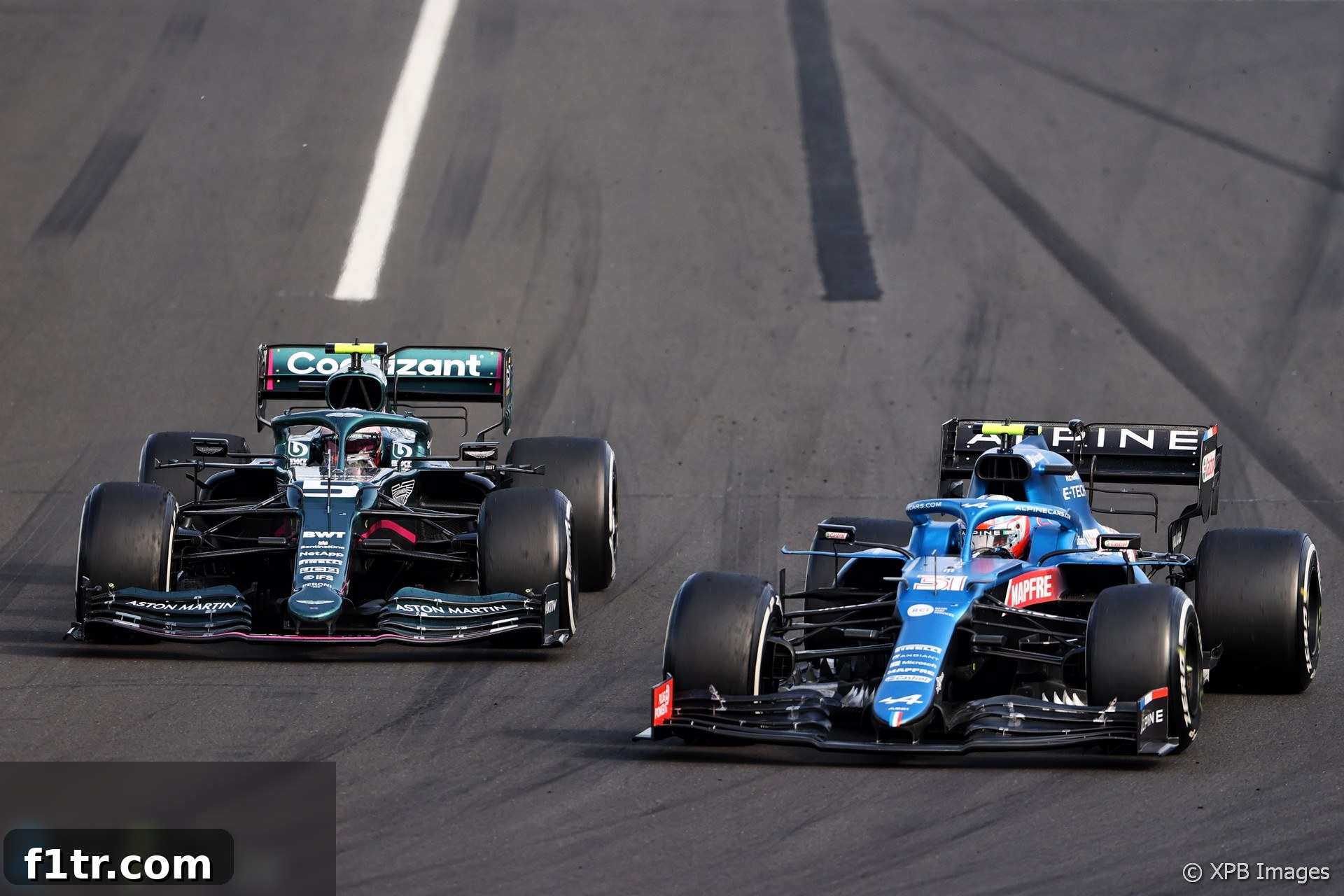
Among the two teams, Alpine enjoyed a more immediately encouraging first year of their ambitious five-year plan. A significant highlight was Esteban Ocon’s opportunistic and masterful performance at the rain-affected Hungarian Grand Prix. Seizing his first genuine opportunity to fight for victory, Ocon displayed remarkable composure, fending off a charging Sebastian Vettel from Aston Martin to claim an impressive and unexpected maiden Formula 1 win. This victory not only boosted team morale but also provided tangible proof of their potential under the right circumstances.
While Alpine has adopted a more understated approach regarding their specific strategies to ascend the grid in the coming seasons compared to Aston Martin’s more public declarations, the commitment of two-time world champion Fernando Alonso should not be underestimated. Alonso, a driver of immense experience and competitive spirit, would only have emerged from retirement for one compelling reason: to chase that elusive third world title. His decision to commit to the 2022 season and beyond clearly indicates his belief in Alpine’s potential, especially with the radical rules changes introduced in 2022 offering a reset button for the entire grid. Alonso’s presence provides invaluable feedback and an unyielding drive for success within the team.
Alpine stands as the sole team currently utilizing the Renault power unit. While operating as a manufacturer team with an exclusive engine supply could theoretically be an advantage, this perception is somewhat tempered by the fact that Renault has lost numerous customer teams over recent seasons. These departures were often attributed to concerns about the power unit’s performance relative to rival manufacturers. With an engine development freeze coming into effect from the current season, the performance of the Renault power unit could become a critical concern for Alpine themselves, potentially limiting their upward trajectory if it lacks a competitive edge.
In preparation for the 2022 season, which promised a wealth of opportunities with new technical regulations, Alpine significantly bolstered its technical ranks through a strategic restructuring. Pat Fry, a highly respected and experienced designer with a distinguished career at Ferrari and McLaren, was appointed Chief Technical Officer. Concurrently, Matt Harman, who previously served as Engineering Director, received a promotion to the crucial role of Technical Director. While these high-profile technical appointments are unlikely to yield immediate, dramatic impacts on their 2022 campaign, they represent decisive actions taken with a clear, long-term vision for the years ahead. These strategic hires underline Alpine’s commitment to building a formidable technical foundation for their championship aspirations.
Aston Martin’s Ambitious Trajectory
Entering the 2021 season, Aston Martin carried significant momentum from what had been their best-ever season under the Racing Point guise since their Jordan days. Consequently, the team harbored high hopes of maintaining, if not improving upon, their previous performance. However, the season proved to be somewhat disappointing, as they ultimately slipped down to seventh position in the constructors’ championship. This setback underscored the challenges of transitioning to a new identity and adapting to the competitive demands of Formula 1.
Despite the 2021 results, the true focus for Lawrence Stroll and his Aston Martin vision had always been firmly set on the 2022 season, a strategic pivot point that was evident from the moment the Stroll-led takeover was first announced. Aston Martin unequivocally demonstrated their intent and commitment to the new era by being the very first of the ten teams to not only unveil their actual 2022 car to the global audience but also to conduct a shake-down test with it the very next day. This proactive and assertive approach sent a clear message about their readiness and serious aspirations for the new regulatory cycle.
Even if the 2022 season were to prove another year largely spent competing within the competitive midfield pack, Lawrence Stroll has consistently emphasized that the most crucial and transformative developments for Aston Martin are taking place meticulously off the track. A colossal and truly “state-of-the-art” factory expansion, featuring cutting-edge facilities, is on schedule for completion in early 2023. This monumental investment includes a brand-new, advanced wind tunnel and a new simulator, both vital tools for modern Formula 1 car development. Stroll has forcefully stressed that this expensive new Formula 1 facility will be “the only one currently fit-for-purpose with the financial regulations taken into consideration.” This highlights a forward-thinking strategy designed to optimize development within the constraints of the sport’s budget cap, ensuring long-term competitiveness.
Beyond the physical infrastructure, Aston Martin has also made significant strides in bolstering its human capital, strategically recruiting top-tier talent to its off-track staff. Leveraging the invaluable expertise and guidance of four-time world champion Sebastian Vettel, who has been instrumental in shaping the team’s direction, the team has brought in industry veterans. Martin Whitmarsh, a highly respected figure in Formula 1 with a storied past at McLaren, was appointed CEO of Aston Martin Performance Technologies. Further strengthening their technical prowess, Dan Fallows, formerly a key aerodynamicist at championship-winning Red Bull Racing, joined as Technical Director in April. To lead this newly assembled formidable team, Mike Krack, the former head of BMW Motorsport, was brought in as Team Principal. These high-caliber appointments signal Aston Martin’s unwavering commitment to assembling a championship-caliber organization.
The Road Ahead: Challenges and Opportunities
It would undoubtedly be a welcome development for the sport to see either, or indeed both, of these formidable teams capitalize on the profound changes brought about by the new technical regulations and the stringent financial rules. These initiatives are specifically designed to promote greater parity and competitive balance within Formula 1, with the ultimate goal of allowing more teams to join the ranks of genuine race-winning contenders over the coming seasons. A more competitive grid invariably leads to more exciting races and a more engaging spectacle for fans globally.
For too long, Formula 1 has been dominated by the Mercedes-AMG Petronas F1 Team, with only Red Bull Racing and Scuderia Ferrari consistently able to mount a serious challenge for the championships. While these intense rivalries have produced thrilling moments, a broader array of teams vying for victory would undoubtedly enhance the overall appeal and competitive integrity of the sport. Therefore, the prospect of more competition from teams like Alpine and Aston Martin is universally welcomed. However, the critical question remains: will the reduced budget cap, coupled with the radically different car designs mandated by the new regulations for the season, be sufficient to create the necessary shake-up? Can these changes truly allow teams like Alpine and Aston Martin to effectively cut the significant gap to the more established, larger teams?
This is a difficult question to answer definitively, particularly when considering the outcomes of recent major rules changes. Historically, significant regulatory overhauls in 2014 and 2017 appeared, paradoxically, to only reinforce the stranglehold of the biggest teams over the top positions. The field only began to converge and become genuinely closer in recent years as the technical regulations remained largely untouched, allowing for incremental development and optimization. This historical precedent suggests that simply changing the rules does not guarantee a more level playing field; sustained innovation and adaptation are key.
Alpine certainly possesses the pedigree and a proven ability to succeed across multiple eras of Formula 1. The Enstone-based outfit’s history of achieving success, first as Benetton and then as Renault, means that it is incredibly difficult to count them out as a genuine threat, especially with so many unknowns accompanying this bold new technical direction for the sport. The concern surrounding the performance and future development of their exclusive Renault power unit due to the engine freeze is valid, but the team demonstrated last season with Esteban Ocon’s victory that they possess the driver lineup and strategic acumen to maximize any opportunities that come their way. They will undoubtedly be eager to showcase their full potential with the all-new cars designed for the 2022 season and beyond.
However, among all the teams currently residing in the midfield, Aston Martin appears to possess arguably the greatest potential for transformative growth, largely owing to the substantial and sustained investment from its benefactors. The vision and financial backing provided by Lawrence Stroll are unparalleled at this level of the grid, enabling the team to embark on an aggressive expansion and recruitment drive. While the full impact of the team’s new cutting-edge facility and its enhanced technical prowess, bolstered by top-tier personnel, may not be entirely realized or felt until well after the 2022 campaign, Aston Martin is undoubtedly being afforded the best possible chance to evolve into a more powerful and consistently competitive force on the Formula 1 grid over the years leading up to 2025.
The ultimate question persists: Will either Alpine or Aston Martin manage to secure a Formula 1 drivers’ world championship by the ambitious deadline of the end of 2025? It is inherently challenging to bet against Formula 1’s deeply entrenched powerhouses – Mercedes, Red Bull, and Ferrari – given their formidable resources, experience, and established competitive advantages. Nevertheless, when compared to the competitive landscape of the last two decades, there is arguably as good a chance of a midfield challenger breaking through and taking a title over the next few years than at any other point in the 21st century thus far. The combination of new regulations, a budget cap, and significant investments from these ambitious teams creates an unprecedented window of opportunity that could reshape the hierarchy of Formula 1.
Related Debates and Polls
- What must Formula 1 fix with its new rules – and what should it leave unchanged?
- ADUO: Do F1 teams who fall behind deserve to get help to catch up?
- F1 is considering doubling its sprint races. Do you want more or fewer?
- Will this be a fight or a rout? 20 questions for the 2026 Formula 1 season
- Which Formula 1 team has the best-looking car – and the worst – for the 2026 season?
Browse all debates and polls