Formula 1’s Bold New Era: Unpacking the First 2022 Pre-Season Test
The dawn of Formula 1’s significantly overhauled regulations for the 2022 season was an event years in the making. Initially slated for introduction earlier, the global Covid-19 pandemic necessitated a delay, pushing the eagerly anticipated changes back by a year. This extended wait only amplified the excitement and speculation surrounding what these radical new rules would mean for the sport. Finally, the long-awaited moment arrived as the first cars, meticulously crafted to conform to F1’s new technical blueprint, hit the track for pre-season testing. While it is undeniably premature to draw definitive conclusions about the pecking order or the ultimate pace of the teams, the initial glimpse offered a wealth of fascinating insights, providing the first substantive details about Formula 1’s bold and ambitious new era.
The core objective of the 2022 regulations was multi-faceted: to promote closer racing by reducing the impact of ‘dirty air,’ to create more aesthetically pleasing cars, and to introduce a level playing field through cost-cutting measures. These goals necessitated a complete redesign of the aerodynamic philosophy, moving away from complex top-side aero elements to a resurgence of ground effect, promising a fresh dynamic to both car design and on-track action.
Design Diversity: Ingenuity Under New Constraints
Formula 1 designers, renowned for their ingenuity, found themselves operating within a more restrictive technical framework for 2022. The new rules, while aiming to limit the extreme developmental scope seen in previous generations, still presented a canvas broad enough for engineers to explore radically different conceptual approaches. The initial reveal of the cars confirmed this, with teams unveiling a striking array of interpretations that visibly diverged from one another.
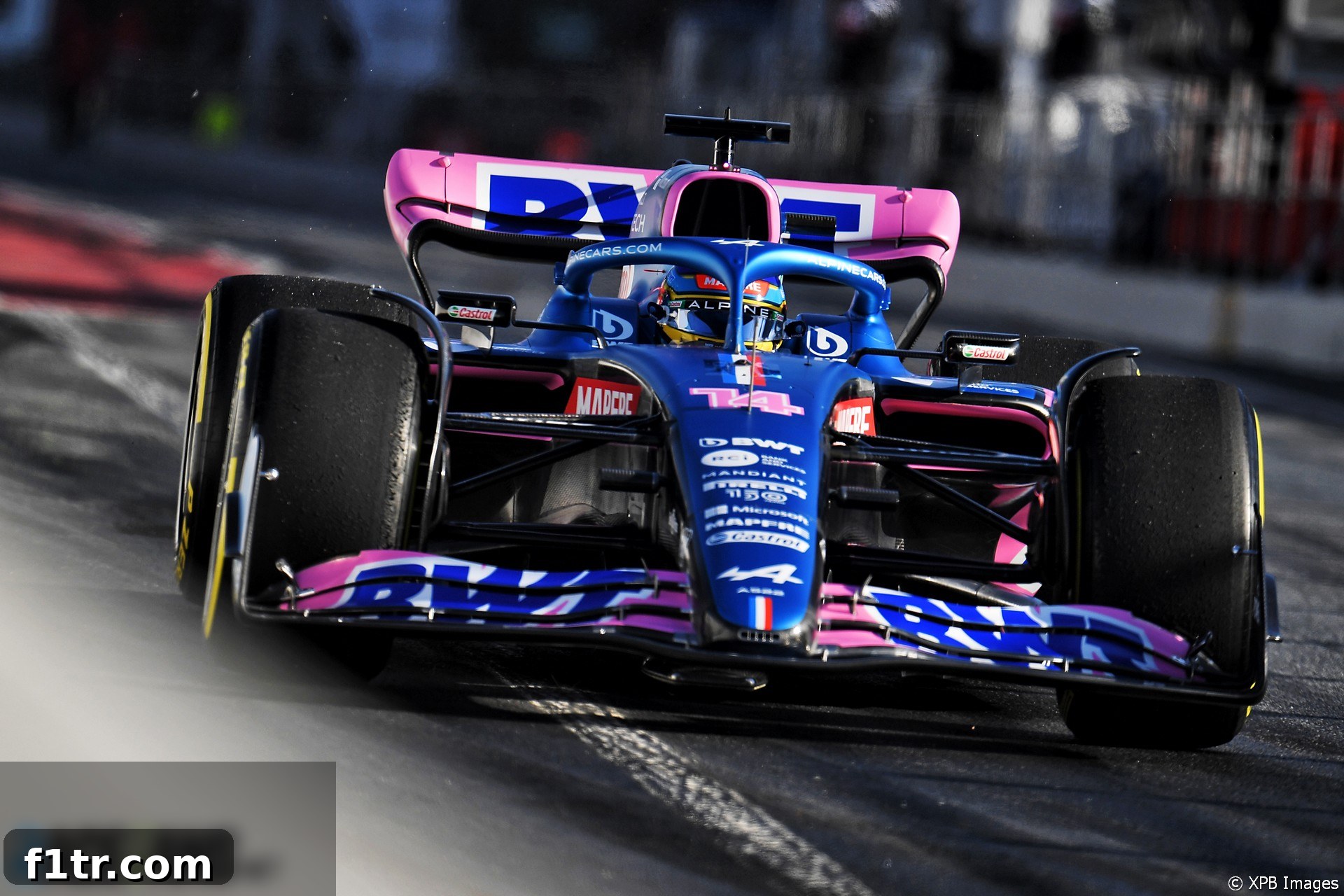
The most noticeable areas of design divergence immediately centered around the sidepod dimensions and cooling arrangements. Powerhouses like Mercedes, Ferrari, and Red Bull, despite operating under the same rulebook, presented remarkably distinct philosophies. Mercedes introduced a revolutionary “zeropod” concept, minimizing sidepod volume to an unprecedented degree. Ferrari opted for a sculpted, bathtub-like design, while Red Bull pursued a more conventional, yet highly refined, downwashing approach. These variations weren’t merely cosmetic; they reflected fundamental differences in how each team chose to manage airflow around the car and optimize the new ground effect aerodynamics.
Beyond the sidepods, differences were also evident in the front and rear wings, showcasing varying degrees of complexity and aesthetic design. Some teams, pushing the boundaries of the new regulations, even adopted less common suspension layouts, such as pull-rod suspension at the front of their cars. This choice, often associated with packaging benefits and improved aerodynamic flow, highlighted the depth of engineering thought applied to every aspect of the new chassis. This visible array of solutions is a refreshing change for fans and promises an exciting development race as teams seek to understand and optimize their chosen paths.
Performance Projections: Faster Than Expected
When the initial outlines of Formula 1’s 2022 regulations were first revealed, a cloud of uncertainty, and even pessimism, hung over discussions regarding car performance. Early simulations from some team principals suggested a significant drop in pace, with projections indicating the new cars might be only marginally quicker than their Formula 2 counterparts. This raised concerns about whether the sport would lose some of its spectacle and raw speed.
However, as teams delved deeper into the technical challenges and refined their designs throughout the preceding year, the narrative began to shift. Increasingly, indications emerged that the new generation of F1 cars would prove to be much closer in performance to their predecessors than initially feared. The first day of testing in Barcelona unequivocally supported this revised outlook.
Lando Norris, behind the wheel of his McLaren, set the quickest time on day one with a 1’19.568. To put this into perspective, had he achieved this time during qualifying for the 2021 Spanish Grand Prix, he would have lined up 19th on the grid. While this might seem a considerable gap to pole position, several critical factors must be considered. February track temperatures are substantially cooler than those typically experienced during a May Grand Prix, which generally leads to slower lap times. Crucially, the 2022 cars are at the very infancy of their development cycle. Teams will unlock significant performance gains through setup optimization, component upgrades, and a deeper understanding of the new aerodynamic package. It is therefore not unreasonable to expect that the 2.8-second deficit between Norris’s benchmark and last year’s pole position will be swiftly eroded, potentially even surpassed, as the season progresses.
Car Characteristics: Speed in the Fast, Caution in the Slow
While overall lap times proved impressive, the manner in which the 2022 cars generate those times marks a significant departure from previous seasons, largely aligning with what engineers and drivers had anticipated. The dramatic increase in underfloor tunnels, designed to exploit the ground effect phenomenon, appears to be an exceptionally effective method for recovering the downforce lost from simplified front and rear wings and the complete removal of complex bargeboards. This renewed emphasis on underbody aerodynamics means cars are exhibiting phenomenal stability and speed through the quicker corners, potentially even exceeding the speeds achieved by their predecessors.
Conversely, the picture in slow corners is quite different. The 2022 regulations mandated an increase in minimum car weight by a substantial 40 kilograms, pushing the total to 795kg. This added mass, combined with the new aerodynamic characteristics, makes the cars feel noticeably more ponderous and less agile in low-speed sections of the track. Lando Norris specifically highlighted this impact, noting how the increased weight affects braking zones and turn-in characteristics. This shift in car dynamics presents a new challenge for drivers, requiring them to adapt their driving styles, particularly concerning throttle application and braking precision in tight corners. It also suggests that car setup will be a delicate balancing act between high-speed performance and low-speed tractability.
Overtaking Potential: The Unanswered Question
The primary impetus behind the sweeping changes to Formula 1 cars for 2022 was an explicit desire to enhance the quality of racing, fundamentally aiming to make overtaking easier and more frequent. For years, the issue of ‘dirty air’ – the turbulent wake left by a leading car, severely impacting the aerodynamics of a following car – had plagued the sport, limiting close-quarters combat. The new ground effect rules were specifically designed to mitigate this problem.
However, whether this ambitious goal has been successfully achieved remains the biggest unanswered question from the initial test. Pre-season testing, by its very nature, is geared towards optimizing individual car performance and reliability, not typically for sustained head-to-head combat or extensive overtaking simulations. Therefore, drawing firm conclusions from these early sessions is difficult. That being said, there were intriguing moments during the Barcelona test where drivers appeared to be actively exploring the new cars’ behavior in traffic. Carlos Sainz Jnr, for instance, spent several laps closely trailing Max Verstappen’s Red Bull, appearing to test the limits of how closely his Ferrari could follow without experiencing the severe aerodynamic degradation characteristic of previous generations.
Even if the long-lamented problem of turbulent air has been somewhat eased, another consequence of the new rules could inadvertently aid overtaking: increased braking distances. As several drivers noted, the combination of heavier cars and simplified suspension systems means the new machines are not as nimble or quick through slower corners. This inevitably translates to longer braking zones, providing a larger window and greater opportunity for drivers to execute a pass. The remaining days of testing, and more importantly, the initial races of the season, will be crucial in determining the true impact of these regulations on the spectacle of Formula 1.
Beyond a Shakedown: Reliability and Mileage Impress
In a somewhat curious exercise in semantics, Formula 1 officially branded the opening three-day session in Spain as a ‘shakedown event,’ reserving the moniker of ‘genuine testing’ for the subsequent three days of running in Bahrain. This distinction, seemingly designed to confer additional prestige and broadcast exclusivity to the later test, created a false impression of the Barcelona sessions. Make no mistake: according to the FIA’s stringent rulebook, F1’s first three days on track in Spain constituted every bit as much a full test as the upcoming sessions in Bahrain.
A key question leading into Barcelona was whether teams would genuinely treat it as merely a ‘shakedown’ – a basic systems check – and if the entirely new and complex cars would suffer from significant reliability issues, limiting valuable track time. The answer, emphatically, was ‘no’ on both counts. Teams approached the Barcelona test with full intent, and the reliability of the new machinery was remarkably high.
Ferrari led the way in terms of mileage, logging an impressive 715 kilometers on the first day alone. Red Bull and Williams also demonstrated robust performance, each covering the equivalent of more than two full race distances. Mercedes and Alpine were not far behind, showcasing the incredible engineering and manufacturing prowess across the grid. Even teams like Haas and Alfa Romeo, which faced minor delays due to various teething problems, managed to exceed the 100-kilometer limit typically imposed on official ‘filming days’ – the true shakedowns teams conduct before a test. This strong showing of reliability suggests that simulation tools and design processes are more advanced than ever, allowing teams to arrive at the track with highly functional, if not yet fully optimized, machines. The extensive mileage accumulated provides invaluable data for engineers, setting a strong foundation for the intense development race that will characterize the early part of the season.
Conclusion: An Exciting Foundation for 2022
The first chapter of Formula 1’s 2022 pre-season testing provided a compelling initial look at a truly transformative era for the sport. From the striking diversity in car design philosophies to surprisingly quick lap times and impressive reliability, the Barcelona sessions laid a strong foundation. While questions about overtaking and the ultimate pecking order still linger, the signs are overwhelmingly positive. With five more days of testing ahead, followed by the highly anticipated first race, the journey into F1’s exciting new chapter has only just begun. The promise of closer racing, intense competition, and innovative engineering continues to fuel anticipation for what is set to be a thrilling Formula 1 season.
2022 F1 Season Articles
- Mercedes told me “you’re wrong” about 2022 car’s problems – Hamilton
- FIA confirms all 10 F1 teams complied with 2022 cost cap
- Steiner “not ashamed” of panning “slow” Schumacher in Drive to Survive
- Albon believes year out of F1 improved him as a driver
- Hamilton sees diversity gains in F1 years on from his ‘traumatising’ experience of racism
Browse all 2022 F1 season articles