Mercedes’ Revolutionary DAS System: Unpacking F1’s Latest Innovation and the Legality Debate
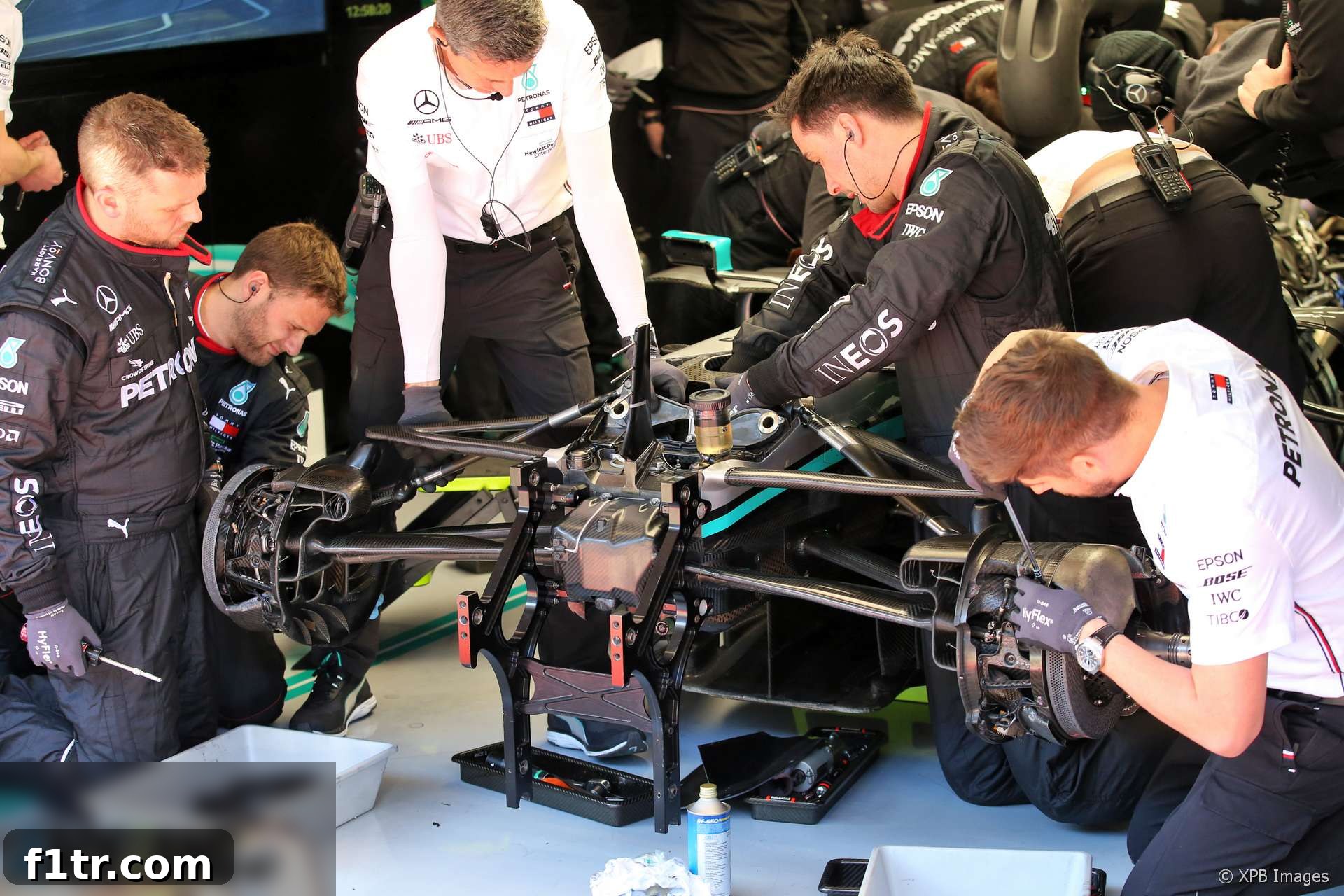
Formula 1, a sport synonymous with cutting-edge technology and relentless innovation, frequently sees teams push the boundaries of design and engineering. One such moment arrived during pre-season testing for the 2020 season, when Mercedes-AMG Petronas Motorsport unveiled a groundbreaking system dubbed Dual Axis Steering (DAS). This ingenious mechanism, observed on their W11 car, sent shockwaves through the paddock, instantly becoming the focal point of discussion and intense speculation. The system, which allowed the driver to adjust the toe angle of the front wheels by pulling or pushing the steering wheel along its axis, immediately raised questions about its legality and potential performance advantages. While the FIA, Formula 1’s governing body, initially indicated that the system appeared to comply with regulations based on the information provided by Mercedes, the true test of its legality would only come under the rigorous scrutiny of official race weekend inspections.
The discovery of DAS during testing wasn’t just a technical curiosity; it was a clear demonstration of Mercedes’ continuous pursuit of marginal gains, a philosophy that has underpinned their remarkable success in the hybrid era. The immediate buzz surrounding the system underscored the fine line F1 teams walk between innovation and adherence to strict technical rules. As the F1 community eagerly awaited the first race of the season, all eyes were on the W11 and the potential impact of its controversial new steering system.
Understanding the Dual Axis Steering (DAS) System: How it Works
At its core, the Dual Axis Steering system presented a novel method for a driver to alter the geometry of the front wheels. While traditional steering systems solely allow for rotational movement of the steering wheel to change the direction of the front wheels, DAS introduced an additional degree of freedom. Onboard footage from the W11 during testing clearly showed the Mercedes drivers, Lewis Hamilton and Valtteri Bottas, pulling the steering wheel towards them on the straights and pushing it back into its conventional position before corners. This distinct axial movement was directly linked to a visible change in the toe angle of the front tires.
The toe angle refers to the inward or outward angle of the wheels when viewed from above. Toe-in means the front of the wheels are closer together than the rear, while toe-out means the opposite. Conventionally, a car’s toe settings are fixed during a race weekend as part of its setup, optimized for specific track characteristics. The genius of DAS was its ability to dynamically adjust this setting while the car was in motion, offering an unprecedented level of control to the driver. This innovative mechanical link between the steering wheel’s axial movement and the toe angle of the front wheels was Mercedes’ latest engineering marvel, designed to extract every ounce of performance from their formidable machine.
The Strategic Advantages: Unlocking Performance Through Dynamic Toe Adjustment
The ability to dynamically alter the front wheel toe angle presented several significant strategic and performance advantages for Mercedes. These benefits primarily revolved around optimizing tire performance and enhancing the car’s handling characteristics, both critical factors in Formula 1.
Optimizing Tire Management and Temperature Control
One of the most widely speculated and plausible benefits of DAS was its role in tire management, particularly concerning temperature. On long straights, maintaining optimal tire temperature can be challenging. A conventional setup might involve a slight toe-out to aid turn-in, but this can lead to scrubbing and uneven heating of the tires on the straights, potentially causing overheating or degradation. By pulling the steering wheel and adjusting the toe angle to a more parallel setting (reduced toe-out or even slight toe-in) on the straights, Mercedes could achieve several things:
- Reduced Scrubbing: A more parallel alignment of the wheels would minimize the scrubbing action against the track surface, thereby reducing drag and preventing unnecessary wear.
- Uniform Temperature Distribution: With less scrubbing, the tires would experience more even heating across their contact patch, leading to more consistent operating temperatures. This is crucial for maximizing grip and extending tire life, allowing drivers to push harder for longer periods.
- Faster Warm-up: Conversely, in cooler conditions or after a pit stop, a slight toe-out could be re-introduced to generate heat more quickly into the tires, bringing them up to optimal operating temperature faster.
In a sport where tire degradation is often the determining factor in race strategy, having an on-the-fly adjustment for tire temperature control could provide a substantial competitive edge.
Enhancing Cornering Dynamics and Setup Flexibility
Beyond tire management, DAS offered the potential to fine-tune the car’s cornering behavior. Different toe settings can profoundly impact a car’s handling:
- Toe-out: Generally enhances turn-in response and makes the car feel more agile at the start of a corner. However, too much toe-out can lead to instability and increased tire wear on straights.
- Toe-in: Can increase straight-line stability but might make the car less responsive on turn-in.
With DAS, drivers could theoretically select the optimal toe setting for each phase of the lap. They could run a setup with increased toe-out for sharper turn-in in twisty sections of the track, and then switch to a more neutral setting on straights for stability and tire preservation. This unprecedented level of dynamic adjustment offered a new dimension of setup flexibility, allowing the W11 to adapt more effectively to varying track conditions, corner types, and driver preferences throughout a race. It represented a sophisticated tool to balance straight-line speed with cornering performance, giving Mercedes a tangible advantage.
Navigating the Regulatory Minefield: The Legality Question
The immediate awe inspired by DAS quickly transitioned into an intense debate about its legality under Formula 1’s stringent technical regulations. While Mercedes’ technical director James Allison remained tight-lipped on the system’s exact purpose, he confirmed that the team had proactively briefed the FIA about its design. He expressed confidence that the FIA would have no concerns regarding its legality, a statement that only fueled the curiosity and skepticism among rival teams and pundits.
An FIA spokesperson echoed Allison’s sentiment initially, stating that based on the information provided by Mercedes, they believed the steering device complied with the regulations. However, they also confirmed that the situation was being “monitored,” a standard but significant phrase indicating ongoing scrutiny. The core of the legality debate revolved around two specific sections of the technical regulations:
Dissecting the FIA Technical Regulations
- Steering System Definition: The technical rules state: “with the steering wheel fixed, the position of each wheel centre and the orientation of its rotation axis must be completely and uniquely defined by a function of its principally vertical suspension travel, save only for the effects of reasonable compliance which does not intentionally provide further degrees of freedom.”
- Prohibition of Powered Suspension Adjustment: The regulations further add: “any powered device which is capable of altering the configuration or affecting the performance of any part of any suspension system is forbidden” and crucially, “no adjustment may be made to any suspension system while the car is in motion.”
Mercedes’ argument here would likely center on defining DAS as an integral part of the *steering system* rather than a separate suspension component. If the axial movement of the steering wheel is considered a legitimate function of the steering system itself, then the subsequent change in toe angle, which is a direct consequence of a steering input, might fall within the permissible boundaries. The key phrase “with the steering wheel fixed” implies that any changes when the steering wheel *is not fixed* (i.e., being moved by the driver) are potentially allowed, as long as they are part of the steering mechanism.
This section is where the most significant challenge to DAS’s legality lay. Opponents would argue that altering the toe angle constitutes an “adjustment” to the “suspension system” and that doing so “while the car is in motion” is explicitly forbidden. However, Mercedes would counter by arguing that DAS is a purely *mechanical* system, not a “powered device,” thus sidestepping the first part of the rule. More importantly, they would vehemently assert that DAS is a *steering system* and its function is to change the steering geometry, which inherently involves changing wheel orientation. Since drivers are permitted to steer their cars while in motion, and DAS is an extension of that steering function, they would argue it falls outside the scope of “suspension adjustment.” The distinction between a “steering system” and a “suspension system” becomes paramount here, with Mercedes aiming to draw a clear line that positions DAS firmly within the former category.
The nuances of these regulations highlight the constant cat-and-mouse game between F1 engineers and the rulemakers. Teams look for loopholes, and the FIA attempts to close them, often leading to complex interpretations of existing texts.
The Scrutiny Ahead: Australian Grand Prix and Beyond
The initial approval by the FIA during pre-season testing was not a definitive green light for DAS. Formula 1 regulations stipulate different levels of scrutiny between testing sessions and official race weekends. During testing, teams often experiment with components that may not be fully race-legal, and the focus is more on data gathering and reliability checks than strict regulatory compliance. It is only at the first Grand Prix of the season, in this case, the Australian Grand Prix, that cars undergo comprehensive and official scrutineering by the FIA technical delegates.
This scrutineering process involves detailed checks of every component against the entire rulebook. The W11, with its DAS system, would be subjected to intense examination. Other teams, particularly those with strong technical departments, would also be closely monitoring the situation. If DAS were deemed illegal, Mercedes would be forced to remove or modify it, potentially undermining a significant performance advantage. Conversely, if approved, it would open the floodgates for rival teams to develop their own versions, provided they could do so quickly and within their budget and resource constraints.
A Legacy of Innovation: F1’s History with Boundary-Pushing Technology
The controversy surrounding DAS is not an isolated incident in Formula 1 history. The sport has a rich legacy of engineers introducing groundbreaking innovations that have challenged existing regulations and sparked intense debates. Iconic examples include:
- The F-Duct (2010): McLaren introduced a system that allowed the driver to stall the rear wing on straights for increased top speed, operated by blocking an opening in the cockpit with their knee.
- The Double Diffuser (2009): Brawn GP, Williams, and Toyota famously exploited a loophole to create a more effective diffuser, providing a significant aerodynamic advantage that shaped the championship.
- Active Suspension (1990s): Williams pioneered computer-controlled suspension systems that dramatically improved handling and stability but were eventually banned for making cars too dependent on technology and reducing driver skill input.
- Mass Dampers (2006): Renault introduced a tuned mass damper system within the nose of the car to control pitch and improve aerodynamic stability, which was also eventually outlawed.
Each of these innovations, much like DAS, showcased engineering brilliance, ignited fierce arguments, and ultimately influenced the evolution of the technical regulations. Mercedes’ DAS system fits squarely into this tradition, a testament to the sport’s relentless pursuit of speed and efficiency through technological advancement.
The Broader Implications for Formula 1
The introduction of DAS, regardless of its ultimate fate, had significant broader implications for Formula 1. It underscored the fact that despite increasingly restrictive regulations, there is always room for clever interpretation and innovative solutions. Should DAS be deemed legal, it would undoubtedly spark an “arms race” among other teams to develop similar systems, potentially leading to a new wave of steering-related innovations.
Moreover, it highlighted the importance of dynamic components in modern F1 car design. While many systems are fixed, the ability to make real-time adjustments from the cockpit – whether for tire management, aerodynamics, or handling – offers a powerful new dimension of performance. For Mercedes, it was a bold statement of their engineering prowess and their commitment to staying ahead of the curve, constantly seeking those marginal gains that define championship success.
Conclusion: Awaiting the Final Verdict
Mercedes’ Dual Axis Steering system stood as one of the most intriguing and contentious technical innovations in recent Formula 1 memory. Its ingenious design, allowing drivers to adjust front wheel toe angles on the fly, promised substantial advantages in tire management and dynamic handling. While the FIA offered initial reassurance regarding its perceived legality, the definitive judgment loomed large with the start of the 2020 season.
The debate surrounding DAS perfectly encapsulated the spirit of Formula 1: a thrilling blend of human skill, engineering genius, and the ever-present challenge of interpreting and pushing the boundaries of the rulebook. As the world awaited the official scrutineering at the Australian Grand Prix, the F1 community held its breath, ready for the final verdict on whether Mercedes had indeed unlocked another dimension of performance within the existing regulations, or if their revolutionary system would be relegated to the annals of ingenious, yet ultimately outlawed, F1 innovations. Regardless of the outcome, DAS firmly cemented Mercedes’ reputation as a pioneer in automotive technology and a team unafraid to innovate at the highest level of motorsport.