Aston Martin’s Bold Rear Wing Design: Pushing F1 Aero Boundaries Under FIA Scrutiny
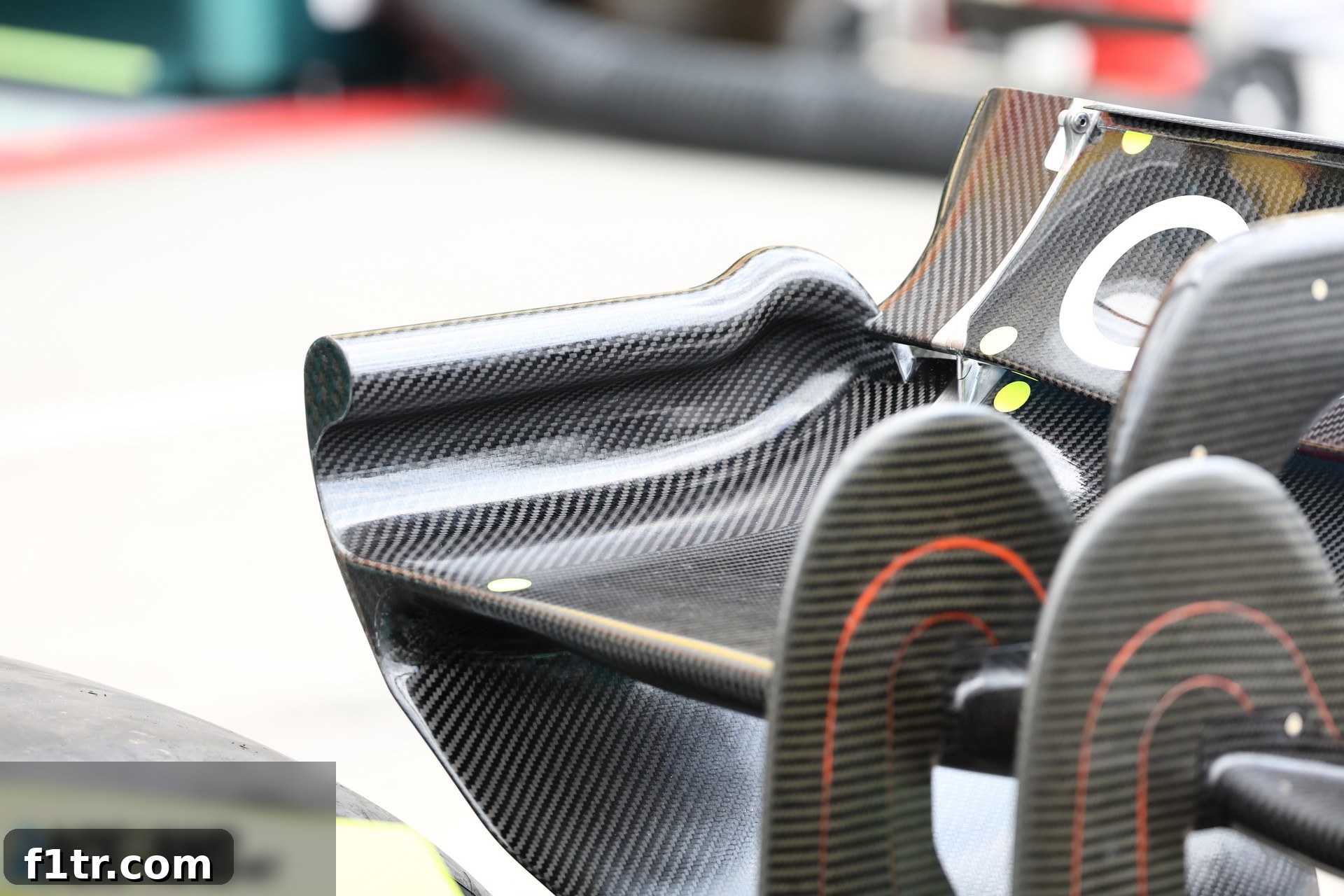
The relentless pursuit of aerodynamic advantage is a cornerstone of Formula 1, and teams consistently push the boundaries of technical regulations. This was vividly demonstrated at a recent Grand Prix, where Aston Martin introduced a highly unusual rear wing design for their AMR22 car. This innovative component, intended to significantly boost downforce at circuits where the penalty for increased drag is minimal, quickly became a focal point of discussion within the paddock. Despite its novel approach, the team confirmed that the FIA raised no concerns regarding its legality, marking another chapter in F1’s ongoing saga of engineering ingenuity meeting regulatory interpretation.
The Genesis of an Aerodynamic Innovation
The 2022 Formula 1 season ushered in a new era of technical regulations, primarily aimed at promoting closer racing and enhancing overtaking opportunities by significantly reducing the “dirty air” effect. Central to these regulations was a redesigned aerodynamic philosophy, emphasizing ground effect and simplified wing elements. Against this backdrop, Aston Martin’s development of a rear wing featuring a peculiar end plate geometry stood out. This modification was specifically engineered to maximize the downforce generated, particularly beneficial at tracks characterized by tight corners and limited long straights, where aerodynamic grip outweighs the efficiency concerns of drag.
Such a development naturally sparked debate regarding its alignment with the fundamental spirit of the 2022 rules. Many wondered if this aggressive interpretation bypassed the core objective of the new regulations. However, Aston Martin team principal Mike Krack was quick to reassure that the team had meticulously ensured their design met all regulatory requirements, maintaining open communication with the sport’s governing body throughout its development phase.
Navigating the Regulatory Landscape: FIA’s Approval Process
The process of introducing radical new components in Formula 1 involves stringent checks and continuous dialogue with the FIA. Mike Krack detailed Aston Martin’s proactive approach, stating, “Developing a wing or developing ideas, you normally do not wait until the last moment before you show it [to the FIA]. So we were in touch with the FIA all along the development to understand if this is something that would be accepted.” This early engagement is critical for teams to avoid costly redesigns or potential disqualifications, underscoring the FIA’s role as both a regulator and a technical arbiter.
Krack further elaborated on the outcome of this collaborative process: “It finally was, so that was for us the moment we said, ‘okay, we go for it’. I think there’s nothing special, at the end of the day. It’s an interpretation of the rules and we developed the wing according to that in conjunction with the FIA and that’s it, basically.” This statement highlights a perennial aspect of F1 engineering: the rules are often a framework, and success lies in the most astute and innovative interpretation of that framework. The FIA’s approval signals that while the design might be unusual, it falls within the permissible bounds of the technical regulations.
Rival Reactions and the “Copycat” Culture of F1
The competitive nature of Formula 1 means that any significant technical innovation by one team is immediately scrutinized by rivals. Christian Horner, team principal of Red Bull, was among those observing Aston Martin’s latest development with keen interest. Known for his witty remarks, Horner acknowledged the potential impact, stating, “I guess if it complies with the regs, that’s the main thing. It opens up another avenue that’s interesting.” His comments suggest that other teams, including Red Bull, might be prepared to explore similar design avenues if proven effective and legal.
The F1 paddock is no stranger to the phenomenon of “copying” successful design concepts. Aston Martin itself had previously introduced a substantial car upgrade at the Spanish Grand Prix which bore a striking resemblance to Red Bull’s RB18, leading to it being affectionately dubbed the “Green Red Bull.” Horner playfully referenced this history, joking, “Maybe for once we’ll copy something off an Aston Martin, rather than the other way round, you never know!” This lighthearted jab underscores the reality that in F1, a good idea, once validated and approved, is fair game for replication across the grid, albeit with each team adapting it to their unique car philosophy.
The implication here is significant: if Aston Martin’s rear wing proves to offer a tangible performance benefit, other teams are likely to begin developing their own versions. This constant arms race of innovation and adoption ensures that the sport remains at the cutting edge of automotive engineering, but also challenges the regulators to keep up with the ingenuity of the teams.
The Regulatory Future: F1 Commission and Potential Rule Amendments
While the FIA has cleared Aston Martin’s design for immediate use, its long-term future could still be subject to change. Rival F1 teams possess the power to advocate for outlawing such developments in future seasons if there is sufficient support within the F1 Commission. This powerful body is responsible for making strategic decisions and amending the sport’s regulations. Changing technical rules mid-season or for upcoming seasons requires a formidable ‘super-majority’ – specifically, 28 votes in favour out of a total of 30. This includes 10 representatives each from Formula One Management (FOM) and the FIA, along with one vote from each of the 10 competing teams.
Despite this potential hurdle, Mike Krack remained unfazed by the prospect of future rule changes. “I’m not concerned about a super-majority or anything,” he affirmed. “If the rules are changing, or if these kinds of designs are not allowed, we will cope with it.” This confident stance reflects Aston Martin’s belief in the legality of their current design and their readiness to adapt to any future regulatory shifts. The intricate voting structure of the F1 Commission ensures that significant rule changes are not made lightly, requiring broad consensus across various stakeholders, making a rapid ban of an approved concept quite challenging unless there’s an overwhelming performance disparity or safety concern.
Beyond the Wing: Broader Implications for F1 Design and Competition
Aston Martin’s rear wing saga is more than just a technical detail; it’s a microcosm of the Formula 1 ethos. It highlights the constant tension between innovation and regulation, where engineers strive to find every conceivable performance advantage within a tightly controlled environment. This intricate dance between technical departments and the governing body is what makes F1 such a compelling spectacle, driving technological advancements that often trickle down to the wider automotive industry.
The incident also underscores the agility and interpretative skill required in modern F1 engineering. The 2022 regulations were designed to simplify aerodynamics, yet teams continue to find complex solutions within those simplified frameworks. This quest for marginal gains, often found in the most minute details, defines the competitive landscape of the sport. As F1 moves forward, such instances will inevitably continue, serving as a reminder that the spirit of innovation will always challenge the letter of the law.