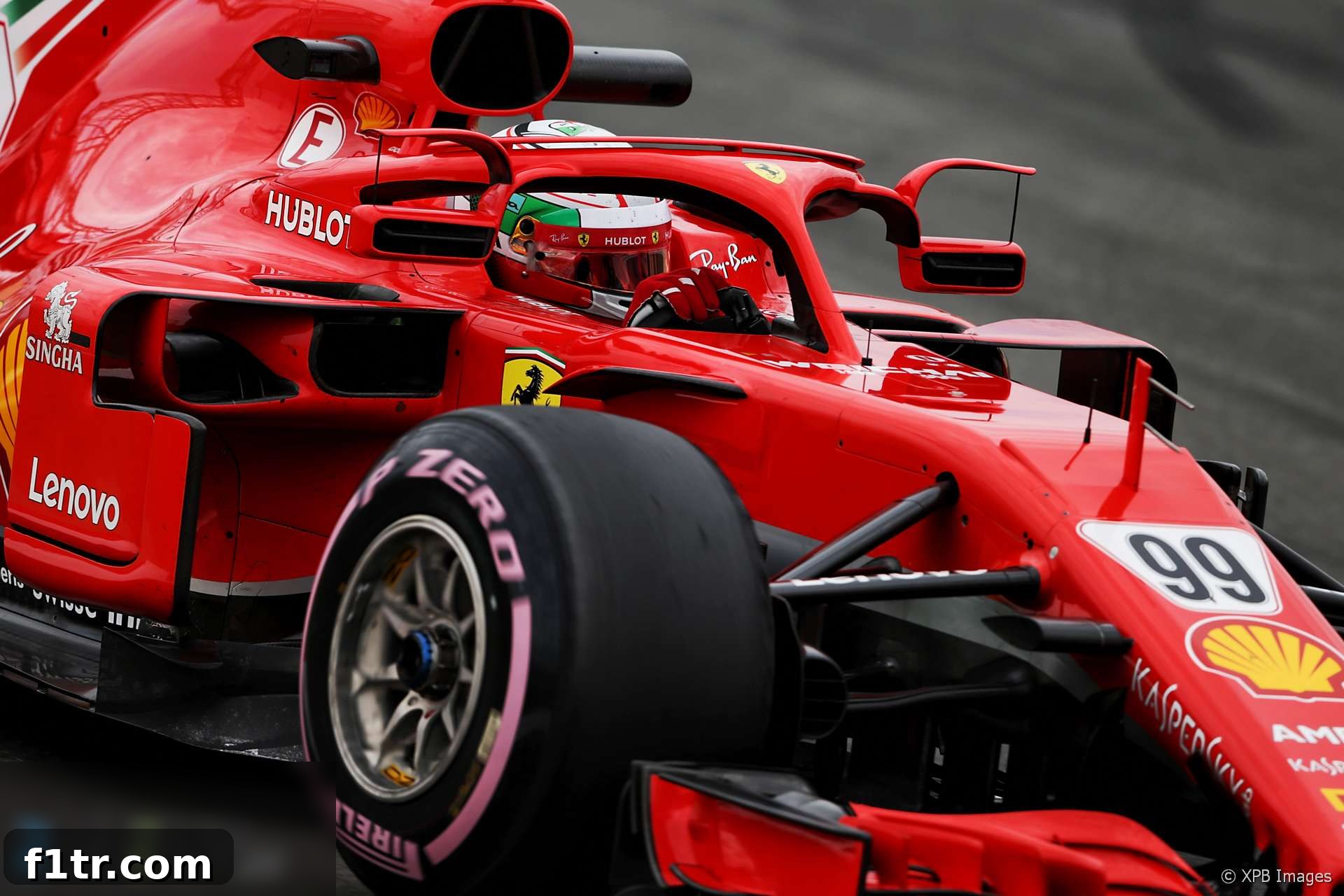
In the high-stakes world of Formula One, where milliseconds can mean the difference between victory and defeat, innovation often dances on the precipice of regulation. Every component of a car, no matter how seemingly innocuous, is scrutinized by engineers for potential aerodynamic gains. This relentless pursuit of performance frequently leads to clashes with the sport’s governing body, the FIA, and one such notable instance arose during the 2018 season with Ferrari’s controversial Halo-mounted mirror design.
The introduction of the Halo safety device in 2018 marked a significant shift in F1 car design, primarily aimed at enhancing driver protection. However, this new cockpit protection presented teams with fresh challenges, particularly concerning driver visibility and the placement of critical car components like wing mirrors. Recognizing these challenges, the FIA had issued a technical directive earlier in the year, TD/014-18, which permitted teams to mount wing mirrors onto the Halo structure. This initial flexibility, intended to assist with visibility and integration, inadvertently opened a new “grey area” for aerodynamic exploitation.
Ferrari, ever a front-runner in design ingenuity, was quick to explore these new boundaries. At the 2018 Spanish Grand Prix, the Scuderia unveiled a distinctive Halo-mounted mirror assembly that immediately drew attention and raised eyebrows within the paddock. While ostensibly serving their primary function of providing rearward visibility, the design featured intricate support structures and housings that suggested a more profound, aerodynamic purpose. Critics and rival teams quickly suspected that Ferrari had crafted these mirrors not just for practical use, but as clever aerodynamic devices designed to manipulate airflow over the car, thereby generating marginal but crucial downforce or reducing drag.
Advert | Become a Supporter & go ad-free
The dispute over Ferrari’s innovative, yet contentious, Halo-mounted wing mirrors precisely encapsulated the ongoing tension between engineering creativity and strict regulatory compliance in Formula One. The FIA’s position was clear: while teams were allowed to integrate mirrors with the Halo, any aerodynamic benefits derived from such designs must be purely incidental, or at the very least, minimal. The governing body acknowledged that some level of aerodynamic interaction is inevitable with any external component on an F1 car, but the primary intent behind the design had to remain functional, not performance-driven in an exploitative manner.
In response to the outcry and the specific concerns raised by Ferrari’s design, the FIA issued a clarifying statement. It reiterated that “whilst the FIA accepts that teams will legitimately design the mirrors, housings and mountings to minimise any negative aerodynamic effects they may cause, we believe that any aerodynamic benefits should be incidental, or at least minimal.” This statement served as a crucial demarcation line, preventing teams from turning essential safety or visibility components into disguised aerodynamic wings. The core principle was that the primary function of the mirror system must be visibility, with any aero gains being a secondary and unintentional consequence.
To further solidify their stance and prevent future circumvention, the FIA laid down specific structural requirements for Halo-mounted mirrors. Teams were explicitly informed that the mountings must “provide a meaningful structural contribution to the mounting system” and “be mounted to the lower and/or inboard surface(s) of the mirror housing.” These directives aimed to eliminate the possibility of teams fabricating flimsy, aerodynamically optimized stalks or structures that served little to no structural purpose but offered significant aero advantages. Furthermore, the FIA indicated that teams employing more than one mounting point for their mirrors, as was evident in Ferrari’s Spanish Grand Prix design, might be required to furnish compelling structural justifications for their necessity. This measure was a direct response to designs that appeared to use multiple supports for aerodynamic purposes rather than purely for stability or structural integrity.
The FIA’s admission that the criteria for evaluating the eligibility of such mountings were “to some extent subjective” highlighted the complexity of regulating cutting-edge motorsport design. To mitigate potential disputes and avoid wasted resources for teams, the governing body offered a proactive solution: teams could consult with the FIA to discuss the legality of new designs before introducing them in a race. This pre-approval mechanism aimed to foster a more collaborative approach, allowing teams to innovate within clear boundaries without the risk of an expensive design being disallowed mid-season. It was a pragmatic step towards clearer communication and interpretation of the evolving rulebook.
Beyond the immediate clarification for the 2018 season, the FIA acknowledged that its existing rules concerning mirrors were “not perfect.” This candid admission underscored the dynamic nature of F1 regulations, which frequently need updating in response to technological advancements and teams’ relentless pursuit of competitive edges. The FIA committed to revising these regulations comprehensively ahead of the 2019 F1 season, promising a more complete set of rules encompassing mirror position, mountings, visibility, and other related aspects. The objective was to secure “unanimous support for such changes for 2019,” ensuring a stable and fair regulatory framework for all competitors.
Despite the FIA’s firm stance and subsequent clarification, Ferrari continued to utilize their controversial Halo-mounted mirror design during the final two days of testing at the Circuit de Catalunya. This decision by Scuderia Ferrari could be interpreted in several ways: perhaps they were gathering further data to argue the legality of their design, or making minor adjustments to comply while retaining as much of the perceived aerodynamic benefit as possible. It highlighted the tenacious spirit of F1 teams, always pushing the envelope and exploring every possible avenue within the grey areas of the rulebook, even in the face of regulatory scrutiny. Their persistence underlined the significant value they placed on even marginal aerodynamic gains from components like mirrors.
The saga of the Halo-mounted mirrors served as a microcosm of the larger regulatory challenge in Formula One. It demonstrated the ongoing battle between ingenious engineering and the need for fair, consistent rules. Every new safety device or technical allowance opens up unforeseen avenues for performance exploitation, keeping the FIA constantly on its toes. The clarity provided by the FIA, combined with its commitment to future revisions, ensured that while innovation is encouraged, it must always operate within the spirit, and not just the letter, of the regulations.
Advert | Become a RaceFans supporter andgo ad-free
Explore More from the 2018 F1 Season
Dive deeper into the events and stories that shaped the 2018 Formula 1 season, a year filled with thrilling races, intense rivalries, and significant technical developments. From groundbreaking design innovations to strategic battles on track, the 2018 season offered a rich tapestry of motorsport drama. Understand how teams adapted to new regulations, the impact of emerging technologies, and the competitive landscape that defined this memorable year in F1 history.
- F1 feared “death knell” for Drive to Survive after Ferrari and Mercedes snub
- McLaren staff told us we were “totally crazy” to take Honda engines in 2018 – Tost
- ‘It doesn’t matter if we start last’: How Red Bull’s junior team aided Honda’s leap forward
- Honda’s jet division helped F1 engineers solve power unit problem
- McLaren Racing losses rise after Honda split
Browse all 2018 F1 season articles