Driving Towards Green: Unpacking Motorsport’s Significant Carbon Footprint and Sustainable Future
Every sport leaves an environmental mark, but the sheer scale of international motorsport’s logistics operations presents its most formidable challenge in reducing its ecological impact. While the spectacle of high-performance vehicles on track often draws criticism for ‘gas-guzzling’ tendencies, the reality is that the vast majority of motorsport’s carbon dioxide emissions stem not from the racing itself, but from the intricate global movement of teams, equipment, and personnel.
In recent years, public awareness and regulatory pressures have intensified, leading to a growing expectation for motorsport championships to meticulously monitor and transparently report their sustainability efforts. This heightened scrutiny reveals a crucial distinction: the visible emissions from a race car pale in comparison to the invisible footprint left by transporting an entire series across continents.
The Colossal Impact of Logistics and Travel
Detailed reports from leading championships underscore the overwhelming contribution of logistics to their overall carbon footprint. Formula 1, for instance, reported that in 2019, a staggering 45% of its carbon footprint was attributable to freight, with an additional 27% originating from staff movement. This means that nearly three-quarters of F1’s emissions before the pandemic were directly linked to transportation.
Formula E, despite its all-electric nature and explicit commitment to sustainability, faced similar challenges. In the same year, 74% of its carbon footprint came from logistics, complemented by 17% from staff travel. These figures clearly illustrate that for any international racing series, the movement of cars, equipment, infrastructure, and thousands of personnel around the globe is, by far, its single largest environmental concern, dwarfing the emissions generated by the cars on track or even the events at a local level.
Understanding the Scale: What Constitutes Motorsport Logistics?
When we talk about motorsport logistics, we’re referring to an incredibly complex operation. For a Formula 1 race, this involves shipping dozens of race cars, thousands of spare parts, sophisticated garage equipment, team motorhomes, hospitality units, broadcasting equipment, and safety vehicles. This freight, often weighing hundreds of tons per team, travels by air cargo, sea freight, and road transport across vast distances between events. Each team’s operations alone are akin to moving a small, highly specialized factory, multiple times a year. Similarly, staff movement involves hundreds, if not thousands, of individuals – drivers, engineers, mechanics, strategists, media personnel, and event organizers – flying frequently across time zones to attend races and related activities.
Challenges in Comparative Analysis
Drawing direct comparisons between the sustainability efforts of different motorsport series is far from straightforward. Each championship employs distinct methodologies for reporting its environmental impact, even when attempting to measure similar metrics like the total carbon footprint of an entire season. Furthermore, the variations in their respective calendars significantly skew results. For example, Formula 1’s 2022 season, featuring 22 individual Grands Prix, inherently generated a larger footprint than Formula E’s 16 races spread across nine venues, especially since several Formula E rounds are double-headers, effectively reducing travel frequency per race.
Extreme E: A Niche Approach to Sustainability
Extreme E has positioned itself as a championship fundamentally built upon environmental consciousness. This innovative off-road racing series stages its events in remote, ecologically sensitive locations, specifically chosen to highlight climate change challenges. Crucially, these events are held without spectators and on natural courses that require minimal barriers or construction, thereby dramatically reducing event-related emissions. The series integrates legacy environmental projects and scientific studies into its operations, aiming to leave a positive impact in host regions.
To further control its freight impact, Extreme E mandates that teams are allowed just a single pallet of equipment, packed before the start of the season. All cars, equipment, and materials are transported on a specially-adapted ship, the St. Helena, which serves as a floating paddock and research hub. This unique approach aims to consolidate transport and minimize air travel.
Despite these pioneering efforts, a direct comparison of emissions per car per race can still present a nuanced picture. In its inaugural season in 2021, Extreme E produced 8,870 tons of CO2 over five events with nine cars entered, translating to approximately 197 tons of carbon per car per race. Comparatively, Formula E’s 2021 report, with an overall footprint of 19,600 tons over 15 races, would put it at about 54 tons of CO2 per car per race. However, as we will discuss, raw figures often require careful contextualization.
Formula 1’s Emissions and Pandemic-Induced Changes
Formula 1’s last publicly published carbon footprint was a substantial 256,551 tons in 2019. Since then, the sport has undergone significant operational shifts, largely propelled by the global coronavirus pandemic. Two seasons with dramatically reduced numbers of spectators and paddock personnel at races, alongside altered working practices that allowed for fewer staff to travel, undoubtedly impacted these figures. While precise post-2019 data is pending, the 2019 figure calculated to approximately 610 tons per car per race, clearly illustrating the immense scale of F1’s environmental challenge when compared to either of the more environmentally-focused series.
Refining Formula E’s Emissions Data
While the initial Formula E figure of 54 tons per car per race might seem remarkably low, it somewhat flatters the logistical complexities involved. In 2021, Formula E ran seven double-header events. When adjusting the calculation by dividing the 19,600 total tons by 24 (the number of cars on the grid that year) and then by eight (the actual number of distinct events or travel instances), the figure rises to a more realistic 102 tons per car per event. This highlights that while double-headers are more efficient environmentally, they still represent significant logistical undertakings.
Pandemic Lessons: The Trade-off Between Carbon Savings and Reach
The compromises forced upon racing series by the pandemic offered stark illustrations of the massive carbon savings achievable by curtailing travel to far-flung destinations. When Formula E was compelled to cancel the latter half of its 2020 season and instead host six closed events at Tempelhof, Berlin, it saved approximately 21,000 tons of CO2 by avoiding planned races in Sanya, Rome, Paris, Seoul, Jakarta, the USA, and London. This provided undeniable proof of concept for the environmental benefits of a more localized calendar.
However, this drastic reduction in travel also had profound commercial and social consequences. Cutting so many international races severely compromised the series’ global reach and audience engagement, with lasting impacts on its market presence and fan base. It’s also important to acknowledge that the primary motivation for these pandemic-era changes was not initially carbon saving, but rather finding a cost-effective and feasible way to complete a season disrupted by an unprecedented global catastrophe. The environmental benefits were a fortunate, albeit secondary, outcome.
Formula E’s Triple Approach: Balancing Sustainability with Growth
Formula E’s sustainability director, Julia Pallé, articulated the inherent complexities of managing a global motorsport series. While double-header events are undoubtedly more environmentally efficient due to reduced travel instances, decisions are made using a “triple approach” that considers environmental, social, and economic perspectives. “Yes, from the environmental side, it will be more beneficial to have only double-headers in the calendar,” Pallé explained. “But the reality is that from the social and the economic perspective, it is not as beneficial.”
This holistic viewpoint means that sometimes, other pillars – such as economic viability (e.g., securing host city fees, attracting sponsors) or social impact (e.g., reaching new audiences, promoting sustainable mobility in diverse markets) – might be prioritized over purely environmental gains, especially if they are deemed to bring broader benefits. For instance, staging a single race in a new market like Jakarta, even with extensive temporary construction, might be chosen for its strategic importance in expanding the series’ global footprint and promoting its message.
Formula E has already achieved net carbon-zero status through offsetting measures. Looking forward, the series has set an ambitious overall plan to reduce its direct emissions by 45% by 2030, targeting a decrease from the 45,000 tons produced in the 2018/19 season (the last representative pre-Covid championship). That 45,000-ton figure from the 2018/19 season works out to about 170 tons per car per event traveled to (across 12 distinct events, including the New York double-header), demonstrating that FE has already made significant strides in reducing that number.
Can F1 Adapt to Greener Logistics?
The operational models of Formula 1 and Formula E are vastly different, making direct adoption of strategies challenging. It would be difficult to persuade F1 teams to abandon their elaborate multi-story motorhomes for simple marquees, or to accept a maximum of two sets of Pirelli tires per day in the same way Formula E does. Similarly, spacing the F1 calendar with significant gaps to allow for more carbon-efficient sea freight over air transport, as Formula E often does, could pose considerable logistical and commercial hurdles for F1’s demanding schedule and team operations.
However, external pressures are increasingly aligning with environmental goals. As the costs of international freight continue to soar, impacting team development budgets and overall profitability, the arguments for minimizing freight become more compelling, potentially even existential for the calendar’s structure. This was highlighted by the decision not to replace the Russian Grand Prix in 2022, which was reportedly based on prohibitive freight costs and logistical limitations rather than a lack of suitable venues.
Innovative Solutions and Collaboration
Some solutions are proving more tolerable and effective, especially when backed by successful trials. Formula 1 and Formula E share a logistics partner in DHL, and the smaller, more agile series has been willing to experiment. Julia Pallé noted, “When we go to trucks and boats, we use biofuel, which is new and really has been implemented thanks to DHL having basically sharing the same objectives because by 2050 they’re aiming to be near zero carbon.” This collaboration offers DHL an invaluable opportunity to test and refine sustainable logistics solutions that can then be scaled across their broader global fleet, demonstrating motorsport’s role as a testbed for wider industry innovation.
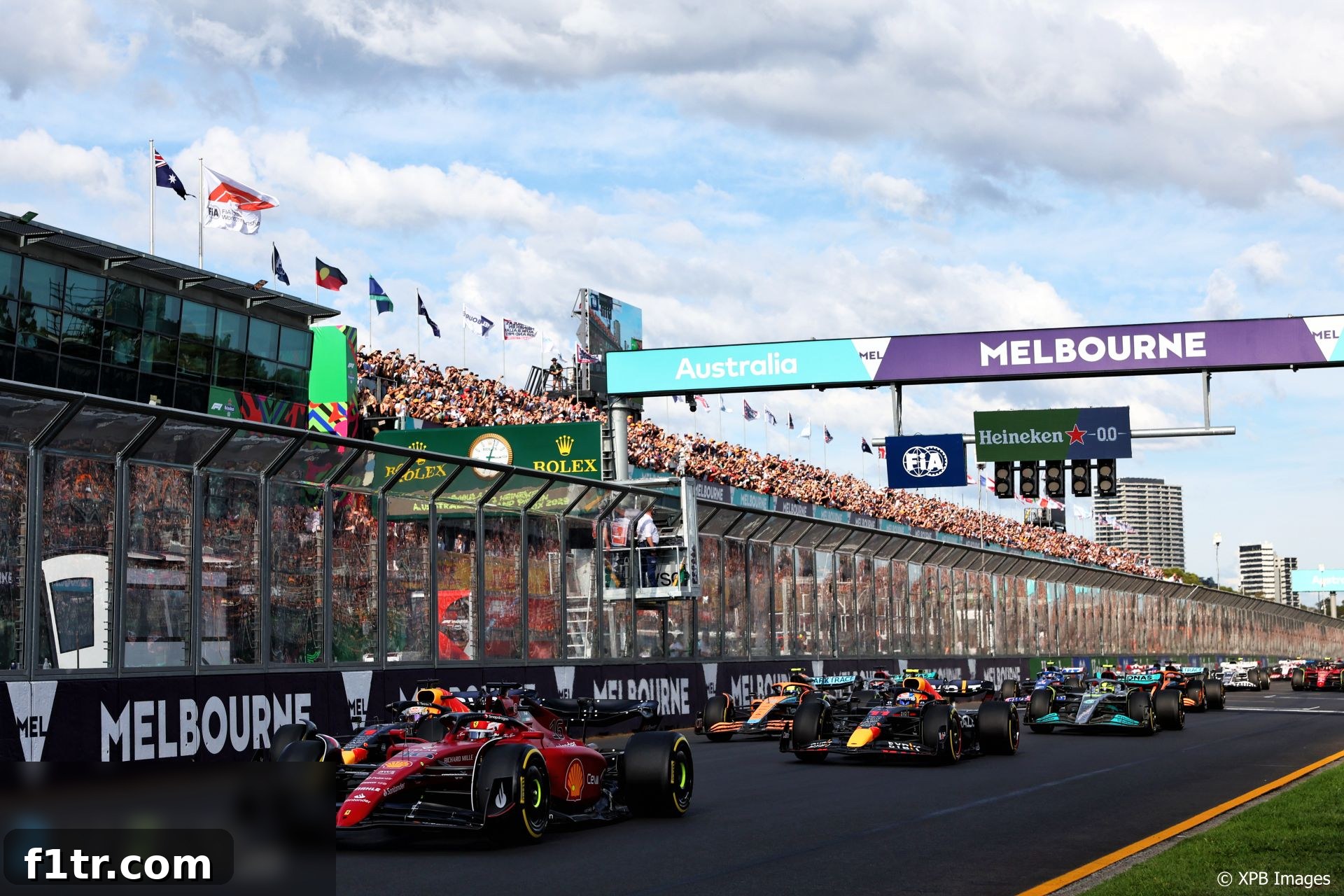
Crucially, Formula 1 has recently signaled its intention to take proactive steps towards reorganizing its future calendars to minimize long-distance travel. This strategic shift holds the potential to drastically cut both its emissions and operational costs. A prime example of current inefficiency is F1’s 2022 calendar, where only two of its four races in North America run back-to-back. After the race in Baku, the series was scheduled to travel 9,000 kilometers to Montreal, only to return to Europe shortly thereafter. Such fragmented travel routes represent significant environmental and financial burdens.
Red Bull team principal Christian Horner emphasized the common-sense approach: “If you look at the calendar it makes sense to group some of the races together, whether it’s some of the American races, some of the Asian races, Europe obviously. Some of the calendar this year, when you look at the geographics of it, Azerbaijan to Montreal, going to Australia for a weekend, it’s about as expensive as you could make.” Regionalizing the calendar, by grouping races in specific geographical regions, could dramatically reduce cumulative travel distances and associated emissions.
Motorsport as a Catalyst for Change
Historically, motorsport has been a powerful engine for technological advancement on the track, pushing boundaries in engine efficiency, aerodynamics, and materials science. In the coming decade, there is an even greater opportunity for this spirit of innovation to extend beyond the cars themselves and apply to the intricate global logistics problems that currently dominate its environmental footprint. By pioneering sustainable freight solutions, experimenting with advanced biofuels in transport, and optimizing travel itineraries, motorsport can not only reduce its own impact but also serve as a high-profile incubator for sustainable practices that have far-reaching applications across global industries.
The journey towards a truly sustainable motorsport is complex, balancing environmental imperatives with commercial realities and the desire for global reach. Yet, with increasing pressure from all sides, and the demonstrable benefits of innovative solutions, the future of racing appears to be firmly on a greener, more responsible path.
Formula E News and Updates
- McLaren to quit Formula E at end of season
- Wehrlein beats Jaguar pair to title in dramatic Formula E finale
- Wehrlein’s London win sets up thrilling three-way title showdown in finale
- Da Costa takes hat-trick of wins in chaotic second Portland race
- Da Costa inherits Portland win from Evans after Cassidy spins lead away
Browse all Formula E articles