The dawn of a new era in Formula 1, marked by the departure of Bernie Ecclestone and the arrival of Liberty Media, raised a pivotal question: Would this transition finally dismantle the entrenched privileges enjoyed by Ferrari? For decades, the iconic Italian Scuderia has held a unique position of power within the sport, often dictating terms and shaping its future. Now, with Liberty Media firmly in control, the answer has become clear: No, Ferrari’s exceptional status endures.
Recent revelations indicate that Liberty Media, despite its stated ambition to foster a more equitable and competitive environment, has chosen to uphold Ferrari’s unparalleled advantages. These include the contentious power to veto rule changes they deem unfavorable – a right explicitly termed Ferrari’s ‘protection right’ within proposed new regulations for future seasons, underscoring its deep institutionalization. Furthermore, Ferrari continues to receive substantial special payments, often amounting to tens of millions of dollars annually, funds not accessible to any of its rival teams. This continuation of extraordinary benefits fundamentally skews the playing field, raising profound questions about fairness and competitive balance in the pinnacle of motorsport.
The persistence of these dispensations forces a critical examination: Are these unique concessions an unavoidable necessity to satisfy the one competitor Formula 1 cannot afford to lose? Or do they represent a disheartening capitulation to a team that perceives itself as intrinsically more significant than the sport itself? This ongoing debate lies at the heart of F1’s commercial and sporting integrity, challenging its foundational principles of competition.
For: Upholding a Legacy and Economic Powerhouse
The arguments in favor of Ferrari’s special treatment are deeply rooted in history, brand power, and commercial realities. Uniquely, Ferrari stands as the sole team to have participated in every single season of the Formula 1 World Championship since its inception in 1950. While other formidable teams have graced the grid, some rising and falling, others arriving much later, none possess the unbroken lineage and consistent presence that defines Ferrari. This unparalleled heritage, spanning over seven decades, imbues the Maranello-based squad with an identity inextricably linked to Formula 1 itself, making its status as a cornerstone of the sport undeniable.
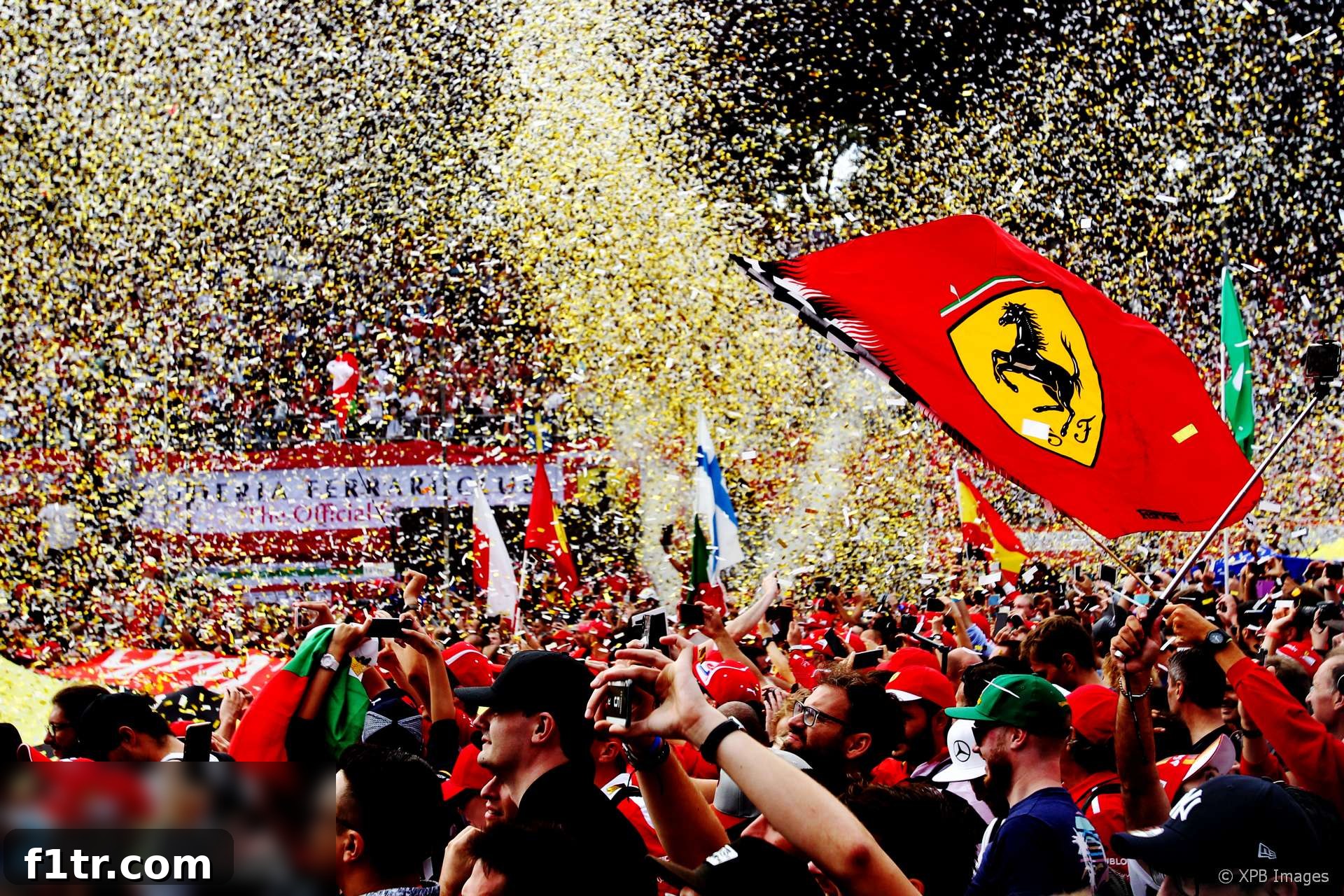
Beyond its historical footprint, the global popularity of Ferrari is immense and far-reaching, extending well beyond the confines of its native Italy. The “Tifosi,” Ferrari’s passionate fan base, represents a truly global phenomenon, attracting unparalleled viewership and engagement. For any aspiring motorsport series – be it the World Endurance Championship, Formula E, or even a potential future rival to F1 – securing the participation of such a prestigious and universally recognized brand would constitute an unprecedented coup. In an era where Liberty Media’s performance is closely scrutinized through metrics like share price and audience growth, the decision to grant Ferrari special treatment becomes a pragmatic business choice. Ferrari is not merely special; its iconic status and drawing power render it genuinely irreplaceable in the eyes of many, providing a unique commercial asset that F1 arguably cannot risk losing without significant repercussions.
The economic contribution of Ferrari also extends to sponsorships, merchandise sales, and the sheer prestige it lends to the F1 brand globally. Its crimson livery and prancing horse emblem are synonymous with speed, luxury, and relentless competition. Losing Ferrari, or even significantly alienating it, could potentially diminish F1’s appeal to a vast segment of its audience and commercial partners. Therefore, from a purely commercial standpoint, maintaining Ferrari’s contentment, even through special privileges, is seen by some as a necessary investment to safeguard the overall health and prosperity of the sport.
Against: Undermining Sporting Integrity and Fair Competition
Conversely, the arguments against Ferrari’s special treatment are compelling, primarily focusing on the fundamental principles of fairness, equality, and sporting integrity. The advantages bestowed upon Ferrari allow it to exert undue influence over the sport’s direction and competitive landscape. The power to veto rule changes, whether explicitly wielded or merely threatened, effectively grants Ferrari the ability to sculpt regulations to its advantage, stifling innovations or proposals that might challenge its position. This unique prerogative means that other teams, despite their expertise and investment, are denied an equal voice in shaping the future rules of the sport.
Furthermore, the substantial special payments Ferrari receives provide a distinct financial head start in car development, research, and operational costs. While Liberty Media may have attempted to mitigate the extent of these advantages, the core disparity remains. This financial bolster, unavailable to any other team, allows Ferrari to invest more heavily in technology and personnel, creating a perpetual competitive edge before a single race car even hits the track. Such an imbalance fundamentally contradicts the spirit of fair competition, where success should ideally be determined by merit, ingenuity, and on-track performance, not by historical entitlements or unique financial handouts.
Bluntly, the perpetuation of these privileges stems from Formula 1’s perceived fear that Ferrari would depart the sport if compelled to compete on an absolutely equal footing with its rivals. However, recent developments suggest that F1’s global appeal and robust fan base are strong enough to thrive independently. Ferrari, for instance, chose not to participate in the widely acclaimed Netflix series “Drive to Survive,” yet the show proved instrumental in attracting a new, younger generation of fans to the sport, demonstrating F1’s ability to engage audiences beyond the direct involvement of every team. The same pattern is evident with F1’s burgeoning Esports project, which Ferrari belatedly joined, further illustrating that F1’s growth trajectory is not solely dependent on the unwavering presence or full participation of any single team, no matter how iconic. These examples challenge the notion that Ferrari is indispensable, suggesting that F1’s inherent drama and global spectacle possess sufficient drawing power to stand on their own.
My Perspective: A Call for True Sporting Equity
As a passionate and long-term follower of Formula 1, it’s easy to appreciate, and perhaps even underestimate, the formidable power of the Ferrari brand in capturing global attention. No other team in Formula 1 commands the kind of tribal, almost religious, following more commonly associated with world-renowned soccer clubs. The sight of the Scuderia’s red cars, the roar of their engines, and the unwavering dedication of the Tifosi are undeniably central to the spectacle and allure of F1. You can dismiss its significance, but who among us wouldn’t wish for a Formula 1 grid populated by ten or more teams that could rival Ferrari’s global popularity and fan engagement? And, certainly, Liberty Media, with its commercial imperatives, cannot comfortably entertain the prospect of losing such an iconic constituent.
Nevertheless, despite the undeniable brand power and historical significance, the continuation of Formula 1’s special favors to Ferrari represents a glaring affront to any genuine notion of sporting integrity and fairness. It sends a message that some teams are inherently more equal than others, undermining the very essence of competition. It is profoundly disappointing that Liberty Media, during its strategic planning for the future regulations, never unequivocally declared that, from a set date, all terms of participation and financial distributions would be offered on an absolutely level playing field to all competing teams. This stance would have been a powerful statement, echoing the sentiments of many rival teams who also believe Ferrari should relinquish its contentious veto powers, a privilege that arguably dates back to the sport’s earlier, less transparent commercial arrangements.
Such a declaration would have presented Ferrari with a clear choice: to compete in Formula 1 on genuinely equal terms with its rivals, potentially for the first time since the 1970s, or to follow through on its occasional threats to withdraw from the sport because it could no longer enjoy its unique privileges. What would Ferrari truly do in such a scenario? My strong suspicion is that the sport in which they have participated for over 70 continuous years, and to which they owe so much of their identity and global renown, is far more important to them than they often care to admit publicly. Indeed, the recent naming of their latest road car after their F1 machine serves as a tangible testament to the inextricable link between the F1 program and the very core of the Ferrari brand and its commercial identity.
Moreover, while Ferrari’s history is undoubtedly rich and significant, the narrative of Formula 1 is not exclusively bound to this single team. The sport’s rich tapestry is woven with countless legends, unforgettable moments, and iconic figures who never raced for Maranello. Consider, for instance, the enduring affection and profound inspiration that Ayrton Senna continues to evoke, decades after the untimely end of a career that, remarkably, did not feature a single start for Ferrari. F1’s appeal transcends any one team; it is about the ultimate pursuit of speed, the human drama, and the relentless innovation that define the pinnacle of motorsport.
Your Voice Matters: Join the Discussion
The debate surrounding Ferrari’s unique position in Formula 1 is complex, touching upon history, economics, and the very spirit of competition. We invite you to delve deeper into these critical issues and share your thoughts. Do you believe Ferrari’s legacy justifies its privileges, or should Formula 1 enforce absolute equality among all its competitors? Your perspective is invaluable in shaping the ongoing conversation about the future of our beloved sport.
Related Debates and Polls
- What must Formula 1 fix with its new rules – and what should it leave unchanged?
- ADUO: Do F1 teams who fall behind deserve to get help to catch up?
- F1 is considering doubling its sprint races. Do you want more or fewer?
- Will this be a fight or a rout? 20 questions for the 2026 Formula 1 season
- Which Formula 1 team has the best-looking car – and the worst – for the 2026 season?
Browse all debates and polls