In the fiercely competitive landscape of professional sports, the principle of competitive balance, or parity, often underpins a league’s long-term appeal and fan engagement. Major North American sports leagues, renowned for generating billions in annual revenue, meticulously cultivate this parity through established mechanisms. Strategies such as player drafts, which grant struggling teams priority access to the most promising young talent, and stringent salary caps, designed to prevent wealthier teams from simply stockpiling elite players, are fundamental cornerstones. This commitment ensures that repeated, sustained success is not merely a consequence of financial might but a true testament to superior strategy, innovation, and unwavering excellence.
Formula 1, in contrast, has historically operated under a different paradigm. For the vast majority of its existence, the pinnacle of motorsport has been anything but equal. The sport traditionally celebrated an ethos where technological superiority and vast financial investment often translated directly into an undeniable on-track advantage. Performance disparities between cars from different teams could be immense, reflecting a vast chasm in budgets, factory infrastructure, research and development resources, prize money distribution, and political leverage. This often resulted in a predictable hierarchy, with a select few front-running teams enjoying persistent dominance, while others languished at the back of the grid, battling for scraps.
The advent of the Liberty Media era, however, heralded a drastic and fundamental transformation for Formula 1. Recognising the imperative for a more sustainable, equitable, and captivating championship, Liberty Media introduced a series of groundbreaking regulatory changes aimed at recalibrating the sport’s competitive dynamics. Central to these reforms, implemented from the 2021 season, was the introduction of a comprehensive budget cap. This financial restriction limits the total expenditure of all ten teams across nearly all racing and development activities, with carefully defined exemptions. The primary objective is to curb the unchecked spending that previously allowed the wealthiest outfits to secure an almost insurmountable advantage, forcing every team to operate with heightened efficiency and strategic acumen.
In parallel with the financial constraints, another crucial new element was introduced to further level the playing field: Aerodynamic Testing Restrictions (ATR). This technical regulation directly addresses the most critical performance differentiator in modern Formula 1 – aerodynamics – by carefully controlling the developmental resources available to each team. Together, the budget cap and ATR represent a concerted, multi-pronged effort to shift Formula 1 towards a more balanced and exciting future, where genuine competition and strategic brilliance are paramount.
The Aerodynamic Testing Restrictions system is ingeniously structured to act as a performance-based equaliser, akin to the reverse-grid benefits often discussed in other sporting contexts or the draft system in North American leagues. It applies a sliding scale of allowances to teams based directly on their finishing position in the Constructors’ Championship standings. This means that each of the ten Formula 1 teams receives a varying quota for the volume of wind tunnel testing time and Computational Fluid Dynamics (CFD) simulations they are permitted to run – the twin pillars of modern aerodynamic development.

To illustrate, while the team occupying seventh place in the standings receives a base level of testing time, the team finishing in last place is granted a significant 15% additional testing time and CFD capacity. This crucial extra allowance is designed to provide a vital boost, enabling them to accelerate their development, explore more design concepts, and more effectively address their car’s inherent weaknesses, thereby helping them to catch up to the rest of the field. Conversely, the reigning world champions, the team at the summit of the Constructors’ Championship, must contend with a substantial penalty: they are restricted to just 70% of the base level of testing time. This significant 30% reduction serves as a major handicap, forcing the most successful teams to be extraordinarily efficient, precise, and innovative in their aerodynamic development process, making every allocated hour and simulation run critically important.
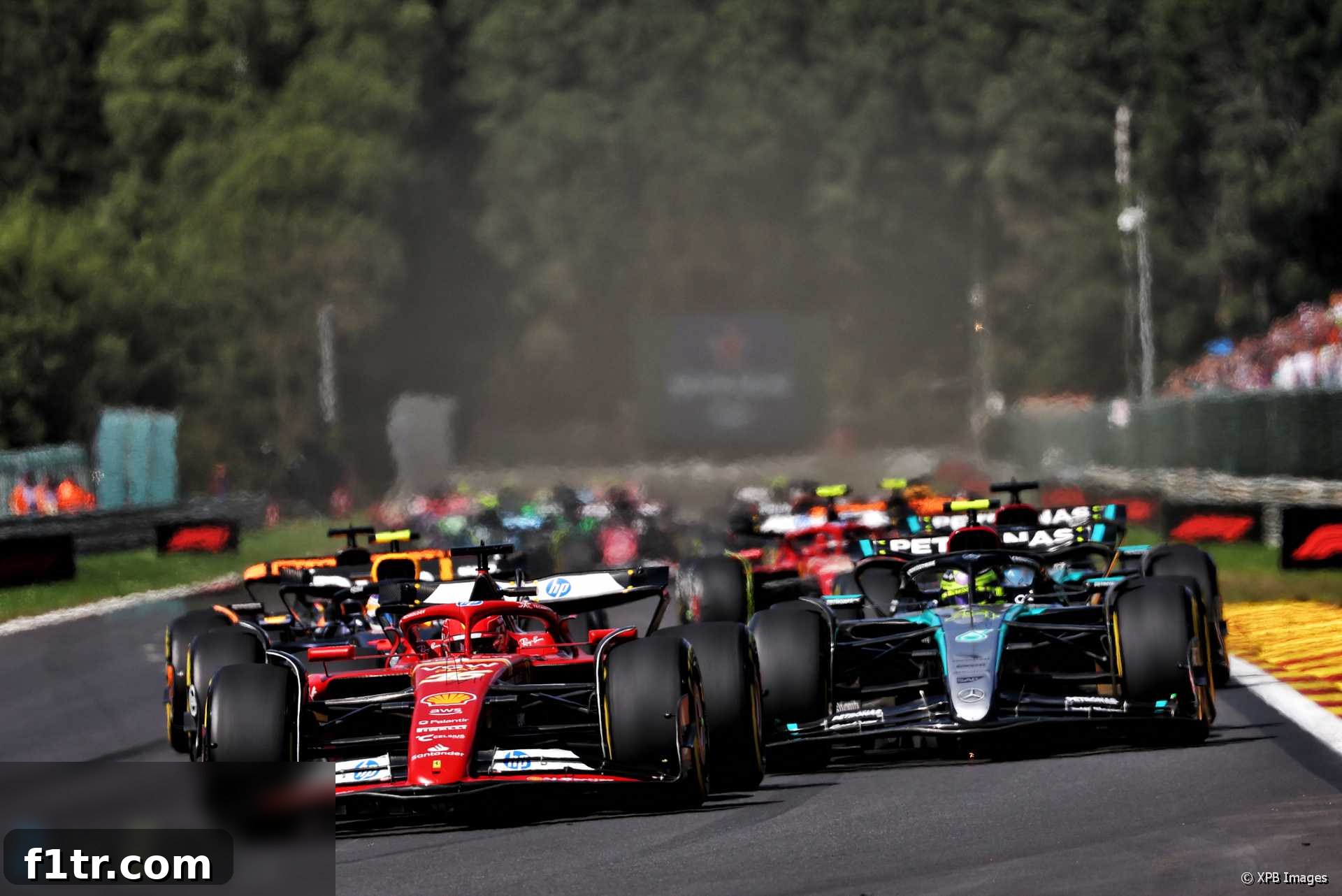
The underlying objective of ATR is to cultivate a more dynamic and less predictable championship by providing enhanced opportunities for those further down the competitive order to develop their cars and work their way into more competitive positions. Four seasons into its implementation, the 2024 Formula 1 season stands as a compelling example of its potential impact. The championship has seen an unprecedented level of competition in many years, with multiple teams and a diverse range of drivers clinching Grand Prix victories over the initial rounds. This observable tightening of the competitive spread has intensified the debate: have these aerodynamic testing restrictions genuinely been a positive element for the world championship?
The Case For Aerodynamic Testing Restrictions
Observing the current Formula 1 landscape, where multiple teams are genuinely in contention to fight for victories each Grand Prix weekend, it is abundantly clear that the Aerodynamic Testing Restrictions (ATR) have demonstrably enhanced the quality of racing in Formula 1. The era of singular, unassailable dominance by one team appears to be giving way to a more thrilling and unpredictable championship narrative.
Under the ATR framework, teams at the pinnacle of the standings can no longer rely on sheer volume of testing or unlimited financial outlay to overpower technical challenges. Instead, they are compelled to adopt a far smarter, more disciplined, and exceptionally efficient approach to their car development. Every design choice, every wind tunnel session, and every Computational Fluid Dynamics (CFD) simulation must be meticulously optimised to the highest degree. This constraint actively fosters genuine innovation and rewards precision engineering, forcing even the most established and successful teams to extract maximum value from their reduced resources.
Crucially, this shift profoundly benefits smaller teams across the grid. By strategically limiting the developmental bandwidth of the traditional giants, ATR creates a more level playing field, opening vital avenues for less resourced outfits to significantly close the performance gap. It incentivizes strategic thinking, agile development processes, and a resourceful mindset, allowing inherent talent and engineering ingenuity to shine through, irrespective of historical budget size. This dynamic is overwhelmingly positive for the sport, making it more accessible, exciting, and ultimately, fairer for all competitors and, most importantly, for the fans.
The Case Against Aerodynamic Testing Restrictions
While arguments for increased parity are compelling, the fundamental concept of aerodynamic testing restrictions inherently challenges the historical essence of Formula 1 as the ultimate engineering competition between constructors. For decades, F1 has served as a relentless battleground for automotive innovation, where manufacturers relentlessly pushed the boundaries of technology in an unconstrained pursuit of pure, unadulterated performance.
Critics contend that artificially handicapping the sport’s most brilliant engineering minds by imposing limitations on their ability to develop and refine critical parts of their cars is inherently contradictory to this core philosophy and detracts from the purity of competition. For instance, if dominant teams like Red Bull Racing, celebrated for their aerodynamic prowess, were not subject to these stringent limitations, would they still face the current level of intense competition? The argument posits that their natural advantage, meticulously earned through superior engineering, operational excellence, and a deep understanding of aerodynamics, is being unfairly curtailed by external intervention.
Historically, Formula 1 has witnessed various teams rise and fall in cycles of natural competitive evolution – from Williams’ formidable dominance in the 1990s, to Ferrari’s unparalleled success in the early 2000s, through McLaren’s periods of resurgence, and more recently, Mercedes’s prolonged supremacy during the hybrid era. These shifts occurred organically, without the need for external, artificial restrictions. Opponents of ATR suggest that it represents an unnecessary intervention, disrupting the natural ebb and flow of competitive dynamics that has long defined Formula 1, advocating instead for a pure meritocracy where the best team, unencumbered by artificial constraints, unequivocally wins.
A Perspective on Parity and Progress
From the perspective of a dedicated fan, there is perhaps nothing more detrimental to the long-term health and excitement of professional sport than the persistent, untouchable dominance of teams that merely possess superior resources and significantly larger budgets. Such monopolistic control, where outcomes become predictable and victories are almost a foregone conclusion, inevitably drains the excitement and engagement from any competition. European football, a sport of immense global popularity, frequently provides stark examples of this challenge. Manchester City’s recent stranglehold on the Premier League, the traditional duopoly of Real Madrid and Barcelona in La Liga, and Bayern Munich’s astonishing 11-season reign in the Bundesliga (only just broken by Bayer Leverkusen this season) illustrate an alarming lack of competitive balance that, despite the sport’s widespread appeal, can breed indifference among the wider audience.

Formula 1 has certainly endured its own periods of sustained dominance, most recently with Mercedes’ unparalleled success throughout the hybrid era, followed by Red Bull’s ascendancy, largely spearheaded by the formidable Max Verstappen. However, the progression of the 2024 season paints a vivid picture of a championship that is as enthralling, unpredictable, and tightly contested as any in recent memory. The early season narrative of Verstappen’s seemingly inevitable march to yet another title has dramatically given way to a captivating spectacle, with multiple drivers and teams securing Grand Prix victories. Imagine the incredulity if, after Verstappen clinched his second straight Grand Prix win of the season in Saudi Arabia, one were to predict that by the approaching summer break, we would have celebrated seven different race winners, and that Lewis Hamilton would be the only driver apart from the reigning world champion to achieve multiple victories? Such a scenario underscores the profound shift towards genuine competitive balance.
In contrast to other forms of motorsport, such as the World Endurance Championship with its often-controversial Balance of Performance (BoP) element – a system teams are frequently discouraged from even publicly questioning – ATR offers a far more transparent, objectively merit-based, and broadly acceptable means of significantly enhancing competition within the sport. Its application is based purely on a team’s championship position, a clear and undeniable metric. This inherent fairness means that should a historically dominant team like Red Bull falter and lose its top spot in the championship, the ATR system will naturally grant them an increased allocation of development resources, providing a built-in mechanism to aid their recovery and fight back. This objective application makes it a more palatable and sustainable solution for fostering competitive balance without appearing arbitrary.
More significantly, ATR is actively breaking the debilitating “negative feedback loop” that trapped smaller and less successful teams for decades, making genuine progress almost impossible to achieve. In previous eras, a lack of on-track success directly translated into lower prize money, diminished sponsorship appeal, and reduced operational resources, making it exceedingly difficult for these teams to invest sufficiently in the improvements needed to climb the competitive ladder. This perpetual cycle of underperformance and underfunding locked many teams into a perpetual struggle for survival at the back of the grid. Now, with ATR, these teams are afforded a tangible and invaluable opportunity to break free from this cycle. They gain critical extra development time and CFD capacity, not as a shortcut to immediate victory, but as a vital tool to refine their machinery, attract talent, and genuinely fight their way up the competitive order. It offers them a realistic chance to build, innovate, and challenge, rather than merely endure a predefined fate.
For all these compelling reasons – fostering genuine competition, rewarding engineering efficiency, supporting strategic growth for all teams, and providing a fairer, more dynamic pathway to success – Formula 1 is unequivocally a better, more exciting, and more resilient sport with the Aerodynamic Testing Restrictions in place than it would ever be without them. These regulations have not only injected unpredictability back into the racing but have also secured a more sustainable and equitable future for the pinnacle of motorsport.
Community Voice: Your Opinion on ATR
The introduction of Aerodynamic Testing Restrictions in 2021 has sparked considerable debate among Formula 1 enthusiasts and pundits. We recently polled our readers to gauge their sentiment regarding the impact of ATR on the sport.
Do you agree that the introduction of aerodynamic testing restrictions has had a positive impact on Formula 1?
- No opinion: 4%
- Strongly disagree: 13%
- Slightly disagree: 4%
- Neither agree nor disagree: 3%
- Slightly agree: 36%
- Strongly agree: 40%
Total Voters: 70
Further Debates and Polls
Engage with more discussions and share your views on critical Formula 1 topics:
- What must Formula 1 fix with its new rules – and what should it leave unchanged?
- ADUO: Do F1 teams who fall behind deserve to get help to catch up?
- F1 is considering doubling its sprint races. Do you want more or fewer?
- Will this be a fight or a rout? 20 questions for the 2026 Formula 1 season
- Which Formula 1 team has the best-looking car – and the worst – for the 2026 season?
Browse all Formula 1 debates and polls