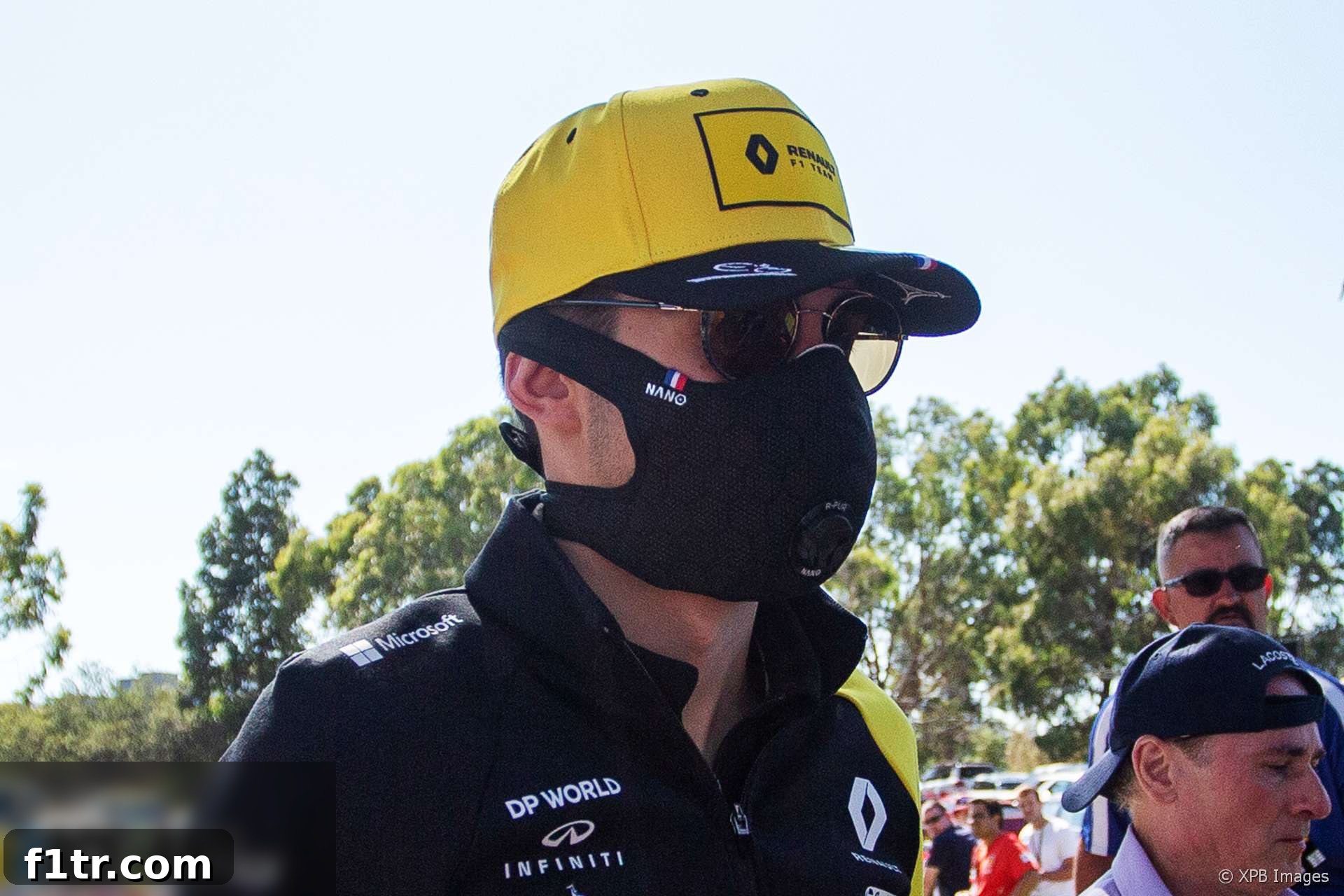
The dawn of the 2020 Formula 1 season was met not with the familiar roar of engines and the jubilant cheers of fans, but with a pervasive cloud of uncertainty and apprehension. As teams and drivers converged on Albert Park for the Australian Grand Prix in Melbourne, a new and formidable challenger had emerged: the global COVID-19 pandemic. What was intended to be a spectacular season opener quickly transformed into a high-stakes test of the sport’s resilience and its commitment to health and safety protocols amidst a rapidly evolving global crisis. The paddock, usually a hive of intense competition and media interaction, found itself grappling with the immediate threat of the virus, casting a long shadow over the much-anticipated return to racing.
The gravity of the situation became starkly clear as reports emerged of suspected coronavirus cases within the Formula 1 community. Two prominent teams, Haas and McLaren, found themselves at the forefront of this developing health scare, awaiting crucial test results that would ultimately dictate the immediate future of their personnel and, potentially, the entire event. Haas, in particular, confirmed that two additional members of its team had entered isolation and were undergoing testing, bringing their total to four individuals under observation. McLaren also confirmed one team member had proactively entered self-isolation after displaying symptoms, a prudent measure reflecting the increasing awareness and concern throughout the paddock. The wait for these test results, anticipated to take approximately 24 hours, created an atmosphere of palpable tension and anxiety, as the entire F1 world held its breath.
Amidst the swirling rumors and genuine concerns, other teams proactively addressed their own situations. Renault, for instance, swiftly moved to quash external reports that claimed three of its team members were also being tested. The French constructor unequivocally stated that these claims were inaccurate and that none of its staff had been quarantined, highlighting the rapid spread of information, and sometimes misinformation, during such a sensitive period. This incident underscored the delicate balance between transparency and preventing panic, as teams navigated the unprecedented challenge of safeguarding their personnel while preparing for the pinnacle of motorsport.
The escalating health concerns prompted immediate and significant changes to the customary operations of the Formula 1 paddock. To mitigate the potential risk of infection and ensure the well-being of all involved, F1 teams collectively implemented a series of preventative measures, particularly impacting media activities and fan engagement. Driver interactions with the press, a staple of any Grand Prix weekend, were notably curtailed. The number of television interviews drivers conducted was significantly reduced, and physical proximity between drivers, team members, and media personnel was strictly enforced. These adjustments, though necessary, fundamentally altered the dynamic of the pre-race build-up, shifting the focus from sporting narratives to public health imperatives.
Perhaps most strikingly, the cherished fan experience underwent a dramatic transformation. The traditional driver autograph session, a highlight for many ardent supporters hoping to get close to their heroes, was replaced with a more controlled question-and-answer event. This digital-first approach allowed fans to submit questions remotely, maintaining a degree of engagement while eliminating direct physical contact. Furthermore, the iconic ‘Melbourne Walk,’ where fans traditionally line up to greet drivers and team members upon their arrival at the circuit, was significantly restricted. Enthusiasts were no longer able to interact directly with their idols, an unfortunate but crucial step to minimize potential transmission vectors. The vibrant, bustling atmosphere typically associated with the Australian Grand Prix was noticeably subdued, replaced by a cautious and somewhat surreal environment where social distancing became the unexpected new norm.
The unprecedented circumstances elicited candid reactions from within the F1 fraternity. Kimi Raikkonen, the stoic and often outspoken Finnish driver, acknowledged the unfortunate necessity of these measures. “I think it’s part of all the situation,” he commented, emphasizing the collective responsibility. “I tried to minimise the risk for everybody, not just for us, but it’s also for the fans.” Raikkonen’s words resonated with the general sentiment that while the restrictions were far from ideal, they were paramount for protecting everyone involved – from the highly visible drivers and dedicated staff to the passionate spectators who travel from around the world. His observation that “I heard there are some people getting ill in the paddock, nobody knows what’s the story on that yet” perfectly encapsulated the prevailing uncertainty and the underlying concern for the health of the entire F1 community. “It’s not just for us, it’s also for their benefit. We’ll see how things work out and what will happen,” he concluded, highlighting the precariousness of the situation.
Claire Williams, then deputy team principal for Williams Racing, candidly admitted that the unfolding health crisis and the stringent precautions had undeniably cast a pall over the usually exhilarating opening race weekend. “We come to Melbourne and it’s the opening race and everyone is normally incredibly over-excited and it’s such a great country to come and race in,” she reflected, articulating the stark contrast between expectation and reality. Her personal experience underscored the emotional toll of the altered environment: “Just doing the walk this morning, you can’t go and meet your fans. I personally spend about 45 minutes, an hour doing that every morning and evening. And it’s great you get to interact with the fans and not being able to go within two metres, that’s not great and that’s not what we want to be doing.” Despite the disappointment, Williams echoed the sentiment of collective responsibility: “But as I keep saying we’ve got to be responsible. Of course it is overshadowing the event, but we haven’t started racing yet. We just have to see how the whole weekend plays out.” Her remarks highlighted the psychological impact on teams and individuals, who were forced to prioritize public health over the cherished traditions and vibrant interactions that define Formula 1. The visual of Esteban Ocon arriving at the circuit wearing a face mask further reinforced the stark reality of the “new normal” that had descended upon the paddock.
The Australian Grand Prix of 2020 became more than just the season opener; it was a watershed moment that would redefine how global sports would operate in the shadow of a pandemic. The events in Melbourne served as a critical test case, revealing the complex logistical and ethical challenges of staging an international sporting spectacle during a health crisis. The eventual cancellation of the race, which occurred shortly after these initial concerns, sent shockwaves through the motorsport world, signaling the true scale of the problem. It forced Formula 1 to confront fundamental questions about its schedule, its responsibilities to its global workforce, and its financial viability. The decisions made and the lessons learned in Melbourne profoundly influenced the subsequent adaptation of the entire F1 calendar, leading to revised health and safety protocols that became the blueprint for the sport’s eventual, albeit delayed and restructured, return to racing later that year. The memory of the 2020 Australian Grand Prix remains a poignant reminder of a moment when the world, and indeed Formula 1, pivoted into an unforeseen and challenging era.
2020 F1 season
- Grosjean to make F1 test return tomorrow for first time since Bahrain horror crash
- Pictures: Wrecked chassis from Grosjean’s Bahrain fireball crash to go on display
- Bottas vs Rosberg: Hamilton’s Mercedes team mates compared after 78 races each
- F1 revenues fell by $877 million in Covid-struck 2020 season
- Hamilton and Mercedes finally announce new deal for 2021 season
Browse all 2020 F1 season articles