Unity and Diversity: F1 Drivers’ Powerful Stand Against Racism at the Austrian Grand Prix
The highly anticipated restart of the 2020 Formula 1 season at the Austrian Grand Prix was marked not only by the roar of engines but also by a powerful display of social consciousness. As the world grappled with widespread protests against racial injustice, particularly following the global rise of the Black Lives Matter movement, Formula 1 drivers took a significant and unprecedented collective stance against racism. This moment, unfolding on the global stage of elite motorsport, highlighted both the unified commitment of many drivers to combat discrimination and the nuanced perspectives within the paddock on how best to express that solidarity.
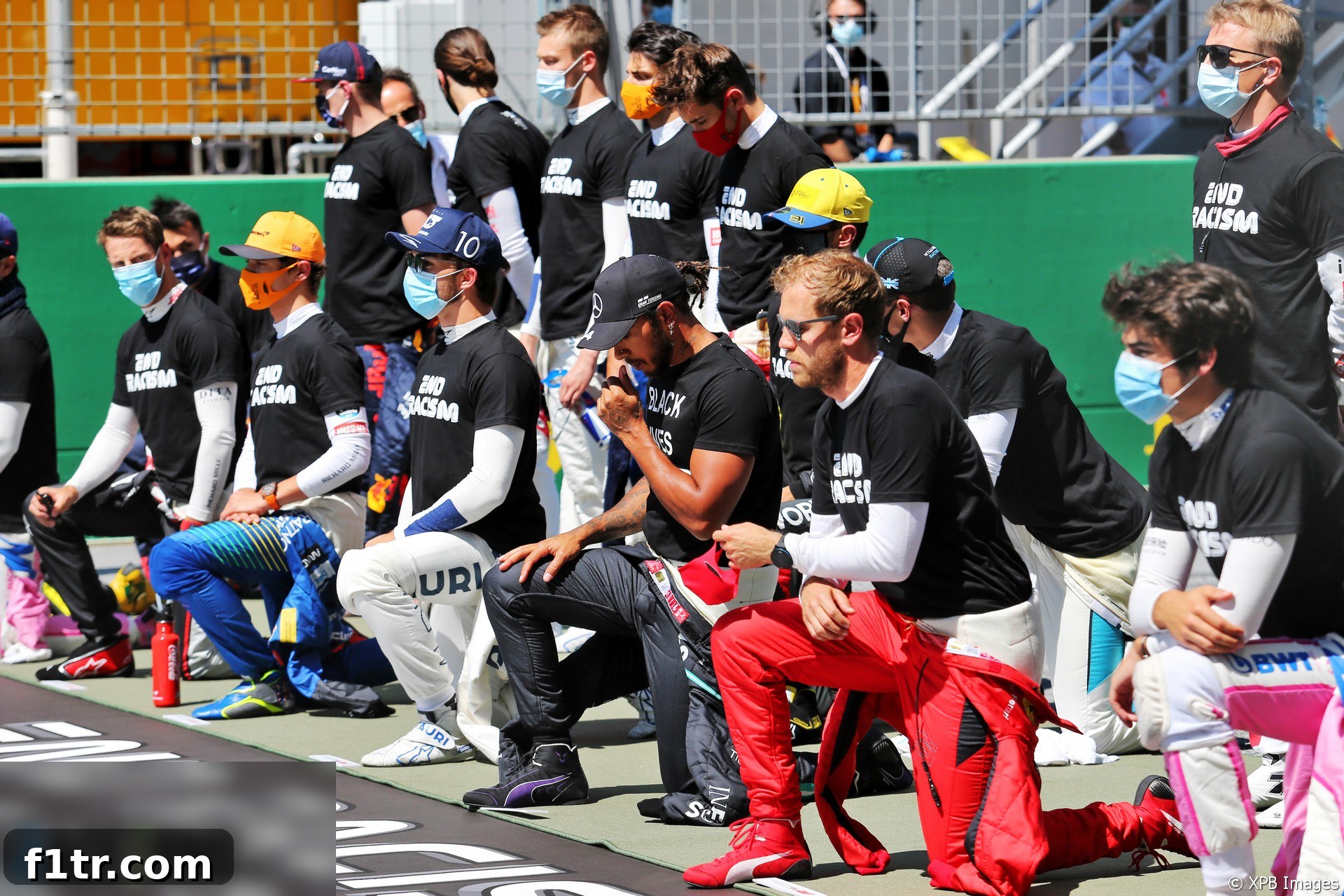
Before the lights went out for the first race of the pandemic-delayed season, a profound statement was made. The entire 20-strong field of Formula 1 drivers gathered at the front of the grid, all sporting specially designed black T-shirts. The majority of these shirts bore the clear and unequivocal message ‘End Racism’ emblazoned across the front, signaling a collective desire to address systemic injustice. Standing prominently among his peers, Lewis Hamilton, a vocal advocate for equality and the sport’s only black driver, wore a T-shirt that proudly displayed the ‘Black Lives Matter’ slogan, underscoring his deep personal commitment to the movement.
The Act of Solidarity: Drivers Take a Knee
In a powerful gesture of solidarity that resonated globally, fourteen of the twenty drivers chose to ‘take a knee’ on the grid. This symbolic act, popularized in sports as a protest against racial inequality and police brutality, conveyed a strong message of support and a call for change. The drivers who knelt alongside Lewis Hamilton included Alexander Albon, Daniel Ricciardo, Sergio Perez, Romain Grosjean, Lando Norris, Esteban Ocon, Pierre Gasly, George Russell, Sebastian Vettel, Valtteri Bottas, Lance Stroll, Kevin Magnussen, and Nicholas Latifi. Their unified posture before millions of viewers worldwide sent an undeniable message: racism has no place in sport or society.
This collective action was a direct reflection of the heightened global awareness regarding racial injustice in mid-2020. The drivers, many of whom have significant platforms and global reach, understood the power of their image. By kneeling, they aligned themselves with a movement that sought to highlight centuries of oppression and inequality, using their visibility to amplify voices demanding systemic change. It was a poignant moment, signifying that the world of Formula 1, often seen as exclusive and detached, was not immune to, nor would it ignore, crucial social dialogues.
Individual Convictions: Drivers Who Stood
While the majority knelt, six drivers made the personal decision to stand during the pre-race ceremony. Their choice, however, did not signify a lack of commitment to the anti-racism cause. Rather, it highlighted the diverse ways individuals choose to express their beliefs and the importance of respecting personal conviction, even within a unified movement. Among those who stood, Charles Leclerc offered a clear explanation for his decision. “I believe that what matters are facts and behaviours in our daily life rather than formal gestures that could be seen as controversial in some countries,” Charles Leclerc stated on social media. He added, “I will not take the knee but this does not mean at all that I am less committed than others in the fight against racism.”
Max Verstappen also chose to stand, echoing a similar sentiment. He emphasized his firm belief in equality and the fight against racism but stressed the importance of individual expression. “I am very committed to equality and the fight against racism,” Verstappen affirmed. “But I believe everyone has the right to express themself at a time and in a way that suits them. I will not take the knee today but respect and support the personal choices every driver makes.” The other drivers who stood were Carlos Sainz Jnr, Daniil Kvyat, and Alfa Romeo drivers Kimi Raikkonen and Antonio Giovinazzi. Their public statements clarified that their choice to stand was not a rejection of the anti-racism message, but a preference for different forms of action or expression, acknowledging the varying cultural and personal contexts that influence such decisions.
Beyond the Gesture: A Shared Commitment
Despite the differing gestures, there was an overarching consensus among all drivers regarding the fundamental message: the urgent need to end racism and promote equality. This unity of purpose was eloquently captured by Lando Norris, who had himself knelt. He urged followers not to “make assumptions about what decisions drivers take on the grid to express their support against racism.” Norris further clarified, “We all share the same belief in ending racism and supporting equality for all.” This sentiment underscored that the core message of anti-racism transcended the specific form of protest, focusing instead on the shared conviction to create a more just and equitable world.
This collective moment on the grid was part of Formula 1’s broader initiative, ‘We Race As One’, launched in response to the global health crisis and the growing calls for social justice. The campaign aimed to address racism and inequality, promote diversity and inclusion, and highlight sustainability within the sport. It signified a conscious effort by Formula 1 to use its global platform for positive social change, acknowledging its role not just as an entertainment spectacle, but as a responsible global entity. The drivers’ actions at the Austrian Grand Prix were a powerful visual representation of this new direction, showing a more socially engaged and self-aware sport.
The Broader Context: F1’s Stance on Social Justice
The 2020 season marked a significant pivot for Formula 1 in its approach to social issues. Historically, F1 had largely remained politically neutral, focusing purely on the racing spectacle. However, the confluence of the COVID-19 pandemic, which delayed and reshaped the season, and the global surge in the Black Lives Matter movement, propelled the sport into a new era of social engagement. Lewis Hamilton, in particular, played a crucial role in challenging F1’s traditional silence, consistently using his platform to advocate for greater diversity and inclusion within the sport itself, as well as addressing broader societal inequalities.
The ‘We Race As One’ initiative, symbolically represented by a rainbow livery on all cars, was an umbrella for various commitments, including tangible steps towards improving diversity in motorsport. The drivers’ unified stance at the Austrian Grand Prix, irrespective of their chosen gesture, was a tangible demonstration of this commitment. It was a signal that the sport recognized its influence and was prepared to leverage it to foster a more inclusive environment. This period also saw F1 actively review its recruitment practices and explore pathways to attract talent from underrepresented backgrounds, from engineering to management roles, recognizing that true change requires systemic efforts beyond symbolic gestures.
Impact and Reception
The drivers’ actions generated significant discussion across traditional and social media. The vast majority of reaction from fans and commentators was positive, applauding the sport for taking a stand on such a critical issue. Many praised the drivers for using their global platform responsibly and for showing a degree of humanity that sometimes gets overlooked in the highly competitive world of F1. However, as with any high-profile social statement, there were also differing opinions. Some believed that sport should remain separate from politics, while others debated the efficacy or appropriateness of the ‘take a knee’ gesture itself. Regardless of individual viewpoints, the event undeniably sparked conversations, bringing critical social issues to the forefront of a global audience.
The unity, even amidst differing expressions, demonstrated a maturing landscape within Formula 1. It showed that while drivers are fierce competitors on track, they could come together on fundamental human values off it. This collective action set a precedent for the remainder of the 2020 season, with similar pre-race ceremonies continuing at subsequent Grands Prix, albeit sometimes with varied participation. It also initiated a longer-term dialogue within the F1 community about its role in contributing to a more equitable society, moving beyond mere statements to exploring concrete initiatives for diversity and inclusion.
The Long-Term Legacy
The moment at the 2020 Austrian Grand Prix was more than just a fleeting gesture; it marked a significant shift in Formula 1’s public identity and its engagement with social issues. It laid the groundwork for ongoing initiatives, such as the Hamilton Commission, which aims to improve the representation of black people in UK motorsport. The ‘We Race As One’ campaign evolved, adapting its focus to address a broader spectrum of diversity and inclusion goals, striving to make motorsport more accessible and welcoming to people from all backgrounds.
This event solidified the position of Formula 1 drivers, particularly Lewis Hamilton, as influential voices for social change. It demonstrated that athletes can and should use their platforms to advocate for causes they believe in, challenging the traditional notion that sports and politics should not mix. The discussions initiated at the Austrian Grand Prix continued to echo throughout the 2020 season and beyond, cementing F1’s commitment to diversity and inclusion as a core pillar of its future strategy. It was a powerful reminder that even in the high-octane world of motor racing, the pursuit of equality remains a universal and paramount human endeavor.
2020 F1 Season Related Articles
The 2020 Formula 1 season was extraordinary in many ways, not just for its social messaging but also for its unique calendar and dramatic racing. Explore more about the season’s key events and developments:
- Grosjean to make F1 test return tomorrow for first time since Bahrain horror crash
- Pictures: Wrecked chassis from Grosjean’s Bahrain fireball crash to go on display
- Bottas vs Rosberg: Hamilton’s Mercedes team mates compared after 78 races each
- F1 revenues fell by $877 million in Covid-struck 2020 season
- Hamilton and Mercedes finally announce new deal for 2021 season
Browse all 2020 F1 season articles