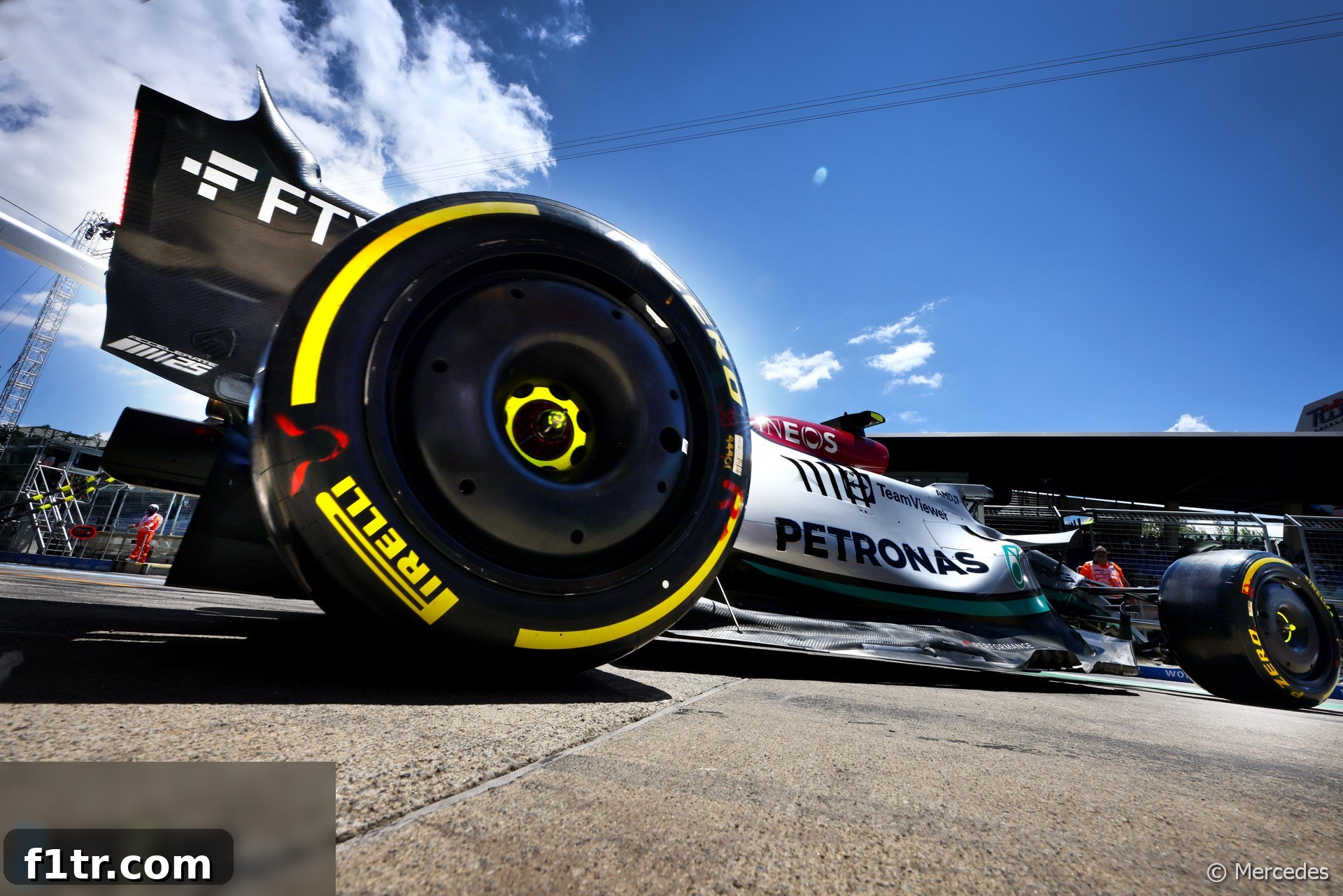
Formula 1’s intricate world of technical regulations has once again taken center stage, as teams grapple with the FIA’s decision to delay a crucial technical clarification regarding car floors. Initially set to be enforced at the French Grand Prix, the directive has now been pushed back to the Belgian Grand Prix, offering constructors a valuable month-long reprieve to modify their chassis designs. This development has ignited a fresh wave of debate within the paddock, highlighting the delicate balance between technical innovation, regulatory oversight, and the pursuit of a level playing field in the fiercely competitive sport.
At the heart of this discussion lies the sophisticated engineering of a Formula 1 car’s floor, specifically the “plank and skid assemblies.” These components, critical to generating downforce through ground effect, have become a focal point of scrutiny. The FIA’s attention was drawn to this area amidst suspicions that some teams might be exploiting loopholes, using floor elements that exhibit excessive flexibility. Such flexibility could allow cars to run lower to the ground at speed, particularly in corners, effectively “stalling” the underfloor aerodynamics to reduce drag on straights or creating a more efficient seal with the track surface, thereby significantly boosting performance. This dynamic interpretation of the rules has led to a perceived unfair advantage, prompting the sport’s governing body to step in.
The journey to this technical directive (TD) began with the FIA observing abnormal behavior in certain cars, leading to concerns not only about fair competition but also driver safety, particularly in relation to the controversial “porpoising” phenomenon that has plagued the 2022 season. Porpoising, the violent, high-frequency bouncing of cars at high speeds, emerged as a significant side effect of the new aerodynamic regulations introduced this year, which heavily rely on ground effect. While some teams, most notably Mercedes, have openly linked excessive floor flexibility to mitigating porpoising or gaining performance regardless, the FIA’s clarification aims to standardize how these floor components behave across the grid, ensuring compliance with the spirit and letter of the regulations.
The initial plan was for the new technical directive, outlining stricter parameters for the plank and skid assemblies, to take effect at the French Grand Prix. This immediate implementation would have given teams very little time to adapt, potentially forcing significant redesigns and manufacturing efforts under extreme pressure. However, following yesterday’s crucial meeting of the F1 Commission, a consensus was reached to postpone its enforcement. The joint statement from the FIA and Formula 1 confirmed: “Following feedback and consultation with the teams and in order to allow the teams to make necessary updates to the plank and skid assemblies, which will ensure a fair application of the metric used to measure this oscillation across all cars, the implementation of the draft technical directive issued to the teams prior to the British Grand Prix will come into effect from the Belgian Grand Prix.” This decision grants teams over a month of additional time, providing a crucial window for engineering adjustments without compromising immediate race preparations.
The reactions from team principals underscore the contentious nature of this technical area. Mercedes team principal Toto Wolff has been one of the most vocal proponents for stricter enforcement, having first drawn attention to the suspected floor behavior after the Canadian Grand Prix. His driver, George Russell, further fueled the debate, stating that “Ferrari and Red Bull were probably pushing the boundaries with the planks a bit more than the interpretation of the regulation.” Wolff reiterated Mercedes’ stance, emphasizing the directive’s importance in addressing “different interpretation on the skid assemblies” which directly impacts car performance, not just porpoising. For Mercedes, a team that has openly struggled with porpoising and has been advocating for safety-related changes, the directive is seen as a necessary step towards an equitable competitive environment. Wolff admitted that Mercedes itself wouldn’t need to make significant changes, hence their desire for earlier implementation. However, he acknowledged the compromise: “Obviously, for us, we don’t need to change anything, so we would like to have it as soon as possible. It can help for porpoising, which Mattia said is not a big issue for the next races, that’s true, but it can be a performance topic. I think again, a compromise is coming for Spa that allows the teams that need to change enough time and we can live with that.”
Conversely, Ferrari team principal Mattia Binotto presented a different perspective. He argued that the technical directive was primarily aimed at addressing the porpoising issue, which he believes has naturally subsided in recent races held on smoother circuits. “We are still discussing much the TD and the porpoising,” Binotto said. “But as a matter of fact it doesn’t seem to be an issue or a subject anymore. It was not a subject in Silverstone, it has not been here a subject, in Austria, for [any] of us. I’m pretty sure it will not be in the next two races.” Binotto also questioned the FIA’s initial process for introducing the TD, suggesting it didn’t follow the proper channels, a point later rectified with discussions at the Technical Advisory Committee (TAC). While acknowledging that new clarifications would indeed necessitate some floor changes and testing, he felt the delay to Belgium was entirely justified given the reduced urgency and the complexity involved in such modifications. This stance highlights the strategic differences between teams, with some viewing the TD as a response to safety concerns, while others perceive it as a regulatory intervention into a performance advantage.
The broader paddock sentiment reflects this division. Aston Martin team principal Mike Krack was “not surprised that there was a big reaction” to the technical directive, subtly hinting that not all “big teams” had been exploiting this particular avenue for performance. For his team, the impact would be minimal: “I don’t think that will change anything for us,” he added. Frederic Vasseur, team principal for Alfa Romeo, expressed an even greater desire for delay, suggesting it could be pushed back to “race 14 or even 16 or 18.” Vasseur raised a fundamental point about the FIA’s role, questioning whether it should “interfere into the set-up of the car.” He stressed the widely accepted principle that the plank, by regulation, is supposed to be rigid. Like Krack, Vasseur anticipated minimal impact on his own team’s operations: “It won’t be a big change for us, but I’m a bit surprised with the reaction because in the regulation the plank is supposed to be a rigid.” These comments suggest a degree of frustration from teams who believe they have been compliant, now facing the ramifications of others’ rule interpretations.
The delay to the Belgian Grand Prix provides a crucial window for teams to undertake the necessary engineering work. Modifying floor designs, even subtly, can be a complex and resource-intensive process involving significant CFD (Computational Fluid Dynamics) analysis, wind tunnel testing, and manufacturing of new components. The plank and skid assemblies are integral to a car’s overall aerodynamic package, influencing downforce, drag, and balance. Any changes, therefore, must be carefully integrated to avoid unintended negative consequences on performance. The additional time allows teams to develop robust solutions without compromising their competitive position in the immediate future of the championship.
Ultimately, this technical directive saga is a microcosm of Formula 1’s perpetual challenge: maintaining parity and fairness within a sport driven by relentless innovation. Teams will always seek to push the boundaries of regulations, and the FIA’s role is to ensure these boundaries are clear and enforced consistently. The implementation of this TD at Spa will be closely watched, as it could potentially alter the competitive landscape, impacting teams that may have been operating with a more flexible interpretation of the rules. The outcome could very well be a more level playing field, or it could spark further technical skirmishes as teams continue to navigate the complexities of the 2022 ground-effect regulations. The discussion surrounding the 2023 regulations, as alluded to by Toto Wolff, suggests that the topic of floor stiffness and its impact on car performance will remain a critical area of focus for the foreseeable future, shaping the very essence of Formula 1 car design and competition.
2022 Austrian Grand Prix
- FIA affirms three sprint races on 2023 Formula 1 calendar
- “Oh, so unlucky!” How Alonso’s cursed Austrian Grand Prix unfolded on his radio
- Ferrari believe their performance deficit to Red Bull is now “negligible”
- Another fan’s experience of harassment last weekend – and why F1 must act
- AlphaTauri “desperately” need upgrades after “disaster” weekend, urges Gasly
Browse all 2022 Austrian Grand Prix articles