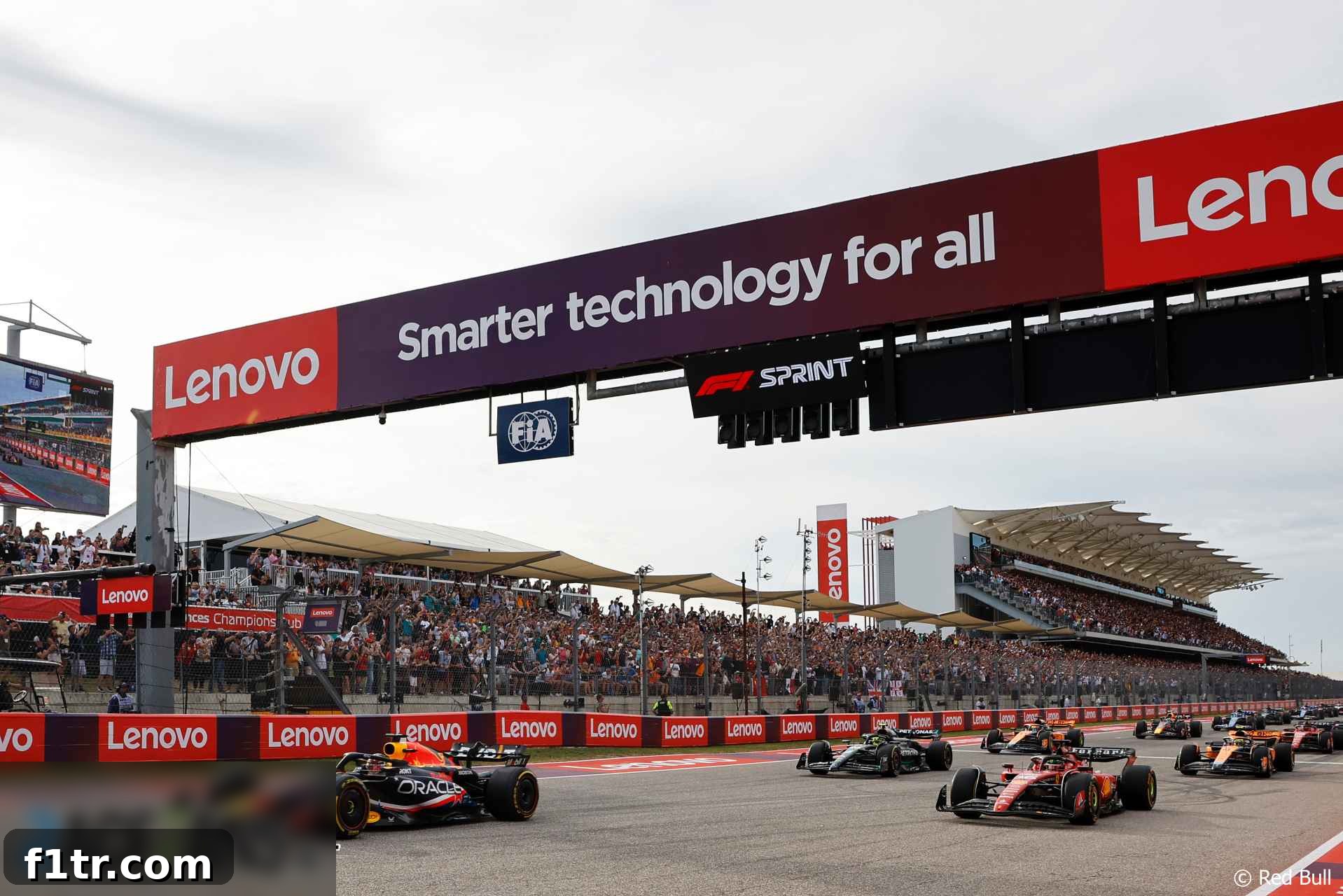
Formula 1’s Sprint Format Evolution: Seeking Clarity and Excitement for the 2024 Season
Formula 1 is a sport constantly pushing the boundaries of innovation, not just on the track with car development, but also in its race weekend formats. The introduction of sprint races in 2021 marked a significant shift, designed to inject more excitement and competitive action into Grand Prix weekends. However, this innovative format has been a subject of continuous refinement, with discussions now intensifying among teams regarding further crucial changes for the 2024 F1 season. The overarching goal remains to strike a delicate balance: enhancing the spectacle for fans while ensuring practicality and fairness for the teams.
The Genesis and Evolution of F1 Sprint Races
The concept of a shorter, Saturday race was first trialled in 2021, aiming to provide a compelling alternative to a standard practice session. The initial format saw Friday dedicated to Free Practice 1 and Grand Prix Qualifying, setting the grid for Saturday’s Sprint race. The results of the Sprint then determined the starting order for Sunday’s main Grand Prix. This approach, while adding a competitive element to Saturday, inherently linked the Sprint to the Grand Prix, making it a qualifier rather than a standalone event.
Recognizing the potential for improvement and responding to feedback, the format underwent a significant overhaul for the 2023 season. The ‘standalone’ sprint weekend was introduced, effectively decoupling the sprint race from the Grand Prix qualifying. Under this revised structure, Friday comprised a single Free Practice session followed by Grand Prix qualifying. Saturday was then dedicated entirely to the sprint: a “Sprint Shootout” qualifying session in the morning, followed by the Sprint race itself in the afternoon. This change aimed to create two distinct competitive events, each with its own stakes, throughout the weekend.
Addressing the Current Format’s Challenges: A Quest for Simplicity
While the 2023 standalone format brought additional racing to Saturday, it also introduced new complexities and logistical headaches. A primary concern identified by teams and observers alike is the disruption to the traditional Grand Prix weekend flow, particularly the rescheduling of Grand Prix qualifying. Historically, Grand Prix qualifying has been a Saturday afternoon staple, a highly anticipated session determining the grid for Sunday’s main event. Under the current sprint format, this crucial session is moved to Friday afternoon.
This shift has created a degree of confusion among fans, even the most dedicated followers of the sport. Aston Martin’s performance director, Tom McCullough, perfectly articulated this sentiment during a recent meeting of Formula 1’s Sporting Advisory Committee. “Even my dad, who’s quite an ‘understander’ and follower of Formula 1 sometimes says to me ‘just remind me is it qualifying on Friday for the main race?’ I think if somebody at that level is having questions, the fans are going to get confused,” McCullough explained. This anecdote highlights the critical need for a simpler, more intuitive structure that doesn’t require fans to re-learn the schedule for six out of twenty-four race weekends.
Beyond fan comprehension, the current format also presents technical challenges for teams. The ‘parc ferme’ regulations, which restrict significant car setup changes after a certain point, are particularly stringent during sprint weekends. With Grand Prix qualifying on Friday, teams have only a single free practice session to fine-tune their cars before the technical lockout begins. McCullough openly admitted, “From a technical point of view, it’s a headache. The car goes into parc ferme after one practice session and it is difficult.” This limited preparation time can inadvertently penalize teams that struggle to find an optimal setup quickly, potentially compromising their performance in both the sprint and the main Grand Prix.
Proposed Solutions: Restoring Tradition and Enhancing the Spectacle
In light of these challenges, Formula 1 is actively exploring modifications for 2024. The most significant proposal under consideration involves restructuring Saturday’s events. The idea is to hold the sprint race qualifying session on Friday afternoon, which would then allow the sprint race to take place early on Saturday. Crucially, this would free up the traditional Saturday afternoon slot for Grand Prix qualifying, returning it to its familiar position in the weekend schedule.
This proposed change offers several compelling benefits. Firstly, it directly addresses the fan confusion by restoring the Grand Prix qualifying session to its accustomed Saturday slot, thus maintaining consistency between conventional and sprint race weekends. Mercedes team principal Toto Wolff underscored this point, stating that keeping the Grand Prix qualifying session in its usual time would “create less confusion.”
Secondly, Wolff also advocated for simplifying the terminology surrounding sprint weekends. He suggested dropping the “sprint shootout” name for the sprint race qualifying session and using the same format and tyre allocation for both the sprint and Grand Prix qualifying sessions. “I mean, I’m getting confused,” Wolff confessed to Sky Sports. “I don’t know which section is the next one – I think it’s qualifying for the grand prix, isn’t it?” This plea for streamlining nomenclature reflects a broader desire across the paddock to make the format more accessible and less perplexing for a global audience.
Navigating New Hurdles: The Technical Imperatives
While moving the sprint race to Saturday morning before Grand Prix qualifying offers clear advantages for clarity and fan engagement, it also introduces a fresh set of challenges that require careful consideration. Ferrari’s sporting director, Diego Ioverno, highlighted the practical implications for teams: “If we move the sprint race on Saturday morning, then you have to make sure that you allow enough gap to teams to react before quali in case of problems and stuff like that.”
This point is critical. A sprint race, though shorter, is still a competitive event with high speeds and potential for incidents. Mechanical failures, crashes, or even minor damage requiring repairs could severely impact a team’s ability to participate effectively in Grand Prix qualifying just a few hours later. Engineers would need adequate time to assess damage, make repairs, and potentially adjust setups if parc ferme rules allow for limited changes after the sprint. The compressed timeline on a Saturday could place immense pressure on mechanics and engineers, potentially leading to rushed work or, in worst-case scenarios, preventing a car from taking part in the crucial Grand Prix qualifying session.
Therefore, any new format must include sufficient buffer time between the sprint race and Grand Prix qualifying. This might involve extending the overall Saturday schedule or implementing specific regulations that allow for more flexibility in car preparation during this interlude. The discussions are ongoing, with teams, F1 management, and the FIA collectively working to iron out these logistical complexities.
The Broader Vision: Balancing Sport, Entertainment, and Commercial Viability
The continuous tweaking of the sprint format underscores Formula 1’s commitment to innovation and its desire to grow the sport’s global appeal. Sprint races, despite their evolving nature, have undeniably added an extra layer of competitive action to select Grand Prix weekends, drawing in new viewers and providing more content for broadcasters and sponsors. From a commercial standpoint, more on-track action translates to more engagement, higher viewership figures, and increased revenue potential for the sport as a whole.
However, the core identity of Formula 1 remains rooted in the Grand Prix, a pinnacle of motorsport that rewards strategy, endurance, and consistent performance over a full race distance. The sprint format must complement, not detract from, the gravitas of the Grand Prix. The discussions for 2024 reflect a mature understanding that the sprint cannot simply be an additional race; it must be a well-integrated component of the weekend that enhances the overall experience without overshadowing or confusing the main event.
Ultimately, the objective is to create a format that is thrilling for fans, fair for competitors, and commercially viable for the sport. As Ioverno aptly summarized, “There are also other options on the table. But we will work all together because at the end this is our target to make it as good as possible for our fans.” The collaborative spirit among teams, the FIA, and Formula 1 management is crucial in this ongoing quest to perfect the sprint race format, ensuring that the 2024 season delivers an even more engaging and understandable spectacle for motorsport enthusiasts worldwide.