The highly anticipated first week of pre-season testing for the 2020 Formula 1 season delivered a mix of surprises, promising developments, and crucial insights into the pecking order. While some teams showcased innovative solutions and remarkable pace, others grappled with reliability issues and the challenge of understanding their new machinery. As the top three teams demonstrated vastly different performances, the midfield battle also hinted at significant shifts, setting the stage for an intriguing championship fight. This comprehensive analysis delves into what we learned about each team during this initial crucial test session, highlighting key developments, driver feedback, and the implications for the season ahead.
Mercedes-AMG Petronas F1 Team: Pushing Boundaries with DAS
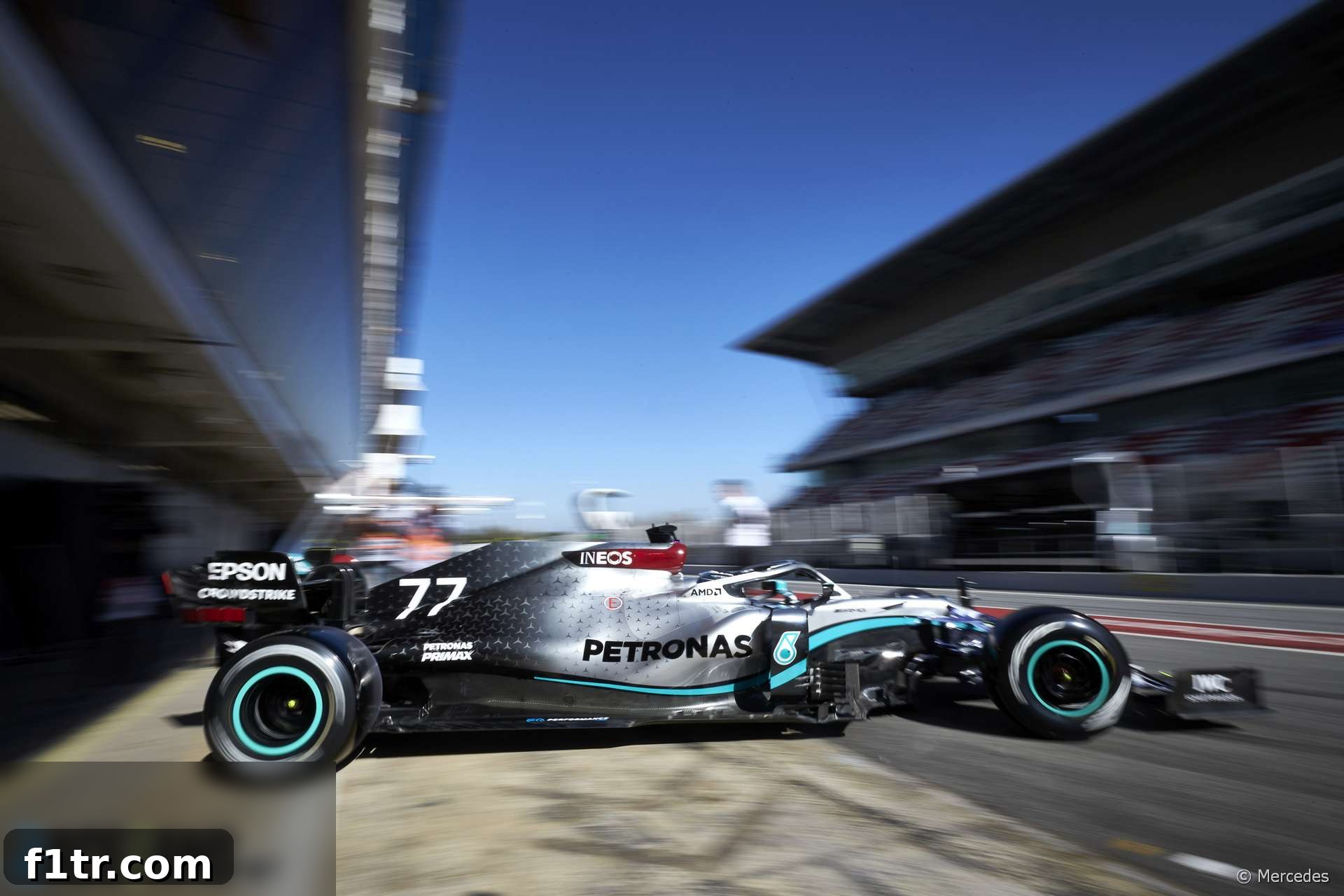
The reigning world champions, Mercedes, undeniably generated the biggest buzz of the pre-season testing. On Thursday, footage from their W11 chassis unveiled the groundbreaking Dual Axis Steering (DAS) system, a pioneering innovation that immediately captured the attention of the paddock and ignited fierce debate. This ingenious system allows drivers to adjust the toe angle of the front wheels by pushing or pulling the steering wheel, offering a dynamic control previously unseen in Formula 1.
While its precise tactical advantages are still being deciphered, it is widely believed that DAS could provide significant benefits, particularly in managing tire temperatures and optimizing aerodynamic efficiency during different phases of a lap. For instance, increasing toe-out on straights could reduce drag, while adjusting it for corners could improve grip and warm tires more effectively. Copying such a complex and integrated system is expected to be an immense challenge for rival teams, who publicly downplayed its potential impact but undoubtedly harbored deep concerns about the advantage it might confer.
Beyond the headline-grabbing DAS, the W11 also features a redesigned rear suspension, marking a clear departure from its predecessor. Driver Valtteri Bottas expressed considerable satisfaction with these changes, noting a significant improvement in the car’s handling characteristics. “The main improvement I feel is the stability we’ve had with the car, especially the rear end of the car feels really stable and makes it very drive-able,” Bottas commented. He further highlighted an improved balance across various speed ranges, stating, “The balance between the speed range from high to low speed is more together than that last year, so that’s a good thing.”
Bottas’s assessment of “no real negatives compared to last year yet” was strikingly affirmed by the unofficial lap times. Mercedes dominated the time sheets, registering a formidable 1.3-second lead over their nearest competitors. Although this blistering pace was achieved on the softest available tire compounds, a common practice in testing, the sheer margin of their advantage was an ominous sign for the rest of the grid. This dominant performance underscores Mercedes’ relentless pursuit of innovation and their ability to extract immediate performance from their meticulously engineered machinery, firmly positioning them as the team to beat.
Scuderia Ferrari: A Cautious Start Amidst Power Unit Concerns
In stark contrast to their robust start in 2019, where Sebastian Vettel famously described his car as “close to perfect” after the first day, Ferrari’s 2020 pre-season testing began on a more subdued note. While last year’s early pace proved to be somewhat misleading when Mercedes introduced aerodynamic upgrades later, this year, the Scuderia made it clear they were not prioritizing outright performance from the outset. Instead, their focus was on data gathering and understanding the new SF1000.
However, the initial three days were far from smooth. Sebastian Vettel missed the opening day due due to illness, and when he finally had a full day in the car, it was cut short by a power unit failure. This incident raised significant concerns, particularly given the low mileage accumulated on the engine. Team Principal Mattia Binotto acknowledged the worrying timing of the failure, stating, “Very early mileage if you consider the overall mileage so far.” The team had only covered approximately 1,300 kilometres on an engine designed to last up to eight race weekends, equating to roughly 2,440km in race distances alone, plus qualifying and practice sessions. The faulty unit was immediately sent back to Maranello for a thorough investigation, with Binotto adding, “What is the detail [of] the issue is something we will understand when the engine is back in Maranello, so we will see in the next days.”
Ferrari’s primary development objectives for the SF1000 were to generate more downforce and broaden the car’s setup window. Binotto indicated some progress in this area, noting a significant trade-off compared to the previous season. “If we compare our performance compared to last year, same time here in Barcelona, the best thing we are certainly a lot faster in cornering, [but] slower in the straights,” he explained. This data aligned with their expectations, suggesting an increase in downforce. However, the critical question remains whether this added downforce will be sufficient to challenge their rivals. Less optimistically, Binotto candidly admitted that their early analysis of testing times indicated both Mercedes and Red Bull were currently faster, signaling a challenging road ahead for the Italian squad.
Red Bull Racing: Quiet Efficiency and Solid Mileage
While Mercedes grabbed headlines with their innovative DAS system, Red Bull Racing adopted a more understated yet highly effective approach to the first pre-season test. Despite an early engine swap by Honda on day two for one of their power units – though it was later re-installed, suggesting an experimental change rather than a definitive failure – the team accumulated an impressive amount of mileage. They were one of only two teams, alongside Mercedes, to exceed 2,000 kilometres over the three days, showcasing remarkable reliability and efficiency.
This high mileage was achieved even after Max Verstappen damaged his RB16 on a kerb during Friday’s session, a testament to the team’s rapid recovery capabilities and their commitment to maximizing track time. Verstappen, known for his relentless pursuit of performance, expressed strong satisfaction with the testing program. “Everybody within the team knew that to be successful, you need to fully understand the car, you need to do a lot of laps,” he stated. “So far, we are very pleased with what we have done. Especially my first day, 168 laps, basically just ticked the whole program. And [Friday] again, of course, I only had the morning, but again a good amount of laps, I’m very happy with it. Everything is running very smoothly and that’s exactly what we want.”
Red Bull didn’t aim for flashy lap times or unveil revolutionary innovations. Instead, their focus was on validating the RB16’s underlying characteristics and confirming the gains they targeted over the winter break. Verstappen indicated that the team had successfully achieved their desired improvements in car behavior. “Overall it feels a bit more connected. But that was also the target, so there was no real surprise there,” he explained. He further added that this development was a continuation of work from the previous season, “I think already towards the end of the season we were working towards that and already last year testing some ideas for this year. It was what we targeted already from the winter onwards. Once I jumped in the car, it was like that.” This methodical approach suggests that Red Bull has built a solid foundation for the season, prioritizing consistent performance and driver confidence over early-test glory.
McLaren: A Promising Start with Strong Development Momentum
Much like Red Bull, McLaren approached the first pre-season test with a focus on accumulating significant mileage in a quiet, yet highly productive manner. Team Principal Andreas Seidl exuded palpable optimism regarding the team’s progress, particularly by midday on Friday, where he declared it their best start to testing in years. This positive sentiment underscores the confidence within the Woking-based squad as they look to build upon their impressive resurgence in the 2019 season.
McLaren’s robust development program was a clear strength last year, and this momentum appears to have seamlessly carried over to the evolutionary MCL35. The team wasted no time in introducing upgrades, with a new front wing, for instance, being fitted to the car on Friday morning. This proactive approach to bringing performance enhancements to the track is a clear indicator of their aggressive development strategy. Seidl elaborated on this, stating, “We have a programme lined up with continuously bringing parts to the track also next week in order to get as much performance out of the car as possible before we head into Melbourne.” While acknowledging that “In terms of the performance so far it’s still early days,” the consistent and smooth operation, coupled with the introduction of new components, provides a strong foundation for McLaren’s aspirations to solidify their position at the front of the midfield and challenge for higher honors.
Renault F1 Team: Searching for the Step Forward
Prior to testing, Renault outlined an ambitious plan for the 2020 season, aiming to introduce a car that represented a significant step forward in performance over its predecessor. Their goal was to establish a strong competitive position early in the season, thereby allowing them to pivot their focus to the extensive new technical regulations set to be introduced for 2021. Visually, the slim nose of the RS20 compared to last year’s car offers a clear indication of their design philosophy aiming for enhanced aerodynamic efficiency.
However, the initial signs from the first test suggest that the team is still working hard to unlock the performance they are targeting. Esteban Ocon, one of only two new driver pairings on the grid this year alongside Daniel Ricciardo, admitted that there is still a considerable amount of work to be done in the second week of testing. “I think we have plenty of stuff for the team to work on,” Ocon commented. “Of course we have to work on how the car feels balance-wise. We are still not where we want to be exactly.”
Despite these challenges, Ocon remained optimistic about the team’s ability to address the issues. “But there’s nothing we can’t fix so that is good. What I would like to have is to arrive at the last day of the test and say OK, we’ve fixed the balance and it feels decent to arrive into Melbourne.” A positive takeaway for Renault was the comparable feedback provided by both Ocon and Ricciardo, which is crucial for efficient development. “It is definitely a step forward. I think [Friday] morning was very good in terms of feeling where we have to improve the car because yesterday evening it was more aero work and nothing really driving properly. So we could more focus on feeling the limitations of the car today and we have a clear picture,” Ocon explained. “We are also pushing on the same direction with Daniel, which is always good because we both have the same comments. So far it’s a good start and I look forward to see what we can do next week.” Although Renault lagged behind their rivals in mileage tallies after the first two days, a particularly busy Friday helped them significantly recover lost track time, providing valuable data for the crucial second week.
AlphaTauri: Business as Usual, Albeit with a New Name
While the exterior livery and team name may be new, the AlphaTauri AT01 is, in essence, an evolution of the Toro Rosso STR15. For Red Bull’s ‘other’ team, life in the paddock largely continued as usual, focusing on steady progress and data collection during the first test. A highly encouraging sign for Honda was AlphaTauri’s ability to complete all three days of testing without necessitating a power unit change, showcasing improved reliability compared to some of their Honda-powered counterparts.
The team amassed a respectable 1,700 kilometres over the three days, a solid effort despite a minor setback due to floor damage on Friday. This marked the second year since the team formally realigned its engine supplier choice with its sister outfit, Red Bull Racing. This closer technical collaboration allows AlphaTauri to leverage a greater number of common parts supplied through Red Bull Technologies, leading to fewer design compromises, particularly in the critical area of packaging the compact Honda power unit. Although the team remained somewhat reserved about the specifics of their progress, Team Principal Franz Tost offered a cautious but positive assessment, indicating that they are “going in the right direction.” This quiet confidence, combined with strong mileage and apparent reliability, suggests AlphaTauri is laying a solid groundwork for the season.
Racing Point: The “Pink Mercedes” Lives Up to the Hype
Before the Dual Axis Steering (DAS) system stole the spotlight, Racing Point’s strikingly similar “pink Mercedes” was the talk of the paddock, marking the first major story of pre-season testing. The RP20 represents a significant and bold design departure for the team, effectively duplicating the aerodynamic philosophy of a rival. This strategy, while potentially rewarding, is a considerable gamble, especially given the intricate and sophisticated exterior surfaces of modern Formula 1 cars and the challenge of integrating borrowed concepts with existing components.
However, early indications suggest that this audacious gamble has paid off handsomely. The RP20 appeared to hit the ground running, with rapid lap times coming relatively easily to the team. This immediate performance has generated a wave of optimism and concern throughout the midfield. Team Principal Otmar Szafnauer, while acknowledging the inherent uncertainty of testing regarding fuel loads and car weight, expressed confidence that the team has successfully addressed long-standing design limitations. “But the things that we tried to fix with this car, I think we fixed,” Szafnauer stated.
He elaborated on a historical challenge stemming from their long-term partnership with Mercedes for gearboxes and engines. “We’ve been buying gearboxes and engines for Mercedes for quite some time, ever since we stopped buying from McLaren. And we had a tricky situation with Mercedes because we ran a high-rake concept that was really developed by Red Bull from the days of the blown diffuser – when they ran a high rake then too, we copied the blown diffuser way back in the day and that required a high rake.” The critical issue was that “Mercedes’ gearbox didn’t lend itself to what we were trying to do. And forever we grappled with [being] limited at the rear with the aerodynamic development because of the gearbox we were using.” The RP20 marks a turning point: “This is the first year where we could actually take time and do what we always needed to do at the rear. And I think we fixed some of those problems.” This foundational resolution of aerodynamic packaging constraints, combined with their bold design philosophy, positions Racing Point as a serious contender in the midfield battle.
Alfa Romeo Racing Orlen: Focusing on Reliability and Data
Alfa Romeo distinguished itself as the only team to deploy a test driver in the condensed six-day pre-season test, with Robert Kubica putting the first laps on the C39 on Wednesday morning before handing over to the race drivers. This strategic decision allowed the team to gather initial data and perform systems checks with a dedicated tester, freeing up their main drivers for more performance-oriented work later in the week.
Last year, the team experienced a peculiar situation where the performance of its car fluctuated dramatically from track to track, making consistency a significant challenge. This week, the C39 posted some decent lap times, though often achieved on the softer tire compounds, which can make it challenging to accurately gauge their true competitive position relative to rivals. However, the overall sentiment from the team was positive, particularly regarding reliability. The team’s new technical director, Jan Monchaux, emphasized their two-phase approach to testing. “We ran without issues for three days, completing all the tests we had on our list and putting the third highest mileage of all teams under our belts,” Monchaux stated. “The first week was all about reliability and making sure all systems worked, while next week we will focus more on our car’s performance.” This methodical strategy prioritizes ensuring the fundamental integrity of the car before pushing for ultimate pace, a sensible approach given their past inconsistencies.
Haas F1 Team: A Tricky Start and Mileage Concerns
While the first three days of testing were remarkably free of red flags overall, it was notable that both stoppages caused by driver error occurred when a Haas driver went off track. This raised questions about the handling characteristics of the new VF-20, suggesting it might be a particularly tricky machine to master. This comes with a sense of caution, as last year the team demonstrated strong pace in testing, only for their season to unravel just two races in, making them wary of drawing premature conclusions from pre-season running.
Friday proved to be a particularly challenging day for Haas, plagued by a series of niggling mechanical problems and an incident. A leaking water pipe cost the team half an hour of valuable track time. This was followed by a wheel rim failure which caused a flat tire, further disrupting their schedule. The afternoon session then saw Kevin Magnussen crash the car on only his fifth lap after the lunch break, compounding their woes. These issues collectively relegated Haas to the bottom of the mileage table for the first test, hindering their ability to gather comprehensive data and validate the VF-20’s performance.
Despite the difficult Friday, Team Principal Guenther Steiner expressed a degree of satisfaction, highlighting that the earlier days of the test had been more productive. “Obviously to fix the car took too long for the few laps you can do at the end so we decided to call it a day and pack in,” Steiner explained. “But we could do that because the rest of the week was going well, the first two days were very good.” While the lost afternoon was undoubtedly a setback, Steiner’s comments suggest that the team managed to complete a significant portion of their initial program, providing a foundation to build upon in the second week of testing.
Williams Racing: A Resounding Return to Timeliness and Progress
The sense of relief and accomplishment was palpable at Williams as their FW43 rolled out first at the start of pre-season testing. This moment was deeply symbolic, coming exactly 12 months after their humiliating experience of being forced to sit in the garage throughout the first two days, awaiting the arrival of their unfinished chassis. Getting the FW43 on track from the outset was a crucial first step, signifying a marked improvement in their operational efficiency and a healthier start to their campaign.
It is easy to underestimate the sheer scale of the challenge Williams faces in 2020. In 2019, the gap between the midfield leaders, such as McLaren, and the top teams was roughly half of Williams’s staggering deficit to the second-slowest car. Simply getting the FW43 running on time is merely the initial box ticked, albeit a highly significant one. The more pressing question now is precisely how much better it is than last year’s dismal car and, crucially, how much they have closed the gap to their rivals.
Head of Vehicle Performance, Dave Robson, offered a cautiously optimistic assessment of the FW43’s improvement. “It is quite a lot better, I think,” he said. However, he also tempered expectations by acknowledging the competitive nature of Formula 1: “But obviously the whole sport we’re in is a race. So whilst we might be better than our car was just back in December, that probably doesn’t mean that much if everyone else has moved on a lot.” The true measure of their progress will only become clear in qualifying and the initial races. Nonetheless, driver feedback has been positive, with Robson noting, “But the drivers are happy. I think conditions here are very favourable, the track’s in very good condition, which probably makes the comparison a little bit harder. But the car is promising.”
Robson also revealed a key design change in the FW43 that could translate into a tangible performance gain. The team has made fewer compromises for cooling compared to previous seasons, which should directly contribute to an increase in downforce. “We probably had too much cooling available throughout the last year,” said Robson. “And then there wasn’t an easy way of kind of closing it up and trading the cooling for the downforce. Which we’ve been able to do with a bit of a reset this year.” This strategic shift has allowed for a much tighter packaging of components, enabling them to convert excess cooling capacity into aerodynamic performance. “So things are much more tightly-packaged this year. We think we’ve got enough cooling to see us through the season, or at least we know how we’ll design the bits to cope with what we’re likely to have. And we have been able to trade that for the performance.” This focused optimization of fundamental design principles could be a critical factor in Williams’s long journey back to competitiveness.
Quotes: Dieter Rencken
2020 F1 season – Related Articles
- Grosjean to make F1 test return tomorrow for first time since Bahrain horror crash
- Pictures: Wrecked chassis from Grosjean’s Bahrain fireball crash to go on display
- Bottas vs Rosberg: Hamilton’s Mercedes team mates compared after 78 races each
- F1 revenues fell by $877 million in Covid-struck 2020 season
- Hamilton and Mercedes finally announce new deal for 2021 season
Browse all 2020 F1 season articles