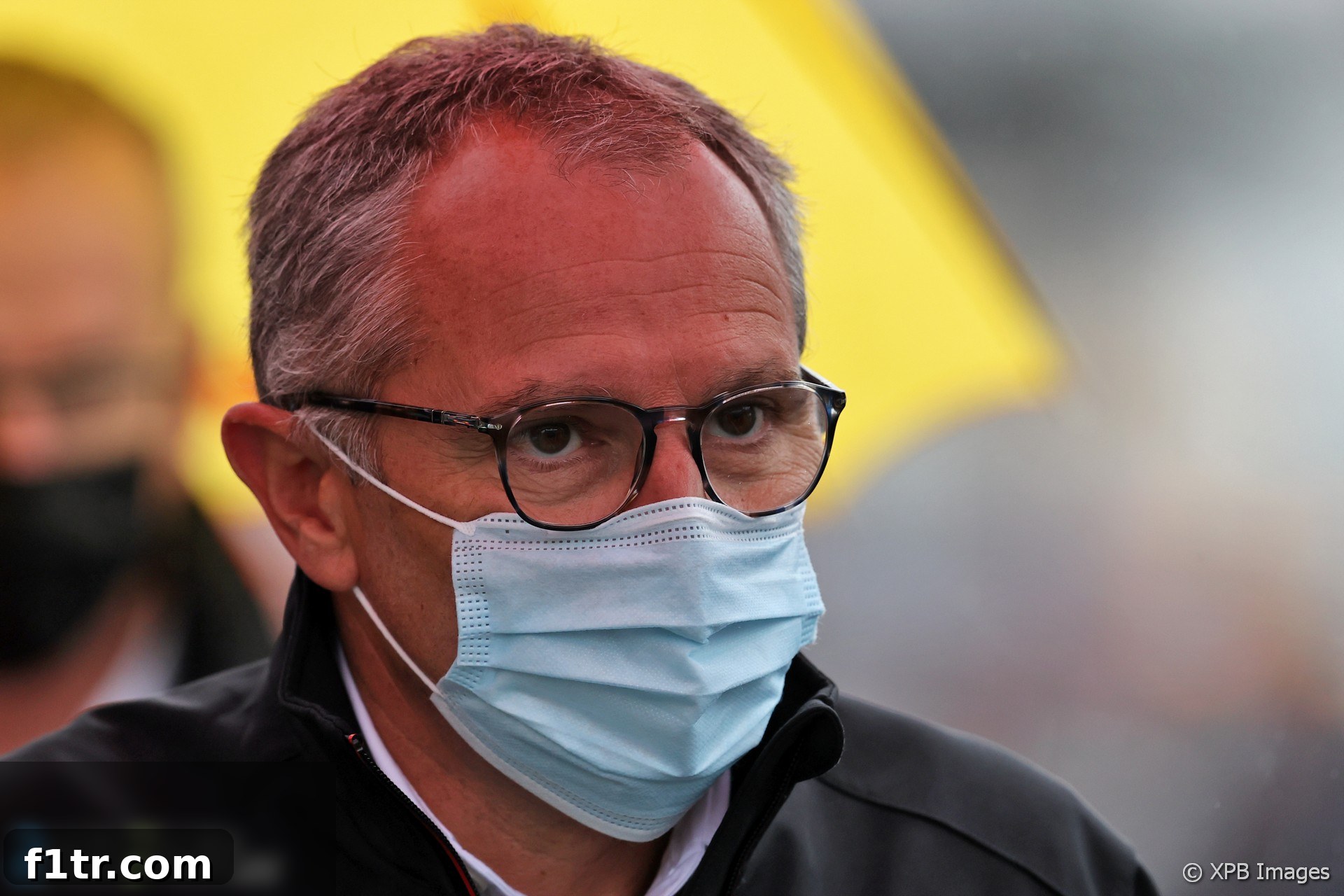
The aftermath of the 2021 Formula 1 Belgian Grand Prix at Spa-Francorchamps remains a significant talking point in motorsport history. Following a drastically shortened, rain-soaked event that saw virtually no competitive racing, calls for spectators to receive refunds quickly amplified. Formula 1 CEO Stefano Domenicali found himself at the heart of this discussion, offering a nuanced perspective on the unprecedented situation that left thousands of fans disappointed and many drivers vocal in their criticism.
The Belgian Grand Prix That Never Was: A Day of Frustration at Spa
On what was supposed to be one of the most thrilling races of the Formula 1 calendar, the 2021 Belgian Grand Prix turned into a spectacle of prolonged delays and ultimate anti-climax. Persistent, torrential rain lashed down on the iconic Spa-Francorchamps circuit from the scheduled start of the race, making conditions entirely unsuitable for competitive driving. Fans, who had braved the elements and invested significantly to attend, endured a grueling four-hour wait, only to witness a mere handful of laps conducted slowly behind the Safety Car before the event was officially abandoned.
A Torrential Turn of Events: Unplayable Conditions
The unforgiving weather transformed the legendary circuit into a perilous waterway. Visibility was minimal, and the risk of aquaplaning was exceptionally high, making it clear to both drivers and officials that a full-scale race was impossible under such conditions. Despite multiple attempts to get the race underway, with cars occasionally venturing out behind the Safety Car, the relentless downpour never relented. This led to a contentious decision: after just two laps completed behind the Safety Car, the race was deemed official, and half-points were awarded to the top ten finishers, much to the chagrin of many within the F1 community.
Drivers Advocate for the Disappointed: Hamilton and Ricciardo Lead the Charge
The drivers, who experienced the treacherous conditions firsthand, were among the most outspoken critics of how the event unfolded and the decision to award points. Many felt a profound empathy for the fans who had committed their time, money, and passion to attend the race.
Lewis Hamilton’s Vehement Criticism: A ‘Farce’ for the Fans
Lewis Hamilton, then a Mercedes driver and a leading voice in the sport, minced no words in expressing his profound dissatisfaction. He branded the day a “farce,” unequivocally stating that “the only people to lose out are the fans who paid good money to watch us race.” Hamilton argued that while the weather was beyond human control, modern Formula 1 possesses “sophisticated equipment” capable of accurately predicting conditions, making it evident that the rain was not going to subside. His criticism extended beyond the mere abandonment of the race; he was particularly incensed by the decision to send cars out for the minimum two laps behind the Safety Car, purely to satisfy regulatory requirements for awarding points, despite no actual racing occurring.
Hamilton’s post-race comments, which he continued on social media, highlighted a fundamental disconnect between the sport’s commercial imperatives and its commitment to providing entertainment and value for its supporters. He asserted, “We were sent out for one reason and one reason only. Two laps behind a Safety Car where there is no possibility to gain or lose a place or provide entertainment to fans isn’t racing.” For Hamilton, the integrity of the sport was compromised, and the focus should have been on the fans. He concluded, “We should have just called it quits, not risked the drivers and most importantly refunded the fans who are the heart of our sport.”
Daniel Ricciardo’s Call for Compensation
Fellow driver Daniel Ricciardo echoed Hamilton’s sentiments, expressing a clear desire for restitution for the spectators. The McLaren racer, understanding the commitment fans make to attend such events, stated, “I’d love for them to get refunded or compensated.” This collective voice from the drivers underscored the growing concern within the paddock for the fan experience, particularly in situations where the event falls far short of expectations.
Stefano Domenicali’s Stance: Navigating Complexity and Considering Compensation
When confronted directly with the pressing question of refunds for the disheartened spectators, Formula 1 CEO Stefano Domenicali offered a complex response. His initial reaction was firm: “no I don’t” support direct refunds. However, he quickly nuanced his position, indicating that while F1 itself might not issue refunds, the responsibility and potential for compensation lay with the promoter of the event, who manages ticket sales.
The Role of the Promoter and Potential Solutions
Domenicali clarified the operational structure, explaining, “Unfortunately the race is not there. You can pay the ticket and then [it is] what it is. At the end of the day for sure the organiser, together with us, will consider the attention, the maximum attention to the fans, that’s for sure.” This statement suggested a collaborative effort between Formula 1 management and the local event promoters to explore viable options for addressing fan grievances. It was understood that Domenicali and the promoters were actively looking at “a number of different options,” though specific details remained undisclosed at the time.
Justifying the Costs and Paramount Safety Measures
When asked by RaceFans for a direct message to those who attended the event, Domenicali reiterated the uncontrollable nature of the situation. He stated, “The message is clear: that, unfortunately, we don’t control the time. And two laps or no laps, the spend [on holding the race] was there.” This underscored the significant financial investment and logistical efforts involved in staging a Formula 1 Grand Prix, regardless of whether a full race takes place. Preparations, infrastructure, personnel, and various other costs are incurred long before race day, a factor that complicates straightforward refund policies.
Furthermore, Domenicali emphasized the paramount importance of safety, a recurring theme in any discussion about racing in extreme conditions. He asserted that race control “tried to do the maximum” to hold the race, but ultimately, safety considerations superseded all other factors. “So, as I said, it’s not a problem of laps or not laps, it’s the unfortunate conditions. You need to consider the safety for everyone and that’s very, very important. So as I said, the first to be disappointed is me because I love racing but there are also conditions which you cannot do it.” This highlighted the difficult balance race organizers must strike between satisfying fans’ desire for racing and ensuring the well-being of drivers, marshals, and track personnel.
The Controversial Points System: A Loophole or a Necessity?
One of the most contentious aspects of the 2021 Belgian Grand Prix was the decision to award championship points for a race that essentially did not happen. Formula 1 regulations stipulate that a minimum of two laps must be completed for a race to be declared official and for points to be awarded. The dispatch of cars behind the Safety Car for those two laps, despite the universally acknowledged impossibility of competitive racing, was widely seen as a cynical move to trigger this rule.
The FIA’s Point-Awarding Mechanism and Sporting Integrity
The application of this rule at Spa sparked intense debate about sporting integrity. Many, including prominent figures like Lewis Hamilton, argued that awarding points under such circumstances devalued the championship and was unfair to both the competitors and the fans. It raised questions about whether the rules, designed for scenarios where a race might be shortened but still involve significant competitive running, were being exploited to meet commercial obligations rather than to reflect genuine sporting merit. The incident highlighted a potential loophole in the regulations that could be leveraged to ensure a “race” technically took place, even if it bore no resemblance to competitive motorsport.
The Fan Experience: Deep Disappointment at Spa
Beyond the philosophical debates and regulatory interpretations, the most significant impact of the 2021 Belgian Grand Prix was felt by the thousands of devoted fans. Attending a Formula 1 race is an immersive experience that goes far beyond the ticket price. It involves significant travel expenses, accommodation costs, time taken off work or school, and a deep emotional investment in the sport.
The True Cost of Attending an F1 Race
For many, a trip to Spa-Francorchamps is a pilgrimage, often planned months in advance. The anticipation, the vibrant atmosphere of the circuit, and the chance to witness the pinnacle of motorsport are what draw fans from across the globe. To have that experience culminate in a non-event, with no actual racing and the added frustration of witnessing points being awarded under such dubious circumstances, was a profound disappointment. This incident served as a stark reminder of the fragile relationship between sports organizations and their core fanbase, where trust and value for money are paramount.
Looking Ahead: Lessons from Spa 2021
The events of the 2021 Belgian Grand Prix undeniably forced Formula 1 to confront critical questions about its protocols for extreme weather, its responsibility to fans, and the integrity of its championship point system. While Domenicali acknowledged the difficulty of controlling natural elements and the substantial costs involved in staging races, the overwhelming sentiment from drivers and fans alike indicated a need for greater flexibility and fan-centric decision-making in such extraordinary circumstances.
Potential Rule Changes and Future Contingencies
The Spa incident ignited discussions within the FIA and Formula 1 about potentially revising rules regarding shortened races and point allocations. The aim would be to prevent similar controversies in the future and ensure that any points awarded truly reflect a competitive sporting contest. Furthermore, exploring clearer guidelines or even an insurance-like mechanism for ticket holders in the event of a force majeure cancellation could bolster fan confidence and loyalty.
Ensuring Fan Satisfaction in Unforeseen Circumstances
Ultimately, the challenge for Formula 1 remains balancing its global commercial interests with the fundamental need to protect the fan experience. The 2021 Belgian Grand Prix stands as a powerful lesson in the importance of transparent communication, proactive contingency planning, and an unwavering commitment to the supporters who form the very heart of the sport. While the specific solutions remain a subject of ongoing dialogue, the incident undoubtedly catalyzed a renewed focus on ensuring that such a disappointing outcome for fans is avoided wherever possible in the future.
Browse all 2021 Belgian Grand Prix articles