Lamborghini’s F1 Ambitions: Why 2021 Was “Too Early” for a Grid Return
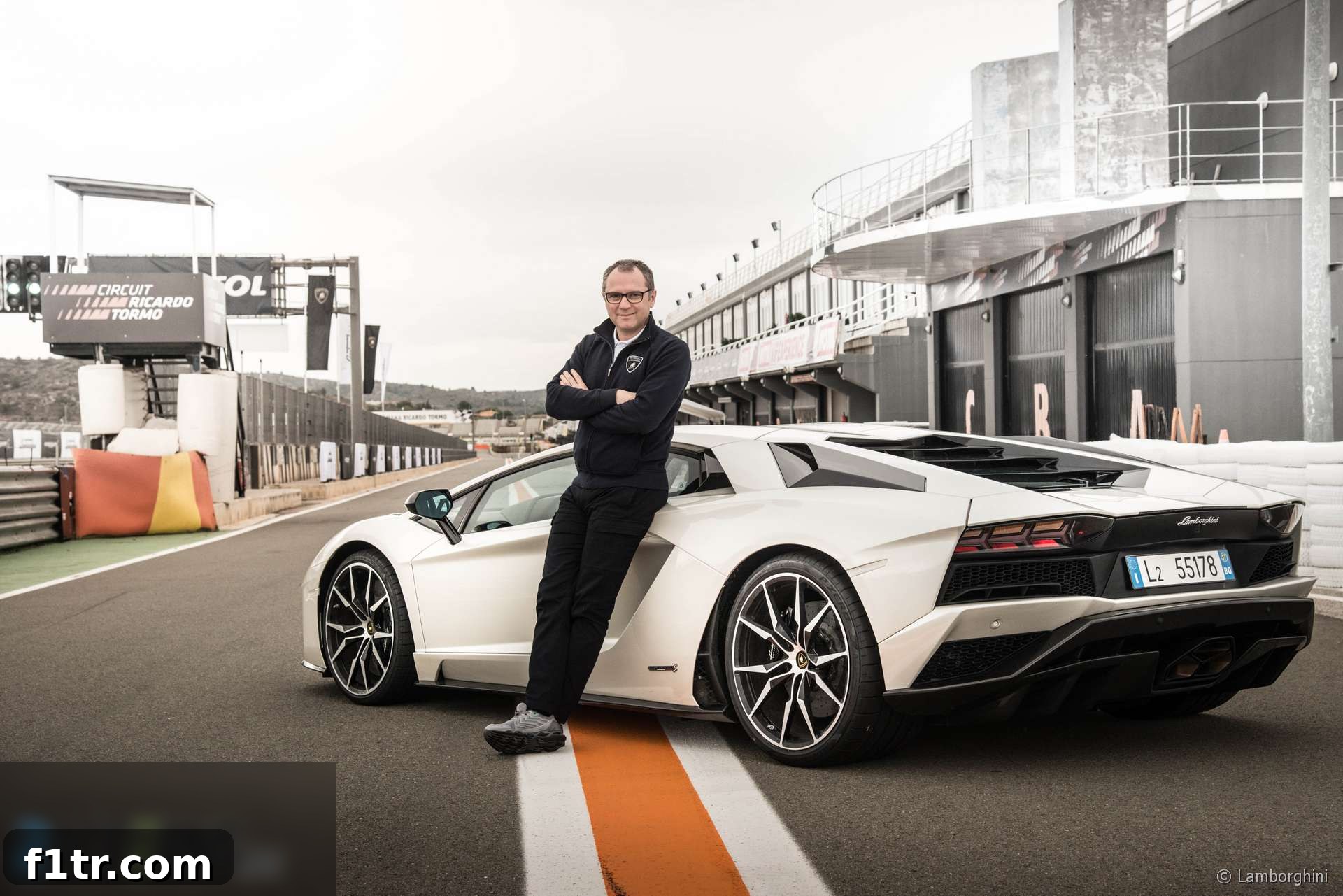
The exhilarating world of Formula 1 is constantly evolving, with significant rule changes often acting as a magnet for new manufacturers eager to test their engineering prowess. However, for iconic Italian sports car manufacturer Lamborghini, the extensive overhaul of F1 regulations for the 2021 season proved to be an opportunity that arrived “too early,” according to chairman and CEO Stefano Domenicali.
Domenicali, a figure well-acquainted with the pinnacle of motorsport from his tenure as Ferrari team principal, took the helm at the Volkswagen Group-owned brand in 2016. Since then, he has actively participated in crucial discussions regarding F1’s future engine rules. Yet, in an interview for the official F1 website, Domenicali candidly explained that a foray into Formula 1 simply doesn’t align with the company’s immediate strategic priorities.
The High Stakes of F1 Entry: Investment and Strategic Priorities
“I would say [it’s] difficult in this moment because the level of investment that Formula 1 needs, not to be competitive but just to compete, is very high,” Domenicali stated, highlighting the immense financial commitment required. Formula 1 demands astronomical budgets for research and development, manufacturing, staffing, logistics, and marketing – costs that can easily run into hundreds of millions of dollars annually for a competitive engine program or a full team entry.
For Lamborghini, a brand currently experiencing unprecedented growth and transformation, these resources are being channeled elsewhere. “Today Lamborghini needs to invest in other priorities: in new product, in the network, in the dealers. We are consolidating a big group, a big growth. Therefore in the short-term I don’t see that possible,” Domenicali elaborated. This strategic focus includes expanding their global dealer network, developing cutting-edge new products, and navigating the industry’s shift towards electrification and sustainable technologies. The success of models like the Urus SUV has significantly boosted Lamborghini’s sales and revenue, demanding substantial internal investment to sustain this momentum and prepare for future market demands. Engaging in an F1 program, even as an engine supplier, would divert critical funds and engineering talent from these core business objectives.
F1’s Pursuit of New Manufacturers: Jean Todt’s Insights
Despite Lamborghini’s current stance, the desire for new blood in Formula 1 remains strong within the sport’s governing body. FIA president Jean Todt confirmed at Monza that at least one manufacturer had expressed significant interest in joining the F1 grid sometime after 2021. This underscores F1’s ongoing efforts to diversify its roster of engine suppliers and teams, aiming to foster greater competition and technological innovation.
“There was some demonstration of interest from one who said to us we are not in a situation to commit for ’21 but what is very important for us is to know exactly what will be the regulations because it will be a strong interest in the future,” Todt revealed. This anonymous inquiry suggests that simplified, more cost-effective engine regulations are a key factor in attracting potential newcomers. F1 has been working towards a more standardized and accessible power unit formula to lower the barrier to entry, making it more appealing for automotive giants to consider a return or debut in the sport. The prospect of more manufacturers joining could invigorate the championship, bringing fresh perspectives, increased investment, and enhanced technical competition.
A Glimpse into Lamborghini’s F1 Past: The V12 Era (1989-1993)
While a modern-day F1 entry might be on hold, Lamborghini is no stranger to the pinnacle of motorsport. The illustrious Italian marque previously operated as an engine supplier in Formula 1 between 1989 and 1993. During this period, under the ownership of Chrysler, Lamborghini developed a formidable 3.5-litre V12 engine, a format introduced to F1 in 1989. Their engines powered several teams, including Larrousse, Lotus, Ligier, and Minardi, showcasing their engineering capabilities on the world stage.
One of the most notable chapters of Lamborghini’s F1 history involved a near-collaboration with McLaren. Towards the end of their F1 tenure in 1993, a version of McLaren’s MP4/8 chassis was famously tested with a Lamborghini V12 engine. Legendary drivers Ayrton Senna and Mika Hakkinen both put the car through its paces, with the powerful V12 unit producing approximately 670bhp. Initial feedback was positive, and the prospect of a McLaren-Lamborghini partnership created considerable excitement.
However, the anticipated deal ultimately fell through, with McLaren opting to use Peugeot engines instead. Domenicali shed light on the reasons behind this missed opportunity: “At the end of the day there was not enough money to pay for the commercial side of it in 1993.” This highlights the brutal financial realities of Formula 1, where even promising technical partnerships can be derailed by commercial considerations and funding shortfalls. Lamborghini’s F1 spell concluded shortly thereafter, marking the end of an era for their direct involvement in the championship.
The “Never Say Never” Outlook for Future F1 Involvement
Despite the current challenges and divergent priorities, Stefano Domenicali concluded his reflections with a hopeful, albeit cautious, note: “But in life never say never.” This sentiment leaves the door ajar for a potential future return of Lamborghini to Formula 1, should circumstances align more favorably. As F1 continues to refine its engine regulations and cost structures, and as Lamborghini solidifies its position and achieves its ambitious growth targets, the landscape could change.
The allure of Formula 1, with its global audience, technological innovation, and intense competition, remains a powerful draw for any performance-oriented automotive brand. For Lamborghini, a future F1 entry would not only be a testament to their engineering prowess but also a powerful marketing tool. However, any such move would require meticulous strategic planning, significant financial commitment, and a clear alignment with both F1’s future direction and Lamborghini’s evolving corporate objectives. For now, the focus remains firmly on internal growth and product development, ensuring that when the time is truly right, Lamborghini can enter the F1 arena not just to compete, but to truly contend for victory.
Further Reading: The 2021 F1 Season and Beyond
- Masi ‘basically gifted the championship’ to Verstappen says 2021 FIA steward Sullivan
- Las Vegas race backers looking to extend F1 deal beyond 2025
- Why Mercedes put ‘a reminder of joy and pain’ on display in their factory lobby
- Verdict on error in GT race suggests Mercedes would have lost 2021 Abu Dhabi GP appeal
- Title ‘stolen’ from Mercedes made us ‘underdogs people cheer for’ – Wolff
Browse all 2021 F1 season articles