George Russell Unravels Russian Grand Prix Tyre Mystery: A Deep Dive into F1 Tyre Management Challenges
For any Formula 1 driver, understanding the intricate dynamics of their machinery is paramount to success. At the 2020 Russian Grand Prix, George Russell, then driving for Williams, experienced a race steeped in frustration and confusion, finishing a lowly eighteenth. However, a comprehensive post-race investigation brought a significant “relief” to the young Briton, as the underlying cause of his devastating tyre problems was finally uncovered. This wasn’t merely a tale of a bad race; it was a stark reminder of the razor-thin margins and complex interplay of factors that define performance at the pinnacle of motorsport, particularly regarding tyre management.
Advert | Become a Supporter & go ad-free
The Sochi Struggle: Battling Beyond Expectations
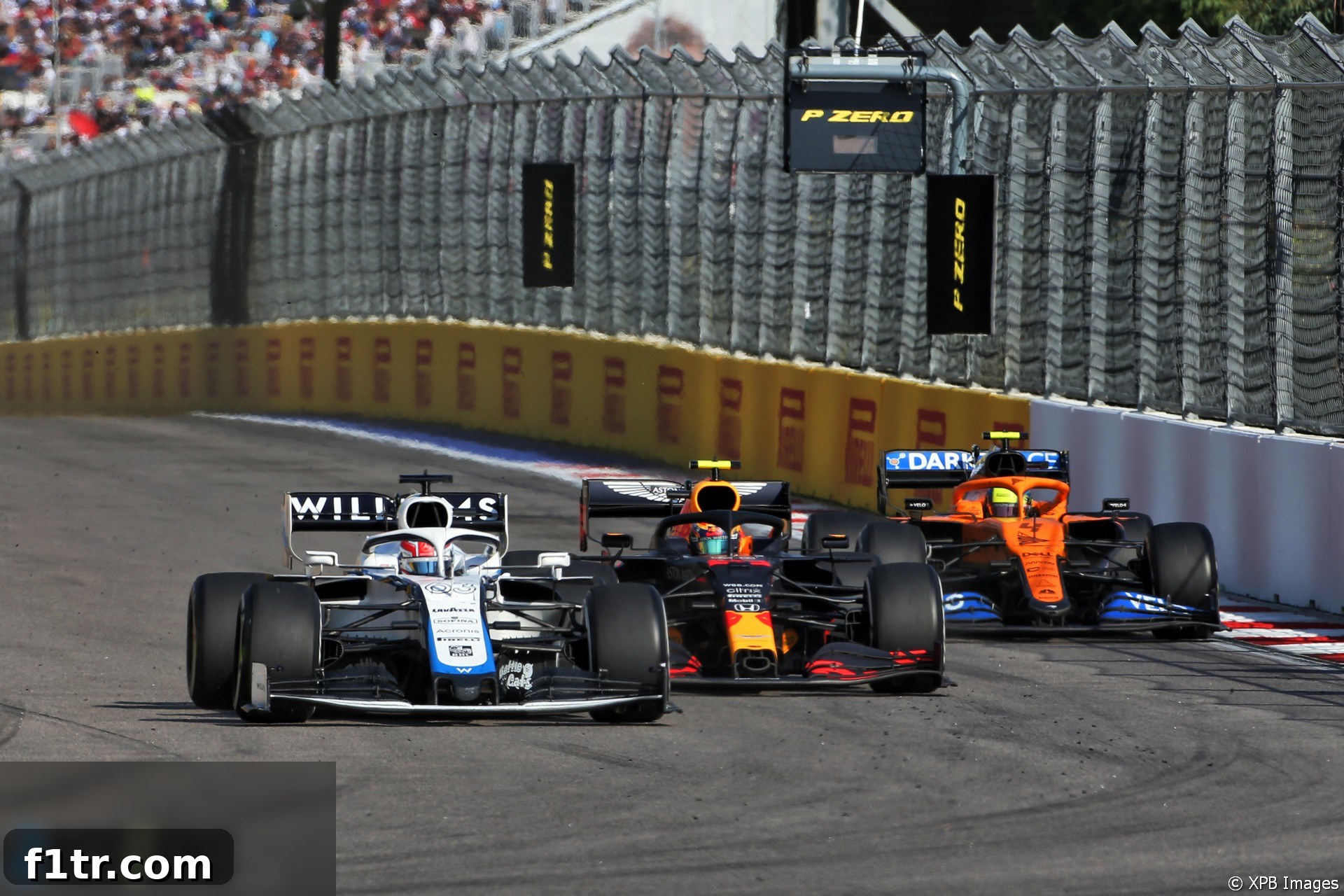
The 2020 Russian Grand Prix presented a familiar challenge for Russell and the Williams team, who were often fighting at the back of the grid. Yet, glimpses of Russell’s prodigious talent frequently shone through, and Sochi was no exception, at least initially. During the early stages of the race, Russell found himself in an unexpected and thrilling skirmish with much faster cars, specifically Alexander Albon in the Red Bull and Lando Norris in the McLaren. This was a testament to Russell’s skill and the Williams FW43’s straight-line speed advantage on the Sochi Autodrom’s long straights, which he acknowledged made it “much easier to keep them behind.”
Such battles are crucial for drivers in less competitive machinery. They provide invaluable experience, highlight a driver’s defensive capabilities, and offer rare opportunities to showcase their racecraft against established front-runners. Russell cherished this period, noting the “good amount of respect” between the three drivers as they pushed the limits of their machines. However, the transient nature of these early race heroics quickly dissolved as the tyre issues began to manifest. Despite the initial promise, the dream of holding position against formidable opponents was short-lived, leading to a dramatic drop in performance and ultimately, a disappointing finish.
The Critical Role of Tyres in Formula 1
Tyres are often described as the most critical component in Formula 1, serving as the sole contact point between the car and the track. Their performance dictates grip, braking, and overall pace, making tyre management an art form that separates the good drivers from the great. Pirelli, the sport’s sole tyre supplier, provides different compounds – from soft to hard – each designed for specific performance windows and durability characteristics. Understanding and operating within these optimal windows is essential for maximizing performance and extending tyre life.
Factors such as track temperature, ambient temperature, driving style, car setup (including suspension settings, aero balance, and brake bias), and even fuel load significantly influence tyre behaviour. When tyres are too cold, they lack grip. When they get too hot, they can suffer from “thermal degradation,” where the rubber loses its structural integrity and performance rapidly declines, or “blistering” and “graining,” physical damages that severely compromise grip. Drivers receive a wealth of data on their steering wheel, including tyre temperatures, but these readings are not always foolproof, as Russell’s experience vividly demonstrated.
Unpacking Russell’s Tyre Temperature Anomaly
Russell’s initial post-race bewilderment stemmed from a complete absence of pace, a stark contrast to his earlier competitive skirmishes. “I was very confused when I finished the race where the pace had gone,” he admitted. The subsequent investigation by the Williams team unearthed a critical flaw: a significant discrepancy in tyre temperature readings. Russell revealed, “We had a tyre temperature issue, so the tyres were running much, much hotter than we expected and than I was reading on my steering wheel.”
This miscommunication between the car’s sensors and the actual tyre condition proved to be a critical misstep. The tyres were operating “well over the window,” meaning they were far exceeding their optimal operating temperature range. When tyres run excessively hot, their performance plummets dramatically, leading to severe degradation. The car’s balance can shift, grip levels diminish significantly, and the driver is left with an unpredictable and underperforming machine. This unforeseen issue meant Russell was inadvertently pushing already overheated tyres, accelerating their demise and making an extra pit stop an unavoidable necessity, regardless of his earlier lock-up.
The Ripple Effect: Strategic Disruption and Driver Frustration
A sudden and unexplained loss of tyre performance can derail even the most meticulously planned race strategy. In Russell’s case, the unexpected degradation of his hard tyres meant they simply would not last to the end of the race, necessitating an additional pit stop. This third stop dropped him to the back of the field, cementing his last-place finish among the classified runners. What began as a promising fight for position quickly transformed into a damage limitation exercise, highlighting the fragility of F1 strategies when unforeseen variables emerge.
The psychological toll on a driver in such a situation is immense. To be battling against top-tier machinery one moment and then inexplicably losing all pace the next can be deeply frustrating and concerning. Russell’s candid admission of being “pretty disappointed and worried directly after the race” underscores the mental pressure on drivers to perform and understand their car. The relief he expressed upon learning the cause was palpable. It shifted the narrative from a perceived driver error or inherent lack of pace to a specific, identifiable technical issue, offering a crucial lesson and a path forward for both driver and team.
Beyond the Race: Lessons Learned and Future Implications
Understanding the root cause of the tyre temperature anomaly was more than just a momentary relief; it was a vital piece of information for the Williams team’s ongoing development. Such incidents contribute to a team’s knowledge base, allowing engineers to refine sensor calibration, data interpretation, and car setup procedures. For Russell, it provided clarity and confidence, reaffirming that his perceptions during the race weren’t entirely unfounded and that a technical issue was at play, rather than a fundamental deficiency in his driving or the car’s inherent pace.
This incident also served as a broader lesson in the complex world of F1 data and telemetry. While drivers are inundated with real-time information, interpreting that data accurately under race conditions is a continuous challenge. Discrepancies between what sensors report and what the car is actually doing can happen, making driver feedback and post-race analysis crucial for identifying and rectifying such issues. As Russell continued his ascent in Formula 1, experiences like the Russian Grand Prix tyre mystery undoubtedly contributed to his comprehensive understanding of car dynamics and the importance of meticulous data analysis, skills that would prove invaluable in his future career at Mercedes.
Advert | Become a RaceFans supporter andgo ad-free
Conclusion
George Russell’s experience at the 2020 Russian Grand Prix stands as a vivid illustration of how critical tyre management is in Formula 1 and how quickly an entire race can unravel due to unforeseen technical complications. The relief felt by Russell after understanding the ‘tyre temperature issue’ was a testament to the pressure on drivers and teams to constantly optimize performance and diagnose problems. This episode provided invaluable insights for Williams and Russell, underscoring the relentless pursuit of perfection required to succeed in the demanding world of Grand Prix racing, where every degree of tyre temperature can be the difference between triumph and despair.
Related Articles from the 2020 F1 Season
- Grosjean’s F1 Test Return: A Look Back at His Bahrain Comeback
- Romain Grosjean’s Bahrain Crash: Examining the Iconic Wrecked Chassis
- Valtteri Bottas vs. Nico Rosberg: A Comparison of Hamilton’s Mercedes Teammates
- The Financial Impact of Covid-19: F1 Revenues in the 2020 Season
- Lewis Hamilton’s Contract Saga: Confirming His 2021 Mercedes Deal
Browse all 2020 F1 season articles