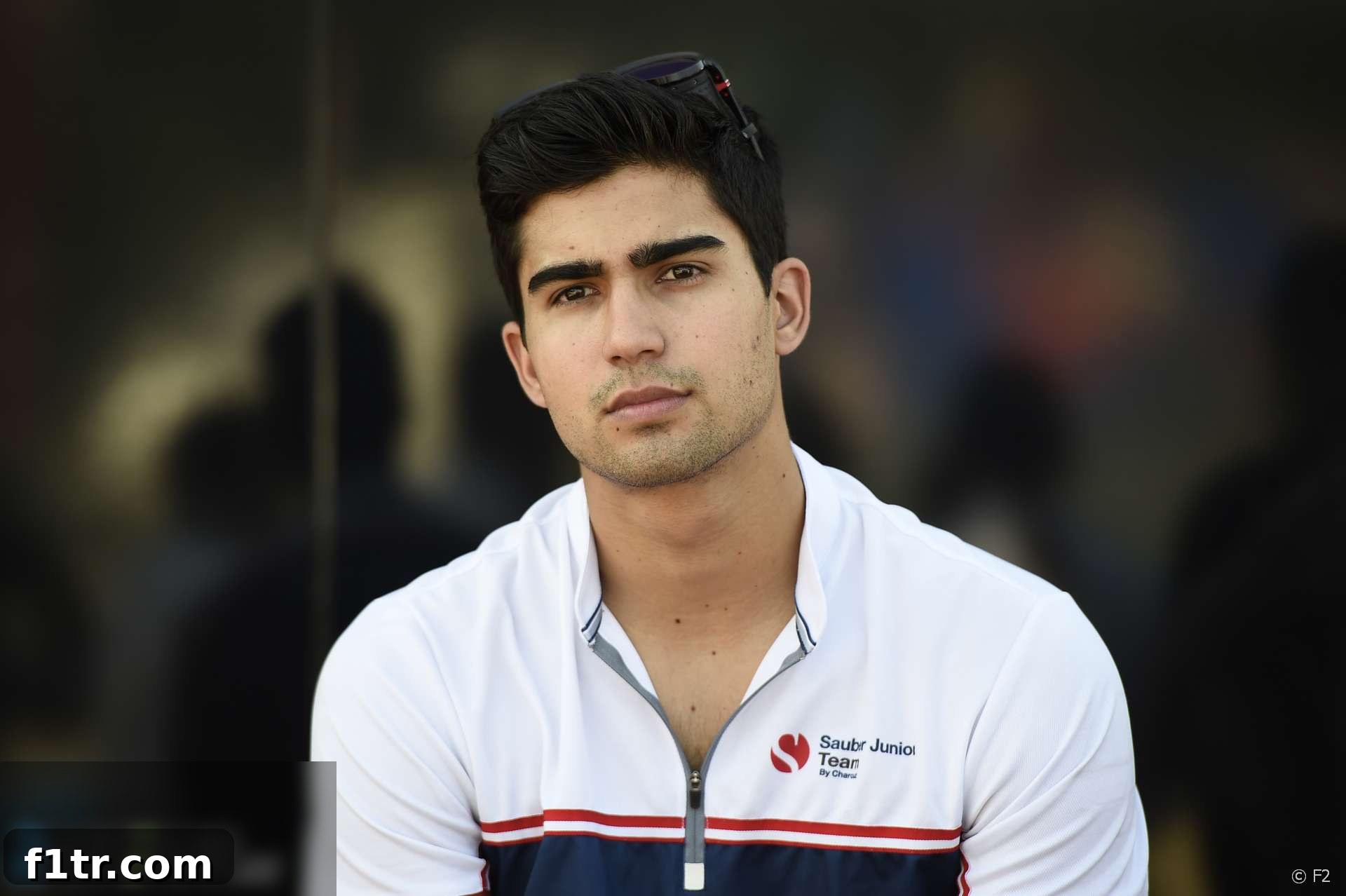
Juan Manuel Correa’s Battle for Recovery: New Complications Emerge After Devastating Spa-Francorchamps Crash
The motorsport community holds its breath as new details emerge regarding the condition of Formula 2 driver Juan Manuel Correa. His family has released a poignant statement, revealing that the 20-year-old racer has encountered “new complications” in his arduous recovery following the horrific crash at Spa-Francorchamps last week. This devastating incident tragically claimed the life of fellow competitor Anthoine Hubert and left Correa with severe injuries, underscoring the inherent dangers, yet unwavering passion, that defines competitive racing.
The accident, which unfolded during Saturday’s Formula 2 race at the iconic Belgian circuit, sent shockwaves across the globe. Initially, Correa was admitted to an intensive care unit in Belgium, where doctors worked tirelessly to stabilize him. Following initial treatment, he was transferred earlier this week to a specialized hospital in London, a move aimed at providing the most advanced medical care for his complex injuries. However, the true extent of the trauma he sustained is only now becoming fully apparent.
Acute Respiratory Distress Syndrome: A Major Setback
Upon his arrival in London, medical professionals diagnosed Juan Manuel Correa with Acute Respiratory Distress Syndrome (ARDS). This severe lung condition, often a consequence of high-impact trauma such as the massive forces experienced in his crash, signifies a critical challenge to his respiratory system. ARDS causes fluid to leak into the lungs, making breathing incredibly difficult and hindering the body’s ability to get enough oxygen. It’s a testament to the sheer violence of the impact that such a systemic injury has manifested.
“As time has progressed, new complications have surfaced as a consequence of the massive impact he suffered Saturday in Belgium,” his family’s statement confirmed. “Unfortunately, this injury resulted in Juan Manuel falling into Acute Respiratory Failure.” This further deterioration means his lungs are no longer able to provide enough oxygen to the body, or remove enough carbon dioxide, to meet the body’s needs. This critical development necessitated aggressive medical intervention to support his vital functions.
ECMO Support: A Life-Saving Intervention
In response to the acute respiratory failure, Juan Manuel Correa is now receiving Extracorporeal Membrane Oxygenation (ECMO) support. This highly specialized, life-sustaining treatment involves circulating the patient’s blood outside the body to a heart-lung machine that removes carbon dioxide and adds oxygen, before returning the blood to the patient. Essentially, the ECMO machine temporarily takes over the function of the lungs, and in some cases, the heart, allowing these vital organs to rest and heal. This advanced medical intervention highlights the gravity of Correa’s condition, as ECMO is typically reserved for the most severe cases of respiratory and cardiac failure.
“Juan Manuel is currently in an intensive care unit that specializes in respiratory injuries,” the family elaborated. “At this point of time he is in an induced state of unconsciousness and under ECMO support. Juan Manuel is in critical but stable condition.” The induced coma is a deliberate medical strategy to reduce the body’s metabolic demands and allow it to focus all its energy on healing, particularly for his lungs. While the term “stable” offers a glimmer of hope, it underscores that his situation remains extremely serious and requires constant, vigilant medical attention.
Family’s Strength and Heartfelt Condolences
Despite the immense challenges, Correa’s family remains steadfast in their hope and belief in his incredible resilience. “We are confident that our son will surprise us like he always does with his tremendous fighting will and strength and will recover completely,” they affirmed. This sentiment resonates deeply with the spirit often demonstrated by racing drivers, who possess an extraordinary level of determination and a refusal to give up, both on and off the track.
In this incredibly difficult time, the family also made a heartfelt plea for privacy and space. “At this time, we kindly request that our privacy and space be respected,” they added. “As a family, we need to pull together and be 100% there for Juan Manuel.” This request is understandable, as they navigate an emotionally and medically complex journey, focusing entirely on their son’s recovery. The outpouring of global support has been a source of strength, for which they expressed profound gratitude.
Furthermore, Juan Manuel’s parents, Maria and his father, took the opportunity to extend their deepest sympathies to the family of Anthoine Hubert. “Maria and I wish to take this opportunity to give our condolences to the Hubert family for their loss. Our hearts are broken, and we can only imagine the pain this loss has brought them.” This poignant gesture reflects the shared bond and collective grief within the motorsport fraternity, reminding everyone of the human cost of such devastating accidents. The tragic loss of Hubert, a bright talent, has cast a long shadow over the racing world, and the Correa family’s acknowledgment of this sorrow speaks volumes about their compassion even in their own time of crisis.
The Impact of the Spa-Francorchamps Tragedy on Motorsport Safety
The horrifying incident at Spa-Francorchamps has once again brought the critical issue of motorsport safety to the forefront. While significant strides have been made over the decades in enhancing driver protection and circuit design, every major incident serves as a stark reminder that racing, by its very nature, carries inherent risks. The Formula 2 crash, which occurred at one of the sport’s most challenging and revered tracks, particularly at the high-speed Raidillon section, has prompted renewed scrutiny and discussion across all levels of motorsport, from grassroots to Formula 1.
Safety advancements such as the HANS (Head and Neck Support) device, improved chassis designs known as survival cells, and more sophisticated barriers have undoubtedly saved countless lives and prevented severe injuries. However, the unpredictable dynamics of multi-car collisions at extreme speeds continue to pose unique challenges. The governing bodies, including the FIA, are perpetually engaged in research and development to further mitigate risks, analyzing every incident to learn and implement new protocols and technologies. The tragic death of Anthoine Hubert and the severe injuries sustained by Juan Manuel Correa will undoubtedly lead to another intensive period of review, examining everything from circuit layout and run-off areas to vehicle integrity and driver equipment, ensuring that lessons learned are translated into tangible safety improvements for future generations of racers.
The Road Ahead: Resilience and Support
Juan Manuel Correa’s journey to recovery will be a long and arduous one, demanding immense physical and mental resilience. Athletes, particularly those in high-stakes sports like racing, are known for their extraordinary determination, and it is this spirit that his family and the wider motorsport community are banking on. The road ahead will likely involve extensive rehabilitation, focusing not only on his respiratory health but also on the multiple fractures and other injuries he sustained. However, the outpouring of support from fans, fellow drivers, teams, and industry figures worldwide serves as a powerful testament to the unity and compassion within the sport.
Messages of hope and encouragement have flooded social media, demonstrating the collective desire for Correa’s full recovery. This global show of solidarity provides an invaluable source of morale for Juan Manuel and his family during this challenging period. As he battles these critical complications, the racing world stands united, sending strength and positive thoughts, hoping to see the young talent return to full health. His fight for recovery is not just a personal one; it has become a poignant symbol of the enduring risks in motorsport and the unwavering human spirit to overcome adversity.
The focus remains squarely on Juan Manuel Correa’s medical progress. The coming days and weeks will be crucial as doctors work to stabilize his condition and guide him through the critical phase of his recovery from ARDS and respiratory failure under ECMO support. The entire motorsport community continues to watch, hope, and pray for his strength and eventual return to health, remembering always the tragic backdrop against which his battle unfolds.
Formula Two
- Formula 2 to debut in Miami and Montreal after Iran war cancellations
- Ex-McLaren junior Dunne’s move to Alpine finally confirmed
- Schumacher says his IndyCar feels like ‘an F2 car, just with better tyres’
- The Formula 2 team with an older driver line-up than almost half the F1 grid
- FIA to award more F1 superlicence points to IndyCar drivers from 2026
Browse all Formula 2 articles