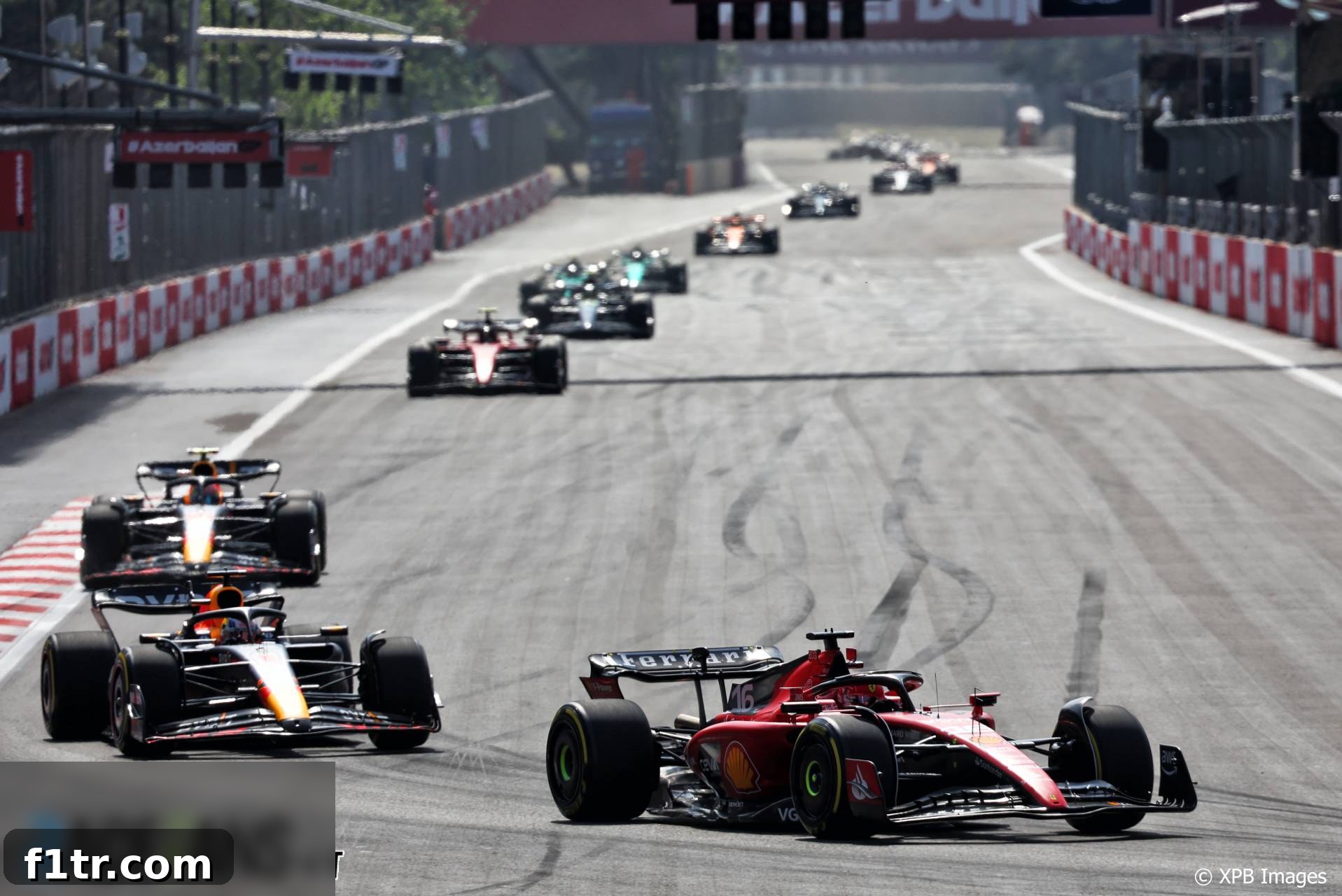
When Formula 1 introduced its groundbreaking technical regulations last year, fundamentally altering how its cars generate crucial aerodynamic downforce, it was hailed as the dawn of a new, thrilling era for the sport. The promise was clear: closer racing, more overtakes, and an enhanced spectacle for fans worldwide. However, the enthusiasm has begun to wane, particularly after recent events like the Azerbaijan Grand Prix, which saw remarkably little on-track action and minimal passing in both the much-anticipated sprint race and the main Grand Prix.
The underwhelming performance in Baku ignited a significant debate within the Miami Grand Prix paddock: are F1’s latest generation of cars truly delivering on their mission to improve racing? This question is now a central topic of conversation, casting a shadow over the sport’s regulatory direction.
Initial feedback from drivers in 2022 suggested a positive shift, with many reporting it was indeed easier to follow rival cars compared to the previous generation. This seemed to confirm the FIA’s objectives for the new ground effect regulations. Yet, as the 2023 season has unfolded, that early optimism has not been sustained. Ferrari’s Charles Leclerc candidly admitted that “it’s a bit more difficult to follow in the low-speed corners” this season, especially when compared to the high-speed sections where the ground effect is most potent. This indicates a worrying trend where the cars’ inherent design, or perhaps their evolution, is starting to undermine the very goal they were designed to achieve.
Leclerc’s Ferrari teammate, Carlos Sainz Jnr, echoes this sentiment with stark simplicity. When asked if he anticipated difficulties in overtaking at the Miami circuit, his reply was a succinct, “Yes.” Sainz elaborated on his concern, explaining, “I think as the races have come by with this generation of cars, it is getting quite bad to follow again. So I don’t know how long it is going to last, this race-ability from these new generation of cars, because they are currently getting more and more tricky to follow.” This collective sentiment from top drivers highlights a growing unease about the trajectory of the sport’s on-track product.
But what are the underlying reasons drivers believe passing has become more challenging in the second season of F1’s ground effect revolution, especially when the field itself appears to be closing up from front to rear? Several factors are contributing to this complex issue, ranging from regulatory adjustments to inherent car characteristics and race dynamics.
Shorter DRS Zones: An Overtaking Conundrum
One of the more contentious changes this season has been the FIA’s decision to modify Drag Reduction System (DRS) zones. Many within Formula 1, along with a significant portion of the fanbase, initially hoped that the 2022 technical regulations, designed to make cars easier to follow, would diminish the reliance on the controversial DRS. This system, which allows a trailing car to open a flap on its rear wing for increased straight-line speed, has long been viewed as an artificial aid to overtaking, sometimes leading to predictable and less exciting passes.
This season, the FIA has actively attempted to reduce DRS effectiveness by shortening activation zones. Using data from the previous season, they’ve moved activation points further down straights at circuits like Bahrain, Baku, and Miami. The intent was to encourage more organic overtaking opportunities, where a car’s inherent pace and driver skill would be the primary factors. However, the general consensus among drivers suggests this strategy has largely backfired. Despite few drivers being outright “fans” of DRS, it remains, paradoxically, critical to racing in its current state.
Alfa Romeo’s Zhou Guanyu articulated the prevailing sentiment: “Where we’re racing, I think we need the extra DRS zones, to be more following closely. Because most of the races have been DRS trains so far – especially for us, trying to clamp back on the field is almost impossible – unless somebody makes a major mistake, which doesn’t really happen too often right now in Formula 1.” His observation points to the phenomenon of “DRS trains,” where multiple cars benefit from DRS simultaneously, effectively neutralizing its advantage for any single car trying to make a move.
Aston Martin driver Lance Stroll believes that the impact of DRS is highly “track-dependent.” He noted, “We go to Baku and overtaking’s a lot easier than Monaco, for example.” This highlights the challenge of implementing a universal regulatory approach when circuit characteristics vary so wildly. Stroll suggested a more tailored approach: “I think just having DRS in the right places and having the right length of DRS for each track to give us an exciting race on Sunday, I think that’s something all want to see. We always want to see overtaking on Sunday.” This pragmatic view emphasizes the need for flexibility to ensure race spectacle.
Reigning world champion Max Verstappen, despite effortlessly using his Red Bull’s potent DRS to overtake Leclerc in Baku, offered a nuanced perspective. He believes the ability to overtake is fundamentally linked to overall car speed and pace difference. “I would prefer, of course, that we could race without DRS – but that’s not possible,” Verstappen stated, acknowledging the current necessity of the system. He explained further: “If the car is faster – let’s say when you have to come through the field from the back – it doesn’t really matter how long the zone is, you will get the car ahead. But when the pace is within a tenth, two tenths – you could see that in Baku, I think – once you have a bit of a DRS train, there is no chance.” This underscores that when cars are closely matched in performance, even DRS struggles to break the deadlock.
Carlos Sainz acknowledges that different teams and drivers will naturally have biased opinions on the ideal DRS zone length, given varying car characteristics. However, from a neutral perspective, he firmly believes that shortening the zones is not the correct approach for the FIA. “If I would forget about which team I drive for, and I would just looking into the benefit of F1, just looking at how difficult it is starting to become follow, at least I wouldn’t shorten them, I would keep them as they were.” This strong consensus from drivers suggests that while DRS is not perfect, its current role in facilitating overtaking is still vital, and reducing its power without addressing the root cause of following difficulties is counterproductive.
Raising the Floor: Unintended Aerodynamic Consequences
Another significant regulatory change introduced for 2023, with unforeseen implications for racing, was the adjustment to car floor heights. Following a major aerodynamic talking point last year – the phenomenon of “porpoising,” where cars violently bounce at high speeds due to fluctuating ground effect – the FIA responded by introducing new regulations to limit this issue and enhance driver safety and comfort. One of these measures mandated raising the minimum height of car floors, a change designed to mitigate the extreme downforce fluctuations that caused porpoising. While effective in reducing bouncing, this adjustment inadvertently reduced the aerodynamic efficiency of the ground effect-producing underbodies in a small but significant way, impacting how cars generate grip and interact with the air.
Mercedes driver George Russell was unequivocal when asked if the floor height change was contributing to drivers’ difficulties in following during 2023. “I think it is,” he replied. He admitted some uncertainty about the exact mechanisms but offered a plausible explanation: “I think obviously F1 created these regulations to help overtaking and following, and since they were introduced every single team has developed naturally away from their initial intentions, as you develop the car. So every car on the grid is very different compared to what they were intended to look like 18 months ago or two years ago now or whenever it was.” Russell’s insight suggests that while the regulations aimed for cleaner air, teams’ relentless development has optimized cars in ways that might inadvertently bring back “dirty air” effects, making following harder. He further noted, “I think the overtaking is slowly getting more difficult. But also because the slipstream isn’t as large as well with these new cars, it’s slowly going in the wrong direction for overtaking.”
Haas driver Kevin Magnussen concurred with Russell’s assessment, highlighting the degradation of following capability compared to the initial promise. “You can still follow easier than in ’21,” he claimed, acknowledging some improvement over the pre-2022 era. However, he quickly added, “But it’s getting worse because the rule change they made for this year with the floor didn’t help. Then also just that’s kind of the natural thing with development going into the cars that tends to become less… you push everything aerodynamically and then it becomes a little more fragile with the airflow, and then it becomes more difficult to follow.” Magnussen’s point about aerodynamic fragility is key: as teams push the boundaries of aerodynamic performance, the cars become more sensitive to disturbed air, making close-quarters racing a greater challenge.
Lack of Tyre Degradation: Stifling Strategic Variety
Beyond aerodynamic downforce, mechanical grip from tyres is equally crucial for generating competitive racing. Formula 1’s mandatory use of at least two different tyre compounds during a race is fundamentally intended to encourage strategic variation and, consequently, more exciting racing. By having cars on track with varying levels of grip and wear at the same time, teams are forced to make tactical decisions that can shake up the running order. However, as Alpine’s Esteban Ocon points out, the early races of the 2023 season have seen very little in the way of tyre degradation, significantly limiting strategic options and on-track action.
“We’ve done three races with no degradation, at the moment, which creates more difficulties to overtake,” Ocon explained. He drew a contrast with earlier races: “I think in Bahrain we’ve seen much more overtaking than the last three. There was no deg in Australia, no deg in Jeddah, No deg in Baku. Let’s see if there are some here with the new Tarmac. But I think as soon as there’s a bit more degradation, there’s more fights and more fun on track.” Ocon’s observation highlights a critical missing element: when tyres don’t degrade significantly, the optimal strategy often becomes a single, predictable pit stop, removing the dynamic element of tyre management and differing strategies that can create overtaking opportunities.
George Russell also feels that introducing more tyre wear into races would be a straightforward and effective way of generating closer racing and more overtaking throughout the championship. “I think we all want the best races, the most exciting races, and there’s probably a few easier ways to achieve this in the short term,” he believes. Echoing Ocon, Russell added, “Like Esteban said about the tyre degradation, it’s been easy one-stops in the last couple of races. And when everybody’s pushing flat-out, there is less exciting races.” This sentiment from multiple drivers points to tyre characteristics as a relatively simple lever the sport could pull to immediately improve the racing product.
Beyond simple tyre wear, Carlos Sainz points out a more subtle but equally impactful factor: drivers still have to be extremely careful to avoid overheating their tyres when pushing hard to challenge a rival ahead. “Surface overheating, especially,” he explained. “It’s the thing that as soon as you are behind a car and you lose a bit of traction, a little bit of braking grip, you start slipping the tyre and that extra slip means the next corner you have less grip, the next corner you have a bit less grip and you’re only able to follow for one or two laps and then you have to back off.” This phenomenon means that even if the absolute wear isn’t high, the localized overheating caused by battling in dirty air can quickly force a driver to retreat, effectively limiting their attacking window to just a couple of laps.
Heaviest Ever Cars: A Trade-off for Safety and Performance
While the 2022 technical regulations promised to deliver better racing by allowing cars to follow more closely, they also aimed to produce the safest Formula 1 cars ever. This commitment to safety, driven by continuous advancements and lessons learned, has led to significantly strengthened monocoques and additional safety structures. As a direct consequence, modern F1 cars are now the heaviest they have ever been, with minimum weights sitting at just under 800 kilograms without fuel. This marks a substantial increase compared to previous generations, which were often hundreds of kilograms lighter.
While an F1 car at 800 kg is still remarkably lighter than a World Endurance Championship hypercar or a GT3 sports car, the increased mass has profound implications for how these machines can be driven and raced. Max Verstappen believes that these heavier, stiffer cars are inadvertently limiting opportunities for drivers compared to the far lighter and more agile F1 cars of the last two decades. “The cars that are probably too heavy,” said Verstappen. “They’re too stiff, so you can’t really run a kerb to try and find a bit of a different line.”
Verstappen’s observation highlights a critical aspect of racing strategy and driver artistry. Lighter, more forgiving cars allow drivers to attack corners more aggressively, utilize kerbs to gain an edge, and explore varied racing lines to find an advantage or create an overtaking opportunity. The current generation, with its increased weight and rigid suspension, restricts these creative approaches. “Everyone is driving more or less the same line nowadays because of just how the cars work, how stiff the suspension is,” he explained. Furthermore, Verstappen noted the compounding effect: “And probably now people are finding more and more downforce in the cars, it probably becomes a bit harder to follow as well.” This suggests a cyclical problem where increased downforce, while improving absolute lap times, might paradoxically make close-quarters battling more challenging, especially with the added weight and stiffness.
In the Future: Drivers Demand a Voice for Better Racing
The growing concerns over the lack of exciting racing and the low level of overtaking are not just confined to the stands or media commentary; they are a significant worry for the drivers themselves. Complaints about the current cars and the diminishing on-track action are surfacing with increasing regularity, prompting the drivers to take action. Carlos Sainz confirmed that the drivers intend to raise this critical matter directly with Formula 1 bosses and the FIA.
Sainz lamented the current disconnect: “We haven’t been asked about it and it hasn’t come up in meetings or in one of these commissions I think that they do. We are trying to get the drivers more into those commissions and more involved because I think maybe F1 or the FIA are missing a bit of our feedback and maybe we are not doing a good enough job to be present there to give that feedback.” This highlights a crucial gap in the decision-making process, where the direct experiences of those on the track might not be adequately considered. Sainz emphasized the collective nature of their concern: “In the end they want to know what’s happening, I think we are all starting to feel the same and we are starting to converge towards feeling the same thing which is normally creating a bit of a trend and a bit of an idea of what’s happening.” This unified front from the drivers suggests a shared understanding of the issues plaguing the racing.
As a director of the Grand Prix Drivers’ Association (GPDA), the drivers’ union, George Russell affirmed the collective resolve to address these problems. He believes it is now time for drivers to amplify their voices to help steer the sport towards a more exciting future. “For sure we’re going to speak with the FIA and F1 about this because we want to be able to race, we want to be able to fight, as we all did in go-karts where there was no aerodynamics – that’s the ultimate dream,” Russell passionately stated. His reference to karting, a pure form of racing where driver skill and wheel-to-wheel combat are paramount, encapsulates the ideal that many F1 drivers aspire to.
Russell concluded with a call for continuous improvement: “I think the sport took a really good turn for the better when these new cars were introduced, but we need to take it to the next step now.” This perspective acknowledges the initial positive impact of the 2022 regulations but stresses that the journey toward optimal racing is ongoing. The collective voice of the drivers, who are arguably the most qualified to assess the quality of racing, will be crucial in guiding Formula 1’s evolution and ensuring that the promise of a thrilling new era is ultimately fulfilled.
2023 Miami Grand Prix: Further Insights
- Verstappen picks Miami Grand Prix as his best drive of 2023 so far
- Albon “maximised most races this year” despite single point scored to date
- A sign the upgrades worked? Ferrari see an upside to Leclerc’s Miami crashes
- Red Bull ‘surprised other teams under-delivered’ with their 2023 cars
- F1’s driver intros are right for US market but wouldn’t work at Silverstone – Horner
Browse all 2023 Miami Grand Prix articles