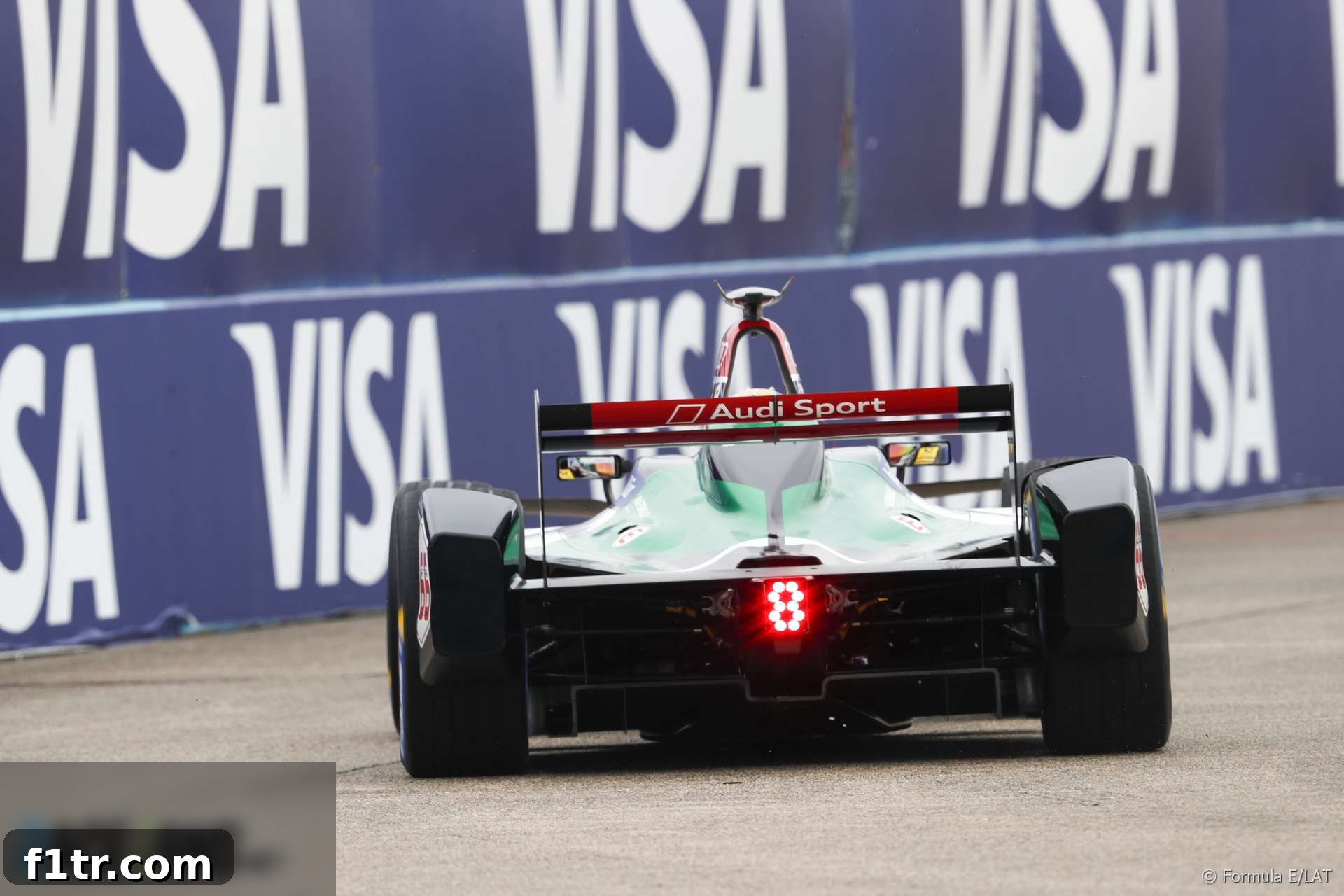
Abt Secures Dramatic Home Pole in Berlin Formula E Qualifying Amidst Regulatory Scare
The atmosphere at the Tempelhof Airport Street Circuit was electric as the FIA Formula E Championship descended upon Berlin for what promised to be a thrilling qualifying session. Amidst the roar of the all-electric machines, Daniel Abt delivered a performance nothing short of sensational, claiming a dominant pole position for his home race. The German driver, representing Audi Sport Abt Schaeffler, showcased incredible pace, outclassing his closest competitors, including his own teammate, by a significant margin. However, the celebrations were momentarily overshadowed by a nervous wait, as Abt’s pole position hung precariously in the balance due to a potential regulatory infringement, adding an unexpected layer of drama to an already captivating session. This nail-biting uncertainty captivated fans and paddock personnel alike, underscoring the high stakes and precision required at the pinnacle of electric motorsport.
Advert | Become a Supporter & go ad-free
The Tempelhof Airport Street Circuit is renowned for its unique characteristics, presenting a formidable challenge to even the most seasoned Formula E drivers. Unlike traditional asphalt circuits, Tempelhof’s layout is carved out of rough, unyielding concrete runways. This distinctive surface offers virtually no ‘give,’ placing immense strain on the specialized Michelin tires and significantly limiting their operational lifespan. As heat builds up within the track surface throughout the qualifying session, the delicate operating window for optimal tire grip becomes incredibly narrow. Drivers are often forced to wrestle their cars, battling with minimal to zero grip if they fail to manage these dynamic conditions perfectly. This inherent unpredictability often defies the conventional wisdom of Formula E qualifying, where Group One is traditionally dubbed the ‘group of death.’ In most races, the track evolves and speeds up with each passing group, disadvantaging those who run early. Yet, Tempelhof’s specific conditions have a habit of throwing up unexpected results, making every group’s performance a critical indicator, not just of raw pace but also of adaptability and strategic prowess.
The Intense Group Qualifying Sessions Unfold
Group One: Defying Expectations
The opening group saw the tail end of the championship’s top ten drivers take to the challenging Berlin track. A formidable line-up comprising Nelson Piquet Jr., Daniel Abt, Mitch Evans, André Lotterer, and Oliver Turvey faced the steadily warming concrete. As the first benchmark, Lotterer clocked in a lap time of 1’10.598. Initial indications suggested a typical Group One scenario, with times appearing to be significantly slower than the mid 1’09 marks observed during earlier free practice sessions. However, the narrative quickly shifted. Oliver Turvey and Daniel Abt, both known for their qualifying prowess, bucked the trend, unleashing much faster laps. Abt, in particular, demonstrated exceptional pace, topping the session with a blistering 1’09.774, immediately signaling his intent and hinting that the usual ‘group of death’ disadvantage might not be as pronounced on this unique circuit. His ability to find grip and speed early on set a high bar for the subsequent groups.
Group Two: Midfield Contention
Following Group One, the midfield contenders entered the fray. Drivers such as José María López, António Félix da Costa, Maro Engel, Nick Heidfeld, and Alex Lynn were tasked with navigating the now slightly warmer circuit. For the most part, this group’s times were unexceptional, reflecting the consistent challenge of Tempelhof. However, Alex Lynn managed to extract a stellar performance from his car, pushing himself into a strong position for Super Pole contention by securing P3 at the conclusion of the group. His impressive lap highlighted the tight competition within the midfield and the potential for any driver to surprise, even in a seemingly consistent group.
Group Three: Redemption and Surprises
Group Three comprised drivers who had been struggling for pace or consistency throughout the season, alongside some new faces. Nico Prost, Luca Filippi, and Jérôme D’Ambrosio were joined by Stéphane Sarrazin, who had recently replaced Tom Blomqvist at Andretti, and stand-in driver Tom Dillmann, covering for Edoardo Mortara due to a DTM calendar clash. While standout performances from this group might have seemed relatively unlikely, Jérôme D’Ambrosio had other ideas. Having won the inaugural Berlin ePrix in Season 1 following Lucas di Grassi’s disqualification and showing promising speed in practice, D’Ambrosio delivered a remarkable 1’09.938 lap. This exceptional effort propelled him directly into Super Pole contention, proving that experience and a strong connection with the circuit can override pre-race expectations. His performance was a testament to his skill and adaptability, injecting further excitement into the qualifying proceedings.
Group Four: The Championship Heavyweights
The final qualifying group featured the championship’s elite – the top five racers in the points standings: Lucas di Grassi, Sébastien Buemi, Felix Rosenqvist, Sam Bird, and Jean-Éric Vergne. This was the group where outright pace and championship pedigree were expected to shine. Jean-Éric Vergne, who had consistently demonstrated superb qualifying form throughout the season, initially topped the times with a 1’09.765. However, the reigning champion, Lucas di Grassi, soon eclipsed him. Di Grassi unleashed a blistering 1’09.620, recording the fastest time of any group session. This lap was incredibly close to Maro Engel’s fastest race lap from the previous season (1’09.519), a remarkable feat considering the circuit length had been slightly extended for this event. Di Grassi’s raw speed underscored the formidable challenge awaiting the Super Pole contenders.
Advert | Become a RaceFans supporter andgo ad-free
The Super Pole Shootout: A Battle for Pole
With the group sessions concluded, the top five fastest drivers advanced to the thrilling Super Pole shootout. The elite quintet comprised Lucas di Grassi, Jean-Éric Vergne, Daniel Abt, Jérôme D’Ambrosio, and Oliver Turvey. Each driver had one flying lap to lay down their absolute best time, with no second chances.
Jérôme D’Ambrosio, despite his heroic effort in Group Three, was unfortunately unable to replicate that blistering pace during his Super Pole run. He clocked a disappointing 1’10.054, which, while placing him on the third row of the grid, still represented his most successful qualifying result of the season, a testament to his fighting spirit.
Oliver Turvey, however, found an extra gear, delivering a highly competitive lap time of 1’09.775. For a moment, it seemed as though this might be enough to challenge for the pole. But Daniel Abt had other plans. Entering the circuit with immense pressure and the roar of the home crowd, Abt produced an absolutely stunning lap, shaving two-tenths off his teammate’s best time, crossing the line with an incredible 1’09.472. This phenomenal performance solidified his dominance and sent a clear message to his rivals.
Jean-Éric Vergne, despite his strong group performance, found himself unable to match Abt’s exceptional pace in the Super Pole session, ultimately settling for a time that placed him behind the German. The biggest surprise came from Lucas di Grassi. Known for his precision and composure, di Grassi made a substantial error during his Super Pole lap, a rare misjudgment from the championship contender. This costly mistake relegated him to a position even lower than D’Ambrosio, a significant setback for the Brazilian.
The Regulatory Cloud: Abt’s Anxious Wait
Even as the cheers for Daniel Abt’s incredible Super Pole lap echoed around Tempelhof, a shadow of uncertainty loomed large. A decision remained open regarding a potential infringement during Abt’s qualifying lap. The investigation centered on a possible breach of the strict regulations governing 200kW power usage. According to Formula E rules, drivers are permitted to deploy the full 200kW power output only within the last sector of their warm-up lap. Any activation of this higher power earlier than permitted constitutes an infringement, carrying severe penalties that could range from a grid penalty to an outright disqualification.
The implications were immense. Abt had seemingly delivered the qualifying performance of his life, a career-defining moment at his home race. To lose such a pole position due to a technicality would have been a devastating blow. The wait for the stewards’ decision was agonizing, not just for Abt and his team, but for all the fans who had witnessed his sensational drive. The tension was palpable in the paddock, with everyone speculating on the outcome. However, some time after the session had concluded, the official confirmation finally arrived, bringing immense relief to Abt and his supporters. The stewards ruled that no infringement had occurred, allowing Daniel Abt to rightfully keep his second career pole position – his first since Long Beach in 2015. This validation cemented his dominant performance and set the stage for a thrilling race from the front of the grid.
Qualifying Results Overview
The exhilarating qualifying session in Berlin delivered a compelling grid for the upcoming ePrix. Here’s a breakdown of the group qualifying and Super Pole results:
Group Qualifying Results:
1. Di Grassi: 1’09.620
2. Vergne: 1’09.765
3. Abt: 1’09.774
4. D’Ambrosio: 1’09.938
5. Turvey: 1’09.943
6. Rosenqvist: 1’09.951
7. Buemi: 1’09.994
8. Lynn: 1’10.002
9. Evans: 1’10.087
10. Bird: 1’10.087
11. Lopez: 1:10.105
12. Dillman: 1’10.214
13. Engel: 1:10.248
14. Heidfeld: 1:10.264
15. Piquet: 1’10.270
16. Sarrazin: 1’10.315
17. Da Costa: 1’10.417
18. Lotterer: 1’10.598
19. Filippi: 1’10.601
20. Prost: 1’10.618
Super Pole Results:
1. Abt: 1’09.472
2. Turvey: 1’09.735
3. Vergne: 1’09.991
4. D’Ambrosio: 1’10.054
5. Di Grassi: 1’10.498
Advert | Become a RaceFans supporter andgo ad-free
Looking Ahead: The Berlin ePrix
Daniel Abt’s confirmed pole position for the Berlin ePrix marks a significant milestone in his career and a moment of immense pride for German motorsport fans. His ability to master the unique Tempelhof circuit and deliver under pressure, especially with the regulatory cloud hanging over him, underscores his talent and resilience. With a challenging circuit known for its unpredictable nature and a grid packed with championship contenders, the race itself promised to be an unmissable spectacle. The stage was perfectly set for an electrifying display of skill, strategy, and pure racing drama, as the drivers prepared to battle it out on the former airport runways of Berlin.
Formula E News and Updates
Stay up-to-date with the latest developments from the world of Formula E:
- McLaren to quit Formula E at end of season
- Wehrlein beats Jaguar pair to title in dramatic Formula E finale
- Wehrlein’s London win sets up thrilling three-way title showdown in finale
- Da Costa takes hat-trick of wins in chaotic second Portland race
- Da Costa inherits Portland win from Evans after Cassidy spins lead away
Browse all Formula E articles