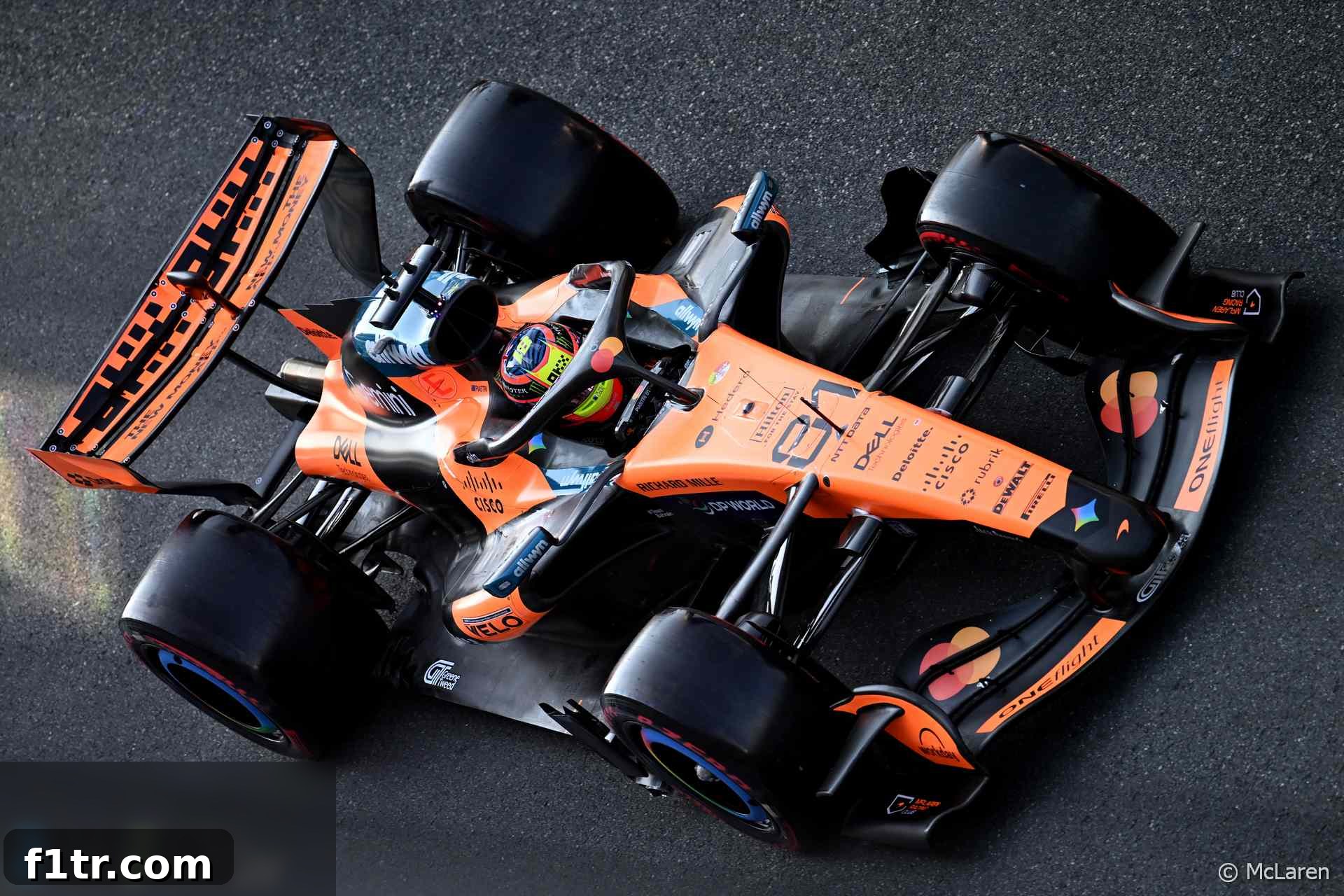
One of the more unusual effects introduced by Formula 1’s 2026 regulations remained a concern for drivers after last weekend’s sessions.
Advert | Become a Supporter & go ad-free
Following the two qualifying sessions, drivers reported that the new power unit rules can still penalise them for pushing too hard on a flying lap.
McLaren’s Oscar Piastri said the sport has made some progress in reducing the extreme “super-clipping” behaviour seen at earlier races, a problem many expected to be less severe at Miami given the layout. However, he warned other issues introduced by the rules persist.
“Lowering the harvest limit and reducing super-clipping is an improvement,” Piastri told Viaplay. “But a lot of the other problems are still the same.
“You have to push harder very carefully to avoid using a lot of energy. So some things are a little better but some things are exactly the same.”
He described an unexpected loss of power at the end of his final flying lap in Saturday’s qualifying. “It was just very, very strange in some ways,” he said.
“In Q1 we had a few things that didn’t behave as expected. Q2 looked pretty good, then in Q3 the first lap wasn’t great. On the second lap some areas were off, and in a few sectors something odd happened with a massive super-clip when I didn’t expect it.”
Advert | Become a RaceFans supporter andgo ad-free
Piastri’s team mate Lando Norris also said the engines “penalised” them when they got on the throttle earlier at corner exits, a detail he highlighted after Miami.
The issue affects more than just the frontrunners. In the midfield, Alexander Albon qualified nearly four tenths of a second slower than team mate Carlos Sainz Jnr, a gap team principal James Vowles attributed to a small difference in throttle application.
“For Alex, we have been suffering from inconsistency on speed across the start/finish line,” Vowles said. “There’s a lot we ask the drivers to do to prepare everything down the back straight, with a sequence of actions needed to get everything spot-on.
“When you have to follow that sequence, performance differences can be extreme. In Alex’s case he had traffic and a minor change in throttle application cost him a few tenths at the start of the lap, which dropped him from where he should’ve been.”
Miss nothing from RaceFans
Get a daily email with all our latest stories – and nothing else. No marketing, no ads. Sign up here:
2026 Miami Grand Prix
- Miami stats: Mercedes have now won at every track on the F1 calendar – so far
- F1 drivers say they are still at the mercy of their power units over a flying lap
- McLaren’s Miami GP radio messages show the scars of Qatar GP tactical error
- ‘This is not the level F1 should be’: Norris tells F1 to ‘ditch the battery’
- Lawson was right: Racing Bulls should not have ordered him to let Verstappen past
Browse all 2026 Miami Grand Prix articles