As the Formula 1 season charges forward, a whirlwind of events, driver insights, and strategic decisions continues to shape the narrative. From the intense driver battles on track to crucial discussions about the sport’s future, the latest F1 news offers a comprehensive look at the thrilling world of motorsport. This round-up brings you the key takeaways, delving into driver perspectives, regulatory debates, and commercial developments that keep fans on the edge of their seats.
Daniel Ricciardo’s Turkish GP Performance: A Struggle for Grip
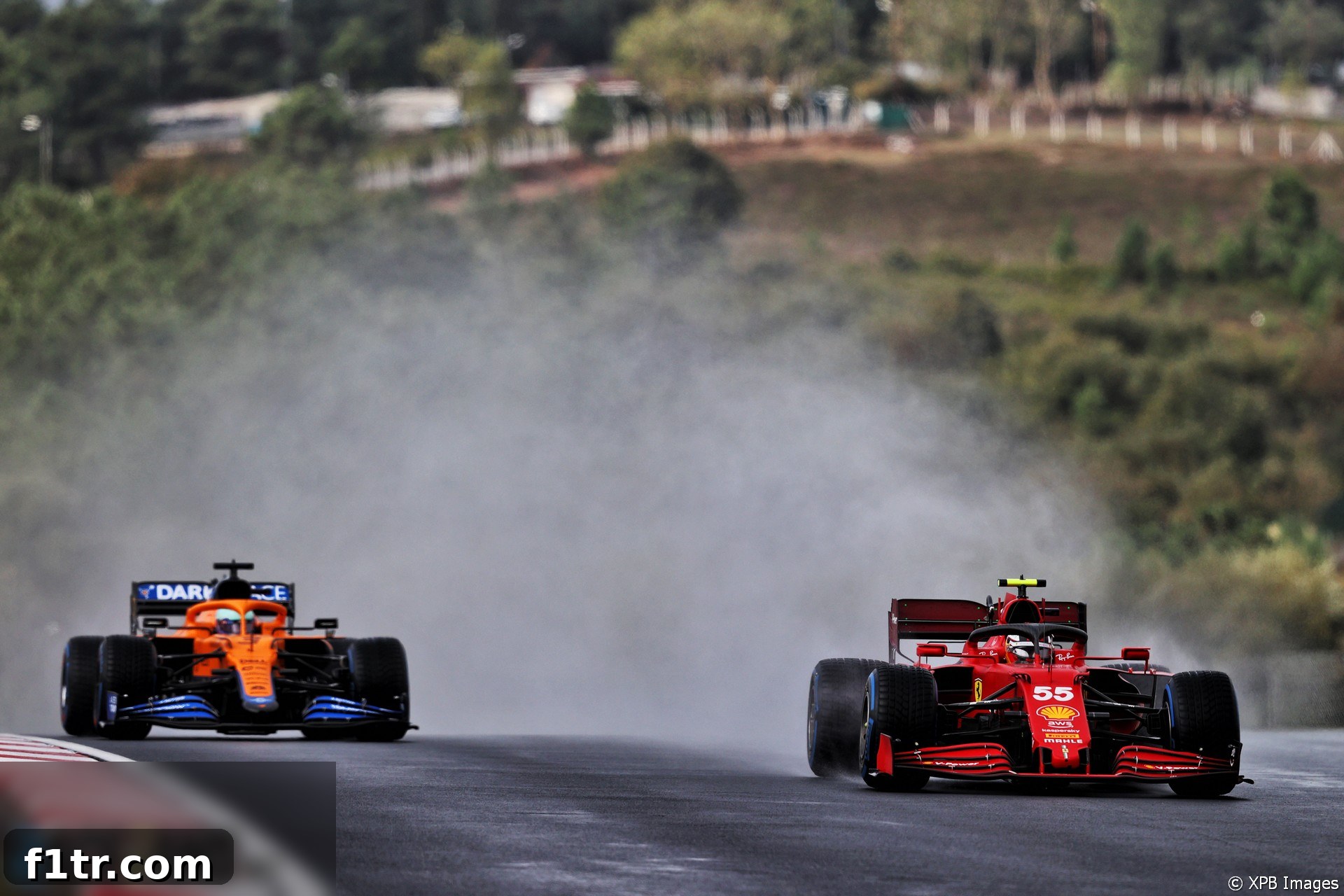
The Turkish Grand Prix proved to be a challenging affair for many drivers, with its notoriously slippery surface and unpredictable grip levels. Among those who faced significant hurdles was McLaren’s Daniel Ricciardo. Starting from the back row alongside Ferrari’s Carlos Sainz Jr., Ricciardo found himself in a direct battle early on, but the race unfolded very differently for the two.
Advert | Become a Supporter & go ad-free
Ricciardo openly admitted that he simply didn’t possess the necessary pace in his car to match Sainz’s charge through the field. While the Ferrari driver impressively climbed to secure points for an eighth-place finish, Ricciardo concluded his race in a disappointing 13th position. “We were side-by-side the first lap, I think I was ahead at one point, he was ahead, then we went back and forth and then he got me back,” Ricciardo recounted, highlighting the initial close quarters battle.
However, the Australian driver quickly recognized a stark difference in performance. “Then his ability to come through the field and keep going… it wasn’t really like his start was better and it put him in a better position, it was just he was faster and he had more grip available,” he explained. Ricciardo praised Sainz’s driving, noting, “I just saw some of the moves he made, he drove very well so I’m not taking that away from him, but you could tell he was driving with confidence and the grip was giving him a lot.” This observation underscored the fundamental limitation Ricciardo faced: a lack of crucial grip, particularly at the front end of his McLaren MCL35M.
Poor front-end grip proved to be the Achilles’ heel for Ricciardo throughout the entire race. This issue significantly hampered his ability to attack corners and maintain speed when following other cars closely. “As soon as I got behind someone, I lost the front and then it started to get dead,” he lamented. This critical lack of aerodynamic stability in dirty air made overtaking incredibly difficult and compromised his tire management.
Desperate for a change, Ricciardo opted for an early pit stop. “So I pitted, thought we’d be quick with clear air on a new tyre, weren’t really that quick,” he confessed. The mid-race period offered a glimmer of hope, with Ricciardo experiencing a brief window of improved performance. “We went through a phase where it was mediocre, then it’s like it cleared. And I remember four good laps where I felt like I could really lean on the tyre and I started to smile under the helmet and then it fell away again.” This fleeting period of confidence highlighted the car’s potential but also the inconsistent nature of its performance under race conditions.
The final laps became a grueling battle against fading tires. “The last 10 laps was just very difficult, just the rear. I had a look at the end, you could see the canvas, it’s down to the core,” Ricciardo described, illustrating the severe degradation of his tires. This performance disparity in Turkey raises questions about McLaren’s car balance, tire management strategies, and how they adapt to low-grip conditions, especially when compared to rivals like Ferrari who demonstrated stronger pace.
Ross Brawn Defends Pivotal 2022 Formula 1 Regulations Change
Despite Formula 1 currently enjoying one of its most enthralling championship battles in years between Max Verstappen and Lewis Hamilton, the sport’s managing director of motorsport, Ross Brawn, remains steadfast in his conviction that the radical technical rules overhaul slated for the 2022 season is not only necessary but crucial for the long-term health and spectacle of racing. The upcoming regulations represent the most significant shake-up to car design in decades, aimed at fostering closer competition and more exciting wheel-to-wheel action.
Speaking in the wake of another championship lead swap between Verstappen and Hamilton at the Turkish Grand Prix, Brawn addressed the growing sentiment that the current thrilling season might negate the need for such drastic changes. “This weekend I heard some comments around whether the 2022 regulation changes are needed given we’re currently enjoying such a golden season this year,” Brawn acknowledged.
However, he was quick to offer a critical perspective. “I think that fails to understand the fact that while the championship is thrilling this year, the cars still struggle to follow each other closely and create overtaking opportunities.” This statement cuts to the core of the issue the new regulations aim to solve. Modern F1 cars, with their complex aerodynamic designs, generate significant “dirty air” that severely disrupts the airflow for following cars, leading to a substantial loss of downforce and making close racing incredibly challenging. This fundamental limitation often results in processional races, even when the drivers at the very front are battling intensely.
Brawn emphasized that the 2022 rules are designed to fundamentally alter this dynamic, moving away from reliance on intricate front wings and bargeboards for downforce to a greater use of ground effect. This shift is intended to create cars that can follow more closely without suffering such a drastic performance penalty. While recognizing that the changes won’t be an instant panacea, Brawn expressed long-term optimism: “While the 2022 rules won’t change the situation overnight, I think they are a much better platform to improve the racing on the track and I’m sure that once the new rules have settled down, we will see some incredible races and championships in the future, with even more wheel-to-wheel action.”
The F1 chief’s defense highlights the strategic vision behind these regulations. It’s not just about addressing the immediate spectacle, but about building a sustainable foundation for consistently better racing in the years to come. The hope is that by creating cars that are inherently better at racing each other, F1 can move beyond reliance on DRS zones and specific track characteristics to deliver genuine, unassisted overtaking and more dynamic races, thereby securing the sport’s appeal for future generations of fans.
Red Bull to Showcase Acura Branding at United States Grand Prix
In a strategic move to bolster its presence and appeal in the crucial North American market, Red Bull Racing is set to feature Acura branding prominently on its cars and driver overalls for the upcoming United States Grand Prix. This branding switch will see the familiar Honda logos replaced on the rear wing and potentially other areas, with Acura, Honda’s premium automotive brand for North America, taking center stage.
The decision underscores the importance of the US market for Formula 1 and its commercial partners. As F1 continues to grow in popularity across the United States, driven by initiatives like the ‘Drive to Survive’ documentary series, teams and manufacturers are increasingly looking for ways to connect with American audiences. Leveraging the Acura brand, which enjoys strong recognition and a loyal customer base in North America, provides a direct and powerful link to this key demographic.
While the rear wing and driver overalls will feature Acura, RaceFans understands that the engine cover on the RB16Bs is expected to retain the “Honda E Technology” signage. This differentiation is significant. “Honda E Technology” represents Honda’s broader commitment to advanced, electrified powertrain solutions, reflecting its global engineering prowess. The presence of both Acura and Honda E Technology branding simultaneously allows Red Bull and its engine supplier to target distinct marketing messages: Acura for premium North American market presence, and Honda E Technology for its overarching technological innovation in propulsion.
This branding initiative is particularly noteworthy given that Honda is set to withdraw as an official engine supplier at the end of the current season, though Red Bull will continue to use Honda power units under its own Red Bull Powertrains division. The strategic use of Acura branding for a marquee event like the United States Grand Prix can be seen as a final, impactful marketing push for Honda’s premium division in a key region, capitalizing on the team’s strong performance and the growing F1 viewership in the US before the full transition to Red Bull Powertrains.
Advert | Become a RaceFans supporter andgo ad-free
Social Media Pulse: Pato O’Ward’s McLaren Experience and Fan Connections
Social media continues to be an invaluable platform for Formula 1 teams and drivers to connect with fans, offer behind-the-scenes glimpses, and build brand loyalty. Recent posts have given fans a closer look at the experiences of rising stars, demonstrating the personal connection drivers have with the sport and their teams.
IndyCar sensation Pato O’Ward, a prominent talent within the McLaren racing family, shared heartfelt messages on his social channels during a visit to the McLaren Technology Centre. On Twitter, O’Ward posted a video reflecting on his journey, stating, “This car made me fall in love with the sport.” This emotional declaration, shared by the Arrow McLaren IndyCar Team, resonated with fans, highlighting the profound impact of high-performance racing machinery on a driver’s passion and career trajectory. Such personal insights foster a deeper connection between drivers and their global fanbase.
In another tweet, O’Ward expressed his sheer excitement at the McLaren facility: “Kid in a candy store. WOW. Never gets old @McLarenF1 🥰 what a special place.” Accompanying images or videos often showcase the impressive engineering and history housed within McLaren’s headquarters, igniting the imagination of motorsport enthusiasts worldwide. These posts not only boost O’Ward’s profile but also serve to strengthen the McLaren brand across different racing series, hinting at potential future F1 opportunities for the young driver.
While specific Instagram content was referenced in the original roundup, the essence of these social media interactions lies in their ability to bridge the gap between elite motorsport and its passionate followers. Through candid posts, drivers offer a human element to a highly technical sport, allowing fans to share in their excitement, challenges, and love for racing.
- Find more official F1 accounts to follow in the F1 Twitter Directory
Links: Accelerating Towards a Sustainable Motorsport Future
The world of motorsport is increasingly recognizing its responsibility to address environmental concerns and pursue sustainable practices. Recent announcements highlight significant strides made by major organizations within the industry to align with global climate action frameworks.
F1 French Grand Prix receive FIA three-star environmental certification (FIA)
In a landmark achievement, the Formula 1 Grand Prix de France has become the first Grand Prix organizer to attain the highest level of environmental certification from the FIA (Fédération Internationale de l’Automobile). This prestigious three-star accreditation is a testament to the event’s exceptional environmental performance and its unwavering commitment to an ambitious sustainable development strategy. The FIA’s recognition underscores the growing imperative for major sporting events to not only entertain but also to operate with a strong ecological consciousness, setting a benchmark for other circuits and organizers to follow in reducing their carbon footprint and promoting eco-friendly operations.
Motorsport UK commits to United Nations Sports for Climate Action Framework (Motorsport UK)
Further demonstrating the sport’s dedication to sustainability, Motorsport UK has proudly announced its commitment to the United Nations Sports for Climate Action Framework. This significant milestone highlights the governing body’s proactive approach to environmental stewardship within the UK’s motorsport landscape. By adopting this framework, Motorsport UK pledges to implement principles that reduce climate impact, promote responsible consumption, and advocate for climate action within its extensive network of clubs, competitors, and events. Such commitments are crucial in ensuring the long-term viability and public acceptance of motorsport in an increasingly climate-conscious world, showcasing how speed and innovation can coexist with environmental responsibility.
We always endeavour to credit original sources. If you have a tip for a link relating to single-seater motorsport to feature in the next RaceFans round-up please send it in via the contact form.
Advert | Become a RaceFans supporter andgo ad-free
Comment of the Day: The Price of Defying Team Orders
Team orders remain one of the most contentious and debated aspects of Formula 1. When a driver chooses to defy direct instructions from their team, it often sparks intense discussion among fans and pundits alike. The recent actions of Antonio Giovinazzi at the Turkish Grand Prix, where he reportedly refused to let his Alfa Romeo teammate Kimi Raikkonen pass, ignited such a debate.
Pretty short-sighted by Giovinazzi. I get it, he’s trying to keep his seat (if it isn’t already gone).
Defying orders and likely costing your team points is no way to convince other teams you’re worth their time, or for Alfa Tomeo to keep him on as a reserve.
@Nerrticus
As highlighted by RaceFans reader @Nerrticus, Giovinazzi’s decision was perceived as “pretty short-sighted.” The context for such a move is often a driver’s desperate attempt to prove their worth, especially when their seat for the following season is in jeopardy. However, the potential ramifications of such defiance are significant. Costing the team valuable championship points, particularly in the tight midfield battle, can severely damage a driver’s relationship with their current employer and tarnish their reputation within the paddock.
In a sport where team cohesion and strategic obedience are highly valued, defying orders sends a strong negative message. It suggests a lack of understanding of the broader team objectives and can lead to a driver being viewed as a difficult asset. For Giovinazzi, whose future with Alfa Romeo (and potentially in F1) was already uncertain, this incident could have detrimental long-term consequences, making it harder to secure future drives or even a reserve role. The intricate balance between individual ambition and team loyalty is constantly tested in F1, and Giovinazzi’s choice serves as a stark reminder of the high stakes involved.
Happy Birthday!
A special shout-out to all the motorsport enthusiasts celebrating their birthdays. Today, we extend our warmest wishes to Randy Torres! May your day be filled with joy, speed, and plenty of racing action.
If you want a birthday shout-out in a future round-up, let us know when yours is via the contact form or by adding your name to our special list here.
On This Day in Motorsport: Damon Hill’s Historic 1996 Championship Triumph
- Exactly 25 years ago today, on October 13, 1996, a momentous chapter in Formula 1 history was written at the Suzuka Circuit in Japan. Damon Hill, driving for the dominant Williams-Renault team, clinched the coveted World Championship title in a race that combined high drama and strategic brilliance. This victory was particularly poignant as it marked his final appearance as a Williams driver, capping a highly successful but often challenging tenure with the British outfit.
Hill’s path to the championship was not without its rivals, primarily his talented rookie teammate, Jacques Villeneuve. The 1996 season had been a gripping battle between the two Williams drivers, showcasing the formidable speed of the FW18 chassis. However, the championship decider at Suzuka saw a dramatic turn of events that ultimately favored Hill. Villeneuve, who had pushed Hill hard throughout the season, suffered a heartbreaking retirement from the race when a wheel detached from his car, effectively ending his title challenge and paving the way for Hill’s triumph.
This momentous day also marked the final Formula 1 race for seasoned veteran Martin Brundle, who concluded a distinguished career that saw him race for several teams, including Tyrrell, Benetton, and McLaren. Brundle’s presence in the paddock and on the grid added to the rich tapestry of the sport, and his retirement symbolized the changing of the guard within Formula 1. Hill’s victory was a fitting culmination of a career marked by perseverance, making him the first son of a world champion (Graham Hill) to also achieve the ultimate title, solidifying his place in motorsport legend.