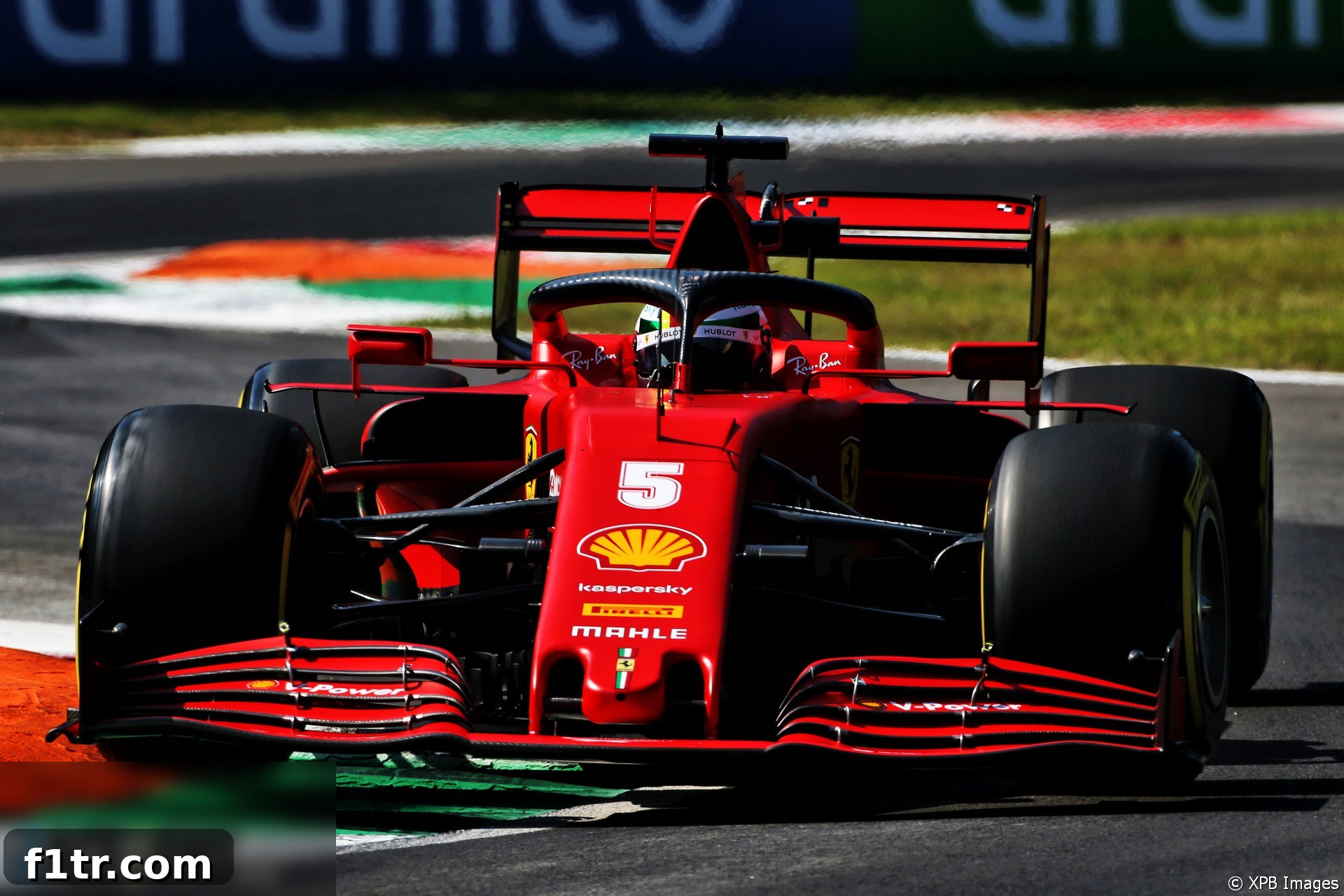
Sebastian Vettel, the four-time Formula 1 world champion, voiced significant concerns over the mandated high tyre pressures, asserting they were severely compromising the handling of his Ferrari SF1000. Speaking during the challenging 2020 Italian Grand Prix weekend at Monza, Vettel highlighted how these elevated pressures transformed his car into a difficult machine to manage, directly impacting its performance and predictability.
Pirelli, the sport’s sole tyre supplier, had implemented a notable increase in minimum front tyre pressures for the Monza event. Teams were required to run their front tyres at 26psi, a significant jump from the 23.5psi set for the same race just a year prior. This adjustment, aimed at ensuring safety and structural integrity under the extreme loads generated by F1 cars on the high-speed Monza circuit, inadvertently created a new set of challenges for drivers, particularly for those already grappling with difficult machinery.
Following a particularly trying day in his Ferrari, which saw him endure a spin at Lesmo 1, Vettel articulated the palpable effect of these higher pressures. He observed a distinct increase in tyre degradation, a critical factor that can make or break a race strategy. “Part of the contributor for that in the race is obviously the balloon pressures that we are forced to run at,” Vettel explained, using a term that vividly describes how the tyres become overly stiff and less compliant. “That doesn’t help.”
The Tyre Pressure Conundrum: A Technical Deep Dive
The science behind tyre pressures in Formula 1 is complex, balancing performance, safety, and longevity. Higher tyre pressures, while mitigating the risk of structural failure, inherently stiffen the tyre carcass. This stiffness reduces the contact patch – the small area of rubber making contact with the track surface – which is crucial for mechanical grip. A smaller contact patch means less adhesion, leading to reduced traction, braking performance, and cornering stability.
Vettel’s description of “balloon pressures” perfectly encapsulates this phenomenon. When tyres are inflated beyond their optimal operating window, they lose their natural flexibility, becoming less able to absorb bumps and undulations on the track. This translates directly into a harsher ride, diminished feedback through the steering wheel, and a car that feels perpetually “on edge.” For a driver, this makes finding the limit incredibly challenging, as the car’s behaviour becomes less linear and more abrupt.
“It’s far away from, I think, where the tyres would like to run,” Vettel lamented, underscoring the compromise forced upon teams and drivers. “But we have to obviously stick to the rules.” This statement highlights the inherent conflict between regulatory requirements and a driver’s desire for optimal car performance and feel. While Pirelli’s mandate is rooted in safety, especially at a circuit like Monza with its punishing high-speed corners and kerbs, the impact on car dynamics for certain teams was profound.
Ferrari’s Monza Misery: An Exacerbated Struggle
The 2020 season was already a historically difficult one for Scuderia Ferrari. The SF1000 chassis, plagued by a significant power deficit and aerodynamic instability, struggled to compete with the front-running teams. At Monza, the “Temple of Speed” where engine power and aerodynamic efficiency are paramount, Ferrari’s weaknesses were glaringly exposed. The increased tyre pressures further compounded these existing problems, pushing the car’s handling characteristics into an even more challenging realm.
Vettel’s spin at Lesmo 1, a notorious right-hand corner requiring precision and confidence, was a stark illustration of the car’s precarious balance. Even for a driver of his caliber, wrestling the SF1000 with its compromised grip and unpredictable behaviour proved to be an uphill battle. The high pressures meant the tyres took longer to reach their optimal operating temperature, or conversely, overheated more easily due to excessive sliding, creating a narrow and unforgiving performance window.
Looking ahead to the race, Vettel painted a grim picture for his team. “It will be a tricky one in the race,” he predicted with a realistic assessment of their prospects. “We’ll be fighting a lot of cars, we will be in the pack. It’s not like racing in front and clean air and having a nice car.” This admission speaks volumes about the challenge facing Ferrari. Racing in traffic, where aerodynamic efficiency is further compromised and tyre temperatures fluctuate wildly, would only amplify the difficulties presented by the high tyre pressures and the car’s inherent deficiencies.
The Broader Impact on Car Balance and Performance
Vettel elaborated on the SF1000’s overall balance, noting it wasn’t drastically different from previous races that season, yet still immensely challenging. “The car is difficult to drive, but it’s not the first time,” he stated, reflecting a season-long struggle for the Italian outfit. The fundamental issues persisted, and the increased tyre pressures simply served to shine a brighter light on them.
When asked about specific areas of weakness, Vettel provided a clear analysis. “Where are we lacking? I think we’re losing down the straights, which is expected.” This was a well-documented issue for Ferrari in 2020, stemming from a significant loss of engine performance. However, the tyre issues added another layer of complexity, particularly in the corners. “In terms of where we want to have a better car to drive, we’re lacking grip on corner entry, pretty much all four wheels, the car is sliding quite a lot.”
This widespread lack of grip, affecting all four wheels, is a classic symptom of a car that is not in harmony with its tyres. High pressures, by reducing the contact patch and increasing stiffness, can prevent the tyres from generating sufficient grip, especially under initial steering input during corner entry. The resulting “sliding” not only costs lap time but also rapidly degrades the tyres through friction, making it even harder to maintain consistent pace over a race stint.
“It’s a handful, it’s very difficult to get everything right to get the lap together,” Vettel concluded, succinctly summarizing the monumental task he faced behind the wheel. The car’s unpredictability demanded constant corrections, making it impossible to string together perfect laps or maintain precise control. Every turn, every braking zone, became an exercise in managing a recalcitrant machine rather than extracting its maximum potential.
Race Day Preparations and Strategic Implications
Despite the daunting challenges, Vettel and the Ferrari team remained focused on incremental improvements. “But that’s something to worry about on Sunday. Now we worry for tomorrow and hopefully get a better car because the better the car, it will also help on Sunday.” This mindset highlights the iterative nature of Formula 1 development, where even minor adjustments can yield significant benefits on track.
The high tyre pressures and the resultant handling issues had profound implications for race strategy. Managing tyre degradation becomes paramount, potentially dictating shorter stints or forcing teams into sub-optimal pit stop windows. Overtaking, already a challenge at Monza due to its high-speed nature and few critical braking zones, becomes even harder when cars are sliding and struggling for grip. Following another car closely exacerbates overheating tyres, further complicating matters for a team already on the back foot.
For Ferrari, securing a strong qualifying position was crucial, not just for track position but also for minimizing the time spent battling in dirty air. However, with a car as temperamental as the SF1000, even achieving a respectable grid slot was an arduous task. The cumulative effect of these factors meant that Vettel and his teammate Charles Leclerc faced an incredibly tough Sunday, battling not just competitors but also the limitations imposed by their machinery and the stringent tyre regulations.
Conclusion: A Season Defined by Struggle and Tyre Challenges
Sebastian Vettel’s candid comments from the 2020 Italian Grand Prix weekend serve as a powerful reminder of the intricate relationship between tyre regulations, car performance, and driver experience in Formula 1. While safety remains paramount, the mandated high tyre pressures presented a significant hurdle for teams already struggling with their car’s inherent balance. For Vettel and Ferrari, these pressures amplified the SF1000’s weaknesses, turning an already difficult season into an even more arduous test of endurance and skill at the iconic Monza circuit.
The challenge was not merely about raw pace but about managing the delicate balance of grip, degradation, and predictability under demanding circumstances. Vettel’s insights into the “balloon pressures” and the consequent sliding illustrate the fine margins within which F1 drivers operate. Ultimately, the 2020 Italian Grand Prix became another chapter in Ferrari’s challenging season, where even the most experienced drivers were left to wrestle with a car pushed to its limits by a combination of inherent design flaws and regulatory constraints.
2020 Italian Grand Prix
- Grosjean “obviously jealous” but pleased for Gasly after win
- 2020 Italian Grand Prix Star Performers
- Gasly: I’m ready for Red Bull return
- Ban on ‘quali mode’ reduced overtaking at Monza – Hamilton
- Gasly beats Sainz in closest F1 finish for 10 years
Browse all 2020 Italian Grand Prix articles