In the annals of Formula 1, some stories transcend the racetrack, embedding themselves in the very fabric of the sport’s dramatic history. Martin Donnelly’s near-fatal crash at the 1990 Spanish Grand Prix at Jerez is one such saga – a moment of terrifying peril that, decades later, surprisingly paved the way for a “very special” encounter with Hollywood royalty, uniting his family with cinematic legends.
Martin Donnelly: The Rising Star and the Jerez Nightmare
Before that fateful day in 1990, Martin Donnelly was a rising talent in Formula 1. Having impressed in junior categories and secured a coveted seat with the Lotus team, he embodied the dreams of countless aspiring racers. His journey to the pinnacle of motorsport was a testament to his dedication, skill, and unwavering sacrifice. Yet, as he himself described it, his career was extinguished in an instant, like a “light switch” flipping off, on the treacherous tarmac of Jerez.
The Cataclysmic Crash at the Spanish Grand Prix
The incident occurred during qualifying for the Spanish Grand Prix at Jerez. Donnelly, pushing his Lotus to the absolute limit through a high-speed right-hander, experienced a catastrophic front-left suspension failure. The car, rendered uncontrollable, became a missile, hurtling towards an unprotected Armco barrier at approximately 135 mph (215 kph). “It was like a bobsleigh with 7mm ride height,” Donnelly recounted, describing the sheer terror of having “no steering control” and bracing himself for an impact he knew would be devastating.
The corner in question, Peluqui, was notorious for its speed and unforgiving nature in 1990. Today, the approach to this turn has been significantly slowed by a chicane, a stark reminder of the safety advancements prompted by incidents like Donnelly’s. But on that day, the raw speed and the exposed barrier created a lethal combination. The force of the impact was so immense that it tore Donnelly’s Lotus apart, catastrophically ejecting him and his seat onto the track – a scene of horror that left onlookers stunned and fearing the worst.
Among those who witnessed the horrifying spectacle first-hand was fellow F1 driver Roberto Moreno, who was watching from the sidelines with Donnelly’s friends. Moreno, familiar with Donnelly from their Van Diemen days, was so convinced of the severity of the crash that he reportedly restrained one of Donnelly’s distraught friends, saying, “no, no, no, leave him alone. He’s dead, he’s dead. He’s gone.” The sight of Donnelly’s inert body on the circuit was so stark and immediate that other drivers, including Pierluigi Martini in his Minardi, courageously stopped their cars to protect him from further harm, even as qualifying was still underway. Ironically, the global television audience saw little of the immediate aftermath, as most cameras were focused on Ayrton Senna’s qualifying lap, cutting away only after the car had struck the barrier and Donnelly was already lying exposed on the track.
The Ironic Saving Grace: Car Disintegration
In a twist of fate that Donnelly himself acknowledged as deeply ironic, the very violence of the crash and the disintegration of his car likely saved his life. While the sight of a chassis tearing apart is terrifying, Donnelly believes it absorbed a significant portion of the impact energy. “If the tub had held up, I would most certainly, 110%, definitely be dead because I would have broken my neck,” he stated. The chassis’s failure, counterintuitively, acted as a crucial energy dissipation mechanism, preventing a fatal whiplash injury and offering him a slim chance of survival amidst catastrophic bodily trauma.
The Professor’s Urgent Battle: Sid Watkins and Donnelly’s Fight for Life
The immediate aftermath of Donnelly’s crash initiated a desperate race against time, orchestrated by the legendary Professor Sid Watkins, Formula 1’s medical delegate. While Donnelly had suffered multiple visible fractures – including his left femur protruding through his leg, permanently shortening it by an inch and a half – Watkins’ primary concern was the unseen, yet far more critical, internal damage. The shock of the impact had caused his internal organs to suffer severe trauma and begin shutting down.
Recognizing the gravity of the situation, Watkins knew that Donnelly’s survival hinged on swift and specialized medical intervention. He had only a limited window of “x” number of hours to transport Donnelly from the hospital in Seville to his highly specialized facility in Whitechapel, London. This urgent transfer was executed with remarkable precision: Donnelly was flown via air ambulance to Gatwick, then transferred by helicopter directly to the roof of the Whitechapel hospital, arriving in the emergency rooms the very next day. Just as Watkins had anticipated, Donnelly’s body continued to shut down.
A Mother’s Prayer and a Miraculous Recovery
The ensuing weeks were a harrowing ordeal. Donnelly spent seven weeks on a respirator, his lungs unable to function independently. His kidneys failed, necessitating daily three-hour dialysis sessions by machine. The situation was so dire that Professor Watkins delivered a somber prognosis to Donnelly’s mother, Margaret: “Margaret, if you believe in God, pray to your God, because we don’t expect Martin to survive.” A chaplain was brought in to administer the last rites, a grim acknowledgement of his precarious state.
Yet, against all odds, Martin Donnelly found a way to cling to life. He endured a truly terrifying experience, his heart stopping twice on the operating table, requiring defibrillation. “So technically I died three times,” he candidly revealed, emphasizing the sheer scale of his battle for survival. His remarkable resilience, coupled with the unparalleled medical expertise of Professor Watkins and his team, pulled him back from the brink, marking a profound victory in the face of overwhelming adversity.
From Personal Tragedy to Hollywood Storyline: The F1 Movie Connection
Decades after the crash that ended his Formula 1 career, Martin Donnelly’s harrowing experience found an unexpected new chapter in the world of cinema. His story became the inspiration for the backstory of the character Sonny Hayes in the official F1 Movie, starring Brad Pitt. The film even incorporates actual footage of Donnelly’s body lying on the track at Jerez, a powerful and visceral tribute to the reality of motorsport’s dangers and the human cost of its pursuit.
While the film portrays Hayes, played by Pitt, returning to race in F1, Donnelly’s reality was different; his career at the pinnacle of the sport was over. Nevertheless, his contribution to the film was acknowledged with a poignant “thanks to Martin Donnelly” in the end credits. This recognition led to a once-in-a-lifetime invitation to the movie’s premiere, an event that would bring its own set of extraordinary encounters.
A Special Meeting with Brad Pitt
At the premiere, Donnelly found himself amidst a star-studded audience, with celebrities like Tom Cruise and Ed Sheeran seated in the rows nearby. However, the most surprising encounter came with the film’s lead actor. As the movie progressed, two previously empty seats on the aisle beside him were filled by none other than Brad Pitt and his girlfriend. A handshake and an invitation to the after-party followed, creating a moment that deeply resonated with Donnelly.
At the after-party, Donnelly and his family had the opportunity to converse freely with Pitt. “We’re talking to Brad and chatting away to him as I am now,” Donnelly shared, highlighting Pitt’s genuine interest and approachable demeanor. For a man from West Belfast, as Donnelly put it, having his children meet and speak with an A-list Hollywood star like Brad Pitt was an experience beyond imagination. It was, he emphasized, “a very, very special moment for me and that happened because of my accident 35 years ago.” This incredible turn of events underscored the profound and unexpected ways in which life can unfold, even from the shadow of past trauma.
Donnelly’s Enduring Legacy: A Catalyst for F1 Safety
Martin Donnelly’s crash, alongside other severe incidents of the era, served as a stark and undeniable catalyst for monumental changes in Formula 1 safety. The image of a driver lying exposed on the track, the catastrophic car disintegration, and the struggle for life in the hospital reinforced the urgent need for comprehensive reforms. Professor Sid Watkins, Donnelly’s savior, became an even more vocal and influential advocate for safety, tirelessly campaigning for safer circuits, stronger car designs, and improved medical response systems.
The evolution of F1 safety, from the unprotected Armco barriers of Jerez in 1990 to today’s highly engineered crash structures, advanced medical interventions, and meticulously designed circuits, owes much to the lessons learned from tragedies like Donnelly’s. While his F1 racing career was cut short, his name is etched in the sport’s history not just as a talented driver, but as a poignant reminder of the inherent risks, and ultimately, as an unwilling contributor to the safety revolution that has saved countless lives in motorsport.
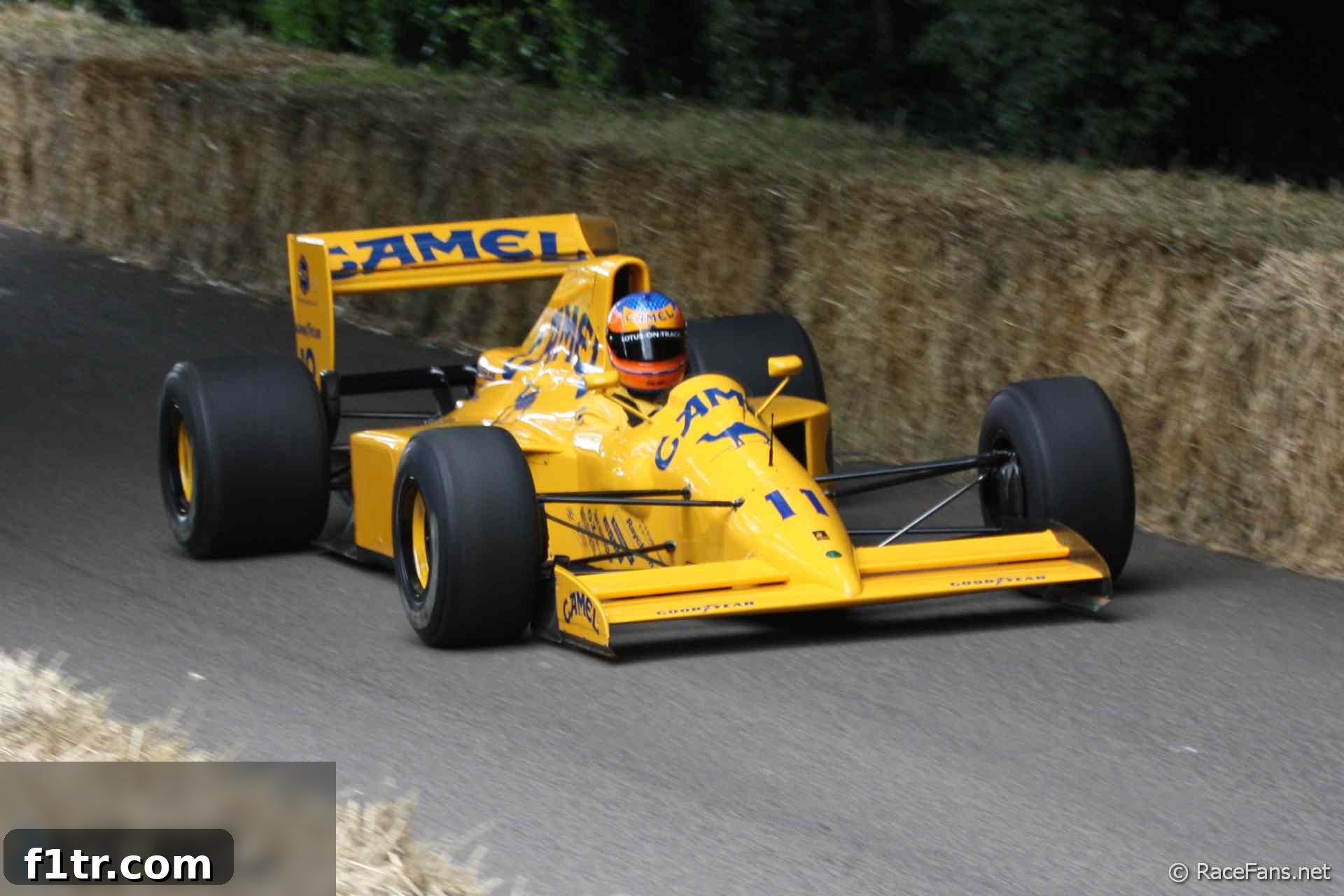
Today, Martin Donnelly remains connected to the world of motorsport, attending events and occasionally even getting back behind the wheel of historic F1 cars, as he did with his Lotus at the Goodwood Festival of Speed in 2011. His story is one of unimaginable adversity, profound resilience, and the unexpected ways in which life can present new opportunities, even when born from the most challenging circumstances. His journey from the brink of death at Jerez to the red carpet of Hollywood is a powerful testament to the human spirit.
Related Formula 1 Insights
- GT driver killed in multi-car crash at Nurburgring Qualifiers
- Should F1 change tracks or racing guidelines to tackle dangers in 2026 rules?
- Controversies, Norris, Newey and more: Five new motorsport books reviewed
- One of F1’s greatest races happened 15 years ago today. Or did it?
- “Overtaking is overtaking”: Domenicali denies F1’s yo-yo racing is “artificial”
Explore More Formula 1 Content