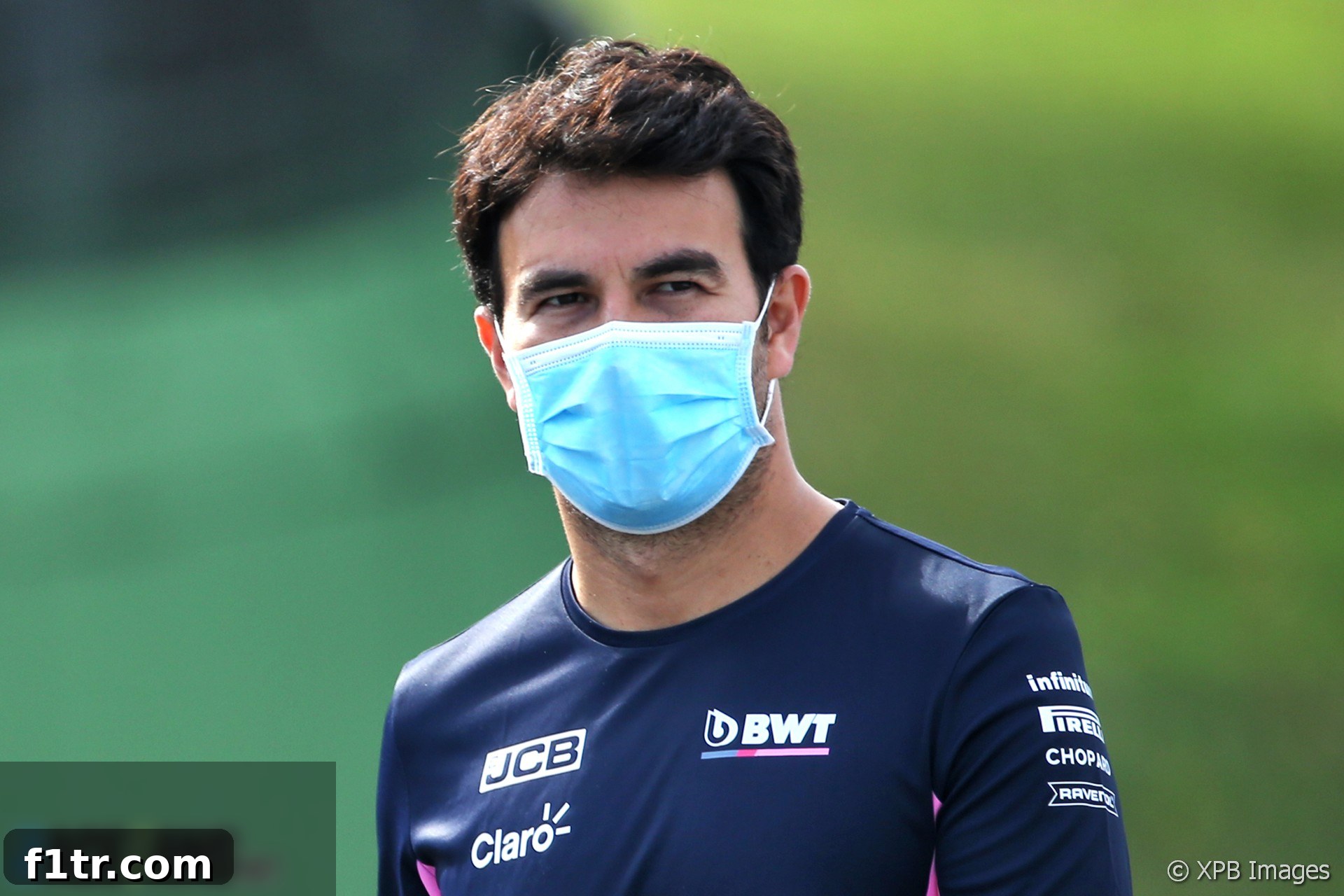
The Verstappen Conundrum: Why Perez and Hulkenberg are Tipped to Tackle Red Bull’s Toughest Seat
Both Sergio Perez and Nico Hulkenberg possess the mental fortitude required to thrive alongside Max Verstappen at Red Bull, a sentiment strongly voiced by Racing Point CEO Otmar Szafnauer. As the 2020 Formula 1 season drew to a close, the speculation surrounding Alexander Albon’s future at Red Bull intensified, prompting discussions about potential external candidates who could fill the notoriously challenging second seat. Szafnauer’s emphatic endorsement highlights the unique pressures of partnering a generational talent like Verstappen and suggests that experience and a robust mindset are paramount. This looming decision by Red Bull represented a critical juncture for their championship aspirations, with the driver market keenly watching.
Perez, who was displaced at Racing Point by the arrival of four-time world champion Sebastian Vettel, found himself without a guaranteed seat for 2021 despite a stellar season culminating in his maiden Grand Prix victory. Similarly, Nico Hulkenberg, having made three impressive substitute appearances for Racing Point earlier in the year, was also a free agent. Both drivers brought a wealth of experience, raw talent, and a proven ability to perform under pressure – qualities that Szafnauer believes are essential for any driver hoping to survive, let alone succeed, as Verstappen’s teammate.
Red Bull team principal Christian Horner publicly acknowledged the team’s consideration of bringing in a driver from outside their traditional young driver programme, a significant departure from their long-standing philosophy. This candid admission underscored the severity of the challenge Max Verstappen poses to his teammates, having comprehensively outperformed both Alexander Albon and his predecessor, Pierre Gasly. The search was not just for speed, but for a driver who could withstand the intense scrutiny and direct comparison to one of F1’s brightest stars.
Szafnauer’s Firm Endorsement: The Imperative of Mental Toughness
Otmar Szafnauer’s conviction regarding Perez and Hulkenberg’s suitability stems from his deep understanding of their individual characteristics and their careers. “Both of them have the mental capacity and the mental toughness to fit in alongside Max,” Szafnauer stated unequivocally. This assessment is not merely a testament to their driving skill but a profound recognition of the psychological resilience required in the apex of motorsport, particularly when pitted against a teammate of Verstappen’s caliber.
In the high-stakes world of Formula 1, mental toughness manifests in various ways: the ability to consistently extract performance from a car, to rebound from setbacks, to handle immense pressure from the media and the team, and crucially, to maintain focus and confidence even when results are challenging. Both Perez and Hulkenberg have demonstrated these traits throughout their extensive F1 careers. Perez, often operating in midfield teams, has consistently delivered strong points finishes and capitalized on opportunities, showcasing his strategic acumen and calm under pressure. Hulkenberg, despite never securing a podium, has been widely respected for his raw speed, consistency, and ability to adapt quickly, as evidenced by his standout substitute performances in 2020.
Szafnauer’s comments also implicitly highlight the unique demands placed upon Max Verstappen’s partners. Verstappen’s aggressive driving style, combined with his phenomenal natural talent and unwavering self-belief, makes him an exceptionally difficult benchmark. Previous teammates, including the highly-rated Pierre Gasly and Alexander Albon, visibly struggled to match his pace and adapt to the Red Bull RB16’s characteristics, which many speculated were optimized for Verstappen’s driving style. This led to a cycle of underperformance and pressure that ultimately saw them replaced, underlining the need for a driver with unparalleled mental strength.
Red Bull’s Driver Dilemma: Beyond the Junior Programme
Red Bull Racing has historically prided itself on its formidable young driver programme, a pipeline that has brought talents like Sebastian Vettel, Daniel Ricciardo, and Max Verstappen himself into Formula 1. However, in recent years, this well-oiled machine appeared to be faltering in its ability to produce a driver capable of consistently supporting Verstappen in the championship fight. The struggles of Albon and Gasly illuminated a critical void: a driver who could not only challenge Verstappen but also provide crucial strategic flexibility and secure valuable constructors’ points.
The decision to look outside the Red Bull stable marked a significant paradigm shift for the team. For years, the philosophy had been to promote from within Toro Rosso (now AlphaTauri), ensuring a consistent supply of Red Bull-groomed talent. However, the urgency of securing a competitive second driver to maximize their championship chances, particularly against a dominant Mercedes outfit, superseded this long-held tradition. Christian Horner and Helmut Marko found themselves in an unenviable position, weighing the loyalty to their academy against the immediate performance imperative.
The pressure on any Red Bull driver is immense, but the pressure on Verstappen’s teammate is particularly acute. Not only are they expected to perform at an elite level, but they are also under constant comparison to one of the sport’s most formidable talents. This environment can be crushing, eroding confidence and hindering performance. The search, therefore, was not just for raw speed, but for a seasoned professional who could withstand the heat, adapt quickly, and consistently deliver under the most intense scrutiny F1 has to offer. This made drivers like Perez and Hulkenberg, with their wealth of experience and proven resilience, particularly attractive prospects.
The Experienced Contenders: The Case for Perez and Hulkenberg
Sergio Perez, often affectionately known as “Checo,” had carved out a reputation as one of F1’s most consistent and resourceful performers. His career, spanning multiple teams including Sauber, McLaren, and Force India/Racing Point, demonstrated his ability to make the most of limited machinery. His tactical intelligence, particularly in tire management, and his knack for seizing opportunistic podiums or strong points finishes, made him a valuable asset. The culmination of his decade-long journey to his first Grand Prix win at the Sakhir Grand Prix in 2020 served as a powerful testament to his unwavering determination and talent, arriving just weeks after it was announced he would be replaced at Racing Point. This remarkable victory, achieved under immense personal pressure, undoubtedly solidified his claim for a top seat.
Perez’s experience, combined with his mature approach to racing, would offer Red Bull a stable and reliable points scorer. He demonstrated the capacity to lead a midfield team and deliver strong results when given the opportunity, a trait that Red Bull desperately needed in their second car. His ability to develop a car and provide clear feedback would also be invaluable, potentially allowing Red Bull to refine their package more effectively across both cars.
Nico Hulkenberg, on the other hand, presented a different yet equally compelling profile. Despite his unfortunate record of never securing a podium finish across a substantial career with teams like Williams, Force India, Sauber, and Renault, his talent and speed have rarely been questioned. He is widely regarded as one of the most underrated drivers of his generation, often described as a “super-sub” due to his immediate pace and adaptation capabilities. His three appearances for Racing Point in 2020, where he stepped in on short notice for COVID-affected drivers, were nothing short of sensational. He quickly got up to speed, out-qualified established drivers, and delivered strong race performances, reinforcing his reputation for raw, unadulterated talent.
Hulkenberg’s seamless integration into the Racing Point car, despite limited preparation, highlighted his natural feel for an F1 machine and his immense professional adaptability. These performances, coming after he had lost his full-time seat at Renault at the end of 2019, showcased a driver still at the peak of his powers and hungry for a return to the grid. His technical understanding and ability to provide clear, concise feedback to engineers would also be a significant asset to Red Bull, allowing the team to gather more comprehensive data across their two cars.
Both drivers offered a tantalizing prospect for Red Bull: not only could they consistently score points, but their experience and composure could also help to stabilize the team’s championship challenge. They presented a clear alternative to the high-risk, high-reward strategy of promoting junior drivers who might buckle under the immense pressure of racing alongside Verstappen.
A Legacy of Talent Spotting: Racing Point’s Driver Philosophy
Szafnauer’s pride in his team’s driver selection strategy, whether in its current guise as Racing Point or its previous iterations, underscores a consistent philosophy of identifying and nurturing talent. The fact that both Perez and Hulkenberg, two highly sought-after drivers, were integral parts of the Racing Point/Force India setup, speaks volumes about the team’s scouting abilities. “We pride ourselves in picking good drivers,” Szafnauer affirmed, connecting the dots between past successes and future aspirations, explicitly including current drivers Lance Stroll and the incoming Sebastian Vettel.
This tradition of shrewd driver selection stretches back even further, to the team’s origins as Jordan Grand Prix. Szafnauer humbly acknowledged that he couldn’t take credit for the very early days, but proudly pointed to the foundational decision by Eddie Jordan to sign a then-unknown Michael Schumacher. Schumacher’s debut with Jordan in 1991 immediately showcased his prodigious talent, setting the stage for a legendary career and cementing Jordan’s reputation for spotting raw, championship-winning potential.
Even during the Force India era, the team continued to attract and develop strong drivers. Szafnauer recalled the rapid pace of Adrian Sutil, a driver he inherited but whose talent was undeniable. Sutil consistently punched above the car’s weight, demonstrating the kind of speed and consistency that would later become a hallmark of drivers like Perez under the Force India banner. These historical precedents reinforce the idea that the team, irrespective of its name or ownership, has always understood the critical role that driver talent plays in extracting maximum performance from limited resources.
The ability to identify drivers who possess not just speed but also the mental resilience and adaptability to perform in varying team environments is a core strength. It is this very expertise that lends weight to Szafnauer’s assessment of Perez and Hulkenberg as ideal candidates for the intense environment at Red Bull, suggesting that their current employers have a keen eye for drivers who can deliver when it truly matters.
The Road Ahead: Red Bull’s Pivotal Decision
The discussion around Sergio Perez and Nico Hulkenberg’s potential move to Red Bull underscored a pivotal moment in the team’s history and the broader Formula 1 driver market. While Red Bull ultimately opted for Perez to partner Verstappen, the debate highlighted the qualities necessary to succeed in F1’s most demanding seat: not just speed, but unwavering mental toughness, experience, and the ability to consistently perform under immense pressure. Szafnauer’s insights provided a valuable perspective from a team that has consistently made shrewd driver choices, reinforcing the belief that certain individuals possess the rare combination of talent and resilience to thrive at the pinnacle of motorsport.
The saga of finding Max Verstappen’s ideal teammate served as a compelling narrative, revealing the complex interplay of team philosophy, driver market dynamics, and the relentless pursuit of championship glory. Regardless of the eventual outcome for each driver, the confidence expressed by Otmar Szafnauer in both Perez and Hulkenberg affirmed their standing as top-tier talents fully capable of meeting the rigorous demands of Formula 1’s most challenging environments.