Dominance and Evolution: Lewis Hamilton’s Record-Breaking Pole at the 2018 Australian Grand Prix Qualifying
The dawn of a new Formula 1 season always brings with it a surge of anticipation, speculation, and the thrill of seeing where each team stands after months of development. The 2018 Australian Grand Prix at the iconic Albert Park circuit in Melbourne was no exception. From the very first session, it was clear that the pace had significantly increased, and leading this charge was none other than Lewis Hamilton. With a blistering pole position time, Hamilton didn’t just top the charts; he obliterated the existing track record, a benchmark he himself had set just 12 months prior. His performance wasn’t merely a testament to his unparalleled skill but also a striking indicator of the relentless evolution of Formula 1 machinery.
Hamilton’s commanding lap saw him shave over a second off the circuit record, a remarkable feat that underscored Mercedes’ continuous pursuit of perfection. This 1-second gain in performance compared to their previous visit to Albert Park highlights the efficacy of their development program. However, while Mercedes showcased their engineering prowess, a fascinating narrative unfolded across the grid: almost half of the field had made an even more substantial year-on-year leap in performance, signaling a tightening of the competitive landscape and promising an enthralling season ahead.
The Midfield Awakens: Renault’s Remarkable Progress and the Battle for ‘Best of the Rest’
Leading the charge among these improved teams was Renault. Having demonstrated significant progress throughout the 2017 season, making the biggest average step, they arrived in Melbourne with a clear intent to continue their upward trajectory. Their 2018 challenger proved to be an astonishing 1.9 seconds faster than their car from the previous year, a testament to comprehensive upgrades in aerodynamics, engine performance, and overall chassis design. This substantial improvement positioned them as serious contenders to lead the ever-competitive midfield.
Despite their impressive raw pace gain, this wasn’t entirely reflected in their final grid positions during qualifying. Carlos Sainz Jnr, one of Renault’s promising drivers, recorded their best time in Q2, but found himself almost half a second slower in the crucial Q3 session. This slight dip in performance allowed rivals to close in. Renault’s technical director, Nick Chester, acknowledged this, stating, “We were reasonably encouraged because I think if you look at Carlos’ Q2 lap, he knew he had a poor Q3 lap, then he would have been in front of the Haases. We’re quicker than McLaren so it wasn’t bad.” His comments underscored the fine margins in the midfield battle and the team’s confidence in their underlying pace, despite the minor setback in Q3.
Occupying the coveted ‘best of the rest’ position, just behind the dominant Mercedes, Ferrari, and Red Bull teams, was Haas. While their performance was commendable, it came with a caveat. Haas has historically performed well at the Albert Park circuit, suggesting that while their 2018 car was competitive, many of their direct rivals had actually made a more significant year-on-year performance step. This nuanced understanding is crucial when evaluating early-season form; a strong showing at a historically favorable track doesn’t always translate universally.
Haas’s Strong Start and the Intricacies of Midfield Dynamics
The team’s consistent showing in Melbourne is often attributed to the circuit’s unique characteristics, which sometimes flatter certain car designs. For Haas, being ‘best of the rest’ was a significant morale booster and a strong indicator of their aspirations to consolidate their position as a top midfield team. However, the data suggested that teams like Renault, and even McLaren (despite being slower than Renault in qualifying on this occasion), had found more outright performance compared to their 2017 counterparts. This dynamic meant that the battle for points among the midfield teams would be incredibly intense, with different strengths and weaknesses emerging at various circuits throughout the season.
The Honda Challenge: Toro Rosso’s Setback and Driver Frustration
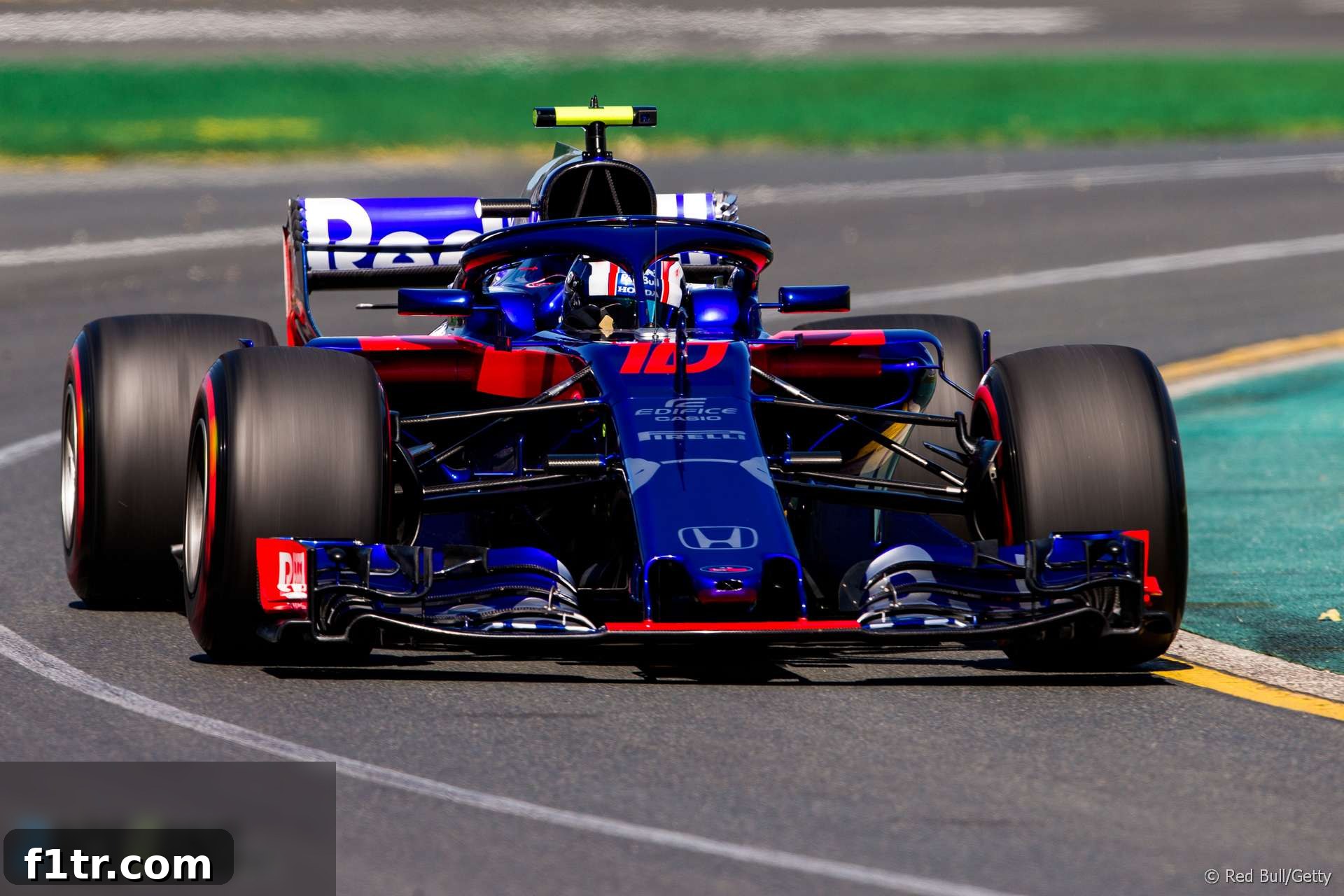
In stark contrast to the widespread performance gains, only one team failed to lap quicker at Albert Park in 2018 than they did in the preceding season, and its identity came as little surprise to seasoned F1 observers. Toro Rosso’s highly publicized off-season switch from Renault to Honda power units had, unfortunately, resulted in a discernible performance hit. This engine change was a calculated risk for the junior Red Bull team, offering the promise of a closer technical partnership but carrying the inherent uncertainty of Honda’s evolving F1 program.
The qualifying session for Toro Rosso was compounded by individual errors from both of their drivers. Pierre Gasly and Brendon Hartley openly admitted to mistakes during their crucial laps, errors which likely prevented them from achieving better grid positions. These self-inflicted wounds were particularly painful given the tight nature of the midfield. Gasly, for instance, described himself as being “too greedy” on his lap, pushing beyond the limit in a desperate attempt to extract every last millisecond. He recounted the frustration:
“We knew the midfield was really tight so we had to put everything together,” said Pierre Gasly, who explained he was “too greedy” on his lap and made a mistake. “[My] first run wasn’t that clean but second run was coming good. [At] turn three I was two-tenths up on Brendon’s lap. I think it would have put us in the mix for Q2 and that’s where I think we should have been. The potential was there to be in Q2. I’m really disappointed because I’ve been too greedy and in the end it costs us a lot of places. Big shame.”
Gasly’s honest assessment perfectly encapsulated the fine margins in Formula 1 qualifying, especially in the competitive midfield. A small mistake, a fraction of a second lost, could easily mean the difference between progressing to the next session and being knocked out early. For Toro Rosso, this early setback with the new Honda engine was a stark reminder of the challenges ahead, but also a motivational factor for continuous improvement and a push for greater reliability and performance from their new power unit supplier.
The Ever-Accelerating Evolution of Formula 1 Performance
Beyond the individual team performances, the 2018 Australian Grand Prix qualifying session also offered a compelling macro-level insight into the accelerating evolution of Formula 1. Lewis Hamilton’s pole position time meant that the current generation of F1 cars were more than 10 seconds quicker than when the sport first raced at the Melbourne circuit in 1996. This incredible speed gain is particularly striking given that the Albert Park track layout has not undergone any significant changes during that period. This sustained increase in pace is a testament to the relentless innovation in motorsport.
Factors contributing to this phenomenal speed increase include advancements in aerodynamic efficiency, lighter and stronger materials, sophisticated suspension systems, and critically, the continuous development of power units. Modern hybrid engines, despite being subject to strict fuel flow regulations, deliver unprecedented levels of power and torque, combined with efficient energy recovery systems. Tire technology has also played a pivotal role, with manufacturers constantly pushing the boundaries of grip and durability. The combination of these elements ensures that Formula 1 remains at the cutting edge of automotive engineering, constantly redefining the limits of speed and performance on iconic circuits like Albert Park.
The 2018 Australian Grand Prix qualifying was a thrilling curtain-raiser to the Formula 1 season. It delivered a clear message of Mercedes’ enduring dominance, highlighted Lewis Hamilton’s exceptional talent, and showcased the fierce and ever-improving competition in the midfield. It also painted a picture of the immediate challenges faced by teams like Toro Rosso as they embarked on new technical partnerships. As the season unfolded, these early indicators from Albert Park provided a fascinating glimpse into the unfolding drama and technological marvel that is Formula 1 racing.
Don’t miss anything new from RaceFans
Follow RaceFans on social media:
- Join RaceFans on Facebook
- Follow RaceFans on Twitter
- Get daily email updates from RaceFans
2018 Australian Grand Prix
- Top ten pictures from the 2018 Australian Grand Prix
- 2018 Australian Grand Prix Star Performers
- Vettel can’t ignore Mercedes’ superior speed after lucky win
- McLaren equal best result of last Honda era in first race with Renault
- Vote for your 2018 Australian Grand Prix Driver of the Weekend
Browse all 2018 Australian Grand Prix articles