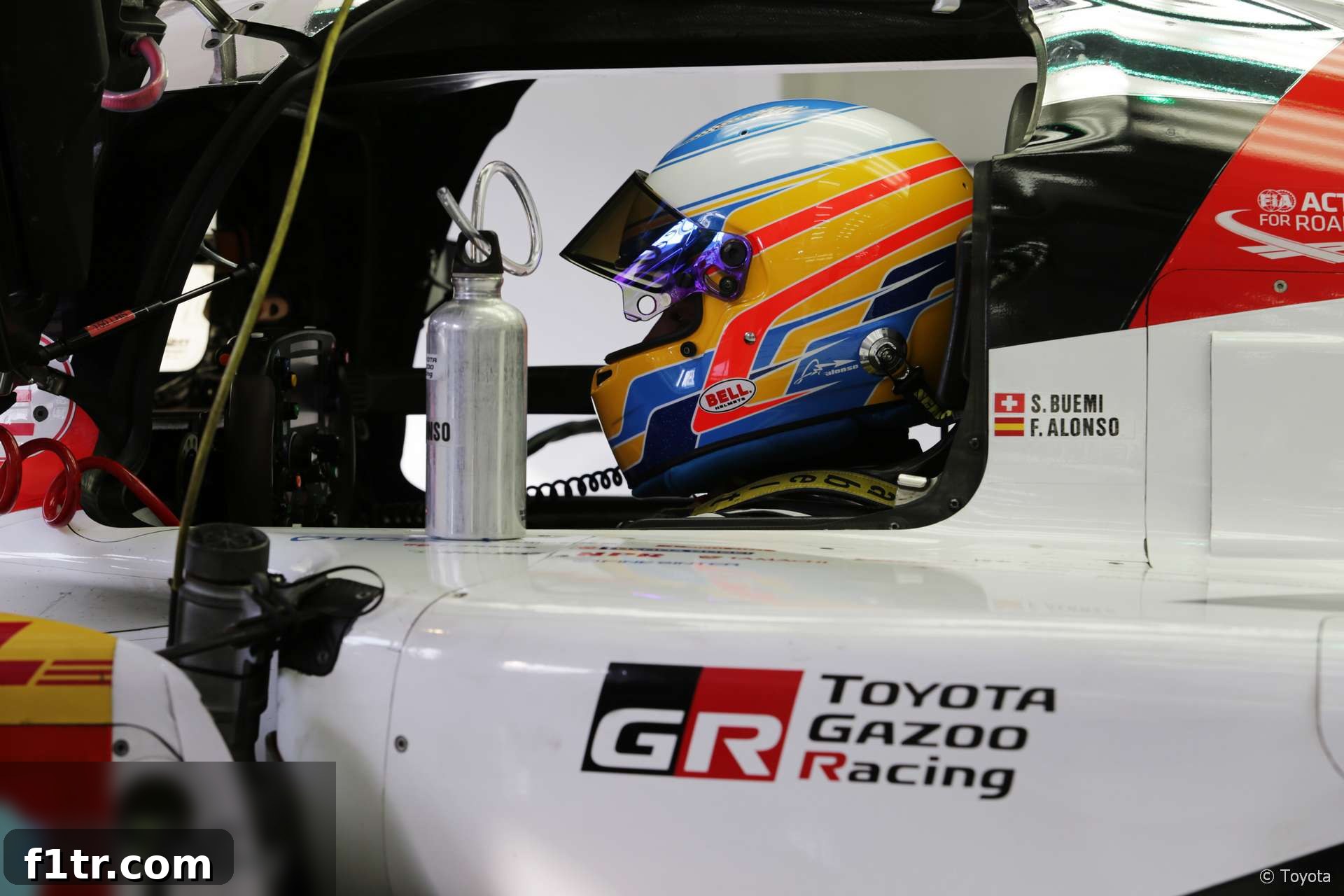
The intricate world of global motorsports often sees its major championships navigating a complex web of schedules, commercial interests, and the aspirations of its most prominent figures. A prime example of this dynamic came to light when the organizers of the prestigious World Endurance Championship (WEC) announced a significant calendar adjustment. The Japanese round of the series, a highly anticipated event, was strategically moved to a new date, a decision made explicitly to ensure the participation of two-time Formula 1 world champion, Fernando Alonso.
Fernando Alonso’s WEC Journey and the Quest for the Triple Crown
Fernando Alonso’s decision to broaden his racing horizons beyond Formula 1 captured the imagination of motorsport enthusiasts worldwide. His ambitious pursuit of the “Triple Crown” – winning the Monaco Grand Prix, the Indianapolis 500, and the legendary 24 Hours of Le Mans – became a central theme of his later career. Having already secured victories in Monaco, his focus shifted intensely to endurance racing, with the WEC providing the ideal platform to gain the necessary experience and ultimately contend for the coveted Le Mans title. His affiliation with Toyota Gazoo Racing in the WEC’s top-tier LMP1 category placed him at the forefront of the championship.
Alonso’s undeniable star power and global appeal were seen as a tremendous asset for the World Endurance Championship. His presence promised to significantly boost viewership, media coverage, and overall interest in the series. For Toyota, having an F1 icon like Alonso represent their factory team, especially at their home race at Fuji Speedway, presented an invaluable marketing opportunity. The initial WEC calendar, however, presented a direct conflict between the Fuji round and the Formula 1 United States Grand Prix, posing a dilemma for Alonso and potentially denying both WEC and F1 fans the spectacle of his multi-series participation.
The Strategic Rescheduling: Resolving the F1 Clash
The call for a calendar alteration was driven by a clear commercial and sporting imperative. As first reported by F1 Fanatic, the proposed change aimed to create an unobstructed path for Alonso to compete in all WEC rounds, including the crucial Toyota home race. The subsequent confirmation from McLaren, Alonso’s F1 team at the time, that he would be permitted to race in Fuji and other WEC events, underscored the collaborative effort to make this happen. McLaren’s flexibility reflected an understanding of Alonso’s personal ambitions and the positive global attention his WEC involvement would generate, indirectly benefiting the McLaren brand.
The WEC Fuji race was officially moved forward by one week, settling on **October 14th**. This carefully calculated adjustment successfully eliminated the conflict with the United States Grand Prix, a major relief for Alonso, who was then juggling his commitments with McLaren in Formula 1 alongside his new challenge in endurance racing. For the World Endurance Championship, this meant securing the participation of one of motorsport’s biggest names, promising an unprecedented surge in media exposure, attendance figures, and global fan engagement for the remainder of the season. Toyota, widely acknowledged as the instigator of this calendar shift, stood to reap substantial rewards from showcasing their hybrid technology and their star driver at their most important domestic event.
Commercial Benefits and WEC’s Global Expansion
The motivations behind the WEC’s decision were multifaceted, extending far beyond merely accommodating a single driver. The “commercial reasons” cited by many involved, including driver Oliver Jarvis, highlighted the immense value Alonso brought to the championship. His star power serves as a powerful magnet, attracting a crossover audience from Formula 1, who might otherwise not closely follow endurance racing. This influx of new eyes translates directly into higher television ratings, increased digital engagement, and robust ticket sales, all of which are vital for a global series aiming for expansion and greater market penetration.
For Toyota Gazoo Racing, the benefits were particularly profound. Fuji Speedway holds immense historical and commercial significance for the Japanese automotive giant. It represents not only a home circuit but also a critical market for their brand and product sales. Presenting their state-of-the-art hybrid prototypes with a driver of Alonso’s caliber on home soil offered an unparalleled platform for brand reinforcement and technological showcase. The strategic importance of the Japanese round, combined with the opportunity to maximize the impact of their high-profile driver, made the case for rescheduling compelling enough to warrant the championship’s rare intervention in its established calendar.
Paddock Divisions: The Unforeseen Clash with Petit Le Mans
While the calendar reshuffle successfully resolved the conflict with the F1 United States Grand Prix, it inadvertently created a new, equally significant clash. The revised WEC Fuji date of October 14th placed it squarely on the same weekend as **Petit Le Mans**, the prestigious final round of the IMSA WeatherTech SportsCar Championship. Petit Le Mans, a grueling 10-hour endurance race held at the iconic Road Atlanta circuit, is a cornerstone event of the North American Endurance Cup (NAEC) and a critical race for many professional drivers and teams who compete across both WEC and IMSA.
This direct overlap presented a difficult dilemma for numerous drivers who had existing contractual obligations and team commitments in both championships. The endurance racing world relies heavily on a pool of versatile drivers, and calendar conflicts of this magnitude force them to make agonizing choices, potentially impacting their careers, relationships with teams, and financial stability.
Driver Reactions: Loyalty vs. Opportunity
The decision to move the WEC Fuji date was met with a predictably mixed response across the paddock. British endurance racing veteran, Oliver Jarvis, articulated a pragmatic yet concerned viewpoint even before the change was officially confirmed. While acknowledging the clear commercial upside, he raised important questions about the welfare of his peers:
“I understand the benefit for commercial reasons for WEC, Toyota and Fuji but what about all the drivers who have already done deals based on the current calendar and who have been a loyal part of the championship for many years?”
Jarvis’s comments highlighted the delicate balance between capitalizing on a superstar’s appeal and maintaining fairness and respect for the established participants who form the backbone of the championship. His concern for “loyal” drivers resonated widely, as many felt that their long-term commitments were being overlooked in favor of a short-term commercial gain.
The criticism intensified from French driver **Olivier Pla**, who was directly affected by the new clash, having been scheduled to participate in both the WEC Fuji race and Petit Le Mans. His reaction on social media was unreservedly critical and emotionally charged:
“Many thanks WEC. I can’t believe you did it. Your lack of consideration and respect for the drivers who had a [contract] with a team in IMSA to race in NAEC the same weekend are unbelievable. I’m sure I will be not the only one to be impressed with what you did.”
Pla’s strong words underscored the profound frustration felt by drivers facing impossible choices between conflicting contracts. Such situations can lead to financial penalties, damaged professional relationships, and missed opportunities to compete in flagship events. The accusation of a “lack of consideration and respect” pointed to a perceived disconnect between the championship organizers’ strategic objectives and the professional realities faced by their competitors.
Broader Implications for Global Motorsports Calendar Management
The WEC Fuji rescheduling incident served as a potent illustration of the ongoing challenges in managing a global motorsports calendar. With an increasing number of championships spanning different continents and featuring drivers who often compete across multiple disciplines, avoiding scheduling conflicts is an increasingly complex task. The WEC’s decision, while undoubtedly a commercial triumph for the championship and Toyota, sparked a crucial debate about the precedents it might set. Should championship calendars be inherently flexible to accommodate high-profile athletes, or should they prioritize stability, predictability, and fairness for all participants, regardless of their celebrity status?
The growing trend of “multi-disciplinary” drivers like Fernando Alonso, who seek challenges beyond a single racing series, adds another layer of complexity to this issue. While their involvement brings undeniable star power and broadens the appeal of various championships, it also places immense pressure on organizers to find innovative solutions to scheduling dilemmas. This delicate balancing act between maximizing exposure and upholding the integrity and predictability of a championship schedule will continue to be a central point of discussion and negotiation among governing bodies, series organizers, teams, and drivers in the years to come. It also highlights the critical need for enhanced communication and collaboration among different racing series to minimize such detrimental conflicts.
Looking Back: The 2018 WEC Season and Alonso’s Legacy
Fernando Alonso’s confirmed participation in all WEC rounds, including the rescheduled Fuji race, undoubtedly injected an extraordinary level of excitement and anticipation into the 2018 season. His presence not only significantly elevated Toyota’s profile but also brought new competitive dynamics to the LMP1 class, engaging fans globally. The opportunity to witness an F1 legend compete for outright victory in grueling endurance races added an unmissable element to each event on the calendar. Despite the controversy surrounding the calendar change, its ultimate objective was achieved: amplifying the WEC’s reach and solidifying its position as a premier global motorsport series.
The 2018 WEC season was indeed marked by intense competition, with Alonso’s journey towards his eventual Le Mans victory becoming a dominant storyline. The Fuji race, specifically, garnered significant attention, not just for the on-track action but also due to the pre-race controversy and the ultimate confirmation of Alonso’s presence. It proved to be a pivotal moment, shaping not only Alonso’s personal quest for the Triple Crown but also influencing the strategic direction and commercial evolution of the World Endurance Championship itself.
Related Articles: Exploring the 2018 F1 Season
For those interested in the broader Formula 1 landscape during this pivotal period of Fernando Alonso’s career and the challenges faced by teams, the following articles offer further context and insights into the 2018 F1 season and related developments:
- F1 feared “death knell” for Drive to Survive after Ferrari and Mercedes snub
- McLaren staff told us we were “totally crazy” to take Honda engines in 2018 – Tost
- ‘It doesn’t matter if we start last’: How Red Bull’s junior team aided Honda’s leap forward
- Honda’s jet division helped F1 engineers solve power unit problem
- McLaren Racing losses rise after Honda split
Browse all 2018 F1 season articles