In the high-stakes world of Formula 1, where every decision can swing the outcome of a race, Christian Horner, Team Principal of Red Bull Racing, didn’t mince words following the 2022 Miami Grand Prix. According to Horner, Ferrari squandered a golden opportunity to secure victory by opting against pitting their drivers for fresh tyres during a pivotal Safety Car period. This strategic misstep, he asserted, paved the way for Max Verstappen to claim a crucial win, further intensifying the battle for the championship.
Verstappen’s triumph marked Red Bull’s third victory of the season, achieved after a masterful overtake on pole-sitter Charles Leclerc. However, the narrative of the race could have been drastically different. Horner firmly believes that had Ferrari capitalised on the Safety Car deployment to equip Leclerc with new tyres, the Monegasque driver would have been in a prime position to reclaim the lead and potentially win the inaugural Miami Grand Prix.
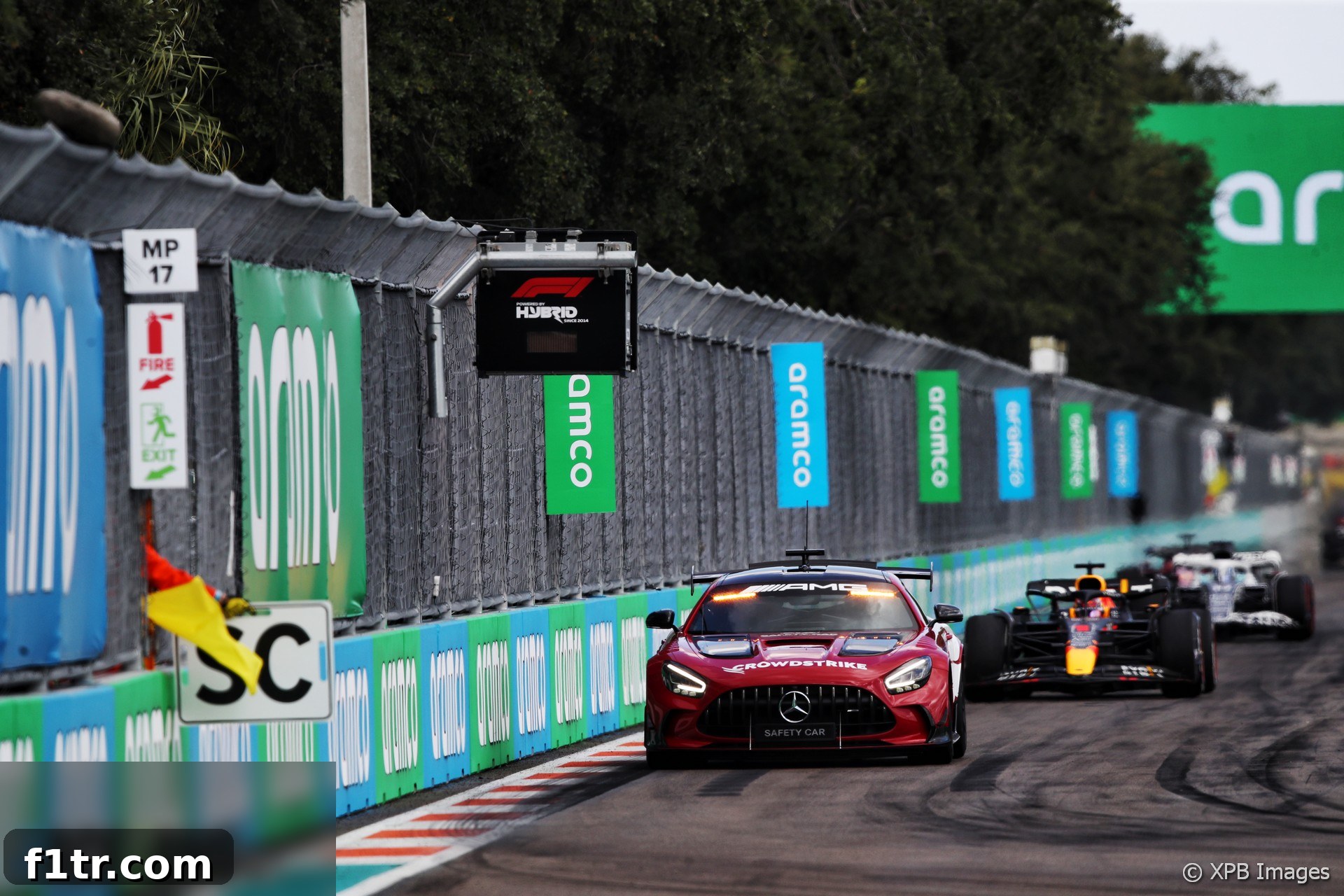
The race dynamic shifted dramatically following an incident involving Pierre Gasly and Lando Norris at turn eight. Initially, a Virtual Safety Car (VSC) was deployed to manage the situation, allowing marshals to assess the scene. This quickly escalated into a full Safety Car period, bringing the entire field into a compressed formation and presenting teams with a critical strategic dilemma. For those yet to make a pit stop, or considering a change in tyre compound, this moment offered a unique advantage – a ‘free stop’ with minimal time loss.
As the Safety Car circulated, the leading contenders faced an immediate choice. Max Verstappen, who was leading the race at the time, made the decision to stay out on track, maintaining his hard-earned track position. Directly behind him, Charles Leclerc and third-placed Carlos Sainz Jnr followed suit, also opting to remain on their existing tyre compounds. This collective decision by the front-runners set the stage for Red Bull’s opportunistic move. Recognizing the potential gain, Red Bull swiftly brought Sergio Perez into the pits from fourth place for a fresh set of soft tyres, an aggressive strategy designed to give him maximum grip and pace for the imminent restart.
Horner’s post-race analysis underscored the significance of Ferrari’s decision. “Ferrari let us off the hook slightly when it went from a Virtual Safety Car to a full Safety Car,” he explained, highlighting the critical juncture. Verstappen had already passed the pit entry when the full Safety Car was deployed, making a pit stop impossible for him without losing significant time. Conversely, Ferrari had the window of opportunity. “Ferrari would have had a free stop, and they didn’t take it with either of their cars,” Horner elaborated, pointing out the strategic oversight. This ‘free stop’ would have allowed Leclerc to swap his worn medium tyres for a set of quicker, fresh softs without sacrificing significant track position, as the rest of the field would be circulating slowly under Safety Car conditions.
The implications of this choice were not lost on the Red Bull chief. Horner concluded, “So we’re grateful for that because I think if they’d put the soft tyres on, that would have been a P3 today.” His assessment suggested that with fresh softs, Leclerc could have easily outpaced Verstappen, who was on older hard tyres, reclaiming the lead and pushing Verstappen down to third. This underlines the fine margins in F1 strategy, where a single decision can dramatically alter the podium outcome and, by extension, the championship battle.
Despite Red Bull’s strategic gamble with Sergio Perez, the Mexican driver faced his own challenges. Having lost power earlier in the race due to a sensor problem, Perez, even with his new soft tyres, wasn’t able to mount a successful attack on Leclerc and ultimately finished fourth. This highlighted that while strategy is crucial, unforeseen technical issues can still hinder performance. Meanwhile, following the Safety Car restart, Leclerc briefly launched an assault on Verstappen for the lead, demonstrating the potent pace of the Ferrari F1-75. However, Verstappen masterfully defended his position, eventually pulling away to secure his victory, with Leclerc following him home in second place.
Horner further lauded Verstappen’s performance, particularly given his disrupted start to the Miami weekend. “Having lost the track time on Friday, especially at a new circuit, I think that hurt us in qualifying,” Horner admitted, acknowledging the team’s early struggles. Despite these setbacks, Verstappen showcased remarkable resilience and speed on race day. His victory was a testament to his driving prowess and the team’s effective strategy.
Reflecting on the race, Horner pointed to several critical moments that contributed to Verstappen’s win. “One was the start and then looking after the tyres, putting Charles under pressure, making that pass and then really controlling the race until the Safety Car,” he stated. Each of these phases required precise execution and unwavering focus from the reigning champion. The strategic importance of tyre management, especially on a demanding new circuit like Miami, played a pivotal role in maintaining race pace and ensuring the longevity of the tyres.
The unique characteristics of the Miami International Autodrome, particularly its three powerful DRS zones, also influenced the race’s tactical dynamics. Horner noted, “And because the three DRS zones were so powerful it was very, very hard to break the tow.” This made it challenging for a leading driver to truly pull away, constantly keeping the chasing cars within striking distance and requiring exceptional defensive driving or superior outright pace to maintain a lead. Verstappen’s ability to manage this pressure, even with the looming threat of Leclerc, underscored his class.
The outcome of the Miami Grand Prix carried significant implications for the drivers’ championship. Verstappen’s hard-fought victory allowed him to chip away at Charles Leclerc’s lead, reducing the gap to just 19 points. This result reignited the championship battle, transforming it into a tighter contest and setting the stage for more intense showdowns in the races to come. The strategic decisions made by both Red Bull and Ferrari during the Miami GP served as a stark reminder of how crucial every call, especially under Safety Car conditions, can be in the pursuit of Formula 1 glory.
The Ferrari situation in Miami illustrates a common dilemma in Formula 1 strategy: the balance between track position and tyre advantage. Staying out maintains the lead but risks being vulnerable to cars on newer, faster tyres. Pitting, while gaining fresh rubber, sacrifices track position. In hindsight, with Horner’s analysis, it’s clear Red Bull believed Ferrari misjudged this balance. The decision not to pit Leclerc seemed to prioritize track position over the potential speed advantage of soft tyres, a choice that ultimately cost them dearly against a relentless Verstappen.
The 2022 Miami Grand Prix was more than just a race; it was a chess match of strategy, showcasing the dynamic nature of modern Formula 1. Red Bull’s boldness in bringing Perez in for new tyres, contrasted with Ferrari’s cautious approach for Leclerc, highlighted the different philosophies at play. While Perez’s power issues prevented him from fully exploiting his fresh rubber, the underlying strategic opportunity for Ferrari was undeniable. This event served as a potent lesson in F1 strategy, emphasizing that even the slightest hesitation can turn a potential victory into a missed opportunity, especially when pitted against rivals as sharp and aggressive as Red Bull Racing.
The unique challenges of a brand-new circuit like Miami further complicated strategic choices. Teams had limited data on tyre degradation and optimal pit windows, adding another layer of uncertainty to an already high-pressure environment. The track surface, which drew criticism from some drivers, and the placement of barriers also played a role in how teams approached the weekend. These factors, combined with the Safety Car incident, made the Miami Grand Prix a true test of strategic acumen and driver skill, a test where Red Bull ultimately proved to be a step ahead of their Scuderia rivals.
2022 Miami Grand Prix Insights
- Why TecPro barriers weren’t used at Miami chicane where Sainz and Ocon crashed
- Miami’s track surface is ‘a safety issue and does not offer good racing’ – Russell
- Miami Grand Prix draws F1’s largest live US television audience
- Alpine complain they had no say over penalty which cost Alonso points
- Red Bull wary of Ferrari’s high-speed cornering strength in Barcelona
Browse all 2022 Miami Grand Prix articles