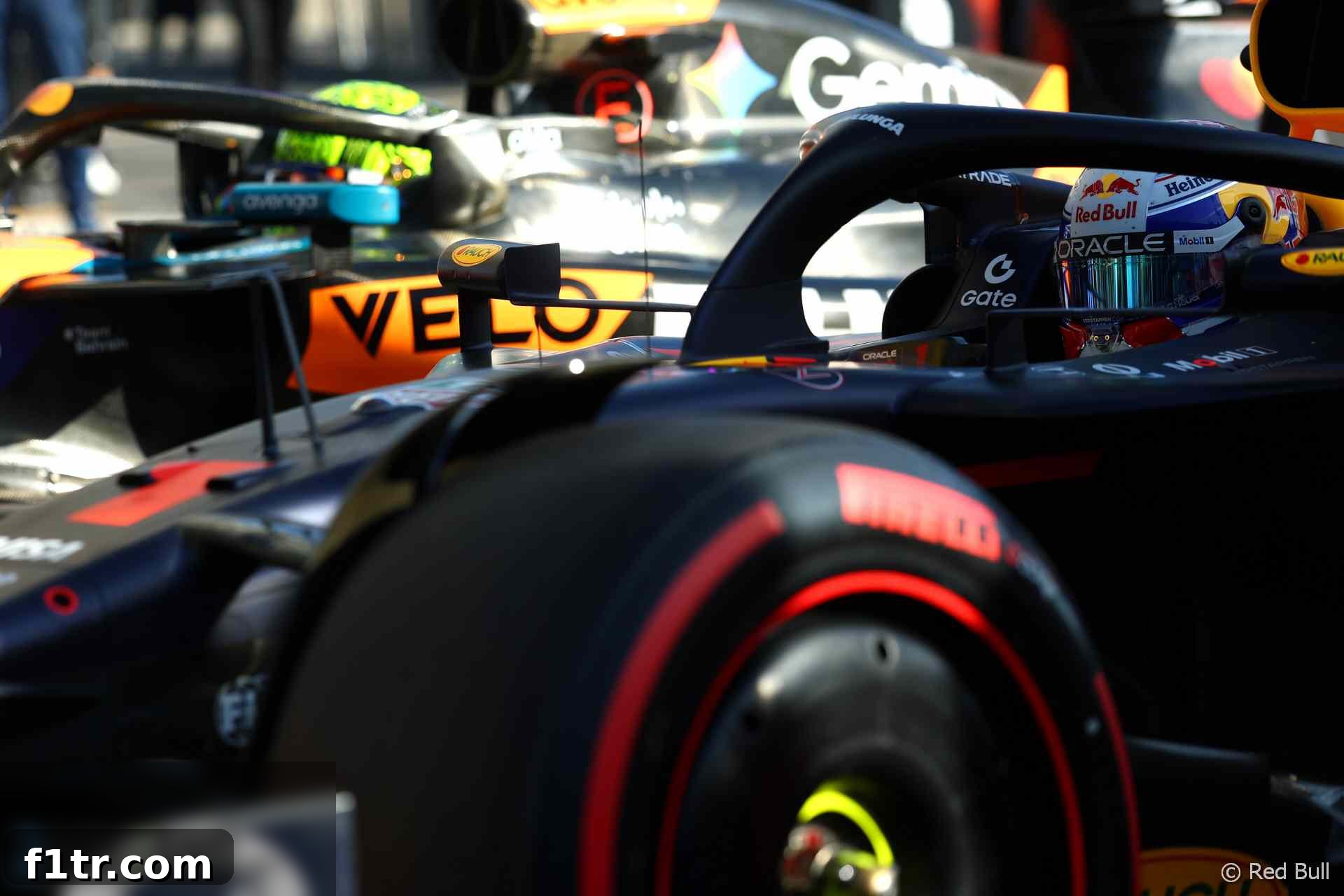
Italian Grand Prix Preview: Verstappen Takes on McLaren at the Temple of Speed
The legendary Autodromo Nazionale Monza, affectionately known as the “Temple of Speed,” is set to host another thrilling Formula 1 Italian Grand Prix. While the drivers’ championship battle increasingly appears to be an all-McLaren affair between Lando Norris and Oscar Piastri, Max Verstappen has once again positioned himself strongly to challenge for victory. Having secured a prime starting spot, Verstappen remains a formidable threat, even as McLaren seeks to maximize every point in their quest for championship glory.
This year’s race promises a captivating strategic battle. McLaren has often demonstrated superior race pace throughout the season, but Verstappen’s Red Bull, combined with his unparalleled skill, makes him a difficult opponent to beat. Adding to the intrigue, Charles Leclerc and Ferrari, buoyed by the passionate home crowd, are lurking close behind, with Leclerc qualifying in the very position from which he claimed victory last year. With the cars showing remarkable parity in performance, the crucial question remains: will we witness a nail-biting fight for the lead, or will Monza’s high-speed nature lead to the infamous ‘DRS train’ phenomenon? Let’s delve into the key data and insights for Sunday’s eagerly anticipated race.
Weather Forecast: A Sunny Sunday at Monza
Formula 1 has been blessed with ideal conditions throughout the Italian Grand Prix weekend, and Sunday looks set to continue this trend. Expect warm, clear skies, with ambient temperatures peaking around 27 degrees Celsius. These consistent and dry conditions are typical for Monza and will allow teams to execute their strategies without unexpected weather interruptions, though tire management in the heat will remain a critical factor throughout the Grand Prix.
The Critical Start: Navigating Monza’s Treacherous First Lap
The opening lap at Monza is often a spectacle of high drama and strategic maneuvering, and for good reason. It boasts one of the longest runs to the first braking zone on the entire Formula 1 calendar, immediately followed by the notoriously slow, narrow, and tight Rettifilo chicane. This challenging sequence frequently becomes the scene of first-lap incidents, with drivers often forced to cut the chicane and subsequently surrender positions – a scenario we’ve already witnessed in the support races this weekend.
Distance from pole position to first braking zone. Source: Mercedes
The challenges for the pole-sitter don’t end at Rettifilo. Following a crucial acceleration zone, drivers arrive at the Roggia chicane, another high-pressure corner where positions can be gained or lost in an instant. Last year, this was precisely where Lando Norris, despite starting from pole, lost the lead to his teammate Oscar Piastri, and a further position to Charles Leclerc. The long run from the grid, combined with the tricky chicanes, makes the opening stages of the Italian Grand Prix a true test of nerve, precision, and opportunistic racing. Securing a strong initial position and navigating these early hazards clean could prove pivotal for the rest of the race.
Race Strategy: One-Stop Dominance or a Risky Gamble?
Monza is unique on the F1 calendar due to its extremely high pit stop time loss, estimated at around 24 seconds. This significant penalty means that a single-stop strategy is almost always the preferred and fastest route to the checkered flag. Teams will meticulously plan their tire usage, aiming to extract maximum life from their chosen compounds to avoid an extra stop.
Looking back at last year’s race, we saw a clear demonstration of this principle. McLaren drivers, Lando Norris and Oscar Piastri, opted for a two-stop strategy, which ultimately proved slower than Charles Leclerc’s perfectly executed single-stop race, leading to his popular home victory. Pirelli, the sole tire supplier, anticipates that most teams will again favor a one-stop approach for this weekend, typically utilizing a set of medium and hard tires for each car.
Tire Compound Choices and Pressure Changes
The choice of starting tire is crucial. Last year, a majority of the grid began on the medium compound, with a few notable exceptions, including Max Verstappen and Sergio Perez on the hard tires. This year, Pirelli has further complicated matters by increasing the minimum permitted front tire pressures by 1psi to 26.5psi following Friday practice. This adjustment aims to enhance safety and tire integrity but could also influence degradation rates and handling characteristics, forcing teams to adapt their setups and driving styles.
While medium and hard tires are expected to be the workhorses of the race, there’s always the tantalizing prospect of a team gambling on the soft compound. This strategy might be particularly viable for drivers who have preserved fresh sets of softs from qualifying. A driver starting on hards would have a strong incentive to delay their pit stop for as long as possible, hoping to switch to a soft compound for a late-race charge, or crucially, to benefit from a Safety Car period which could offer a ‘free’ pit stop, nullifying the high time loss.
Here’s a breakdown of the tire sets each driver has available for the race, offering a glimpse into their strategic flexibility:
| Pos. | Driver | Team | Tyre compound |
|---|---|---|---|
| 1 | Lando Norris | McLaren-Mercedes | Medium |
| 2 | Oscar Piastri | McLaren-Mercedes | Medium |
| 3 | George Russell | Mercedes | Medium |
| 4 | Charles Leclerc | Ferrari | Medium |
| 5 | Carlos Sainz Jnr | Ferrari | Medium |
| 6 | Lewis Hamilton | Mercedes | Medium |
| 7 | Max Verstappen | Red Bull-Honda RBPT | Hard |
| 8 | Sergio Perez | Red Bull-Honda RBPT | Hard |
| 9 | Alexander Albon | Williams-Mercedes | Medium |
| 10 | Nico Hulkenberg | Haas-Ferrari | Medium |
| 11 | Fernando Alonso | Aston Martin-Mercedes | Medium |
| 12 | Daniel Ricciardo | RB-Honda RBPT | Medium |
| 13 | Kevin Magnussen | Haas-Ferrari | Medium |
| 14 | Pierre Gasly | Alpine-Renault | Medium |
| 15 | Esteban Ocon | Alpine-Renault | Hard |
| 16 | Yuki Tsunoda | RB-Honda RBPT | Hard |
| 17 | Lance Stroll | Aston Martin-Mercedes | Hard |
| 18 | Franco Colapinto | Williams-Mercedes | Medium |
| 19 | Valtteri Bottas | Sauber-Ferrari | Hard |
| 20 | Zhou Guanyu | Sauber-Ferrari | Medium |
Available Tyres for the Race (New/Used)
| Tyres available for the race | Hard | Medium | Soft | |||
|---|---|---|---|---|---|---|
| Driver | New | Used | New | Used | New | Used |
| Max Verstappen | 2 | 0 | 1 | 0 | 0 | 3 |
| Lando Norris | 1 | 0 | 1 | 0 | 0 | 4 |
| Oscar Piastri | 1 | 0 | 1 | 0 | 0 | 4 |
| Charles Leclerc | 1 | 0 | 1 | 0 | 0 | 4 |
| Lewis Hamilton | 1 | 0 | 1 | 0 | 0 | 4 |
| George Russell | 1 | 0 | 1 | 1 | 0 | 3 |
| Andrea Kimi Antonelli | 1 | 0 | 1 | 1 | 0 | 3 |
| Gabriel Bortoleto | 1 | 0 | 1 | 0 | 0 | 4 |
| Fernando Alonso | 0 | 1 | 0 | 1 | 0 | 4 |
| Yuki Tsunoda | 1 | 0 | 1 | 0 | 0 | 4 |
| Oliver Bearman | 1 | 0 | 1 | 0 | 1 | 4 |
| Nico Hulkenberg | 1 | 0 | 1 | 0 | 1 | 4 |
| Carlos Sainz Jnr | 1 | 0 | 1 | 0 | 2 | 3 |
| Alexander Albon | 1 | 0 | 1 | 0 | 2 | 3 |
| Esteban Ocon | 1 | 0 | 1 | 0 | 1 | 4 |
| Isack Hadjar | 0 | 1 | 2 | 0 | 2 | 2 |
| Lance Stroll | 0 | 1 | 0 | 1 | 2 | 3 |
| Franco Colapinto | 1 | 0 | 1 | 0 | 2 | 3 |
| Pierre Gasly | 1 | 0 | 1 | 0 | 2 | 3 |
| Liam Lawson | 1 | 0 | 1 | 0 | 3 | 2 |
Overtaking Opportunities at Monza
Monza, with its long straights and fast corners, is a circuit that historically provides ample overtaking opportunities, largely facilitated by the Drag Reduction System (DRS). The DRS zone layout remains unchanged from last year, allowing drivers to deploy DRS on the main straight after Parabolica (Turn 11) and on the back straight after Lesmo 2 (Turn 7). These two zones are crucial for cars trying to make moves, requiring precise timing and a strong exit from the preceding corners.
Recent races, particularly at Zandvoort, have seen several incidents involving drivers battling for positions, leading to an accumulation of penalty points. This has put almost every driver (all but four) on the F1 grid with at least one penalty point on their license. Notably, pole-sitter Max Verstappen currently holds the highest tally with nine penalty points, putting him dangerously close to a race ban threshold. This situation adds an extra layer of caution and pressure, especially during tight wheel-to-wheel combat, as drivers will be keen to avoid any further infractions.
- Formula 1 drivers’ current penalty points
Speed Trap Analysis: The Need for Speed
At Monza, raw straight-line speed is king. Teams often sacrifice downforce for velocity, and the speed trap data from qualifying provides a clear picture of who has prioritized this crucial element. This year, one team stands out: Sauber. Their cars demonstrated an impressive top speed, clocking over 3 kph faster than any other competitor through the speed trap. This aggressive low-downforce setup could make them a formidable force, particularly in defending or attacking on the long straights.
Ferrari also appears to have trimmed Lewis Hamilton’s car for higher top speed, a strategic move likely influenced by his five-place grid penalty. Knowing he would need to overtake to gain positions, maximizing straight-line performance becomes paramount for his race. Among the front-runners, Max Verstappen’s Red Bull holds a slight but significant edge over the McLarens in terms of speed trap figures. This marginal advantage could prove critical, making it considerably harder for Lando Norris and Oscar Piastri to launch effective overtakes against him, especially if Verstappen can maintain track position.
| P. | # | Driver | Car | Engine | Model | Max kph (mph) |
|---|---|---|---|---|---|---|
| 1 | 27 | Nico Hulkenberg | Sauber | Ferrari | C45 | 355.9 (221.1) |
| 2 | 5 | Gabriel Bortoleto | Sauber | Ferrari | C45 | 355.9 (221.1) |
| 3 | 44 | Lewis Hamilton | Ferrari | Ferrari | SF-25 | 352.7 (219.2) |
| 4 | 16 | Charles Leclerc | Ferrari | Ferrari | SF-25 | 350.9 (218.0) |
| 5 | 6 | Isack Hadjar | Racing Bulls | Honda RBPT | 02 | 350.1 (217.5) |
| 6 | 14 | Fernando Alonso | Aston Martin | Mercedes | AMR25 | 349.6 (217.2) |
| 7 | 87 | Oliver Bearman | Haas | Ferrari | VF-25 | 349.5 (217.2) |
| 8 | 55 | Carlos Sainz Jnr | Williams | Mercedes | FW47 | 349.1 (216.9) |
| 9 | 1 | Max Verstappen | Red Bull | Honda RBPT | RB21 | 348.6 (216.6) |
| 10 | 22 | Yuki Tsunoda | Red Bull | Honda RBPT | RB21 | 348.4 (216.5) |
| 11 | 63 | George Russell | Mercedes | Mercedes | W16 | 348.1 (216.3) |
| 12 | 31 | Esteban Ocon | Haas | Ferrari | VF-25 | 348.0 (216.2) |
| 13 | 12 | Andrea Kimi Antonelli | Mercedes | Mercedes | W16 | 347.7 (216.1) |
| 14 | 18 | Lance Stroll | Aston Martin | Mercedes | AMR25 | 346.9 (215.6) |
| 15 | 23 | Alexander Albon | Williams | Mercedes | FW47 | 345.9 (214.9) |
| 16 | 81 | Oscar Piastri | McLaren | Mercedes | MCL39 | 345.8 (214.9) |
| 17 | 10 | Pierre Gasly | Alpine | Renault | A525 | 345.7 (214.8) |
| 18 | 4 | Lando Norris | McLaren | Mercedes | MCL39 | 345.7 (214.8) |
| 19 | 43 | Franco Colapinto | Alpine | Renault | A525 | 345.0 (214.4) |
| 20 | 30 | Liam Lawson | Racing Bulls | Honda RBPT | 02 | 344.9 (214.3) |
Safety Cars: The Unpredictable Variable
Monza has a mixed history with Safety Cars. While the last two Italian Grands Prix ran without a single Safety Car or Virtual Safety Car period, the race prior to that, in 2022, concluded under a prolonged Safety Car phase after Daniel Ricciardo’s McLaren came to a halt. That race also saw a brief Virtual Safety Car intervention when Sebastian Vettel’s Aston Martin broke down.
Given Monza’s high-speed nature and the proximity of walls in certain sections, incidents can quickly necessitate a Safety Car deployment. Such an event can dramatically reshuffle the strategic deck, offering a “free” pit stop to those who manage to time it perfectly, and potentially undoing the efforts of those who have meticulously managed their tires. The unpredictable nature of Safety Cars ensures that teams will have contingency plans ready, hoping to capitalize on any unexpected disruptions to the race flow.
The Starting Grid
The starting grid at Monza is particularly significant, not only for the challenging first lap but also for setting the tone for the entire race. The pole position offers a crucial advantage on the long run down to Rettifilo. The confirmed grid for this year’s Italian Grand Prix is as follows, and any further changes between now and the start of the race will be updated:
- 2025 Italian Grand Prix grid
Championship Implications: The Battle Heats Up
The Italian Grand Prix carries significant weight in the ongoing drivers’ championship. If the drivers finish in their current starting positions, Lando Norris would narrow Oscar Piastri’s championship lead to 31 points, intensifying their intra-team battle. Meanwhile, Max Verstappen, despite his consistent challenge, would still see his deficit to the championship leader reduced to 94 points. Every point scored at Monza, a maximum points race, is crucial and can significantly influence the championship narrative as the season progresses. The stakes are incredibly high, not just for race victory, but for the ultimate glory of the Formula 1 title.
- Formula 1 drivers’ championship points calculator
Your Predictions: Who Will Conquer the Temple of Speed?
All eyes are on the legendary Monza circuit for what promises to be an exhilarating Italian Grand Prix. Max Verstappen, despite his impressive qualifying performance, hasn’t converted his last three pole positions into victory. Will he defy this recent trend and deny the McLaren championship contenders their crucial points, securing his third victory of the season? Or will the McLaren duo, perhaps with a strategic assist from a roaring Ferrari crowd, claim dominion at the Temple of Speed?
Share your predictions for the Italian Grand Prix in the comments below!
Become a RaceFans supporter and go ad-free.
2025 Italian Grand Prix Related Articles
- No change to McLaren’s team orders after Monza review – Stella
- Bearman did not deserve penalty for Sainz collision at Monza, says Vowles
- Transcript: Hamilton seeking final tenths as he closes gap to Leclerc
- McLaren can clinch F1’s earliest title win since 1988 with as little as fifth place
- How did Verstappen know about Norris’ slow stop in Italy? Red Bull told him
Browse all 2025 Italian Grand Prix articles