Unpacking F1’s Customer Parts: The Haas Model, Team Protests, and the Prize Money Battle
In the first installment of a new series, we’re putting questions from our RaceFans Supporters to special correspondent @DieterRencken. Here’s our first deep dive into the complex world of Formula 1 regulations and team dynamics:
Advert | Become a Supporter & go ad-free
In a recent article Dieter seemed to be suggesting Haas were actually going beyond what the rules on customer parts allowed and were buying manufactured parts and services that weren’t allowed. How is it none of the other teams have complained to the stewards about this?
Is this why Haas waited for the Abu Dhabi Grand Prix before they complained to the stewards about Racing Point/Force India getting paid such and such (in the hope that Lawrence Stroll will have forgotten about this by the time we get to Melbourne)? Do all the teams make use of parts and services that the rules don’t allow, so complaining to the stewards could bite them as well?
Stephen Crowsen
Thank you, Stephen, for raising such pertinent questions that touch upon some of the most intricate and often contentious aspects of Formula 1. It’s a common misconception, but I don’t recall suggesting that the Haas F1 team had actually transgressed “beyond the rules” in its astute utilization of non-listed parts. On the contrary, I’ve consistently expressed admiration for team principal Guenther Steiner’s ingenious interpretation and rigorous application of the sport’s regulations. My fascination with Haas’s journey began early; I had the privilege of being the first journalist with whom Steiner shared his vision for the team back in 2013, a full three years before their official entry into F1, during a memorable visit to his nascent base in Charlotte.
The Haas Model: A Masterclass in Regulation Interpretation
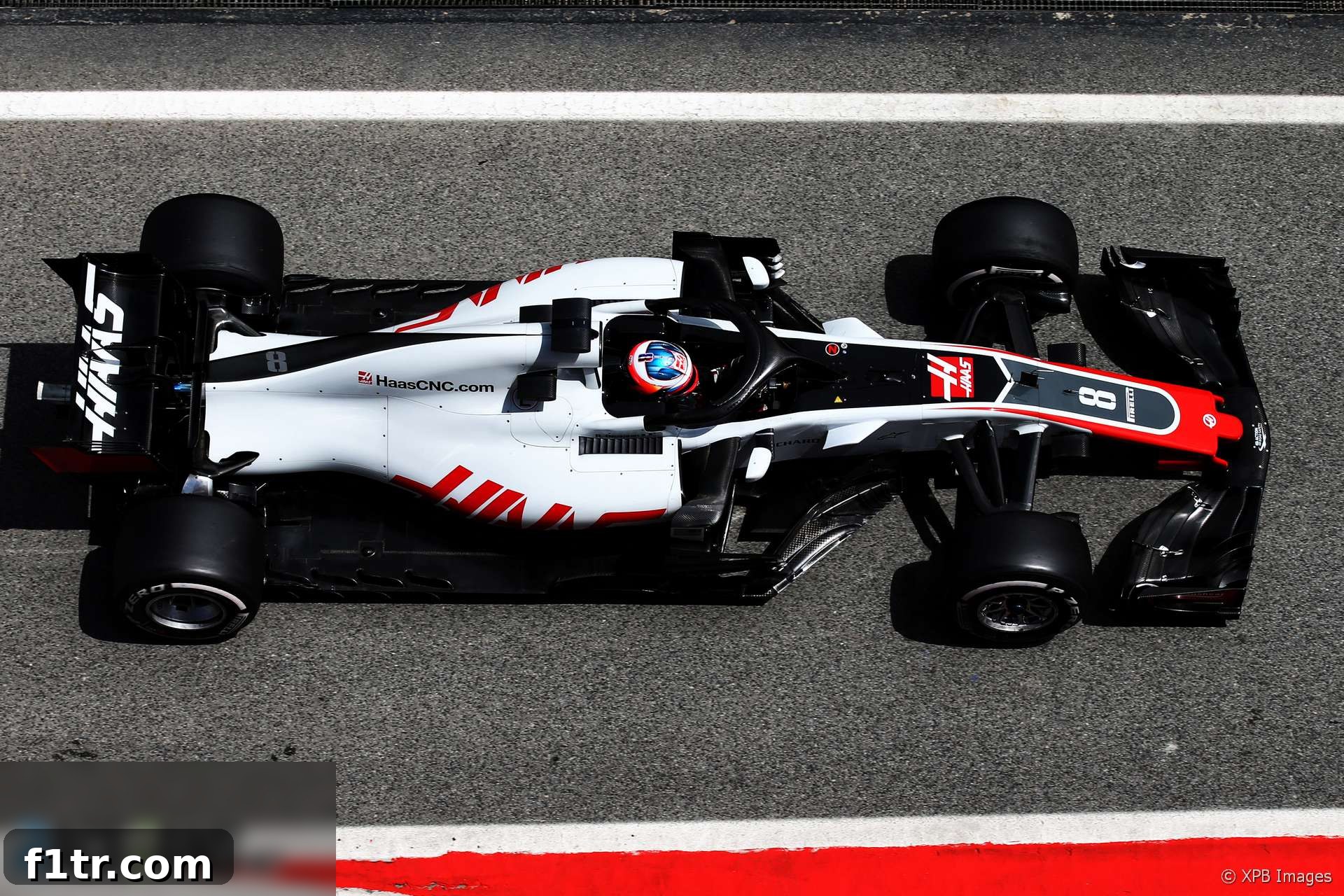
The core of Haas’s operational philosophy lies in maximizing the permissibility within F1’s sporting and technical regulations, specifically concerning what are known as ‘listed’ and ‘non-listed’ parts. In essence, ‘listed parts’ are fundamental components that each team must design and manufacture themselves, or at least own the intellectual property rights to, signifying a significant investment in in-house capabilities. These typically include crucial aerodynamic surfaces like the chassis, front wing, rear wing, and other performance-differentiating elements that define a car’s unique identity. ‘Non-listed parts,’ however, can be sourced externally from third-party suppliers or even from other F1 teams, provided the commercial and technical agreements comply with the often-complex regulatory framework. Haas, leveraging its close relationship with power unit supplier Ferrari and chassis constructor Dallara, has expertly navigated these rules to procure as many non-listed components as possible, effectively creating a highly cost-efficient and competitive entry into the pinnacle of motorsport.
This strategic approach has allowed Haas to focus its more limited resources on optimizing the integration of these purchased components and on developing the essential listed parts, thereby achieving performance levels that often exceed what a traditional new independent team might typically attain on a similar budget. It’s a testament to Steiner’s sharp understanding of the regulatory framework and his team’s ability to execute a lean yet potent operational model, transforming potential weaknesses into strategic advantages within the highly competitive F1 paddock.
Why Not Red Bull and Toro Rosso? A Tale of Different Philosophies
Given the apparent success of the Haas model, which offers a clear pathway to competitiveness without the colossal development costs traditionally associated with F1, I’ve frequently pondered why Red Bull did not pursue a similar strategy with its junior team, Toro Rosso (now AlphaTauri). This question became particularly pertinent during periods when both teams shared identical engines from Renault, and later Honda, seemingly offering a perfect synergy for component sharing. However, the answer, as I was advised, stems from a fundamental difference in Red Bull Racing’s operational philosophy and development timelines.
Red Bull Racing is renowned for its aggressive and late ‘design freeze’ approach. This means they finalize their car design as close to the start of the season as possible, often incorporating significant upgrades and design tweaks even into the early races of the championship. This methodology allows for maximum developmental flexibility and continuous innovation, enabling them to react to competitor performance and circuit demands effectively. However, such a late design freeze would leave Toro Rosso with insufficient time to independently design and develop its own ‘listed parts,’ which, as mentioned, are components where teams must hold the intellectual property rights and demonstrate original design work. If Toro Rosso were to adopt a similar customer parts model to Haas, they would need their designs for listed parts to be significantly ahead of Red Bull’s to avoid potential conflicts or, more crucially, implicit data sharing – a practice strictly prohibited by the FIA.
The Ferrari/Haas/Dallara relationship is structured differently, allowing for a more delineated separation of design and manufacturing responsibilities while still benefiting from shared resources and expertise. As Haas chief designer Rob Taylor meticulously explained in an exclusive interview I conducted with him, their collaboration emphasizes distinct roles while optimizing synergies within the regulatory boundaries. This contrast highlights that while the customer parts model can be highly effective, its successful implementation depends heavily on a team’s overarching strategic objectives and internal development processes.
FIA Scrutiny and the Vigilance of Competitors
The Haas model hasn’t been without its intense scrutiny, a natural consequence of operating so close to the regulatory edge in a sport where competitive advantage is everything. At the close of 2015, just prior to Haas’s F1 debut, Mercedes-AMG Petronas F1 Team, ever vigilant and acutely aware of potential loopholes, lodged a formal request for clarification regarding the new entrant’s wind tunnel usage. Haas, both then and now, utilizes Ferrari’s state-of-the-art wind tunnel facilities under a contractual agreement. Following a thorough investigation by the FIA, the stewards ultimately confirmed that Haas’s operations were fully compliant with the prevailing regulations, and the team was subsequently cleared of any wrongdoing. However, this incident did prompt the FIA to review and subsequently amend the regulations governing manning levels and wind tunnel usage specifically for new entrants, highlighting the dynamic nature of F1 rule-making and the constant push-and-pull between teams and the governing body seeking to close potential avenues for competitive exploitation.
Regarding Stephen’s query about why other teams haven’t “complained [about Haas] to the stewards,” rest assured, if there were even the slightest credible suspicion that any team had breached, or even artfully bent, the ‘listed parts’ regulations, the alleged transgressor would swiftly find themselves inundated with formal protests. F1 teams are fiercely competitive, and their technical departments maintain an incredibly keen eye on rivals’ designs and operational methodologies. The sport operates with an implicit, yet highly effective, system of self-policing, where rivals are often the first to flag any perceived irregularities.
A prime example of this mechanism in action was Haas’s own exclusion from the 2018 Italian Grand Prix. This was a direct result of a protest lodged by Renault, who successfully argued that Haas’s floor design did not comply with a specific technical directive issued by the FIA. While this particular infraction was unrelated to ‘listed parts’ usage, it powerfully illustrates the readiness of rival teams to challenge perceived rule breaches and the FIA’s unwavering commitment to enforcing technical compliance. The consequences for non-compliance can be severe, ranging from penalties and disqualifications to substantial fines, as dramatically demonstrated by the infamous 2007 ‘Spygate’ scandal. That episode ultimately cost McLaren a staggering sum of $100 million in fines and forfeited revenues (a figure I still consider disproportionately high for the specific offense), underscoring the FIA’s zero-tolerance stance on deliberate cheating and intellectual property theft within the sport.
Formula 1, despite its global reach and immense financial scale, remains a surprisingly small and interconnected world. Information, particularly concerning potential regulatory infringements or innovative interpretations, spreads rapidly. Personnel frequently move between teams, carrying with them invaluable insights into competitors’ operations and vulnerabilities, creating a constant state of mutual observation and competitive espionage (within legal bounds, of course). This constant vigilance ensures that any team attempting to circumvent the rules would face immediate and sustained opposition from its rivals.
Advert | Become a RaceFans supporter andgo ad-free
The Abu Dhabi Protest: More Than Just Parts – A Battle for Prize Money
Stephen’s question also delves into the timing of Haas’s protest against Force India/Racing Point at the Abu Dhabi Grand Prix. The motivation behind this action was far more multifaceted and intricate than a simple hope that Lawrence Stroll, the new owner of the rebranded team, would “forget about it.” As I detailed in my analysis at the time, the protest was not primarily linked to the use of ‘listed parts,’ despite Force India/Racing Point extensively sourcing Mercedes powertrains, electronics, and hydraulics, and subsequently designing or sub-contracting the remaining components. Instead, the crux of the matter revolved around the highly contentious issue of Formula 1’s prize money distribution, a battle for financial stability and competitive standing.
To fully grasp the context, we must rewind a month and a half prior to Abu Dhabi, to the Japanese Grand Prix weekend. It was there that Guenther Steiner formally requested definitive clarification from Liberty Media, F1’s commercial rights holder, regarding whether Force India/Racing Point would be entitled to certain prize monies that, in Haas’s view, they were not strictly due under the existing team agreements. The dispute arose after Force India entered administration in July of that year and was subsequently re-admitted to the sport as a ‘new entrant’ under the new ownership of a consortium led by Lawrence Stroll. Haas contended that this re-entry status should preclude the team from receiving the full historical prize money payments typically reserved for established teams, which include a significant ‘Constructors’ Championship Bonus’ based on historical performance and participation. This bonus, often referred to as ‘Column 1’ money, can amount to tens of millions of dollars, making it a crucial component of any team’s budget.
The Strategic Timing of the Abu Dhabi Protest
The choice of the Abu Dhabi Grand Prix for the formal protest was highly strategic, as it represented Haas’s final opportunity within the 2018 season to officially challenge Force India/Racing Point’s status and subsequent prize money entitlement. An additional, tactical factor influencing this timing was the presence of Garry Connolly as the chairman of the stewards that weekend. Connolly had also officiated at the Spa-Francorchamps event when Force India/Racing Point was officially accepted as a new team following its administration, making him a key figure in the prior rulings and therefore uniquely positioned to review the nuances of the ongoing dispute with an informed perspective.
Far from “hoping Lawrence Stroll would forget about it,” the protest was precisely calculated to achieve the opposite effect: to keep the issue firmly on the agenda, potentially unsettling Force India/Racing Point during the crucial off-season period when teams are focused on development and securing sponsorships. The primary objective of Haas’s protest was to obtain an official ruling from the stewards confirming that Force India/Racing Point was indeed a ‘new team’ in the eyes of the regulations and the commercial agreements. This critical point was ultimately upheld by the stewards. The implications of this ruling are profound: if confirmed as a new team, Force India/Racing Point would not be eligible for the full share of F1 revenues for an initial period, typically two years, a stipulation that applies to new entrants to ensure fair competition and financial sustainability across the grid. This ongoing saga is no trivial matter, with a substantial sum of up to $60 million riding on the final outcome, making it a critical financial battleground for both teams involved and a precedent-setting case for future F1 entrants and financial distributions.
The Future of F1 Regulations: 2021 and Beyond
Looking ahead, the landscape of Formula 1 regulations is continuously evolving, driven by the FIA’s desire for closer competition and Liberty Media’s vision for a more sustainable and equitable sport. I’ve been informed that the schedule of ‘listed parts’ is highly likely to be expanded for the 2021 season and beyond. This proposed change is a deliberate effort by the FIA and Liberty Media to reduce the dependence of what are often referred to as ‘B teams’ on the major, established outfits. By mandating that teams design and manufacture a greater number of performance-differentiating components in-house, the aim is to foster greater independence and potentially level the competitive playing field, preventing a situation where smaller teams simply become extensions of their larger partners. This move seeks to ensure that each constructor truly brings a significant amount of its own intellectual property to the grid.
This regulatory shift is expected to have a more significant impact on Haas than perhaps any other team, given their current model’s heavy reliance on externally sourced non-listed parts from Ferrari. However, Haas has consistently demonstrated its adaptability and strategic acumen since its inception. I am confident that Guenther Steiner and his dedicated team will be able to successfully “gear up” to meet these new requirements in due course, potentially necessitating an expansion of their in-house design and manufacturing capabilities and a re-evaluation of their operational partnerships. The sport is always in flux, demanding that teams perpetually innovate not just on track, but also in their operational and regulatory strategies to remain competitive and compliant.
On a related note, despite the passage of time since the Abu Dhabi protest, I believe no definitive progress has yet been made on the complex and financially significant question of Force India/Racing Point’s full revenue entitlement. This issue remains an open wound in the sport’s financial structure, awaiting a final resolution that could have lasting implications for how new teams are treated, how F1’s multi-million-dollar prize fund is distributed, and ultimately, the financial health and competitive balance of the entire Formula 1 grid.
[dietersinbox]
Advert | Become a RaceFans supporter andgo ad-free
Dieter’s Inbox
Browse all Dieter’s Inbox articles