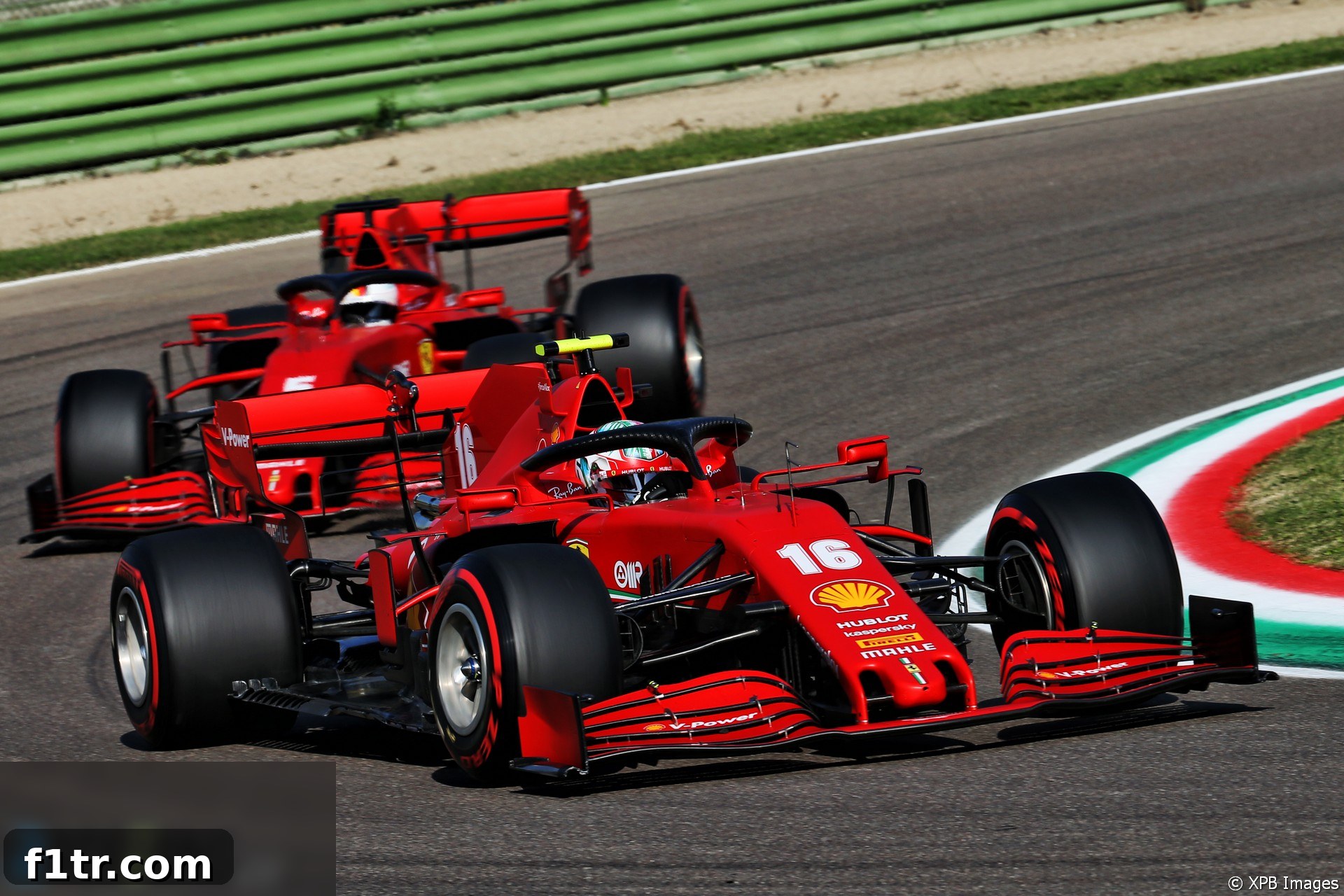
Since their significant downturn on the high-speed ‘power circuits’ of Spa and Monza earlier in the season, Scuderia Ferrari has demonstrated tangible progress with their SF1000 challenger. This resurgence, though gradual, has been a welcome sight for Tifosi globally, especially after a period of intense scrutiny and disappointing performances. The team managed to bounce back from a rare double-zero points haul, and notably, at the Portuguese Grand Prix, they secured their first double-digit points score since the Silverstone rounds. Despite these encouraging signs of improvement, Ferrari’s ambitions of clinching a top-half finish in the constructors’ championship remain a considerable challenge, if not a distant dream.
Currently, holding onto sixth place in the constructors’ standings is already a less-than-ideal position for a team of Ferrari’s stature. However, the looming threat of dropping to seventh place would be an even more bitter pill to swallow, carrying significant implications for prize money, team morale, and future development resources. This precarious situation is exacerbated by the relentless pursuit of AlphaTauri, another Italian team that has shown remarkable form and is steadily closing the gap. The Emilia-Romagna Grand Prix at Imola, a circuit where AlphaTauri was also enjoying its third “home” race of the year, presented a crucial battleground in this midfield tussle, adding an extra layer of national pride and competitive tension to the proceedings.
Advert | Become a Supporter & go ad-free
While Ferrari’s improving pace had led many to believe they might consolidate their position and fend off their rivals, AlphaTauri delivered a truly unexpected shock at Imola. French driver Pierre Gasly, who has been a standout performer for the team throughout the 2020 season, masterfully piloted his AT01 to an impressive fourth position on the starting grid. His teammate, Daniil Kvyat, further amplified AlphaTauri’s strong showing by securing an excellent eighth place. This collective performance propelled AlphaTauri squarely into the spotlight, positioning them as a genuine threat to Ferrari’s precarious championship standing. The significant qualifying results immediately raised questions about the source of AlphaTauri’s sudden surge in performance, especially at a track like Imola known for its demanding technical layout.
One theory circulating in the paddock suggested that AlphaTauri might have gained an edge from a filming day they conducted at the Imola circuit earlier in the year, potentially allowing them to gather crucial data and fine-tune their car setup. While this advantage cannot be entirely dismissed, it is equally important to highlight a broader trend: this marks the second consecutive race weekend where AlphaTauri has unequivocally demonstrated that they are the third-quickest team on the grid, behind only the dominant Mercedes and Red Bull outfits. This consistent top-tier performance underscores not just a fleeting advantage but a deeper, more sustained improvement in their car’s overall package and operational execution. Their engineers and strategists have clearly unlocked significant potential within the AT01, making them a formidable force in the competitive midfield.
Given that overtaking opportunities at the historic Imola circuit are notoriously scarce and challenging, AlphaTauri’s strong qualifying positions presented a golden opportunity to significantly erode Ferrari’s 16-point lead in the constructors’ championship. The strategic importance of capitalising on strong grid positions at Imola cannot be overstated, as track position often dictates race outcomes. With the final three races of the 2020 season scheduled to take place at circuits that are particularly sensitive to power unit performance – a known weakness for Ferrari’s SF1000 – the Scuderia faced immense pressure to bolster their championship advantage at Imola. Failing to do so would expose them to an even greater risk of suffering further setbacks and potentially conceding seventh place in the constructors’ standings before the year concludes. The stakes were incredibly high for the legendary Italian team, and the tension palpable.
Advert | Become a RaceFans supporter andgo ad-free
Ferrari’s Precarious Position and the AlphaTauri Threat
The 2020 Formula 1 season had been a trying period for Ferrari, a year defined by fundamental weaknesses in their SF1000 chassis and power unit. The nadir at Spa and Monza, where their performance was alarmingly uncompetitive, served as a stark reminder of the challenges ahead. However, the subsequent races saw the team, under the leadership of Mattia Binotto, steadily introduce upgrades and refine their understanding of the car. While these improvements were incremental, they were enough to prevent further embarrassing outcomes and allowed drivers Charles Leclerc and Sebastian Vettel to extract more performance. The double-digit score in Portugal, driven by solid points from both drivers, was a significant psychological boost and a measurable sign that the tide was beginning to turn, albeit slowly.
Yet, the reality of the constructors’ championship remained grim. Sixth place, while an improvement from their mid-season slump, was still a far cry from Ferrari’s usual standing. The possibility of dropping to seventh, particularly to a sister team of Red Bull like AlphaTauri, would be a major blow to the team’s prestige and, more practically, to their financial standing. Each position in the championship brings with it a substantial difference in prize money, crucial for funding future car development in the tightly regulated budget cap era. AlphaTauri’s strong form at Imola, spearheaded by Pierre Gasly’s superb qualifying, directly challenged this financial and reputational stability. The team’s ability to consistently perform at the sharp end of the midfield was not just a testament to their own hard work but also a worrying indicator for Ferrari.
The strategic challenge for Ferrari extended beyond Imola. With circuits like Bahrain and Abu Dhabi, known for their long straights and reliance on power, still on the calendar, the limitations of the Ferrari power unit would once again come under intense scrutiny. Imola, with its more balanced demands, offered Ferrari a chance to capitalise on chassis improvements, but AlphaTauri’s unexpected pace meant this opportunity was being fiercely contested. The Scuderia’s engineers and strategists would need to extract every ounce of performance from their package, not just for pride, but for the tangible benefits of securing a higher championship position. The battle was not just on track, but also a fight for resources and a statement of intent for the seasons to come.
AlphaTauri’s Unprecedented Surge: A Midfield Game-Changer
AlphaTauri, formerly Toro Rosso, has often been regarded as a competitive midfield team, but their performances in the latter half of the 2020 season, particularly at Imola, elevated them to a new level. Pierre Gasly, fresh off his incredible victory at Monza, continued to demonstrate his burgeoning talent and leadership within the team. His ability to consistently extract maximum performance from the AT01, coupled with Daniil Kvyat’s solid support, has been a significant factor in their rise. The team’s decision to conduct a filming day at Imola prior to the Grand Prix was certainly a talking point. While such days are primarily for promotional activities and are restricted in terms of mileage and data collection, any familiarity with the circuit can offer a marginal but valuable advantage, especially on a track making its return to the F1 calendar after many years.
However, attributing AlphaTauri’s success solely to a filming day would be an oversimplification. The data clearly indicated a more profound trend: AlphaTauri had established itself as the “third-quickest” team for consecutive races. This consistent performance against stronger rivals suggested a fundamental improvement in the car’s aerodynamics, mechanical grip, and overall balance. Their Honda power unit, while not matching Mercedes, was proving to be a reliable and potent package, especially when paired with a well-sorted chassis. This sustained competitiveness put AlphaTauri in a unique position to challenge the established order of the midfield, and crucially, to exert immense pressure on Ferrari’s championship standing. Their surge represented a genuine shift in the midfield dynamics, forcing other teams to re-evaluate their strategies and car development paths.
The implications of AlphaTauri’s rise extended beyond their direct battle with Ferrari. Their ability to frequently out-qualify and out-race teams like McLaren, Renault, and Racing Point signaled a serious threat to the aspirations of all midfield contenders. Gasly’s prowess in qualifying, exemplified by his fourth-place grid slot at Imola, provided the team with excellent track position, a critical element for success on circuits where overtakes are difficult. This strategic advantage, combined with their car’s improved race pace, made them a formidable competitor capable of converting strong Saturdays into significant Sunday points. AlphaTauri’s Cinderella story of the 2020 season was becoming a full-blown narrative of consistent excellence.
The other striking development in the intricate balance of power among the Formula 1 teams at the Emilia-Romagna Grand Prix was the unexpected downturn in performance from Racing Point. The team, which had shown considerable promise and even secured a victory earlier in the season, delivered what was arguably their worst performance of the year so far. In a qualifying session that saw AlphaTauri soar, Racing Point found themselves struggling to extract pace, ultimately being ranked as only the seventh-quickest team. This was a significant step backward for a team that had often been contending for podiums and was regularly vying with Red Bull for the second-fastest car honours in the middle of the season. Their dip in form was a clear indication that the competitive landscape of the midfield was constantly shifting and that consistency was proving elusive for many contenders.
Racing Point CEO Otmar Szafnauer offered insights into the team’s struggles, suspecting that the truncated practice time at the Emilia-Romagna Grand Prix played a significant role in their suboptimal performance. “If you have greater simulation tools and techniques back at the factory, being prepared to come here helps in such a compressed practice and qualifying sessions,” he explained. This comment highlights the increasing reliance on advanced simulation and factory-based preparation in modern Formula 1. With less track time to fine-tune setups, teams with superior virtual tools and data correlation capabilities gain a crucial advantage. Szafnauer suggested that Racing Point might not have been as well-equipped in this regard compared to some of their rivals, particularly those who consistently perform well in varied conditions.
Furthermore, Szafnauer elaborated on another contributing factor: “Also if you run the same philosophy of car over time then you can also get to the optimal solution quicker. We’re still learning about this aero philosophy at the different tracks and I think some of the others aren’t.” This statement alludes to Racing Point’s well-documented adoption of an aerodynamic philosophy heavily influenced by the 2019 Mercedes car, earning them the nickname “Pink Mercedes.” While this approach yielded significant gains, it also meant the team was still in the process of fully understanding and optimising this concept across a diverse range of circuits. Teams that have developed their own unique aero philosophies over a longer period, such as Mercedes, Red Bull, or even AlphaTauri, might possess a deeper institutional knowledge, allowing them to adapt more quickly to varying track characteristics and limited practice time. This learning curve, Szafnauer implied, was hindering Racing Point’s ability to consistently extract maximum performance from their package, especially when faced with a condensed weekend format.
The visual representation of performance trends, often depicted in five-race average graphs, clearly illustrated the widening gap between Racing Point and the consistent pace-setters, Mercedes. While they had been remarkably close to Red Bull in terms of raw performance during the middle part of the season, their recent slump at Imola indicated a worrying trend. Racing Point now found themselves at a tangible risk of losing touch with the very front of the midfield battle, particularly on one-lap pace, which is critical for strong qualifying results and advantageous track position. This downturn jeopardised their aspirations for a strong finish in the constructors’ championship, potentially opening the door for rivals like McLaren and Renault to consolidate their positions ahead. The fluctuating fortunes of Racing Point underscored the fierce competitiveness of the 2020 midfield, where even a slight dip in performance could have significant ramifications.
Quotes: Dieter Rencken
Advert | Become a RaceFans supporter andgo ad-free
Join the RaceFans Supporters Drive!
If you’ve thoroughly enjoyed RaceFans’ comprehensive motor sport coverage throughout the exciting and unpredictable 2020 season, we kindly invite you to take a brief moment to discover more about our crucial Supporter Drive. Your support is instrumental in maintaining the quality and independence of our reporting.
Our ambitious goal is to welcome 3,000 new Supporters to help sustainably fund RaceFans. This vital community backing enables us to continue producing the high-quality, original, and fiercely independent motorsport coverage that you’ve come to expect and rely on. We believe in providing unbiased insights and in-depth analysis for every racing enthusiast. Here’s a clear explanation of what we’re asking for and why it matters so much to our mission – and crucially, how you can easily sign up and become a part of our growing community:
- Join the RaceFans Supporters Drive today and help secure the future of independent motorsport journalism!
Further Insights from the 2020 Emilia-Romagna Grand Prix
- Gasly reflects on the potential lost podium at Imola, describing it as his most painful retirement yet.
- An F1 marshal offers a critical perspective on Lance Stroll’s near-miss at Imola, raising significant safety concerns.
- McLaren acknowledges the imperative of finding even the “smallest gains” in qualifying to fiercely contend for third place in the championship.
- Pirelli initiates a comprehensive investigation into Max Verstappen’s unexpected tyre failure during the race.
- A detailed analysis of the standout performers and key moments from the 2020 Emilia-Romagna Grand Prix.
Browse all articles related to the 2020 Emilia-Romagna Grand Prix for complete coverage.
The 2020 Emilia-Romagna Grand Prix at Imola proved to be a pivotal race in the complex narrative of the Formula 1 season. While Ferrari showcased signs of recovery, they found themselves facing an invigorated AlphaTauri, whose exceptional performance underscored a significant shift in the midfield pecking order. Concurrently, Racing Point’s unexpected dip in form added another layer of intrigue, highlighting the unforgiving nature of F1 competition where even small operational discrepancies or car philosophy learning curves can yield dramatic results. As the season hurtled towards its conclusion, the battle for every championship point intensified, promising more captivating motorsport action on the power-sensitive circuits that lay ahead.