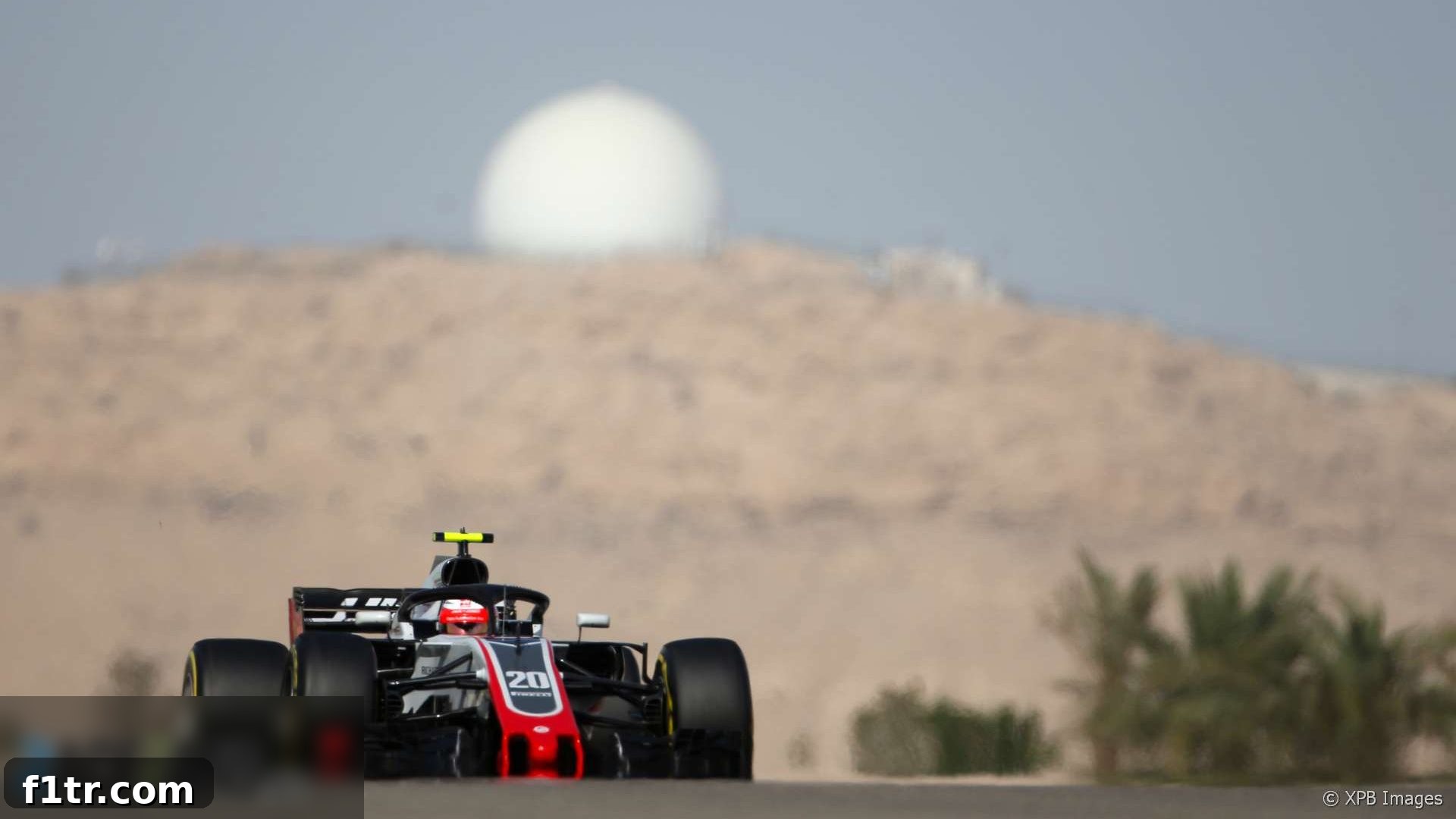
Kevin Magnussen Warns Against Excessive DRS: Bahrain’s Overtaking Dynamics Under Scrutiny
The exhilarating world of Formula 1 constantly seeks the perfect balance between competitive racing and driver skill. One of the most debated tools in achieving this balance is the Drag Reduction System (DRS). While designed to facilitate overtaking and inject excitement into races, its implementation is a fine art, as Haas driver Kevin Magnussen has recently highlighted. Speaking out from the Bahrain International Circuit, Magnussen expressed significant reservations regarding the decision to extend the DRS zone, fearing it could inadvertently make overtaking excessively straightforward and diminish the very essence of genuine wheel-to-wheel racing.
The Evolving Role of DRS: A Double-Edged Sword in Formula 1
The DRS zone, a crucial element in modern Formula 1, allows drivers to open a flap on their rear wing, significantly reducing aerodynamic drag and providing a speed advantage when following a competitor within one second at designated detection points. For the 2018 season, the DRS zone on Bahrain’s main straight was incrementally extended by an additional 100 metres, a move intended to enhance the spectacle of overtaking. This decision followed a period where several drivers, despite an extra DRS zone being introduced, reported that overtaking had become notably more challenging during the season’s opening race in Australia.
However, for Magnussen, the rationale behind extending the DRS zone in Bahrain was questionable. He firmly believes that the previous setup at the desert circuit provided an optimal level of overtaking opportunity without the need for further adjustments. His commentary reflects a broader sentiment among some in the F1 paddock: a concern that regulatory bodies sometimes overreact to single events, leading to unintended consequences that swing the pendulum too far in the opposite direction.
Magnussen’s Perspective: The Threat of “Drive-by” Overtakes
The Danish driver articulated his concerns with directness, stating, “I think it was pretty good before coming here, before extending the DRS. I think it’s typical thing that F1 tends to do, over-react. You have one bad race, make a big change and then you go too much the other way. And the race becomes boring because it’s easy to pass everyone.” This critique cuts to the heart of the debate surrounding DRS: does it genuinely improve racing, or does it merely facilitate ‘easy’ passes that lack the drama and skill of traditional overtaking?
Magnussen’s worry is that an over-extended DRS zone could lead to what he describes as a “drive-by” scenario. In such a situation, the speed differential afforded by DRS becomes so significant that the overtaking car simply glides past its competitor with minimal effort or defensive driving required. He elaborated on this point, suggesting that while position swapping might increase, it doesn’t necessarily equate to exciting racing. “If you have too much DRS it’s just a drive-by. You don’t get racing, you just get overtakes, swapping of positions. Which isn’t necessarily what everyone wants to see.” This distinction between a mere “overtake” and true “racing” is critical. Genuine racing involves close quarters combat, strategic positioning, and a test of nerve and skill from both drivers, whereas a “drive-by” can feel artificial and less satisfying for fans and competitors alike.
The challenge for Formula 1 regulators lies in finding that elusive sweet spot where DRS aids in breaking the aerodynamic ‘dirty air’ effect without becoming an overpowering mechanism that trivializes overtakes. Circuits like Bahrain, with its long straights and specific corner profiles, often amplify the impact of DRS. Magnussen’s comments serve as a valuable driver’s perspective, urging caution and a balanced approach to rule changes that fundamentally alter the racing dynamics.
Behind the Pit Wall: Haas F1 Team’s Early Season Challenges
Beyond the philosophical debates on racing aesthetics, the 2018 season presented immediate, tangible challenges for the Haas F1 team, particularly concerning their pit stop operations. The season’s opening race in Australia saw both Haas cars retire due to severe wheel change problems during pit stops – a devastating blow for a team with high hopes for the year. Despite these highly visible and costly errors, Kevin Magnussen offered an unwavering vote of confidence in his pit crew, demonstrating a strong sense of team unity and understanding.
A Driver’s Support: Magnussen on Pit Crew Resilience
Magnussen’s response to the pit stop failures was both pragmatic and empathetic. “Those things happen and we move on,” he stated, refusing to dwell on the misfortune. “We all make mistakes, no one’s perfect.” This mature outlook underscores the inherent pressures of Formula 1, where split-second decisions and precision execution are paramount, yet human error remains an undeniable factor. His solidarity with his mechanics was particularly poignant given Haas’s status as a relatively smaller team on the F1 grid.
He shed light on the unique constraints faced by teams like Haas: “The mechanics work so hard on the car, we’re not a big team so we don’t have too many people to take over and they haven’t actually had time to practice very much. So they didn’t go into the race as confident as they should.” This explanation provides crucial context, highlighting the resource disparity within F1. Larger teams often boast extensive support staff and dedicated pit stop practice regimes, allowing for greater specialization and redundancy. For a smaller outfit like Haas, every individual plays multiple roles, and opportunities for repetitive, high-intensity pit stop drills might be limited compared to their more affluent rivals. This lack of extensive practice, Magnussen suggested, could have contributed to a deficit in confidence for the crew when under the immense pressure of a live Grand Prix.
The Human Element in High-Performance Sport
Magnussen’s empathy for his crew was clear: “So I feel bad for them. No one could have done a better job anyway, it’s just a tough situation.” He recognized that the incident was a culmination of factors rather than a failing of individual effort or capability. The incident in Australia was a harsh lesson, but one that Magnussen believes the team would learn from. He expressed optimism for the future, stating, “Now they’ve had a bit more time to rest and do a bit more practice and hopefully they feel more confident. Mistakes happen and it’s going to happen again sometime, it’s part of life.” This sentiment speaks volumes about the culture within Haas and the mutual respect between drivers and their technical teams. In a sport where perfection is constantly chased, acknowledging the inevitability of errors and fostering an environment of support for continuous improvement is vital for long-term success and morale.
The Broader Context of F1 in 2018: A Season of High Stakes and Development
The 2018 Formula 1 season was a fascinating period for the sport, characterized by intense rivalries and ongoing technical evolution. Mercedes and Ferrari were locked in a fierce battle for supremacy, while Red Bull Racing, powered by Renault (and later eyeing Honda for future gains), was a consistent threat. For customer teams like Haas, the season was about maximizing performance within their means, demonstrating their capability, and pushing to establish themselves as consistent midfield contenders. Debates over DRS effectiveness and the reliability of pit stop operations were integral to the narrative of the year, underscoring the relentless pursuit of speed and efficiency at every level of the sport. Magnussen’s insights from Bahrain not only offered a snapshot of driver concerns but also reflected the constant dynamic tension between regulation, technology, and human performance in Formula 1.
Ultimately, Magnussen’s comments regarding the DRS zone at the Bahrain International Circuit underscore a perennial challenge in Formula 1: how to engineer excitement without artificially undermining the sporting integrity and skill inherent in racing. His unwavering support for his pit crew, despite early season setbacks, further illustrates the human element and resilience required in the high-stakes environment of Grand Prix racing. Both aspects highlight the constant evolution and introspection within the sport as it strives to deliver the best possible spectacle for its global fanbase while maintaining the fierce competitive spirit that defines Formula 1.
Go ad-free for just £1 per month>> Find out more and sign up
2018 F1 season
- F1 feared “death knell” for Drive to Survive after Ferrari and Mercedes snub
- McLaren staff told us we were “totally crazy” to take Honda engines in 2018 – Tost
- ‘It doesn’t matter if we start last’: How Red Bull’s junior team aided Honda’s leap forward
- Honda’s jet division helped F1 engineers solve power unit problem
- McLaren Racing losses rise after Honda split
Browse all 2018 F1 season articles