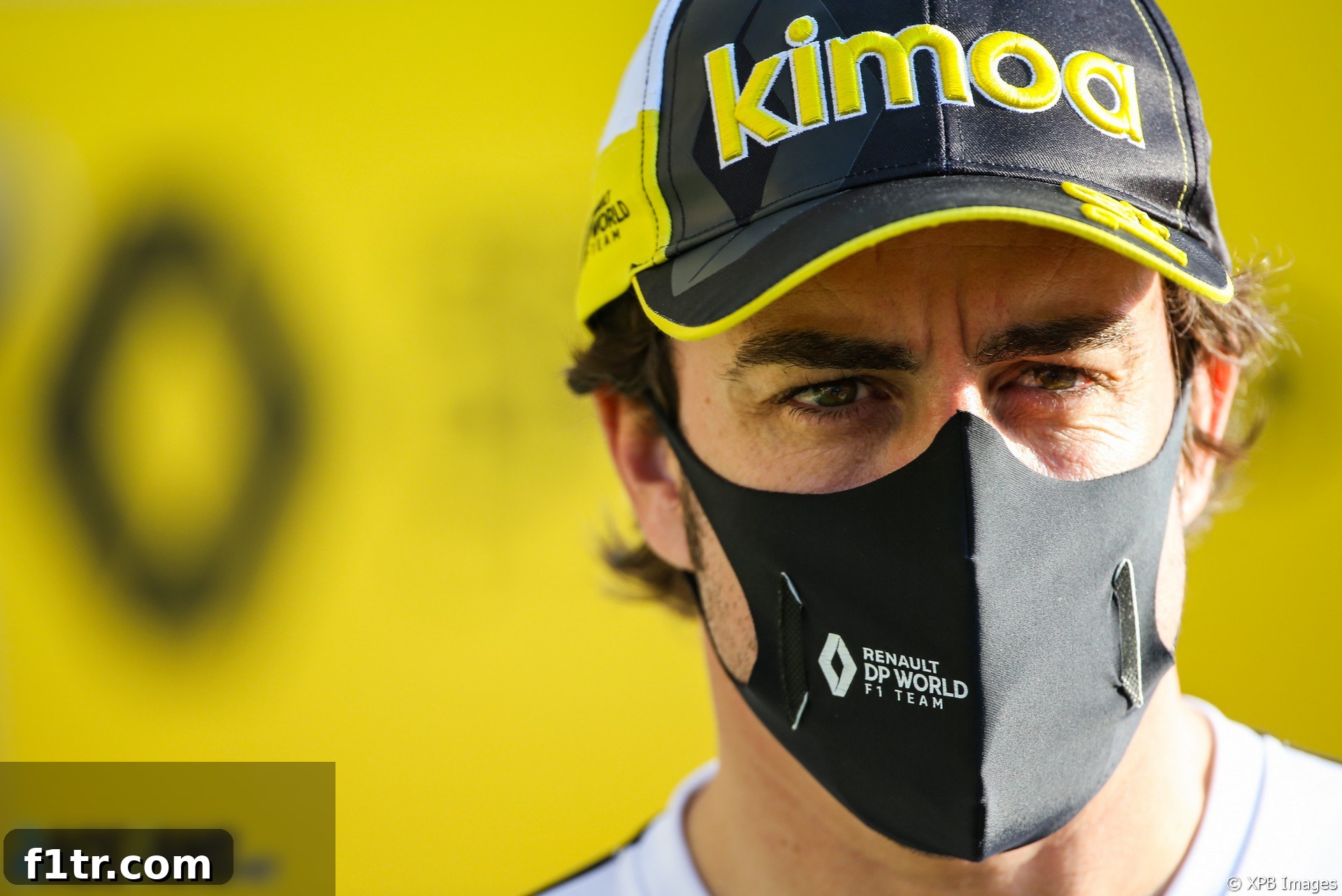
The highly anticipated 2021 Formula 1 season is on the horizon, bringing with it a wave of exciting driver changes and new team dynamics. As teams gear up for a fiercely competitive year, the traditional Young Drivers Test serves as a crucial opportunity for upcoming talent to gain invaluable track experience. However, a recent directive from the FIA has ignited significant discussion and controversy, particularly concerning the participation of veteran drivers transitioning to new outfits. While two-time F1 World Champion Fernando Alonso has received special dispensation to join next week’s test, other prominent drivers, including Carlos Sainz Jnr, who is making a high-profile move to Ferrari, have been explicitly denied the same opportunity.
The decision, communicated by FIA Formula 1 Race Director Michael Masi, has sent ripples through the paddock, highlighting the complexities and interpretations of the sport’s sporting regulations. For drivers like Alonso, making a grand return to the grid after a two-year hiatus with Renault (soon to be Alpine), the test offers a vital chance to reacclimatise to F1 machinery and work with his new team. However, for those changing teams after a full 2020 season, such as Sainz moving from McLaren to Ferrari, or Sebastian Vettel joining Racing Point (soon to be Aston Martin), this ruling poses a significant setback, limiting their crucial preparation time ahead of a pivotal season.
Renault, now Alpine, confirmed last week that the 39-year-old Spaniard, an F1 legend with over 300 Grand Prix starts, had secured permission to participate in the Young Drivers Test scheduled for December 15th in Abu Dhabi. This announcement was met with a mix of understanding and envy within the F1 community. Alonso’s absence from Formula 1 for the 2019 and 2020 seasons, despite his continued involvement in other motorsport disciplines, was cited as a key factor in the FIA’s decision to grant him this unique dispensation. His return marks a significant moment for the sport, and allowing him early access to the car was presented as a means to aid his reintegration and provide valuable feedback to his team as they develop their 2021 challenger.
The FIA sporting regulations, specifically Article 10.5 b) ii), clearly state that the Young Drivers Test is primarily intended for individuals who “have competed in no more than two F1 World Championship races during their career… unless otherwise approved by the FIA.” This clause forms the bedrock of the entire debate. The initial dispensation granted to Alonso, a driver who has far exceeded the two-race limit, naturally led several other teams to seek similar allowances for their own incoming experienced drivers. Carlos Sainz, who expressed a keen interest in driving the SF1000 at the earliest opportunity, was among those hoping to capitalise on any precedent set by Alonso’s case. He had publicly stated at the Sakhir Grand Prix that he would embrace the chance to drive for Ferrari if it became available, understanding the immense value of even a single day of testing.
However, the FIA’s subsequent clarification effectively closed this window for drivers who competed in the 2020 season. Michael Masi, the sport’s highest regulatory authority on track, conveyed via email to all teams that the special approval extended to Alonso would not be broadened to include his rivals who are also joining new teams for the 2021 F1 season. This definitive stance cemented the specific conditions under which a waiver would be considered. Masi informed the teams that any approval for “drivers who have participated in more than two F1 races in their career, under Article 10.5 b) ii), will be subject to the condition that they have not competed in any Formula 1 races during the 2020 season.”
This critical distinction drew a clear line in the sand. It meant that while Alonso, having been absent from the 2020 grid, qualified for the exemption, drivers like Sainz, Vettel, and Daniel Ricciardo – all of whom competed throughout the highly condensed 2020 season – did not. Ricciardo, who is making his move from Renault to McLaren for 2021, and Vettel, leaving Ferrari to join Racing Point, had previously indicated they would not participate in the test. While their personal reasons might have played a role, the FIA’s definitive ruling would have, in any case, barred them from taking part. The competitive implications of this decision are significant. Drivers transitioning to new teams often face a steep learning curve, not just with the car’s characteristics but also with the team’s procedures, engineering philosophy, and the crucial relationships with their new colleagues. A day or two of testing can alleviate some of this pressure, allowing for a smoother integration ahead of pre-season testing, which is often severely limited.
The FIA’s clarification does, however, create an opening for other experienced F1 drivers who did not compete in the 2020 season to potentially participate in the Young Drivers Test. This interpretation allows teams to run their reserve drivers or other non-competing experienced personnel, potentially using their expertise for car development. For instance, Red Bull’s long-standing reserve driver, Sebastien Buemi, who has extensive F1 experience but did not race in 2020, would be eligible. Similarly, Mercedes’ reserve driver, Stoffel Vandoorne, also a former F1 competitor, could theoretically take part. This aspect of the ruling suggests an attempt to balance the spirit of the ‘Young Drivers’ test with the practical needs of teams to conduct meaningful development work, even if it uses a veteran non-racer. This allows teams like Mercedes and Red Bull to leverage their skilled reserve drivers for valuable data collection, while still adhering to the letter of the amended regulation.
Ultimately, the FIA’s precise interpretation of its own sporting regulations has carved out a very specific exception for Fernando Alonso’s return, while simultaneously denying similar opportunities to other experienced drivers moving between teams. This decision underscores the intricate balance between promoting young talent, managing team development, and upholding the integrity of the sporting rules. As the 2021 F1 season approaches, the absence of crucial acclimatisation time for drivers like Carlos Sainz could prove to be a talking point, potentially influencing early-season performances as they strive to integrate into their new environments without the benefit of early track time. The ongoing debate around F1 testing rules, particularly in an era of reduced track running, continues to be a central theme in the sport’s regulatory landscape.
2020 F1 season
- Grosjean to make F1 test return tomorrow for first time since Bahrain horror crash
- Pictures: Wrecked chassis from Grosjean’s Bahrain fireball crash to go on display
- Bottas vs Rosberg: Hamilton’s Mercedes team mates compared after 78 races each
- F1 revenues fell by $877 million in Covid-struck 2020 season
- Hamilton and Mercedes finally announce new deal for 2021 season
Browse all 2020 F1 season articles