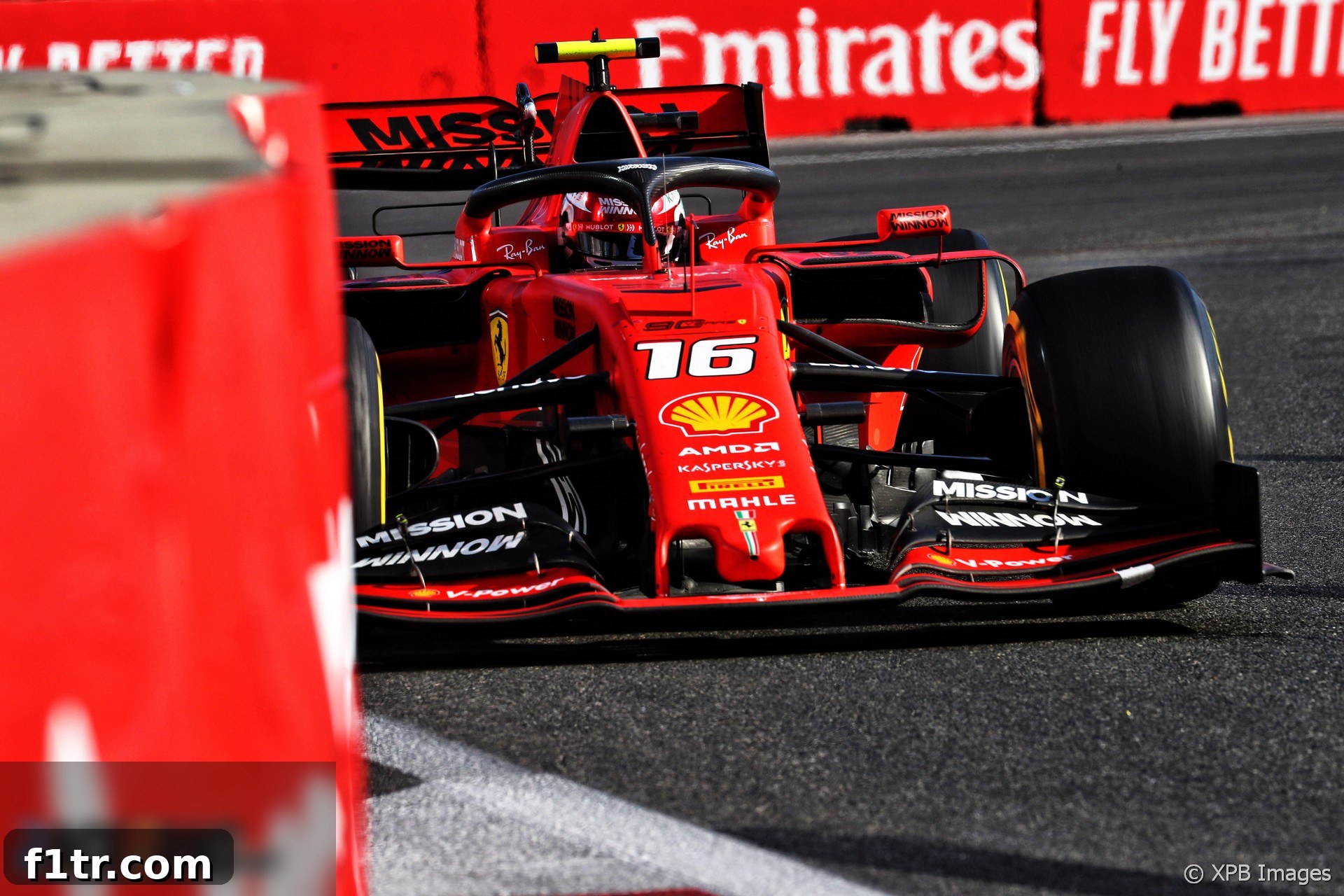
The 2019 Formula 1 season delivered a compelling narrative of intense rivalries, strategic masterstrokes, and moments of high drama. Among these, the Azerbaijan Grand Prix stood out as a poignant ‘what if’ scenario, particularly for Charles Leclerc. Despite showing unprecedented pace throughout the practice sessions, a critical error in qualifying prevented the young Monegasque driver from potentially dominating the race, a sentiment echoed by none other than reigning champion Lewis Hamilton.
Leclerc, behind the wheel of his Ferrari, had been consistently the quickest car on the streets of Baku, setting the fastest times in all three practice sessions. This performance built considerable anticipation, suggesting that Ferrari finally had the edge over their Mercedes rivals on this challenging street circuit. However, a moment of over-ambition in Q2, while attempting a crucial strategic gamble, unravelled his weekend’s promising start and irrevocably altered the course of the Grand Prix.
Advert | Become a Supporter & go ad-free
The Strategic Gamble That Backfired
Leclerc’s ambition was not merely to secure pole position; it was to do so with a strategic advantage for Sunday’s race. The plan was to qualify for Q3 on the medium compound tyres, which would then allow him to start the race on the more durable rubber. This choice offered significant flexibility, enabling a longer first stint and potentially unlocking a one-stop strategy, a coveted advantage on a track known for its variable tyre degradation.
Lewis Hamilton, reflecting on the incident, expressed his understanding and admiration for the strategic intent. “Having looked back I’m not surprised [they did that],” he stated. Hamilton was convinced that Leclerc possessed the raw speed to pull off this audacious strategy. “I think he had the pace to get through on that tyre. And if he had got through on that tyre and qualified in Q3 he would have been on pole.” This endorsement from a seven-time world champion underscores the high regard in which Leclerc’s talent and Ferrari’s strategic acumen were held, even by their closest competitors.
Ferrari’s Untapped Pace in Baku
The F1 paddock was abuzz with Ferrari’s pace that weekend. Baku’s unique layout, featuring long straights intertwined with tight, technical sections, seemed to suit the SF90’s characteristics. The car’s straight-line speed advantage, combined with Leclerc’s masterful handling through the narrow castle section, made for a formidable package. Hamilton’s analysis further solidified this view, contending that Ferrari “definitely were quicker” than Mercedes in Baku.
Delving into the data, Hamilton’s team estimated that even Sebastian Vettel, Leclerc’s seasoned teammate, would have been two-tenths quicker than Valtteri Bottas – who eventually won the race – had he benefited from a slipstream, an advantage Mercedes cars often afforded each other. Moreover, Leclerc had consistently demonstrated a two-tenth advantage over Vettel throughout the weekend, highlighting his exceptional form and Ferrari’s overall strength. This suggested a potential four-tenths advantage for Leclerc over the lead Mercedes in qualifying, a margin that would typically guarantee pole position.
The Impact of the Q2 Crash
Leclerc’s crash in Q2 was a cruel twist of fate. Pushing the limits of his Ferrari, he misjudged the entry into Turn 8, sliding wide and impacting the barrier. The sight of the damaged Ferrari, with Leclerc visibly distraught, sent shockwaves through the pit lane. This single error not only dashed his hopes for pole but also severely compromised his starting position for the race, forcing him to begin from P10. It was a stark reminder of the unforgiving nature of street circuits and the fine line between heroics and heartbreak in Formula 1.
The incident left Sebastian Vettel as the sole Ferrari representative in Q3. Vettel’s session was further complicated by Mercedes’ clever tactics. Reports later emerged that Mercedes had employed a ‘dummy’ practice start during qualifying, effectively disrupting the slipstream train and leaving Vettel without the aerodynamic tow he needed for his final flying lap. This strategic maneuver by Mercedes exemplified the psychological warfare inherent in top-tier motorsport, ultimately contributing to Vettel being bumped back to third on the grid by the two silver arrows.
The Cruciality of Tyre Strategy
The medium tyre strategy was not just a theoretical advantage; it was profoundly practical given the characteristics of the Baku circuit and the performance of the softer compounds. Hamilton articulated this clearly: “There are races that we go to that, if you can get through on the harder tyre, it is better. Especially in a race like that where the start distance is so short, the benefit of a softer tyre is minimised.”
The soft tyres, while providing initial grip, proved to be far less durable and consistent in Baku, leading to significant degradation for many competitors during the race. Had Leclerc started on the medium compound, his race narrative would have been entirely different. “So if he’d started on that tyre we would not have seen him. He would have disappeared as we all struggled on the soft tyre throughout the race,” Hamilton explained. This statement paints a vivid picture of the potential dominance Leclerc was poised to unleash had his qualifying gamble paid off. The ability to run longer on the first stint, avoid early pit stops, and then switch to a fresher, faster compound later in the race would have given him an insurmountable advantage.
Advert | Become a RaceFans supporter andgo ad-free
The Enduring ‘What If’ of Baku
The 2019 Azerbaijan Grand Prix remains a prominent ‘what if’ in Charles Leclerc’s burgeoning career. His raw speed and Ferrari’s undeniable performance advantage in Baku, coupled with a shrewd tyre strategy, painted a picture of potential dominance. The qualifying crash, however, transformed what could have been a triumphant weekend into a masterclass in damage limitation. Despite starting from tenth, Leclerc demonstrated his race craft, climbing through the field to finish fifth and securing the fastest lap, a testament to the car’s underlying pace and his driving prowess.
This race served as a microcosm of Ferrari’s 2019 season: flashes of brilliant speed and strategic genius, often undermined by operational errors or unforeseen circumstances. For Leclerc, it was a harsh but invaluable lesson in the razor-thin margins that define success and failure at the pinnacle of motorsport. While Bottas celebrated a hard-fought victory and Mercedes secured a one-two finish, the lingering question in Baku was not about who won, but about what Charles Leclerc could have achieved.
His impressive practice performances and Hamilton’s strong assertion provide concrete evidence that the Azerbaijan Grand Prix was Leclerc’s race to lose, and unfortunately, he lost it in qualifying. It highlights that in Formula 1, raw speed is just one component of success; execution, strategy, and avoiding critical errors are equally, if not more, vital.
Related Stories from the 2019 F1 Season
- Crying in the Melbourne car park at 2019 grand prix was my career low – Ocon
- McLaren Racing reports reduced £71 million loss in 2019
- Kvyat: Hockenheim podium last year was “my biggest achievement” so far
- How the FIA’s new encrypted fuel flow meter targets Ferrari’s suspected ‘aliasing’ trick
- “He smashed my office door”: 23 must-see moments from ‘Drive to Survive’ season two
Browse all 2019 F1 season articles