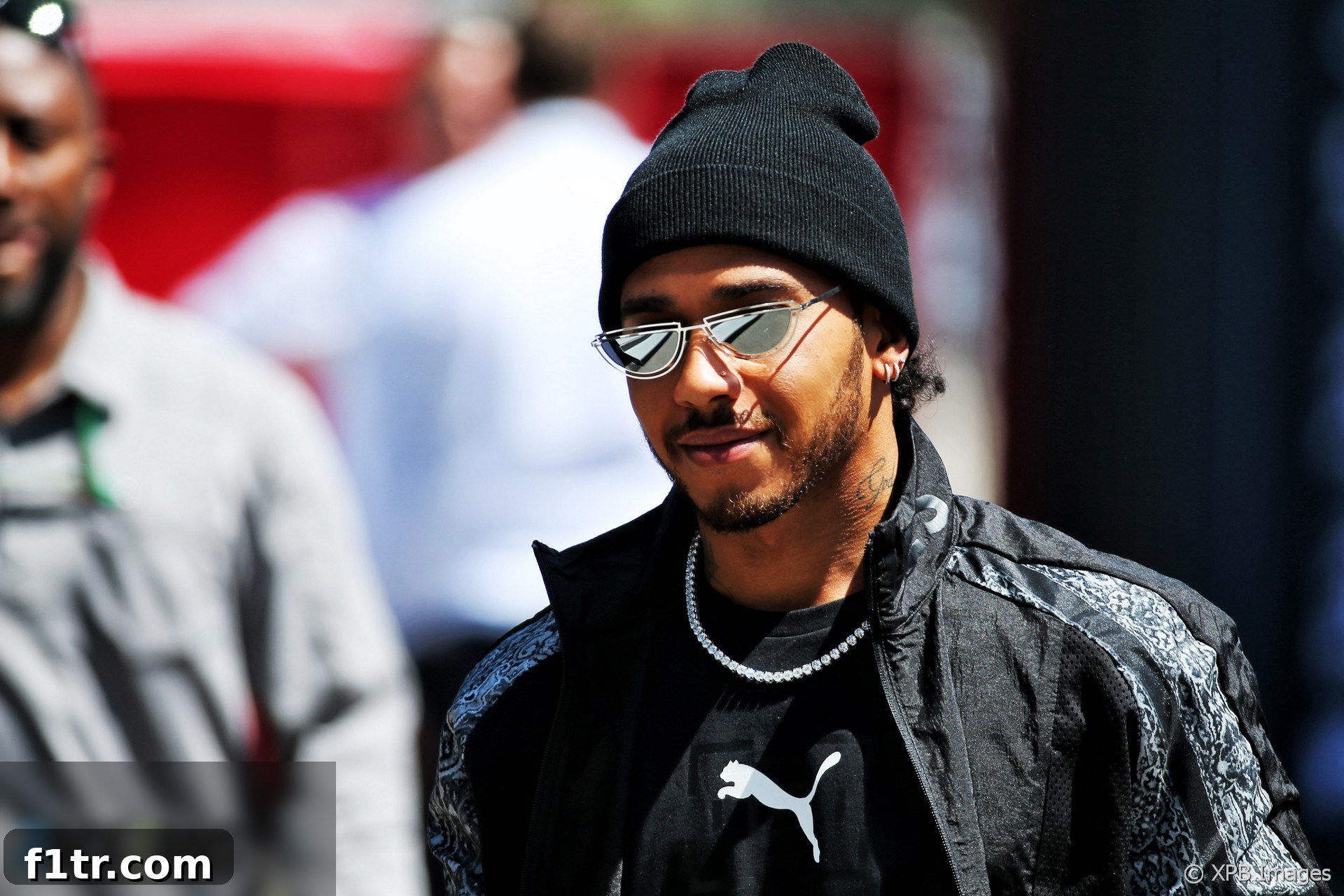
Lewis Hamilton Calls for a Return to Grueling F1, Advocating for Greater Driver Challenge and Enhanced Entertainment
In a candid reflection on the future of Formula 1, Lewis Hamilton, one of the sport’s most decorated figures, has passionately reiterated his desire for a more physically demanding racing environment. The five-time world champion articulated a vision where drivers are pushed to their absolute limits, suggesting that the current iteration of Grand Prix racing falls short of the ultimate athletic test it once was. His comments arrive as the sport considers significant regulatory changes for the 2021 season and beyond, sparking a broader conversation about F1’s identity and appeal.
The Quest for a True Physical Test: Hamilton’s Vision for F1 Drivers
Hamilton’s core argument centers on the perceived ease with which modern F1 cars can be driven, particularly compared to past eras. He starkly illustrated this point by stating he “could probably do two or three races in a row,” a testament to the current reduced physical strain. This observation serves as a powerful critique, suggesting that the pinnacle of motorsport should inherently demand more from its competitors than a driver of his caliber can endure multiple times consecutively.
To rectify this, Hamilton proposed several transformative changes. He expressed a nostalgic longing for “V12, naturally aspirated engines” paired with “manual gearboxes,” a combination synonymous with a raw, visceral driving experience that predates much of the modern electronic and hydraulic assistance. Such a shift would dramatically increase the demands on a driver’s skill, strength, and endurance, moving away from the highly refined, power-assisted machinery of today.
Beyond the powertrain, Hamilton also targeted track design and car controls. He advocated for the removal of “all these big run-off areas,” which currently provide a safety net, allowing drivers to push limits without immediate punitive consequences for minor errors. A return to more unforgiving circuits, where mistakes are met with gravel traps or barriers rather than expansive asphalt, would inject a vital element of risk and precision back into racing. Furthermore, he suggested either eliminating or significantly reducing steering assist, noting his personal preference for a “low” setting to make it “harder for me.” This emphasis on direct, unassisted control underlines his desire for a truly physical connection between driver and machine, where brute strength and delicate touch are equally crucial.
“You should be just so physically exhausted after the race, it should be exhausting like a marathon,” Hamilton emphasized. This vivid analogy highlights the level of physical depletion he believes is appropriate for a sport of Formula 1’s stature. The current environment, he argues, has inadvertently made it easier for younger talents to transition into the sport and for experienced drivers to extend their careers for longer periods. While this might seem beneficial on the surface, Hamilton sees it as indicative of a diminished challenge, urging F1 to reclaim its status as the ultimate test of human and machine.
His sentiments resonate with many purists who recall an era when drivers emerged from their cockpits visibly drained, a testament to the immense physical and mental toll of a Grand Prix. Hamilton believes that by making the sport more physically taxing, it would not only elevate the perceived heroism of the drivers but also ensure that only the most exceptionally conditioned athletes can truly excel at the highest level. This perspective reframes the longevity of careers not just as a mark of skill, but as a symptom of a sport that could, and should, demand more.
Reshaping the Spectacle: Beyond Car Regulations for Enhanced Entertainment
Hamilton’s critique extended beyond driver demands to the broader issues plaguing Formula 1 as a global entertainment product. He acknowledged the perennial need for “better tyres,” a consistent complaint from drivers who often find current specifications limit their ability to push hard throughout a race. However, he stressed that the sport’s challenges run deeper than just technical specifications and regulations.
He expressed significant skepticism regarding the efficacy of past regulatory changes, noting that attempts to cut costs and improve overtaking have generally “not been great in all of those years.” This historical pattern, he believes, has left the sport with lingering issues, including a persistent “separation between all the top wealthier teams and the lower teams” and a general sense that “people are not so excited.”
Hamilton argued that current F1 leadership, specifically Liberty Media, faces the same fundamental problems that have historically plagued the sport. He believes the solution requires a more holistic approach, extending far beyond mere revisions to car specifications. “There’s more to it than just changing the regulations of the car,” he stated, pointing to the unchanging “entertainment aspect” of the race weekend format.
The standard four-day, 21-weekend calendar, with its largely immutable structure, was highlighted as a potential contributor to fan fatigue. Hamilton proposed a radical re-evaluation of this format, suggesting that the “entertainment of it has to probably shift to suit different tracks.” He even mused about potential innovations for iconic but challenging circuits like Monaco, where overtaking is notoriously difficult. “Maybe have two races there – I don’t know what it is, I don’t have the answer for it but I think that element also needs to have a real look into because the fans are the reason that we’re able to continue to do what we do,” he explained.
The champion also candidly addressed the issue of fan engagement and perception. While acknowledging strong attendance at many events, he noted that some races struggle with “not big attendance” and that “promotion is perhaps not always the best in some places.” Crucially, he confronted the “boring” label often attached to F1, particularly during periods of single-team dominance. He acknowledged that stopping cycles of dominance (whether by Ferrari, McLaren, Mercedes, or Red Bull) is partly a regulatory challenge, but maintained that “on a more global scale there has to be changes outside of the regulations.” This broader vision, he hinted, is likely being considered by key figures like Ross Brawn as part of the extensive planning for the 2021 overhaul.
Beyond the Track: Hamilton’s Personal Evolution and Peak Performance
Amidst his calls for a tougher Formula 1, Lewis Hamilton also offered insights into his personal journey towards peak physical and mental condition. He believes he is currently in the best shape of his career, attributing a significant part of this transformation to his switch to a “plant-based” diet.
This dietary change, he explained, had a “huge amount” of positive impact, both “mentally and physically.” He expressed regret that he didn’t adopt this lifestyle “a lot earlier,” highlighting a broader societal issue: “Unfortunately the education is pretty poor for kids at school and obviously parents probably aren’t educating their kids because they also don’t know of the positive effects it can have.” Hamilton’s advocacy for plant-based nutrition stems from his direct experience of its benefits, suggesting a deeper understanding of health and well-being as he matures.
In addition to physical health, Hamilton emphasized his growth in mental resilience. He openly admitted that “not every day is easy” and that he still encounters “humps.” However, he feels consistently equipped with “new tools to be able to handle and build and learn new things all the time.” This continuous self-improvement, both on and off the track, has fostered a sense of enduring strength: “I’m definitely in the best place I’ve ever been but I think you’ve really seen that shift over the past years and I don’t think that’s every going to stop I think I’ll continue to learn and grow and improve.”
Hamilton’s personal development narrative adds another layer to his perspective on Formula 1. While he himself strives for continuous improvement and has optimized his physical and mental state for the sport, he simultaneously desires a sport that challenges even this optimized version of a driver to its absolute maximum. This duality underscores his commitment to excellence, both individually and for the sport he champions.
His comprehensive vision for Formula 1 — one that marries a grueling physical challenge for drivers with an innovative, engaging entertainment package for fans, all while promoting personal well-being — highlights his unique position as both a competitor and a thought leader within the sport. As F1 navigates its future, Hamilton’s influential voice continues to shape the discourse around what the pinnacle of motorsport truly ought to be.
Become a RaceFans supporter andgo ad-free
2019 F1 season
- Crying in the Melbourne car park at 2019 grand prix was my career low – Ocon
- McLaren Racing reports reduced £71 million loss in 2019
- Kvyat: Hockenheim podium last year was “my biggest achievement” so far
- How the FIA’s new encrypted fuel flow meter targets Ferrari’s suspected ‘aliasing’ trick
- “He smashed my office door”: 23 must-see moments from ‘Drive to Survive’ season two
Browse all 2019 F1 season articles