Lance Stroll Criticizes 2021 Abu Dhabi GP Finale: “Sport Before Show”
Aston Martin driver Lance Stroll unequivocally expressed his profound dissatisfaction with the contentious conclusion to the 2021 Formula 1 season’s final race, stating that the sport’s governing body prioritised entertainment over fair competition.
The 2021 Formula 1 Abu Dhabi Grand Prix remains one of the most polarizing and fiercely debated races in the sport’s history. Its controversial final moments led to an intense championship decider and sparked widespread discussion about the integrity of race management. At the heart of this controversy was Race Director Michael Masi’s decision-making during a crucial Safety Car period, particularly regarding the procedure for lapped cars. The FIA subsequently initiated a thorough review of the incident, acknowledging the profound impact it had on the sport’s reputation and its fanbase.
The Controversial End to the 2021 Season
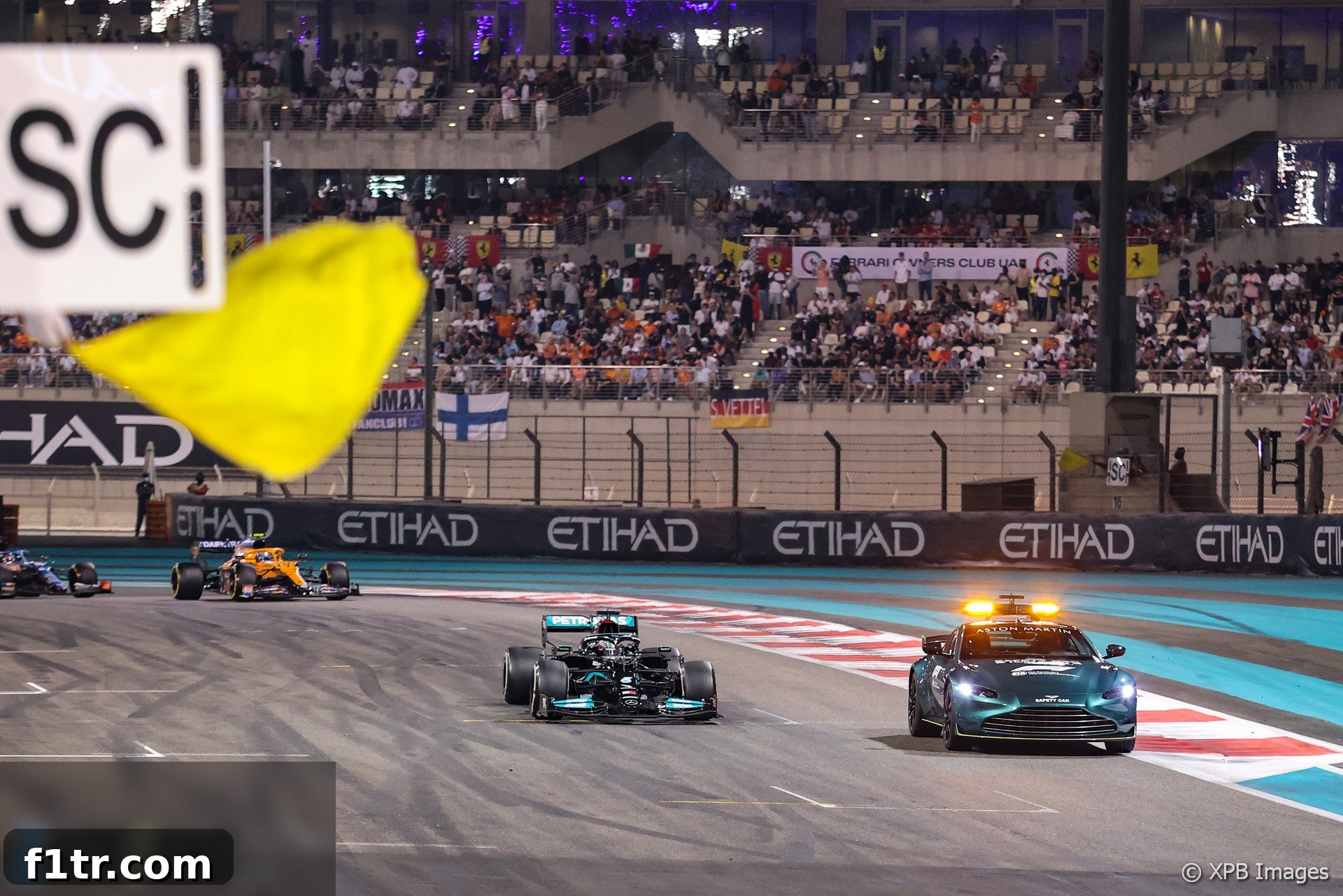
The final race of the 2021 season saw an epic showdown between Max Verstappen and Lewis Hamilton, with the championship title hanging in the balance. A late-race crash brought out the Safety Car, seemingly securing Hamilton’s victory. However, Masi’s subsequent actions to restart the race for a single final lap, in a manner that appeared to diverge significantly from established regulations and previous practices, dramatically altered the outcome. This decision created a direct, wheel-to-wheel battle between the two championship contenders, ultimately allowing Verstappen to clinch the title.
Partial Unlapping: A Key Point of Contention
A central element of the controversy revolved around Masi’s directive to permit only a select group of lapped drivers to unlap themselves and rejoin the lead lap. Crucially, Lance Stroll, driving for Aston Martin, was among those not allowed to unlap, despite his teammate, Sebastian Vettel, who was ahead of him on track, being given the clearance to do so. This selective application of the rules placed Stroll at a clear disadvantage and fuelled his strong criticisms of the race management.
Speaking at the launch of Aston Martin’s new AMR22 chassis, Stroll did not mince words when asked about the contentious conclusion to the previous season. “I think that consistency in our sport is not our strongest point,” Stroll stated, highlighting a fundamental flaw he perceives in Formula 1’s operational standards. He reiterated his firm belief that “Abu Dhabi was just not right,” asserting that the established rules should be immutable and applied uniformly to all competitors.
Stroll’s Argument: Rules Must Be Consistent, Not Modified for Spectacle
Stroll elaborated on his viewpoint, underscoring the clear guidelines governing Safety Car procedures. “The rules are the rules. When there’s a Safety Car, lapped cars get to overtake the Safety Car and then we go racing,” he explained. His frustration stemmed from the unprecedented nature of Masi’s decision. “There’s nothing that says half the cars can overtake and half the cars have to stay behind and then we’ll go racing. So those things can’t be modified during a race just to put on a show.” This statement directly challenged the notion that race rules could be arbitrarily altered in real-time to heighten entertainment value, suggesting a dangerous precedent for the sport’s integrity.
Masi’s decision had a direct and significant impact on the race’s final standings and the championship battle. By allowing only certain lapped cars to unlap, it effectively cleared the path for Max Verstappen to directly challenge race leader Lewis Hamilton. Concurrently, it ensured that other lapped cars, including Stroll’s, remained between the Red Bull driver and third-placed Carlos Sainz Jnr. Stroll firmly believes that this controversial decision was made primarily to orchestrate a more dramatic and entertaining conclusion to the season, rather than to uphold sporting fairness.
“Definitely, that was an example of poor consistency,” Stroll reiterated, reinforcing his central critique. He stressed that “The rules are the rules and can’t be changing, modifying the rules for entertainment.” For Stroll, the fundamental principle should always be clear: “It has to be sports first.” He contended that if there were any missteps or alternative approaches Formula 1 or the FIA could have taken, such matters should be rigorously reviewed in hindsight, post-race, rather than through on-the-fly rule alterations during the event itself. “But I don’t think it’s right that that happened in Abu Dhabi,” he concluded, underscoring his unwavering stance.
The Enduring Debate: Sport vs. Show in Formula 1
Stroll’s comments tapped into a broader, ongoing debate within Formula 1 and professional sports at large: the delicate balance between maintaining sporting integrity and enhancing entertainment value. In an era where sports increasingly compete with other forms of media for viewership, there’s pressure to deliver thrilling spectacles. However, Stroll’s argument firmly positions him on the side of “sports first,” suggesting that any manipulation of rules for the sake of excitement undermines the very essence of fair competition and risks alienating purist fans. The Abu Dhabi incident became a stark illustration of how perceived attempts to “put on a show” can lead to accusations of unfairness and calls for greater transparency.
The FIA’s subsequent review of the Abu Dhabi Grand Prix was a direct response to the immense pressure from teams, drivers, and the global fanbase. This comprehensive investigation aimed to scrutinize the events leading up to the final lap, Michael Masi’s decision-making process, and the application of the sporting regulations. The findings of this review ultimately led to significant structural changes within race control, including Michael Masi’s departure as Race Director and the implementation of a new, rotational system for the role, alongside the introduction of a Virtual Race Control Room. These measures were designed to enhance robustness, consistency, and impartiality in race management, signaling the FIA’s commitment to addressing the shortcomings exposed by the 2021 finale.
Moving Forward: Driver Engagement and Future Discussions
Looking ahead, Stroll expressed his expectation for continued and deeper discussions between the drivers and the FIA regarding the handling of the Abu Dhabi race. “There’s been talks but everyone kind of disappeared after Abu Dhabi,” he noted, pointing to an initial period of quiet after the intense controversy. However, he was confident that these crucial conversations would resume. “So I’m sure we’ll touch on it some more as drivers with the FIA and with Formula 1 and all that leading up to the first race.” This highlights the vital role drivers play in shaping the sport’s future, acting as key stakeholders whose direct experiences on track provide invaluable feedback for rule formulation and enforcement.
The involvement of drivers in refining sporting regulations and ensuring consistent application of rules is paramount. Their unique perspective on safety, fairness, and the practical implications of race control decisions makes their input indispensable. Stroll’s call for further dialogue underscores a collective desire among competitors for clearer guidelines, enhanced accountability, and a renewed trust in the governance of the sport. The aspiration is to prevent any recurrence of situations where the integrity of a race, let alone a championship, could be called into question due to ambiguous or inconsistent rule interpretations.
The Legacy of Abu Dhabi 2021: A Call for Unwavering Sporting Integrity
The events of the 2021 Abu Dhabi Grand Prix and Lance Stroll’s candid remarks serve as a powerful reminder of the delicate balance Formula 1 must strike between captivating entertainment and unwavering sporting integrity. While the spectacle of a last-lap championship decider was undeniably thrilling for many, the perception of rules being bent for dramatic effect left a lasting scar on the sport’s image. Stroll’s insistence on “sports first” resonates with a core tenet of competition: that the outcome should be determined by talent, strategy, and adherence to clearly defined rules, not by subjective interventions designed for “the show.”
As Formula 1 continues to evolve and expand its global footprint, ensuring transparent governance and consistent application of its regulations will be critical for maintaining its credibility and the trust of its millions of fans. The lessons learned from Abu Dhabi 2021, driven home by voices like Lance Stroll’s, underscore the imperative for F1 to prioritize fairness and consistency above all else, ensuring that the spectacle always emerges organically from the purity of competition.