German Grand Prix Friday Practice: A Glimpse into Hockenheimring’s Unpredictable Battle
The opening day of the German Grand Prix at the Hockenheimring delivered a tantalizingly unclear picture, leaving teams and fans alike in suspense regarding the true pecking order. Friday practice sessions often serve as a preliminary taste of the weekend’s action, but this particular day left more questions than answers, hinting at a thrilling and closely contested Formula 1 spectacle.
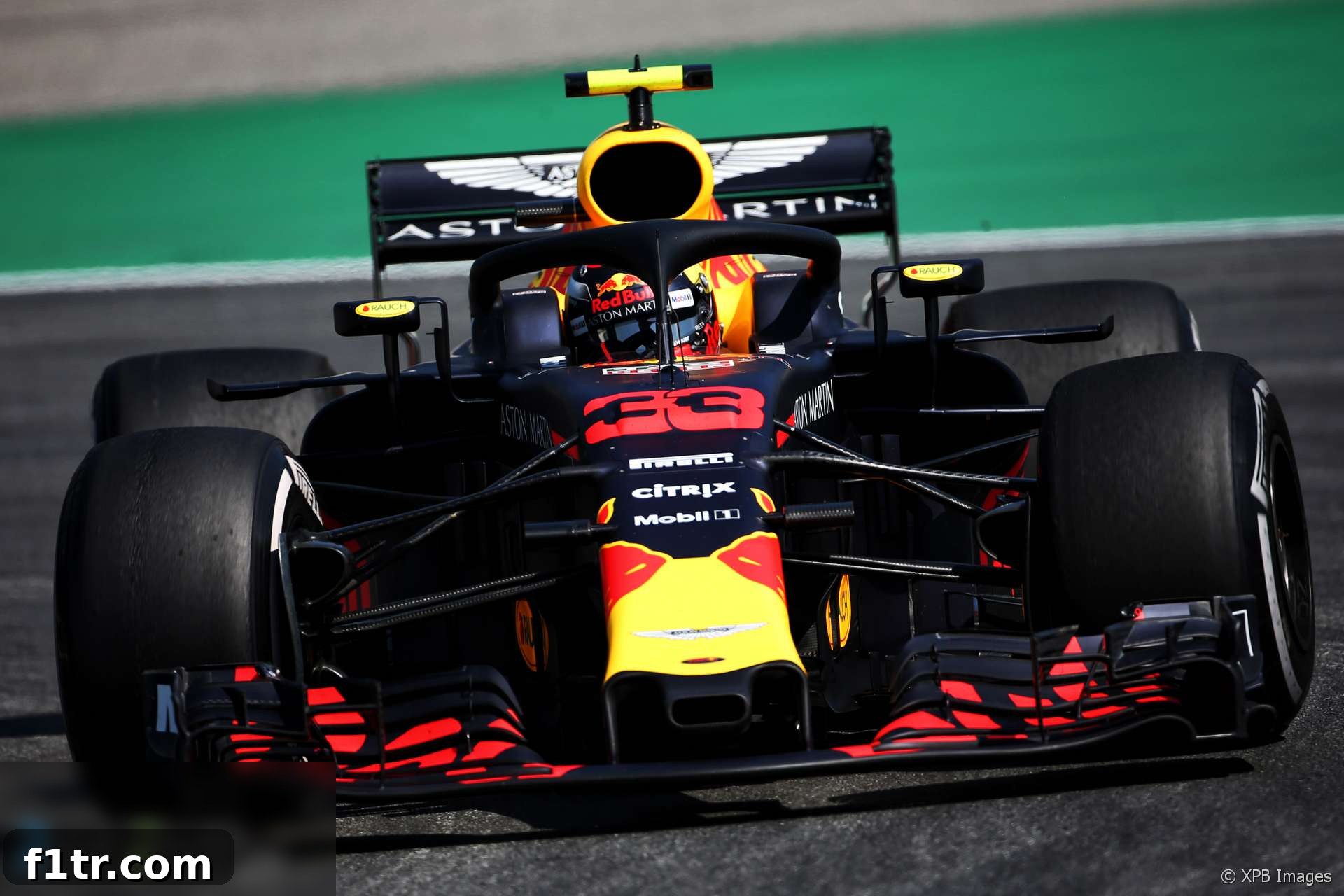
Red Bull Racing, often dubbed “Friday specialists,” lived up to their reputation by setting the quickest times in both free practice sessions. This impressive early performance, however, should be viewed with a degree of caution, as their rivals traditionally unlock significant pace boosts for Saturday’s crucial qualifying. Despite Red Bull’s official topping of the timing sheets, a deeper analysis of the data suggested a different story unfolding behind the scenes.
Mercedes’ Lewis Hamilton, a multiple world champion known for his precision and raw speed, demonstrated immense potential. Had he managed to flawlessly link his three best sector times across the circuit, his theoretical optimum lap of 1 minute 12.887 seconds would have placed him almost two-tenths clear of any competitor. This implied latent speed from the Mercedes W09 suggests that the silver arrows are very much in contention, biding their time before unleashing their full performance.
Hamilton himself, however, voiced concerns, not about Red Bull, but about the strategic “sandbagging” he suspected from the Ferrari camp. He firmly believed that Ferrari had suddenly unlocked a significant power boost from their engines. This perception wasn’t without merit. Ferrari has consistently shown a tendency to find substantial lap time improvements between Friday and Saturday, particularly in qualifying trim, compared to their main rivals. Furthermore, Sebastian Vettel’s blistering pace through Sector Two, a section of the track where raw top speed and engine power are paramount, further fueled these suspicions, highlighting Ferrari’s potential advantage when it truly matters.
The narrative of Red Bull dominating Friday only for their rivals to find more pace on Saturday is a familiar one throughout the season. Their competitors’ potent qualifying modes, designed to extract maximum performance over a single lap, often negate Red Bull’s strong long-run pace. Adding to the complexity for Red Bull, Daniel Ricciardo faces an unavoidable grid penalty, meaning he will start from the back of the grid regardless of his qualifying performance. Therefore, even if the track remains dry, all signs point to another enthralling, nail-bitingly close Mercedes-versus-Ferrari pole position shoot-out, reminiscent of the thrilling battle witnessed at Silverstone just a fortnight prior.
Weather Woes and Strategic Shifts: The Impact of Hockenheimring’s Forecast
The looming weather forecast adds another layer of intrigue and unpredictability to the German Grand Prix weekend. Crucially, the prospect of rain for Saturday’s qualifying session could be a game-changer, particularly for Max Verstappen and Red Bull. Wet conditions often serve to neutralize the straight-line speed advantage of more powerful engines, bringing the more aerodynamically efficient Red Bull chassis into its own. This would significantly boost Verstappen’s chances of challenging for pole position, transforming the qualifying dynamic. Conversely, rain wouldn’t offer any solace to Ricciardo, whose pre-existing grid penalty renders his qualifying time largely academic for his starting position.
Looking ahead to race day, conditions are expected to undergo another significant transformation. While the threat of rain on Sunday appears to be receding, temperatures are predicted to drop substantially. An anticipated decrease of approximately 8°C in track temperature will drastically alter the tyre situation, presenting teams with a fresh set of challenges and strategic conundrums.
Tyre Tribulations: Blistering, Graining, and the One-Stop Mandate
Friday’s hotter conditions highlighted a prevalent issue for all teams: left-rear tyre blistering. Renault appeared to suffer the most pronounced effects, while Haas’s Romain Grosjean openly suggested that Pirelli should have brought the thinner-gauge tyres previously utilized at Silverstone. These thinner tyres are designed to reduce heat build-up and subsequently mitigate blistering, a problem that causes chunks of rubber to detach from the tyre surface, leading to a loss of performance and grip.
However, with the cooler temperatures forecast for Sunday, the focus shifts from blistering to another tyre phenomenon: graining. Graining, particularly on the front-left tyre and especially with the ultra-soft compound, is expected to become a more significant problem. Graining occurs when the tyre surface cools down and small pieces of rubber tear off, rather than wearing away smoothly, reducing grip and increasing degradation.
“That’s why this afternoon they were trying to simulate different pace to understand which is the level they can run,” explained Pirelli’s Motorsport Director, Mario Isola, referring to the teams’ Friday efforts to gather data for varying conditions. His insights underscore the delicate balance teams must strike with their tyre management.
Isola further elaborated on the strategic imperatives: “The target is to have one stop, because they lose too much if they stop twice. And there is no real incentive because the degradation becomes high when you finish the tyre but the first part of the stint the degradation is very low. You have low [degradation] and then you have what we can call ‘the cliff’, at that point you have to change.” This “cliff” refers to the sudden and dramatic drop-off in tyre performance once a certain wear threshold is crossed, making a timely pit stop crucial to avoid losing significant lap time.
Pirelli has supplied a range of compounds this weekend, with the ultra-soft tyre being two ‘stages’ softer than the next available compound, the soft. Intriguingly, the performance differential between the ultra-soft and the soft is only around 0.6 seconds per lap. This relatively small gap opens up valuable strategic avenues for the front-running teams. Many will be aiming to navigate through Q2 using the more durable soft tyre (assuming dry conditions), thereby allowing them to start the race on this preferred compound. Starting on the soft offers a longer first stint and greater flexibility in race strategy. Moreover, even those teams compelled to use the ultra-soft in Q2 should still be capable of executing a one-stop race strategy, avoiding the time-consuming necessity of a second pit stop. Isola confirmed this possibility: “If with the ultra-soft you run more than 15 laps then you can fit the medium and try to go to the end of the race. That is 50 laps but with the medium it is feasible.” This indicates that even starting on the fastest compound doesn’t necessarily lock teams into a multi-stop strategy, provided they manage the ultra-softs effectively in the opening stint.
Midfield Melee and Power Unit Dynamics
Beyond the leading contenders, the midfield battle promises to be as intense as ever. Haas F1 Team, affectionately referred to as “Formula 1 B,” showcased strong pace on Friday, presenting them with another prime opportunity to secure a significant points haul, perhaps even a coveted one-two finish in their category. However, converting these promising practice performances into concrete race results has proven challenging for the American outfit throughout the season.
Meanwhile, Sauber continues to impress with the rising star Charles Leclerc, whose two top-10 appearances already indicate he is a strong contender for a Q3 slot once again. His exceptional talent in extracting maximum performance from the softer tyre compounds continues to shine, often outperforming his teammate, Marcus Ericsson, who still appears to struggle to match Leclerc’s pace, particularly on the softer rubber.
The consistent strength demonstrated by the Ferrari customer teams – Haas and Sauber – serves as a stark underline to a broader narrative developing in Formula 1: Ferrari appears to have decisively overtaken Mercedes in power unit development. This perceived shift in engine performance has undoubtedly tipped the balance in the closely-fought midfield battle, enabling Ferrari-powered cars to punch above their weight and challenge teams that historically had a power advantage.
Practice Data Insights: Long Runs and Lap Times
Longest Stint Comparison – Second Practice Analysis
Understanding race pace and tyre degradation over extended runs is paramount for formulating a successful Grand Prix strategy. While the detailed visual chart of drivers’ lap times during their longest unbroken stints is not presented here, such data typically highlights the consistency and endurance of various tyre compounds and individual driving styles. Very slow laps, often indicative of pit stops or significant traffic, are usually omitted to provide a clearer picture of sustained performance. Analysts would use such charts to zoom into specific periods, pan across different drivers, and reset views to compare performance trends and identify potential strategic windows.
Complete Practice Times: Hockenheimring Friday Performance
The combined practice times from FP1 and FP2 offer a snapshot of individual and team performance over the opening day. While Red Bull topped the overall sheets, the close margins and varying strategic approaches mean that these times are merely indicators rather than definitive predictors of Saturday and Sunday’s outcomes. Observing the total laps completed also gives an idea of each team’s program execution and data gathering efforts.
| Pos | Driver | Car | FP1 | FP2 | Total laps |
|---|---|---|---|---|---|
| 1 | Max Verstappen | Red Bull-TAG Heuer | 1’13.714 | 1’13.085 | 52 |
| 2 | Lewis Hamilton | Mercedes | 1’13.529 | 1’13.111 | 68 |
| 3 | Valtteri Bottas | Mercedes | 1’13.903 | 1’13.190 | 69 |
| 4 | Sebastian Vettel | Ferrari | 1’13.796 | 1’13.310 | 69 |
| 5 | Kimi Raikkonen | Ferrari | 1’14.267 | 1’13.427 | 65 |
| 6 | Daniel Ricciardo | Red Bull-TAG Heuer | 1’13.525 | 1’14.682 | 58 |
| 7 | Romain Grosjean | Haas-Ferrari | 1’14.691 | 1’13.973 | 63 |
| 8 | Kevin Magnussen | Haas-Ferrari | 1’14.853 | 1’14.189 | 64 |
| 9 | Charles Leclerc | Sauber-Ferrari | 1’15.097 | 1’14.374 | 66 |
| 10 | Nico Hulkenberg | Renault | 1’15.282 | 1’14.496 | 63 |
| 11 | Esteban Ocon | Force India-Mercedes | 1’14.508 | 39 | |
| 12 | Sergio Perez | Force India-Mercedes | 1’15.415 | 1’14.552 | 67 |
| 13 | Carlos Sainz Jnr | Renault | 1’15.769 | 1’14.592 | 53 |
| 14 | Marcus Ericsson | Sauber-Ferrari | 1’14.783 | 38 | |
| 15 | Pierre Gasly | Toro Rosso-Honda | 1’16.071 | 1’14.793 | 76 |
| 16 | Brendon Hartley | Toro Rosso-Honda | 1’15.864 | 1’14.830 | 81 |
| 17 | Fernando Alonso | McLaren-Renault | 1’15.544 | 1’14.836 | 51 |
| 18 | Lance Stroll | Williams-Mercedes | 1’15.629 | 1’15.269 | 68 |
| 19 | Sergey Sirotkin | Williams-Mercedes | 1’15.876 | 1’15.408 | 75 |
| 20 | Stoffel Vandoorne | McLaren-Renault | 1’16.149 | 1’15.454 | 48 |
| 21 | Nicholas Latifi | Force India-Mercedes | 1’16.023 | 27 | |
| 22 | Antonio Giovinazzi | Sauber-Ferrari | 1’16.136 | 23 |
Quotes: Dieter Rencken
More from the 2018 German Grand Prix
- 2018 German Grand Prix Star Performers
- Vettel is first driver to crash out of the lead solo in 13 years
- Top ten pictures from the 2018 German Grand Prix
- Hamilton rains on Vettel’s parade
- Paddock Diary: German Grand Prix day four
Browse all 2018 German Grand Prix articles