Ferrari F1’s Strategic Overhaul: A Pyramid Rebuilt for Championship Ambition
In the high-stakes world of Formula 1, change is often the only constant, and for Scuderia Ferrari, a significant organizational restructure has arrived, albeit with little surprise. Indeed, the most astonishing aspect for many observers is that it took the legendary Maranello outfit a full two years to acknowledge that its previously adopted flat operating structure was fundamentally incompatible with the demands of a major team aspiring to world championships. Operating with less than half of Ferrari’s colossal budget, midfield teams might find a flatter hierarchy manageable, but for a team with Ferrari’s legacy and ambition, a different approach was clearly imperative.
The murmurs of discontent regarding the Scuderia’s fitness for purpose were not new, with early suggestions of structural deficiencies emerging well over a year ago. However, Ferrari’s disastrous start to the 2020 Formula 1 season left no room for doubt; profound change was not merely advisable but an undeniable necessity for the team to regain its competitive edge and uphold its esteemed reputation.
Advert | Become a Supporter & go ad-free
Echoes from the Past: Montezemolo’s Call for Global Talent
Adding weight to the growing calls for reform, former Ferrari president Luca di Montezemolo, a figure synonymous with periods of Ferrari’s championship success – both in the mid-seventies and again as CEO during the late nineties – recently issued a poignant plea. He urged Ferrari to actively recruit the finest talents available, unequivocally stating that nationality should be no barrier. This sentiment mirrored arguments made just a week prior in various motorsport analyses, underscoring a critical shift in perspective that Ferrari needed to embrace.
While some cynics might suggest Montezemolo’s public pronouncements were a thinly veiled attempt to angle for a return to the Maranello fold, having been unceremoniously ousted in 2014 by then-Fiat Chrysler Automobiles (FCA) CEO Sergio Marchionne, his insights remain invaluable. Few individuals possess a deeper, more intuitive understanding of the intricate Maranello psyche and what it truly takes to succeed at Ferrari than Montezemolo.
The Marchionne Legacy: A Flat Structure Designed for Efficiency, Not F1 Dynamics
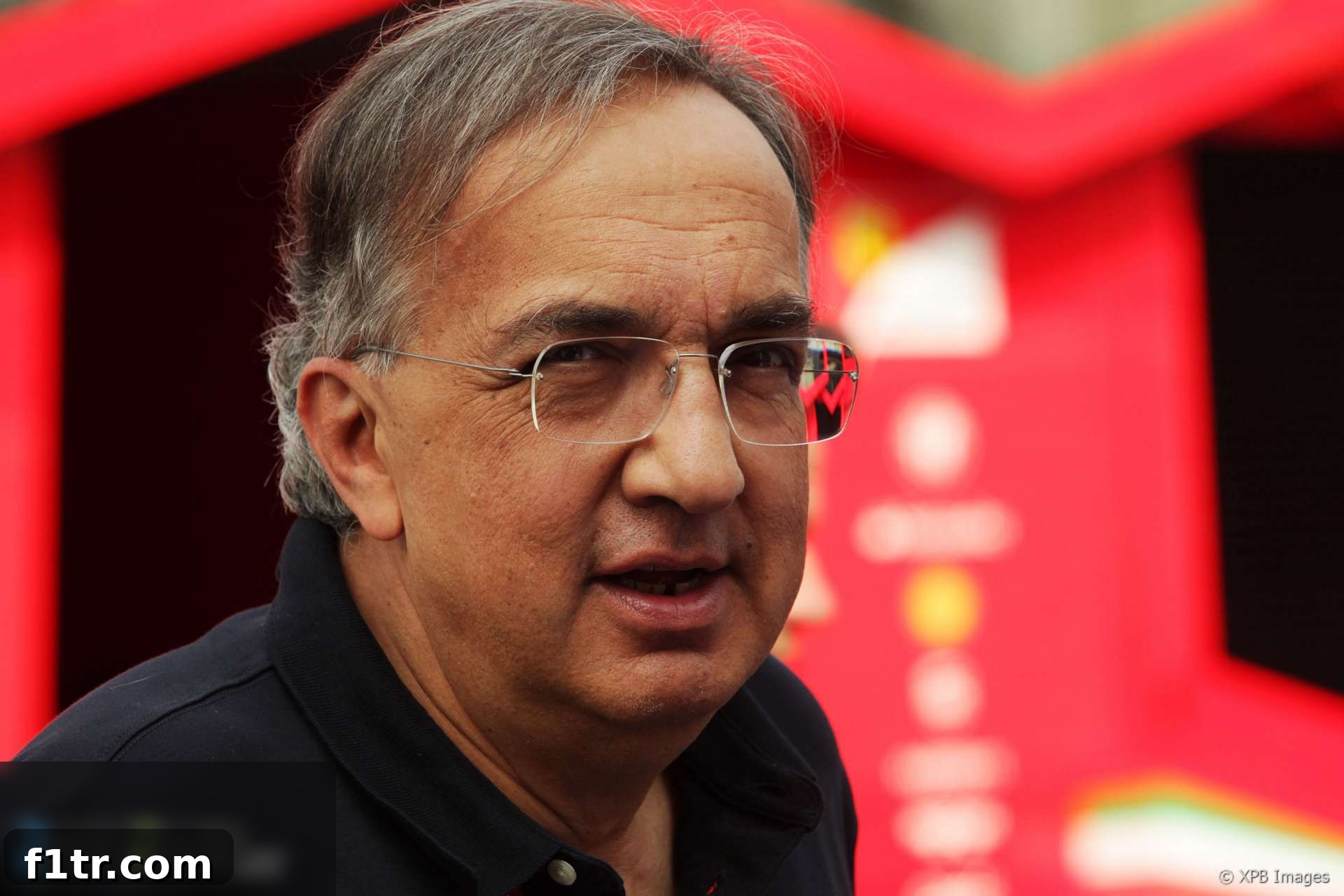
At the time of Montezemolo’s departure, Ferrari was still an integral part of FCA, before its subsequent spin-off via listings in New York and Milan. The team’s previous organizational structure, the subject of yesterday’s announced revisions, was originally conceptualized and implemented by Sergio Marchionne. His vision was clear: to streamline operations and enhance efficiency, a philosophy he applied rigorously across all FCA companies as a hard-nosed cost-cutter.
Marchionne’s grand plan involved his retirement from FCA in March 2019, at which point he intended to assume the dual roles of Ferrari president and CEO. His particular focus would have been the crucial commercial and political elements of Gestione Sportiva, Ferrari’s sporting division, leaving the operational aspects to others. As part of this proposed restructure, then-team principal Maurizio Arrivabene was slated for retirement. The operational activities of the sporting division were to be delegated to Mattia Binotto, who would combine the role of sporting director with his existing function as technical director. In essence, Gestione Sportiva would operate with a flat reporting structure, a stark contrast to the traditional pyramid hierarchies prevalent in most successful Formula 1 teams.
Why Flat Structures Fall Short in F1’s Complex Environment
Marchionne’s approach, while effective in certain corporate environments, proved challenging for the unique ecosystem of Formula 1. F1 teams are highly specialized entities, managing thousands of components, complex aerodynamic concepts, cutting-edge power units, and intricate race strategies, all under immense time pressure and relentless public scrutiny. A flat structure, where numerous departments report to a single individual, often leads to bottlenecks in decision-making, diluted accountability, and an overwhelming burden on the central figure.
Unlike the broader auto industry, where product cycles are longer and strategic decisions can be more deliberated, F1 demands rapid, precise, and highly collaborative responses. A hierarchical, or pyramid, structure with clearly defined roles, responsibilities, and delegated authorities ensures that expertise can be leveraged efficiently, problems can be addressed swiftly at the appropriate level, and the team principal can maintain a strategic overview without being bogged down in every operational detail. The absence of such clear delegation can cripple a team’s ability to innovate, adapt, and perform consistently at the pinnacle of motorsport.
Lessons from Rivals: The McLaren Blueprint
The inherent challenges of non-pyramid structures in F1 are underscored by the recent history of other prominent teams. McLaren, for instance, spent over a decade languishing in the wilderness after experimenting with a ‘matrix’ structure, favored by its previous administration. It is only now that McLaren is emerging from that period, largely thanks to its reversion to a traditional pyramid system, meticulously installed when Zak Brown took the helm of the team. This compelling case study strongly indicates that a pyramid structure, which effectively delegates authorities and responsibilities through defined, unambiguous reporting hierarchies, is not merely advantageous but absolutely crucial for sustained success in the intensely competitive world of Formula 1.
Advert | Become a RaceFans supporter andgo ad-free
Binotto’s Impossible Burden: Leadership Without Guidance
However, Marchionne’s ambitious plan for Ferrari never reached its full realization. His unexpected death in July 2018 left a void that was filled by Louis Camilleri, former head of long-time Ferrari sponsor Philip Morris International. Crucially, Camilleri brought with him no direct motor industry experience. Despite this, he proceeded to dump Arrivabene and implement Marchionne’s flat structure, but critically, without the guiding hand and strategic acumen of Marchionne himself.
Thus, in one swift and rather hasty swoop, Mattia Binotto found himself responsible not only for all of Ferrari’s sporting and technical activities but also for navigating the arcane politics of Formula 1. He was tasked with an immense portfolio, yet lacked the crucial mentorship and strategic oversight of the man who had originally devised the very structure he was meant to operate within. Under ‘normal’ circumstances, in a ‘normal’ team, during a ‘normal’ year, such a workload would be an enormous ask. But this was Ferrari, a team under unparalleled global scrutiny, operating in a 2020 season that had already been flagged as a critical year for contract negotiations and a transition period ahead of F1’s much-trumpeted ‘new era’.
To compound the challenges, the entire world was turned topsy-turvy by the unprecedented unpredictability of Covid-19, adding layers of logistical and financial complexity. Is it any wonder, then, that Binotto came under enormous and sustained pressure throughout this period? His position became increasingly untenable, highlighting the urgent need for a more sustainable and robust organizational framework.
The New Dawn: A Pyramid Rebuilt for Performance and Clarity
The latest restructure at Ferrari is specifically engineered to address these glaring issues. Its primary objective is two-fold: firstly, to significantly reduce Mattia Binotto’s overwhelming workload by establishing new, specialized technical performance teams. Secondly, it aims to clearly delegate authorities and responsibilities to a core group of empowered individuals. This strategic reallocation of duties is designed to free Binotto to concentrate on the bigger picture aspects of running what is arguably the most political and globally scrutinized team in Formula 1 history. By shedding the burden of day-to-day operational minutiae, Binotto can now dedicate his expertise to strategic planning, external relations, and guiding the team’s long-term vision.
In essence, the formerly flat structure has been judiciously ‘pyramidised,’ creating distinct layers of command and accountability. Crucially, this overhaul has been implemented while largely retaining existing staff, an unequivocal expression of confidence in the talent and potential within the current team. This continuity signals that Ferrari believes its issues stemmed more from structural inefficiencies than from a lack of capable personnel. That said, the dynamic nature of F1 suggests that further refinements to the structure are likely on the cards, especially as the sport’s impending budget cap begins to exert its full influence, forcing teams to operate with even greater fiscal discipline and operational efficiency.
Strategic Appointments and Future Prospects: A Step Towards Redemption
Whether this latest restructure alone will prove sufficient to decisively reverse Ferrari’s recent regression remains to be seen. However, it is undeniably a significant and necessary step in the right direction. The reorganization, coupled with the timely return in March of Luca Colajanni – a battle-hardened F1 politician if ever there was one – this time as the head of Scuderia Ferrari’s brand strategy, could prove to be a pivotal turning point for the team. Colajanni’s experience will be invaluable in navigating the complex political landscape of F1, enhancing Ferrari’s standing, and ensuring its powerful brand is strategically managed.
Together, these strategic adjustments hold the potential to reshape Ferrari’s trajectory, both in terms of on-track performance and its political influence within the sport. While success in Formula 1 is never guaranteed and the road ahead will undoubtedly be challenging, at least now, the Scuderia has significantly improved its fighting chance of returning to the pinnacle of motorsport, where its legacy truly belongs.
Advert | Become a RaceFans supporter andgo ad-free
2020 F1 season
- Grosjean to make F1 test return tomorrow for first time since Bahrain horror crash
- Pictures: Wrecked chassis from Grosjean’s Bahrain fireball crash to go on display
- Bottas vs Rosberg: Hamilton’s Mercedes team mates compared after 78 races each
- F1 revenues fell by $877 million in Covid-struck 2020 season
- Hamilton and Mercedes finally announce new deal for 2021 season
Browse all 2020 F1 season articles