Andretti Global’s Formula 1 Dream: Building a Team Amidst Shifting Tides
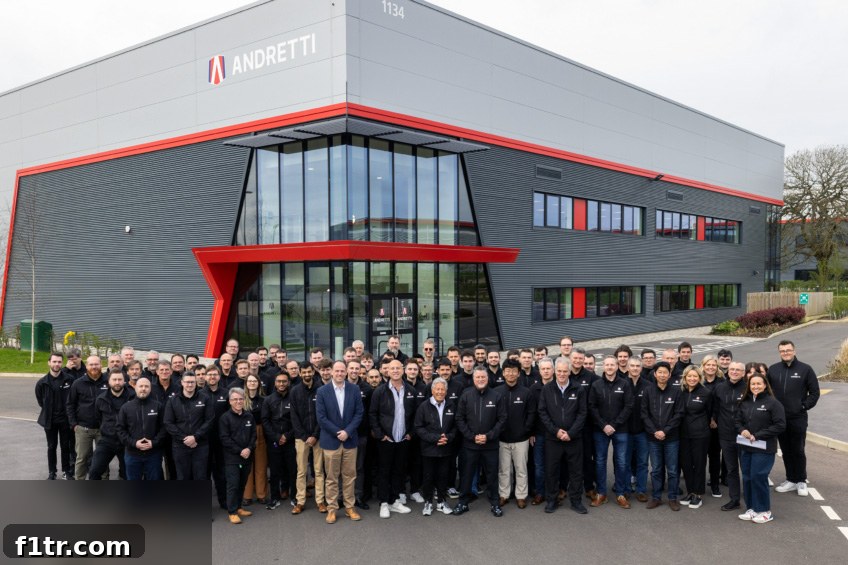
Andretti Global, led by motorsport legend Michael Andretti, is making significant strides in its pursuit of a Formula 1 entry, actively recruiting for numerous positions at its state-of-the-art Silverstone base. This strategic move signals a robust commitment to its F1 ambition, even as the team navigates the complex political landscape of the world championship.
The journey for the prospective Formula 1 team has been a rollercoaster of hope and setbacks. Despite receiving official approval from the FIA (Fédération Internationale de l’Automobile) in October of last year after a rigorous and lengthy application process, their path was complicated by a formal rejection from Formula One Management (FOM) in January. FOM, the commercial rights holder for the series, operates under Liberty Media and cited various concerns, including the potential dilution of value for existing teams and doubts about the commercial benefit a new entrant would bring.
A Potential Reversal: The Shifting Sands of F1 Entry
However, recent reports suggest a significant turning point may be on the horizon. Multiple credible sources indicate that FOM is poised to reconsider its earlier stance, potentially paving the way for Andretti Global to join the elite grid as early as the 2026 season. This timing is particularly crucial, as 2026 marks the introduction of entirely new chassis and power unit regulations, presenting a more level playing field for new entrants and a strategic window for teams to establish themselves under fresh technical parameters.
The prospect of Andretti Global’s entry in 2026 has reignited excitement among fans and stakeholders, particularly in the United States, where Formula 1’s popularity has surged in recent years. An American-led team with strong ties to a revered racing dynasty could further galvanize this growth, adding a new dimension to the sport’s global appeal.
Leadership Transition and a Growing Team at Silverstone
The leadership structure at Andretti Global has also seen recent developments. Michael Andretti, the former Formula 1 and IndyCar driver and son of the iconic 1978 world champion Mario Andretti, stepped down from his direct operational role last month. His trusted business partner, Dan Towriss, has since taken over the day-to-day management of the ambitious operation, with Michael Andretti remaining closely linked to the project in an advisory capacity. This strategic realignment aims to streamline operations and bring renewed focus to the intricate task of establishing an F1 team from the ground up.
The commitment to building a competitive team is evident in the robust recruitment drive underway at their Silverstone base. In recent weeks, Andretti Global has publicly listed over 30 new factory-based and trackside positions. These roles span a wide spectrum, from junior-level opportunities to highly specialized senior positions, encompassing crucial areas such as advanced design, cutting-edge engineering, and various essential corporate functions. The sheer volume and diversity of these openings underscore the comprehensive nature of their preparatory work, laying the groundwork for a fully functional Formula 1 team infrastructure.
Assembling a Team of Motorsport Veterans
Andretti Global has also been successful in attracting top-tier talent from within the Formula 1 paddock. Pat Symonds, a highly respected figure in motorsport with a distinguished career including a tenure as Formula One Management’s chief technical officer, joined the team in May as a consultant. His wealth of experience in F1 technical regulations and team operations is invaluable. Furthermore, Nick Chester, who previously held the demanding position of technical director at the Alpine F1 team, has been appointed to the same crucial role at Andretti Global, bringing a proven track record of developing competitive chassis and car performance.
These strategic hires of seasoned professionals highlight Andretti Global’s meticulous approach to building a formidable technical and operational backbone. Their expertise will be instrumental in navigating the complex challenges of designing, developing, and running a modern Formula 1 car, particularly with the significant regulation changes anticipated for 2026.
The Cadillac Catalyst: General Motors’ Entry and its Impact
A pivotal element in Andretti Global’s bid is the involvement of Cadillac, a marquee brand of General Motors. In November of last year, Andretti made the landmark announcement that Cadillac would become its power unit supplier for the 2028 season, following its projected entry into F1. This commitment from a global automotive giant like GM fundamentally shifts the dynamics of Andretti’s application.
While many existing F1 teams have historically expressed resistance to expanding the grid, primarily due to concerns about diluting their potential earnings from prize money, the prospect of a prestigious brand like General Motors entering the series has been met with a far more receptive attitude. GM’s participation, especially as a power unit manufacturer, would bring immense credibility, technological prowess, and significant marketing value to Formula 1, appealing to a broader corporate audience and strengthening the sport’s commercial appeal.
The commitment of Cadillac to develop its own F1 power unit signifies a substantial investment and long-term vision. This is a crucial distinction, as F1 has long sought to attract more manufacturers. A bespoke Cadillac power unit would elevate Andretti Global beyond merely being a customer team, positioning them as a genuine constructor with an integrated factory effort, a status highly valued within the F1 ecosystem.
F1 Teams’ Perspectives: The “Accretive” Argument
The debate surrounding new team entries often revolves around financial implications and the “accretive” principle – whether a new team truly adds value that outweighs any dilution. Mercedes team principal Toto Wolff articulated this sentiment recently: “We have a statutory obligation as directors to present the standpoint that is the best for our company and for our employees, and we’ve done that in the past. I think if a team can add to the championship, particularly if GM decides to come in as a team owner, that is a different story.”
Wolff further elaborated, “And as long as it is accretive, that means we’re growing the popularity of the sport, we’re growing the revenue of the sport, then no team will be ever against it. So I’m putting my hope in there.” His comments reflect a pragmatic approach from established teams: while they are naturally protective of their commercial interests, a genuinely value-adding entrant, especially one backed by a global automotive powerhouse like GM, could ultimately benefit everyone by expanding the sport’s overall commercial pie.
However, Wolff also noted a perceived lack of direct engagement from the aspiring team regarding their proposed value proposition: “No one from Andretti or Andretti Global or whatever the name will be has ever spoken to me a single sentence in presentation of what the accretive part is. But they don’t need to because the teams don’t decide. It is the commercial rights holder with the FIA.” This statement underscores the ultimate authority of FOM and the FIA in such decisions, yet also highlights the political maneuvering and lobbying that often accompany significant changes in Formula 1.
Regulatory Scrutiny: The Antitrust Investigation
Further complicating the F1 entry saga, the United States Department of Justice announced in August that it would investigate whether Liberty Media, the American company that owns Formula 1, had violated antitrust laws by refusing to allow Andretti Global into the championship. This investigation introduces a new layer of scrutiny, examining whether FOM’s decision-making process was fair and competitive, or if it amounted to an anti-competitive practice hindering market entry.
An antitrust investigation by a powerful government body like the US Department of Justice is a serious matter and could have significant implications for how Formula 1 operates and manages its commercial rights. It puts pressure on Liberty Media to demonstrate transparency and fairness in its decision-making, particularly concerning a high-profile American entity seeking to join an increasingly popular global sport. The outcome of this investigation could influence not only Andretti’s bid but also future expansions and the overall governance structure of Formula 1.
The Road Ahead: Hopes and Challenges for Andretti in F1
Andretti Global’s persistent drive to enter Formula 1 showcases a deep passion for the sport and a strategic vision for its future. The ongoing recruitment at Silverstone, the backing of Cadillac, and the assembly of a veteran leadership team all point towards a serious, well-resourced effort. While the initial rejection from FOM posed a significant hurdle, the renewed rumors of a potential reversal, coupled with the looming 2026 regulation changes, offer a fresh wave of optimism.
The integration of a new team, especially one with the potential to bring an American manufacturer into the fold, holds immense promise for Formula 1. It could inject new competition, foster innovation, and significantly boost the sport’s commercial appeal, particularly in the lucrative North American market. However, challenges remain, from securing final approval to building a fully competitive car under new regulations and navigating the complex political landscape of F1.
As Andretti Global continues to build its foundation at Silverstone, the motorsport world watches with bated breath. The convergence of new regulations, a powerful automotive partner, and persistent ambition suggests that Michael Andretti’s long-held dream of an F1 team could very well become a reality, reshaping the grid and adding an exciting new chapter to the sport’s illustrious history.