Formula 1 motorsport director Ross Brawn has unequivocally stated his intention to proceed with plans for evaluating potential alterations to the sport’s traditional race weekend format in 2020. This announcement has ignited a significant debate within the F1 community, pitting the desire for innovation against the preservation of a cherished legacy. The exact nature of these proposed “experiments” remains somewhat nebulous, with various radical concepts being floated, including the introduction of mini-races to determine grid positions for Sunday’s main event, and even the controversial idea of reverse grids for these preliminary contests. The very mention of such changes has sparked both curiosity and apprehension among fans and stakeholders alike.
Brawn maintains that the feedback concerning the trial of new formats at a select number of races next year has been overwhelmingly “positive.” Initially, he had expressed a preference for testing these modifications during non-championship events, a seemingly logical approach to gauge their impact without affecting the championship standings. However, the rapidly expanding Formula 1 calendar, which already boasts a record 22 races for the 2020 season, makes the addition of further rounds an impractical and indeed, a non-starter. This logistical constraint means that any experimental format changes would, by necessity, have to be implemented during actual championship rounds, directly impacting the competitive integrity of the season.
The timing of these proposed trials, Brawn argues, is opportune. With most other aspects of the technical and sporting regulations set to remain stable in 2020, ahead of the much-anticipated and sweeping overhaul of the rules slated for 2021, the intervening season presents a unique window. This period of relative regulatory calm, according to Brawn, would allow for a focused assessment of format adjustments, providing valuable data before the sport embarks on its next major evolutionary phase. The intention is to refine the race weekend experience, making it more engaging and dynamic, potentially attracting new audiences while retaining the loyalty of existing fans. However, this perspective overlooks a crucial counter-argument that challenges the very premise of such experimentation.
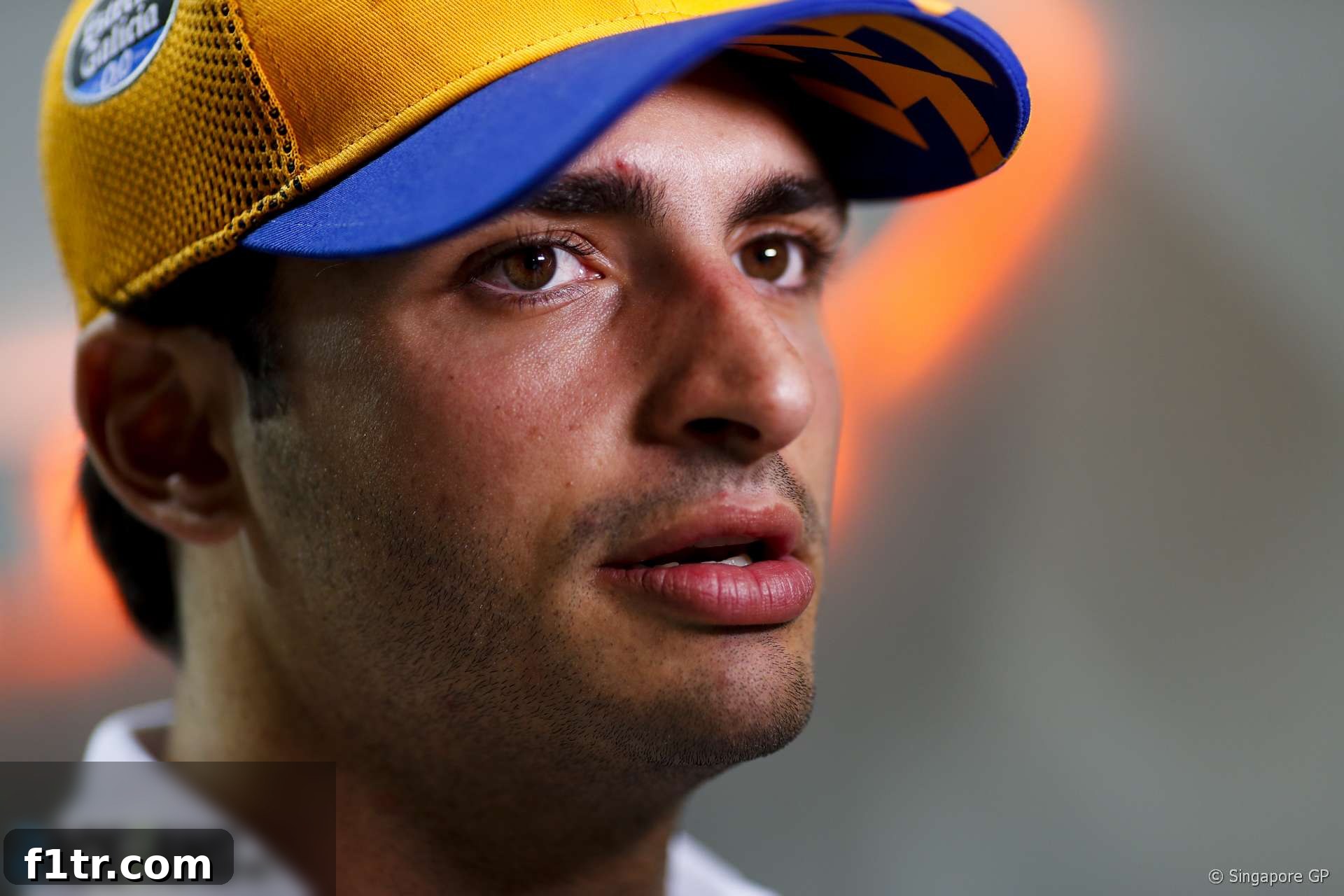
As one perceptive driver pointed out, the impending revolutionary rule changes of 2021 may well render any current tinkering with the race weekend format entirely superfluous. In a remarkably succinct yet profoundly insightful statement, McLaren driver Carlos Sainz Jnr articulated a compelling counter-argument against the immediate necessity of qualifying format changes. When questioned by RaceFans on a Saturday evening in Singapore, Sainz began by emphasizing a fundamental priority: “I personally think we will first need to see, before changing the format, a Formula 1 with a tight field and with cars that are able to follow.” His words cut to the heart of F1’s perennial challenges.
Sainz further elaborated on his vision for the sport: “Once we have a 2021 with cars that are able to follow and a whole grid in one second – which is what I wish, for every driver to be able to make a difference – we might not need any of those changes and we might have the best Formula 1 ever without any of those changes.” This statement underscores a critical belief held by many within F1: that the core issues of competitive disparity and the inability for cars to race closely are far more detrimental to the spectacle than the current qualifying format. He eloquently concluded: “So why don’t we focus on making Formula 1 how it should be, which is closer competition and more equal money distribution and cars that are able to follow each other? Then all of a sudden you have a good Formula 1 and maybe you don’t need all the other stuff.”
Sainz’s argument hits the nail squarely on the head. There is, fundamentally, no compelling evidence to suggest that F1’s existing race weekend format is inherently flawed. Indeed, we have been privileged to witness some truly tremendous races this year, occasions when all the critical elements aligned to produce captivating on-track action and unpredictable outcomes. These races serve as a powerful testament to the fact that when the conditions are right – when cars can genuinely battle, and the field is close – Formula 1 delivers unparalleled excitement without the need for artificial format manipulation.
Nonetheless, it is undeniable that Formula 1 grapples with significant underlying problems that demand urgent attention. Chief among these is the extraordinary difficulty drivers encounter when attempting to follow closely behind another car, a challenge vividly demonstrated during the Singapore Grand Prix weekend. This aerodynamic dependency often stifles wheel-to-wheel racing and limits overtakes, thereby diminishing the spectacle. Equally problematic is the pronounced performance chasm separating the top three teams from the rest of the grid, a disparity starkly reflected in the championship points standings. These are the structural imbalances that truly undermine the sport’s competitive integrity and overall entertainment value.
As Sainz astutely identified, these two areas – the design of cars to facilitate closer racing and a more equitable distribution of performance and financial resources – represent the most pressing concerns for Formula 1. It is precisely for these reasons that Ross Brawn and his team have been diligently working on a comprehensive suite of new regulations for 2021, encompassing radically redesigned cars, a stringent budget cap, and a revised income distribution system. These fundamental changes are scheduled to be introduced in 2021, the earliest realistically achievable timeline given F1’s complex web of existing commercial agreements and logistical challenges. They represent a genuine attempt to address the sport’s root causes of limited competition.
However, to contemplate, in the interim, a radical change that would involve dismantling F1’s iconic qualifying format would be nothing short of madness. Qualifying is not merely a segment of the race weekend; it is an integral part of the sport’s very identity and deeply woven into its rich history. The thrilling spectacle of drivers pushing their machines to the absolute limit, risking everything for the perfect lap, is a cornerstone of Formula 1’s appeal. Consider the sheer audacity and skill displayed in Charles Leclerc’s breathtaking final Q3 lap during the Singapore Grand Prix. Who, observing such a display of courage and precision, could possibly conclude that this is the kind of thrilling spectacle F1 can afford to sacrifice? Or that such a heroic effort should be ‘rewarded’ with a reverse grid penalty and a 20th place start?
Brawn’s apparent eagerness to “fiddle” with the format conveys an impression of impatience on the part of Liberty Media, the sport’s commercial rights holder. Their long-awaited overhaul of Formula 1, while promising, is still more than a year away. Yet, there is little to be gained, and much to be lost, by tampering with elements that are demonstrably not broken, especially while awaiting the implementation of the comprehensive solutions designed to fix the genuinely problematic aspects of the sport. The pursuit of superficial changes risks alienating loyal fans and undermining F1’s heritage, all without addressing the deep-seated issues that truly impact the quality of racing.
Carlos Sainz Jr. has indeed nailed the core problem and its solution. The path forward for Formula 1 should be clear: resist the urge for cosmetic alterations and instead, concentrate all efforts on the foundational reforms planned for 2021. The sport’s future success hinges not on gimmicks, but on genuinely competitive racing, driver skill making a decisive difference, and a level playing field. It is time for those in leadership positions to heed the wisdom of a driver who understands the sport’s true essence and priorities.
Quotes: Dieter Rencken
Don’t miss anything new from RaceFans
Follow RaceFans on social media to stay updated with the latest news, analysis, and discussions from the world of Formula 1:
- Join RaceFans on Facebook
- Follow RaceFans on Twitter
- Get daily email updates from RaceFans
Comment
Delve deeper into critical issues and engage with insightful commentary from our expert writers. Explore a range of opinions and analysis that spark discussion and offer unique perspectives on the sport’s most pressing topics:
- The shadow of motorsport’s worst tragedy hangs over F1’s latest safety debate
- F1 got lucky three ways. But now it has a difficult and urgent problem to solve
- Verstappen’s overreaction shows he knows he cost himself the 2025 title
- F1’s sticking-plaster fix for Qatar tyre failures is an embarrassment
- The FIA’s stewards grabbed the chance to correct their mistake – unlike last time
Browse all comment articles