McLaren’s Uphill Battle: Navigating the 2023 F1 Season with the MCL60
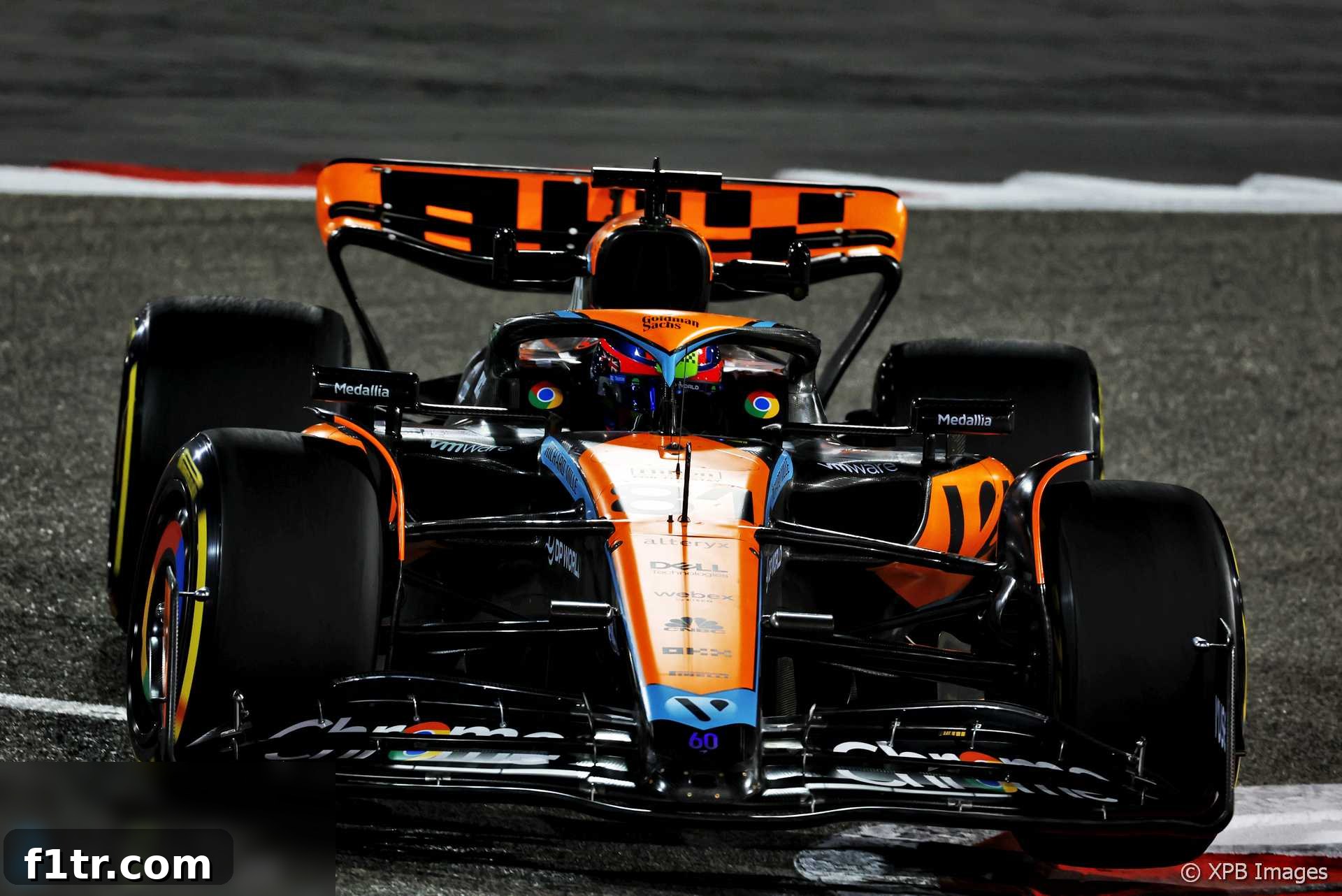
McLaren provided an early, somewhat concerning, glimpse into their expectations for the 2023 Formula 1 season when they unveiled the MCL60 at their headquarters. The initial presentation itself subtly hinted at a degree of dissatisfaction with the car’s baseline performance. Team representatives openly acknowledged that significant improvements were already in the pipeline, earmarked to be introduced as swiftly as possible once the season commenced – potentially even as early as the fourth round of the championship, scheduled for the end of April. This proactive but unusually candid admission set a cautious tone, suggesting that the team anticipated a challenging start to the year.
Pre-Season Testing Reveals Deeper Concerns for the MCL60
The team’s initial cautiousness appeared to be well-founded, if not entirely understated, during the crucial three-day pre-season testing session in Bahrain. While the customary disclaimers apply to testing times, which are often misleading due to varying fuel loads, tire compounds, and testing programs, the MCL60 rarely made an impression at the top of the timesheets. This lack of outright pace raised eyebrows across the paddock and among fans, suggesting that McLaren might be facing a more significant performance deficit than initially hoped.
During the testing period, the new car experienced several interruptions, spending noticeable periods confined to the garage. The team actively worked to remedy several minor, yet niggling, problems, most notably with the mandatory bodywork fins extending over the inside of the front wheels. While McLaren expressed confidence in having a definitive fix for these specific issues in time for the season-opening race, the underlying, deeper performance problems are understood to be far more complex and will undoubtedly require a more protracted effort to resolve. These initial setbacks highlighted that while superficial issues could be quickly addressed, the fundamental competitiveness of the MCL60 still needed substantial work.
Andrea Stella’s Frank Assessment: No Excuses, Just Reality
The responsibility for navigating McLaren through these challenging waters now rests firmly on the shoulders of Andrea Stella, who took over as Team Principal from Andreas Seidl at the close of the previous season. Stella faces his first major headache in his new leadership role, and he offered no platitudes or excuses for the team’s disappointing start to the season. Speaking to members of the media, including RaceFans, at the Bahrain International Circuit, Stella’s remarks were refreshingly candid and direct.
“It’s not an effect of the changes of regulations, and we didn’t take a step backwards,” Stella openly admitted. “We just didn’t develop fast enough.” This statement was a stark acknowledgment of the team’s internal challenges rather than attributing issues to external factors like regulatory shifts. Stella further confessed that the team’s sub-par performance during testing did not come as a shock to him or the technical department. “Our performance is pretty much where I expected it to be. No surprises. The data correlates with what we were expecting from an aerodynamic point of view.” He reiterated that there were “no surprises” regarding their likely competitive situation or position in the pecking order, despite the inherent difficulty of accurately assessing performance from pre-season testing times alone.
The Upgrade Race: A Strategy for Mid-Season Recovery
Among teams that find themselves resigned to starting the Formula 1 season at a competitive disadvantage, there’s a common and understandable refrain: the latter stages of the championship will offer ample opportunities to catch up. Andrea Stella echoed this sentiment, emphasizing the long game in F1 development. “We know we have work to do, but if we think about this season, the season is long, there can be variations in the competitive order,” he explained. “Like I said already at the car launch, we know there’s a good development rate, that’s where we are focusing. I think the start, we have to be realistic, but in terms of looking ahead to the season, we remain optimistic.”
McLaren’s strategy revolves around an aggressive upgrade program. The team plans to introduce significant performance enhancements for the MCL60 in areas where they believe some of their rivals have already capitalized with their 2023 car designs. Stella provided insight into the development timeline: “In Formula 1, the material you have right now, trackside, is material that you had two or three months ago in development. So the good news is that we have good development streams going on; they will land trackside in some weeks.” This explains why early-season performance can be locked in by decisions made months prior. He acknowledged the competitive reality: “Obviously, when you know that you have good development ongoing, you kind of realize ‘ah, maybe our competitors already have it.’ So it’s a reference to yourself. This game is very competitive. If you slow down in terms of development rate, you can’t assume it happened the same to others. So that’s why you see me not necessarily the most optimistic now, but rather more optimistic for what’s coming in the season.”
Unlocking Potential: The Crucial Role of Aerodynamic Efficiency
Stella underlined the significant potential gains expected from the forthcoming upgrades. “There’s a couple of components where we see that there’s quite a bit of lap time sensitivity. I can’t say what. So it will not necessarily look like a completely different car, but some of the changes will seem to make a significant difference for aerodynamic efficiency.” This focus on aerodynamic efficiency is a direct response to the team’s recent trajectory and its challenges in adapting to F1’s overhauled technical regulations.
McLaren arguably overachieved in 2020 by securing third place in the constructors’ championship, partly due to an uncharacteristically poor season for Ferrari. This was followed by a more representative fourth-place finish in 2021. However, their fall to fifth in 2022 was a significant disappointment, largely stemming from shortcomings with their first car designed under the new F1 regulations. While McLaren has made strides in addressing three of the main problems encountered in 2022, Stella admitted that the team is still lagging significantly in one critical area.
“Last year we had some clear objectives in terms of development. They had to do with aerodynamic efficiency, some development related to the exploitation of the tires and tire usage, and also some other objectives to improve the balance,” Stella elaborated. “The reality is that most of these objectives have actually been met. But the objective in terms of aerodynamic efficiency of the car, that’s the one where we are still shy of what was our target, I would say. So some of the objectives have been met. Aerodynamic efficiency is still not where we would like it to be or where we would like it to be to be a top four contender. So I would say that’s the one in which we are still short.” This pinpointed deficit in aerodynamic efficiency is the core challenge McLaren is urgently trying to overcome.
Addressing Root Causes: Infrastructure and Expertise Gaps
Stella candidly admitted that McLaren “realized probably late that there were some development directions that had more potential in terms of development rate and also in terms of development over a longer period.” He added, “We didn’t realize that early enough for these development directions to be part of the launch specification of the car.” This delayed realization underscores a fundamental issue within the team’s developmental process.
Stella doesn’t attribute McLaren’s developmental lag to a single problem or shortcoming. Instead, he views it as a broader consequence of the team’s resource limitations when compared to Formula 1’s top contenders. McLaren is actively working to bolster its infrastructure, most notably with the construction of a new, state-of-the-art wind tunnel. The benefits of this significant investment are expected to begin materializing later in the current year, providing a crucial tool for future car development.
“The aerodynamics of an F1 car is one of the most complex engineering projects that you can see on the planet,” Stella emphasized. “So it is quite challenging and requires top facilities. It requires expertise that you need to develop over the years. So I wouldn’t say there’s a specific deficit in some areas; it’s more of a variety of reasons. We keep mentioning some of them, just because it’s the case – we keep mentioning the technology, the lack of the wind tunnel. We keep mentioning that from a workforce point of view, we do have to expand the aerodynamic group – we went through a phase of contraction; we have now changed this tendency. So we are increasing the workforce from this point of view as well. And then you have to keep building.” He cited top teams like Red Bull, which have meticulously developed their expertise over a long period, enabling them to respond effectively to regulatory changes and improve year after year. “I’m afraid it’s just continuous improvement and growth, and we have to improve in all areas, I would say,” Stella concluded.
Beyond the Budget Cap: McLaren’s Commitment to Sustained Investment
While all Formula 1 teams are increasingly feeling the constraints of the sport’s budget cap on their ability to invest in development, Stella firmly stated that this is not an excuse McLaren intends to invoke. “It’s an excuse that I don’t want to invoke because McLaren is now in a situation in which we do have resources that we can invest,” he clarified. “These investments have already started. We have been able to optimize within the cost cap. So I think it’s more the fact that it takes time to achieve the standards required from a technological point of view, from an expertise point of view, from a number of people point of view, to compete at the top in F1. So I wouldn’t say [we’re] budget cap-limited.” This perspective highlights McLaren’s long-term vision and its commitment to rebuilding its capabilities, acknowledging that sustainable excellence requires more than just financial outlay; it demands time, strategic recruitment, and the cultivation of expertise.
The Road Ahead: A Challenging Yet Optimistic Outlook
At this early stage of the season, most teams maintain a reserved stance regarding their definitive position in the competitive order. However, Andrea Stella is acutely aware that the midfield, which McLaren inhabited last year, is likely to be even more compact and intensely competitive this season. The performance deficits identified by the team could therefore make a significant difference, potentially dictating whether they qualify for Q1 or Q3.
“I think we will see again that the midfield is very compact,” Stella predicted. “This means that if you don’t do a good enough job, even in setting up and maximizing what you have, you may struggle to get out of Q1. At the same time, you might be a Q3 contender. So I think the ‘fork’ is relatively open, is relatively wide.” He concluded with a realistic yet ambitious target for the season: “When I’m talking about competitiveness at the moment, I would say our objective through the season is to be a top four car. At the moment, I would say we are not necessarily in this range.” McLaren’s journey in the 2023 F1 season promises to be an intriguing one, marked by determined efforts to bridge the performance gap and reclaim a more prominent position among the sport’s elite.