Welcome to our comprehensive round-up of the latest news and insights from the thrilling world of Formula 1 and international motorsport. As the highly anticipated Hungarian Grand Prix approaches, the paddock is abuzz with discussions about crucial team upgrades, driver expectations, and the ongoing dynamics shaping the racing landscape. This week, we delve into Ferrari’s strategic efforts to reverse their recent fortunes, Williams’ pragmatic outlook on a challenging circuit, and a candid critique from the IndyCar scene regarding recent track conditions. Join us as we explore these pivotal stories and more.
Formula 1 & Global Motorsport Updates
Advert | Become a Supporter & go ad-free
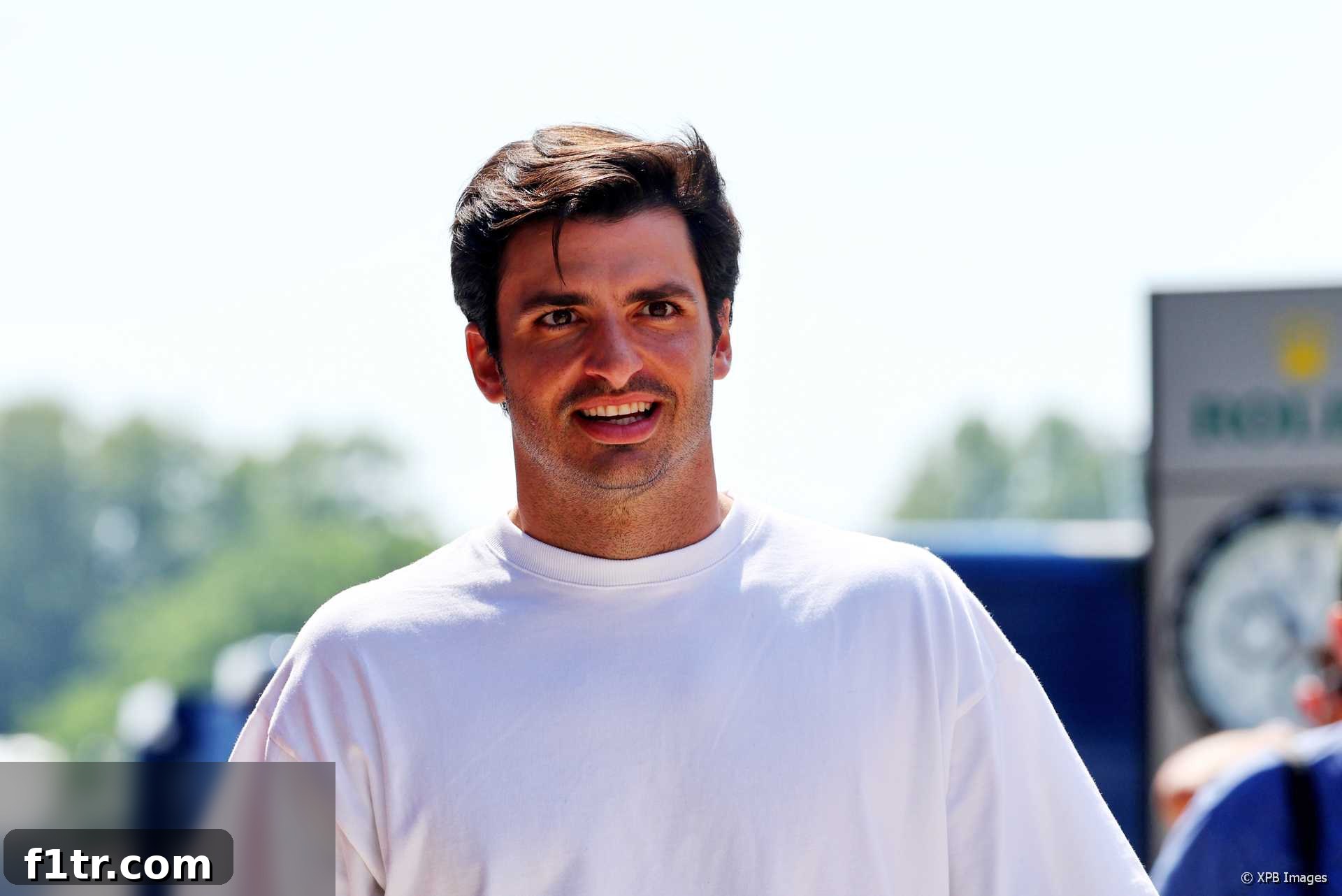
Carlos Sainz Expresses Hope for Ferrari’s Floor Upgrade at Hungaroring
Carlos Sainz Jnr has articulated a sense of cautious optimism regarding Ferrari’s latest aerodynamic development: a revised floor upgrade set to be introduced at the Hungaroring for the Hungarian Grand Prix this weekend. The Spanish driver openly acknowledged the Maranello squad’s recent struggles, particularly an observable increase in undesirable bouncing during high-speed cornering scenarios. This issue, which has intermittently plagued the Scuderia, intensified following the implementation of their previous floor design at the Emilia-Romagna Grand Prix.
Sainz provided an insight into the technical adjustments, revealing, “We’ve made a very small modification in the floor that we’re hoping that could help with the issues that we’ve been battling with recently.” While described as a “very small modification,” such changes in Formula 1 aerodynamics can often yield significant performance shifts, especially when addressing fundamental stability problems. Aerodynamic efficiency and stability are paramount on the twisty and technical Hungaroring circuit, which demands maximum downforce and precise handling. Ferrari’s engineering team has been working tirelessly behind the scenes to diagnose and mitigate the car’s inconsistencies, aiming to unlock more consistent pace and improve tire management.
Despite the high expectations placed on this upgrade, Sainz maintained a pragmatic perspective, emphasizing the necessity for real-world validation. “Whether it will work or not, we need a bit of time to see,” he cautioned. “We need this weekend, probably, to make the analysis.” This period of intense data collection and analysis during practice sessions will be crucial for Ferrari to ascertain the efficacy of their new component. Sainz underscored the team’s relentless pursuit of improvement, stating, “The team is pushing flat-out to revert the situation, because clearly we’ve been out-developed by our competitors and now we are trying to fight back and get ourselves back in the mix.” The Hungarian Grand Prix is thus not just another race, but a critical juncture for Ferrari’s mid-season development push, potentially dictating the trajectory of their performance in the latter half of the championship.
Alexander Albon Lowers Expectations for Williams at the Hungarian Grand Prix
Advert | Become a Supporter & go ad-free
Following a commendable showing at their home grand prix at Silverstone, where he skillfully guided his car to the team’s second top ten finish of the season, Alexander Albon has adopted a realistic, even conservative, stance regarding Williams Racing’s prospects for scoring points at the upcoming Hungarian Grand Prix. Despite flashes of competitiveness and encouraging progress shown by the Grove-based outfit, Albon believes the unique characteristics of the Hungaroring circuit may not align favorably with the strengths of their FW46 challenger.
“I don’t think it’s a circuit that should suit us,” Albon admitted during the pre-event press conference on Thursday. He drew insightful parallels between the Hungaroring and another European circuit, explaining, “It’s kind of a little bit like Barcelona: Hot, a bit more about pure downforce.” These conditions, typically requiring maximum aerodynamic grip and sustained cornering performance, have historically presented a greater challenge for Williams compared to high-speed tracks where their efficiency can shine. The team has been diligently working on understanding and improving their car’s performance on these high-downforce, technically demanding layouts, which often expose fundamental aerodynamic weaknesses.
The Hungarian Grand Prix will therefore serve as a crucial diagnostic test for Williams’ ongoing development. Albon elaborated on their strategy, noting, “I think it’s a good test for us. We’ve come up with some new options and new ideas coming from Barcelona and thinking about how we want to address some of our issues.” The team plans to leverage the initial practice sessions to rigorously evaluate these new concepts. “We’ll just go out there in FP1, try a few things and see if it works,” he added. This meticulous and data-driven approach underscores Williams’ methodical journey to improve their standing in the constructors’ championship, prioritizing incremental gains and a deeper understanding of their car’s behavior across diverse circuit types, rather than expecting a miraculous turnaround on tracks that inherently challenge their current package.
Alex Palou Compares IndyCar at Repaved Iowa to “Moto GP on Dirt”
IndyCar star Alex Palou has delivered a stark and critical assessment of the recent two-race weekend at Iowa Speedway, bluntly describing the events as “boring” and attributing the diminished racing spectacle primarily to a recent repaving of the circuit. Palou articulated that the track’s new asphalt surface profoundly impacted the drivers’ ability to engage in competitive, side-by-side racing on the traditionally exciting oval, leading to a frustrating experience for both competitors and, arguably, the viewing public.
The reigning IndyCar Series champion did not mince words in his critique of the conditions. “Even when leading, being in the middle of the pack – the IndyCars we had, the package of IndyCar tyres, aero, engine, whatever we had on track this weekend – it was impossible to make it run,” Palou stated emphatically. His comments highlight a fundamental incompatibility between the newly laid surface and the current IndyCar machinery, including tire compounds and aerodynamic configurations. Historically, Iowa Speedway has been renowned for its thrilling, multi-groove racing, allowing drivers to battle across different lines; however, the fresh asphalt appears to have significantly curtailed these characteristics, limiting passing opportunities and leading to processions rather than dynamic racing.
Palou further elaborated on the issue, explaining, “It was never an issue before. It was a repave for our cars.” While acknowledging that other racing series might perform adequately on the updated surface, he employed a vivid and memorable analogy to illustrate the predicament faced by IndyCar, likening it to “putting a Moto GP on dirt. It’s a cool track, but you cannot put it on the same and expect a very nice race.” His powerful comparison underscores a significant and pressing concern for the series: ensuring that track conditions are conducive to the type of exciting, close-quarters racing that IndyCar is celebrated for, particularly on its iconic oval venues. The issues encountered at Iowa raise important questions about coordination between circuit maintenance protocols and the evolving specifications of racing machinery in order to preserve the integrity and spectacle of the sport.
Advert | Become a RaceFans supporter andgo ad-free
Deeper Dives & Essential Motorsport Links
Beyond the immediate headlines, explore more compelling stories, insightful analyses, and fascinating historical features from across the motorsport spectrum, offering a broader perspective on the sport’s key figures and developments:
Leclerc on ‘Incredible’ Hamilton, Mindset and Ferrari Dip (BBC)
In a candid and insightful interview with the BBC, Ferrari’s Charles Leclerc shared his profound respect and admiration for rival and soon-to-be Mercedes successor, Lewis Hamilton. Leclerc spoke with immense sincerity about Hamilton’s unwavering strengths and his highly analytical approach to racing, expressing a keen and genuine interest in the learning opportunities that would arise should they ever become teammates. He articulated his personal drive, stating, “I need to be convinced that I am the fastest driver when I put the helmet on, but I am really looking forward to it, and it will be super-interesting for me.” Leclerc further emphasized the continuous learning process inherent in Formula 1, noting how much one can gain from every single teammate. He particularly highlighted Hamilton’s apparent lack of weaknesses as a driver, viewing it as a testament to his “incredible” talent. This perspective offers a rare glimpse into the mindset of a top-tier F1 driver constantly striving for self-improvement, even amidst Ferrari’s current performance fluctuations.
Hamilton Hails Ralf Schumacher but Insists F1 Has Work to Do on Diversity (Guardian)
Lewis Hamilton, a tireless and outspoken advocate for diversity and inclusion within motorsport and beyond, offered commendation for Ralf Schumacher’s recent decision to publicly discuss his sexuality. Hamilton viewed this as a profoundly significant step forward, reflecting a positive and evolving societal landscape where individuals are increasingly empowered to embrace their authentic selves without fear of reprisal. He thoughtfully observed, “Clearly he has not felt comfortable to say it in the past and it’s definitely not a new thing. It just shows we are in a time that finally you can take that step and don’t have to fear.” Hamilton leveraged this positive development to reiterate his long-standing call for Formula 1 to continue its dedicated efforts in fostering a more diverse and inclusive environment across all strata of the sport, from the boardroom to the grid. He acknowledged that while commendable progress has undoubtedly been made, there remains substantial work ahead to achieve true representation and equality.
ERS Activation Issues Roil IndyCar Teams (Racer)
IndyCar teams are currently grappling with persistent and problematic Energy Recovery System (ERS) activation issues, which have caused considerable frustration and operational challenges at several recent race events. Gavin Ward, a respected and prominent figure within the IndyCar paddock, openly expressed his concerns regarding the system’s management. He stated, “The disabling or enabling it has caused some issues at recent events, and my opinion is there’s not really any reason why they need to switch it off.” The crux of the problem appears to lie in the current regulations governing the ERS system’s activation and deactivation protocols. Ward speculated on the potential underlying safety concerns driving these regulations, noting, “I think they’re worried that drivers are going to be trying to use it on pit lane, looking at the dash, or be distracted by something while they’re driving down pit lane.” This ongoing technical quandary highlights the inherent complexities of integrating advanced hybrid systems into racing machinery and the delicate balance that must be struck between optimizing performance, ensuring driver safety, and maintaining operational efficiency within the high-pressure environment of competitive motorsport.
F1 24 Season 2: Create History with New Content (EA Sports)
For esports enthusiasts and sim racers eager to delve deeper into the virtual world of Formula 1, EA Sports has announced exciting details about the upcoming second season of F1 24 content. This eagerly anticipated new season promises to introduce a wealth of fresh challenges, additional car liveries that reflect real-world designs, iconic classic drivers, and potentially new game modes or enhanced customization options. These updates will allow players to further immerse themselves and “create history” within their virtual racing careers, mirroring the dynamic and evolving narratives of the real-world sport. Such seasonal content releases are crucial for keeping the F1 gaming experience vibrant, engaging, and relevant to the passionate global fanbase.
Historic Insights: A Grand Prix Dream for Birmingham in 1971
Take a fascinating journey back in time with remarkable archive footage from 1971, which meticulously explores the ambitious and forward-thinking plans for a Birmingham Superprix. This historical gem, unearthed from the extensive BBC Archive, revisits a compelling period when the concept of hosting a prestigious street circuit race in the very heart of England’s second-largest city was actively being explored and discussed. The captivating footage features insightful contributions and expert opinions from the legendary two-time F1 world champion, Graham Hill, who lent his considerable expertise and visionary perspective to the prospective event. It offers a unique and invaluable glimpse into the challenges, logistical considerations, and sheer excitement that surrounded the idea of bringing top-tier motorsport to urban environments many decades ago, vividly showcasing the enduring and powerful appeal of street racing long before its modern resurgence on the global stage.
We always endeavour to credit original sources. Got a tip for a link relating to single-seater motorsport? Please send it to us via the contact form.
Advert | Become a RaceFans supporter andgo ad-free
Social Media Spotlight: A Look Back at Minardi’s Enduring F1 Legacy
Stay connected with the pulse of the motorsport community through notable posts and historical reflections shared across X (formerly Twitter), TikTok, and other platforms:
40 years ago today @MinardiOfficial revealed its first Formula 1 car, the M185, which it raced the following year.
The team was bought by Red Bull in 2005 and now competes as RB.#F1 #RaceFans pic.twitter.com/E3ztKh6H4w
— RaceFans (@racefansdotnet) July 18, 2024
This historical tweet from RaceFans serves as a poignant reminder of a significant milestone in Formula 1’s rich tapestry: the unveiling of Minardi’s inaugural F1 car, the M185, precisely 40 years ago. Minardi, a beloved and often underestimated underdog team, played a crucial role in the sport’s ecosystem for many years, eventually laying the foundational groundwork for what would evolve into the contemporary RB F1 team following its acquisition by Red Bull in 2005. This social media reflection beautifully underscores the deep historical roots and the fascinating, ever-evolving lineage of teams within Formula 1, highlighting how today’s competitors often stand on the shoulders of dedicated historical racing endeavors that shaped the sport’s identity.
Advert | Become a RaceFans supporter andgo ad-free
- Find more official F1 accounts to follow in the F1 Twitter Directory
Comment of the Day: Haas’s Driver Decision & Magnussen’s Impending Departure
The recent significant announcement regarding Kevin Magnussen’s impending departure from the Haas F1 Team at the conclusion of the current season has ignited considerable discussion and debate within the passionate motorsport community. Today, we shine a spotlight on a particularly insightful and thought-provoking comment from our astute reader, Frank, who offers a compelling and well-reasoned argument in favor of Haas’s strategic decision:
After dominating Mick Schumacher, I did not expect Magnussen to be so badly bloodied by Nico Hulkenberg.
I would say that Hulkenberg now and Magnussen then were proof that a driver can make a substantial difference – especially among those backmarkers and lower midfielders.
It might be sad for Magnussen, but if you want to show any ambition as a team – which everybody is urging Haas to do – you simply cannot start the season with a driver that is definitely slower than your current ace.
They have to bet that other experienced drivers on the market are as fast as Hulkenberg.
Frank
Frank’s incisive analysis delves deeply into the performance comparison between Kevin Magnussen and his recent teammates, particularly highlighting Nico Hulkenberg’s consistently strong and unexpected showing against the Danish driver. This perspective powerfully emphasizes the critical and often underestimated role that an individual driver plays, even within the highly technical and machinery-dependent world of Formula 1. This impact is especially pronounced for teams operating in the fiercely competitive midfield or at the back of the grid, where marginal differences in driver performance can yield significant gains in terms of points and championship position. Frank’s commentary underscores the inherent commercial and competitive pressures that teams like Haas face to field the strongest possible driver lineup. This is not merely about ambition, but about demonstrating a tangible commitment to striving for consistent points finishes and elevating the team’s overall standing. The impending driver market will undoubtedly be a key area of strategic focus for Haas as they endeavor to align with Frank’s sentiment and secure a driver who can match or even exceed Hulkenberg’s current formidable performance, thereby propelling the team forward in the constructors’ championship.
Happy Birthday to Our Motorsport Enthusiasts!
A very happy birthday goes out to Cube, Phil G, Tom Haxley, Robk23 and Toiago! We extend our warmest wishes and hope you all have a fantastic day filled with celebration and joy, perhaps even some motorsport-themed festivities!
On This Day in Motorsport History: Rosberg’s Pole, Hamilton’s Dramatic Crash in 2014
- Exactly 10 years ago today, on July 19th, 2014, Nico Rosberg secured a memorable and hard-fought pole position at his home race, the German Grand Prix at the Hockenheimring. The qualifying session itself was exceptionally dramatic and provided a significant talking point, as his then-Mercedes teammate and fierce championship rival, Lewis Hamilton, suffered a significant and spectacular crash during Q1 due to a brake disc failure. This unforeseen incident not only set the stage for a tense and intriguing race the following day but also further intensified the already heated and captivating championship battle between the two Mercedes drivers, vividly showcasing the high stakes, technical fragility, and unpredictable nature that so often define Formula 1 qualifying sessions.