The thrilling spectacle of Formula 1 continues to deliver captivating storylines and intense competition, even in the nascent stages of the 2024 season. From the analytical aftermath of the Bahrain Grand Prix to the exciting anticipation surrounding the upcoming Saudi Arabian Grand Prix, the paddock is buzzing with significant developments that shape the narrative of the sport. This comprehensive round-up aims to delve into some of the most prominent headlines, including the resolution of Lewis Hamilton’s unexpected seat concerns, Yuki Tsunoda’s ongoing journey of self-improvement, Aston Martin’s inspiring demonstration in Riyadh, and other crucial updates from across the broader motorsport landscape.
Formula 1 Insights: Key Headlines from the Paddock
Mercedes Confirms No Seat Break for Lewis Hamilton Following Bahrain Concerns
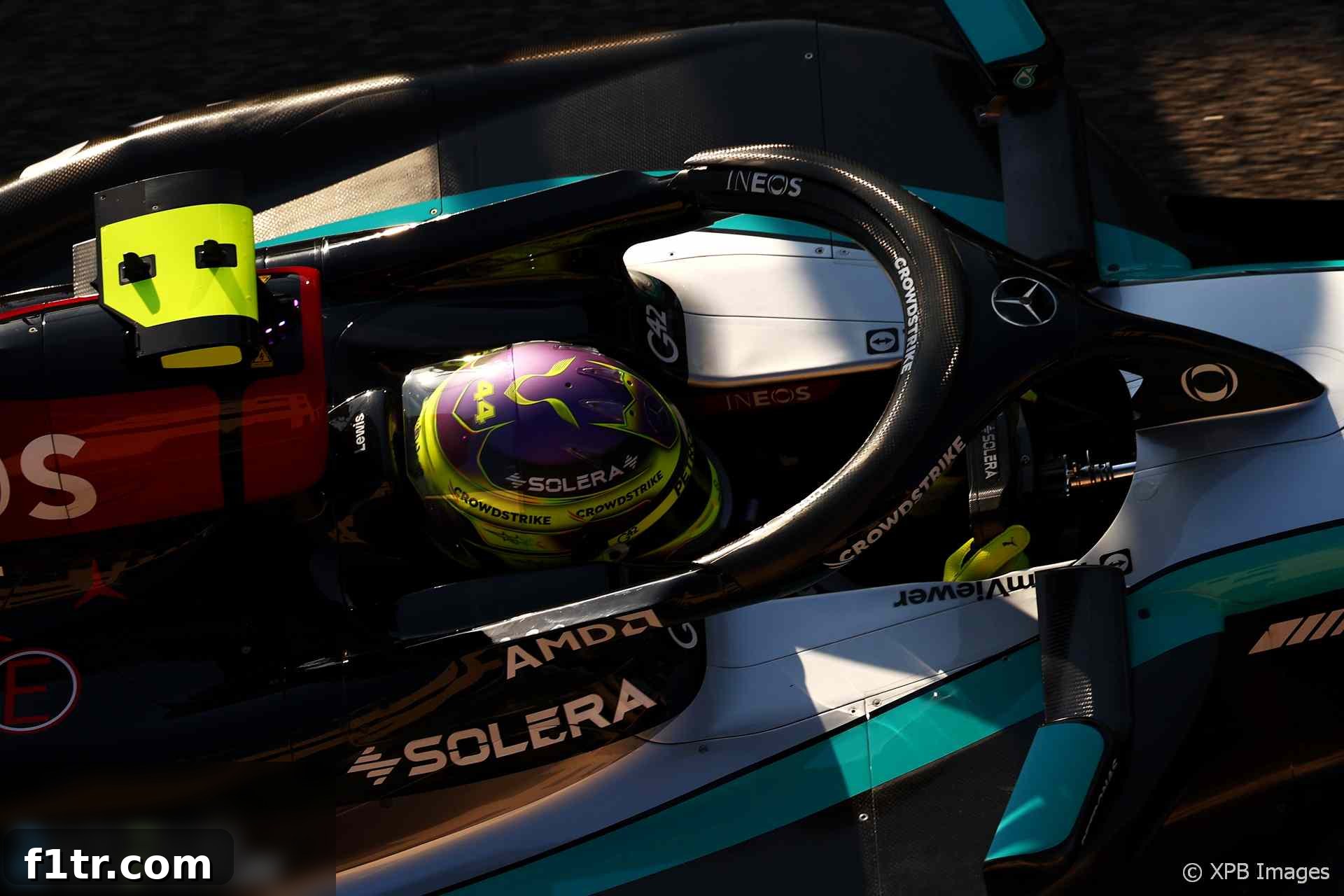
During the high-stakes environment of the recent Bahrain Grand Prix, seven-time world champion Lewis Hamilton communicated a surprising concern over his team radio, indicating that he believed his seat might have been “broken.” This report immediately captured widespread attention and sparked considerable speculation, given the paramount importance of a driver’s comfort and rock-solid stability within the cockpit of a high-performance Formula 1 car. However, subsequent detailed inspections conducted by the Mercedes-AMG Petronas Formula One Team have provided clear answers, ultimately offering reassurance to the Silver Arrows camp and their star driver.
Andrew Shovlin, Mercedes’ esteemed trackside engineering director, has since confirmed that a meticulous examination of Hamilton’s W15 chassis and its cockpit components, specifically the seat, revealed no structural damage, breakage, or any evidence of mechanical failure. Shovlin offered an extensive explanation of the team’s findings in a video update published by Mercedes, shedding light on the intricate design and crucial functionality of F1 seats. He emphasized that these bespoke, custom-moulded seats are deliberately engineered for easy and rapid removal, primarily as a critical safety feature. This design allows for swift driver extraction, with the driver remaining securely in their seat, during the unfortunate event of an accident. Crucially, he clarified that the primary restraint system securing the driver within the car is the multi-point safety harness, not solely the seat’s mounting.
Given the definitive absence of any structural defect, Mercedes engineers have put forward a highly plausible scenario to account for Hamilton’s mid-race concern. It is theorized that an imperceptibly slight amount of play or movement in his seating position, possibly induced by the tremendous G-forces exerted during cornering or braking, or even a minor shift in his body during aggressive maneuvers, could have caused the seat to momentarily lift or “flex” before settling back into its designated position. This subtle, transient motion, particularly when experienced at blistering speeds and under intense pressure, could easily have been interpreted by Hamilton as a breakage or malfunction. While such an occurrence might seem insignificant, even a fleeting sensation of instability can be profoundly unsettling for a driver, potentially impacting their concentration, rhythm, and confidence. Mercedes’ prompt and comprehensive investigation ensures that this isolated incident has been thoroughly addressed, preventing it from becoming a persistent worry as the team pushes forward into the demanding circuits that lie ahead in the 2024 Formula 1 season.
Yuki Tsunoda Prioritizes Emotional Control for Red Bull Ambitions
Advert | Become a Supporter & go ad-free
Japanese driver Yuki Tsunoda, who races for the RB Formula 1 Team (formerly AlphaTauri), has once again found himself at the center of discussions regarding his passionate, yet occasionally volatile, radio communications during races. Following the opening round of his fourth Formula 1 season at the Bahrain Grand Prix, which concluded with another notably angry outburst concerning team orders, Tsunoda has openly acknowledged the critical need to improve his emotional control. He recognizes this as a paramount step for his career progression, especially if he genuinely aspires to secure a coveted seat with the senior Red Bull Racing team in the future.
Tsunoda’s natural driving talent is a point of frequent admiration, characterized by moments of sheer brilliance, aggressive overtakes, and raw speed. However, instances of frustration manifesting through animated and sometimes expletive-laden radio messages have become a recurring, albeit often endearing, theme throughout his Formula 1 career. The most recent incident in Bahrain saw him expressing considerable displeasure and openly questioning team instructions when asked to swap positions with his teammate Daniel Ricciardo in the closing stages of the race. This led to a visibly tense interaction and a heated exchange post-chequered flag, captured by broadcast cameras. While such displays can be understood as products of the immense pressure and adrenaline in the heat of battle, consistent public expressions of anger or dissent can potentially reflect negatively on a driver’s maturity and their ability to maintain composure under extreme pressure – qualities that are highly sought after and non-negotiable for top-tier teams vying for championships like Red Bull.
The young driver, keenly aware of the implications, directly addressed his need for improvement. “It’s the thing I have to improve for sure,” Tsunoda admitted. “If I do those things again, for sure, it will be more issues.” He emphasized his proactive dedication to working on these “self-controllers,” understanding that professionalism, disciplined communication, and a calm demeanor are crucial attributes for any driver hoping to make the jump to a championship-contending team. Despite this focus on self-management, Tsunoda expressed solid confidence in his other driving attributes, believing he is “achieving most of it” and continuously improving his on-track performance. His ability to channel his inherent aggression constructively and effectively manage his emotions, particularly when faced with challenging team directives or adverse race situations, will undoubtedly be a pivotal factor in determining whether he can successfully secure a coveted spot at Red Bull in the highly competitive landscape of Formula 1’s future.
Aston Martin Inspires Future Generations with AMR22 Demo in Riyadh
In a spectacular and historically significant event leading up to the Saudi Arabian Grand Prix, the Aston Martin Aramco Formula 1 Team conducted a dynamic demonstration run in Riyadh. This captivating display marked a significant milestone as the first public demonstration of a modern ground effect Formula 1 car in the city, providing local audiences with an up-close experience of the immense power, precision engineering, and sophisticated aerodynamics that define contemporary F1 machinery. The vehicle chosen for this special occasion was Aston Martin’s AMR22, a 2022-specification challenger. Teams are now permitted to run such older-spec cars privately for promotional activities in 2024, enabling them to engage fans in unique settings.
Behind the wheel of the powerful AMR22 was Aston Martin ambassador Jessica Hawkins, a trailblazing figure in motorsport who continues to break down barriers and inspire. The demonstration was strategically positioned as a key highlight within a series of events organized to commemorate and honour International Women’s Day, which was observed on Friday. Hawkins’ prominent involvement in the event profoundly underscored the team’s unwavering commitment to promoting diversity, inclusivity, and equal opportunities within motorsport, extending its reach far beyond the confines of the race track to a broader global audience. Her commanding presence and skilled driving in an F1 car served as a potent and visible symbol of achievement, possibility, and opportunity for women in a sport historically dominated by men.
Jessica Hawkins herself eloquently articulated the profound and far-reaching impact of such public visibility. “Since I drove the F1 car in Hungary last year, I have been contacted by lots of women and girls around the world asking how they can get involved,” Hawkins stated, emphasizing the ripple effect of her participation. She further added, “Ahead of International Women’s Day, it is vital to be seen and hopefully that will encourage more females to get involved.” The demonstration in Riyadh was, therefore, much more than a mere showcase of speed and engineering prowess; it was a deliberate, powerful, and impactful effort to engage, educate, and profoundly inspire the next generation, with a particular focus on young girls, to pursue careers and passions in STEM (Science, Technology, Engineering, and Mathematics) fields and throughout the motorsport industry. It sent a clear message that the exhilarating and challenging world of Formula 1 is genuinely accessible to all who possess the drive to dream big, work diligently, and relentlessly pursue excellence.
Advert | Become a RaceFans supporter andgo ad-free
Essential Motorsport Links: Deep Dive into F1 and Beyond
Explore a carefully curated selection of compelling articles, insightful analyses, and exclusive interviews from across the diverse world of motorsport. These handpicked links offer deeper perspectives on current Formula 1 debates, candid driver commentary, and broader industry trends, providing a comprehensive and engaging overview for dedicated fans seeking to stay fully informed.
Verstappen and Russell Advocate for Higher F1 Car Ride Heights to Improve Driver Welfare (BBC Sport)
Two of Formula 1’s most influential and vocal drivers, Max Verstappen and George Russell, have jointly raised significant concerns about the extreme ride heights and inherent stiffness of the current generation of F1 cars. Russell, speaking with collective driver sentiment, eloquently articulated the severe physical toll this design philosophy exacts, stating: ‘All the drivers have been speaking with F1 because it is a little bit unsustainable to keep running the cars like this. You get the most amount of performance running the car as close to the ground as possible and as stiff as possible, so you feel like your teeth are rattling out down the straight.’ This ongoing and critical discussion highlights the delicate balance and often contentious trade-off between maximizing aerodynamic performance and ensuring driver comfort, long-term health, and overall well-being – a pivotal debate as Formula 1 continues to refine its technical regulations for the future.
Audience Analysis: F1 Season Opener Sees 15% Drop in Viewership, NFL Combine Gains Traction (Sports Business Journal)
A recent, in-depth audience analysis conducted by the Sports Business Journal has unveiled a notable dip in viewership figures for the Formula 1 season opener in Bahrain, as broadcast on ESPN in the United States. The live broadcast averaged 1.12 million viewers, which represents a 15% decrease when compared to the previous year’s opener, which had attracted a larger audience of 1.32 million viewers. This particular event marks the least-watched F1 opener since 2021. While a multitude of factors, such as specific broadcast timing (a Saturday morning slot in the US) and competitive programming, can inevitably influence these figures, the trend prompts an important discussion about Formula 1’s evolving viewership patterns in key markets, especially when contrasted with other sporting events like the NFL Scouting Combine, which surprisingly recorded growth in its audience.
Max Verstappen Reaffirms Undying Commitment to Red Bull Amidst Paddock Speculation (Verstappen.com)
Amidst the swirling rumors and intense paddock speculation surrounding internal team dynamics and potential driver movements at Red Bull Racing, three-time reigning world champion Max Verstappen has unequivocally reiterated his unwavering loyalty and long-term commitment to the team. Speaking candidly from Jeddah, Verstappen declared: ‘The intention of signing a long-term contract with Red Bull is to stay with them all that time. I know what they have done for me in my career, I really enjoy it and I’m also really happy with the team. And with our performances now there is no reason to leave. I have a contract until the end of 2028.’ This powerful and definitive statement from the dominant reigning champion provides a crucial sense of stability and renewed confidence within the Red Bull camp, effectively quashing persistent rumors about his potential departure and emphatically underscoring his profound satisfaction with the current winning environment and trajectory of the team.
Advert | Become a Supporter & go ad-free
Williams Team Torque Episode Two: Previewing the Challenges of Saudi Arabia (Williams F1)
The esteemed Williams Racing team offers its dedicated fanbase an exclusive and engaging behind-the-scenes perspective in the second compelling episode of their popular ‘Team Torque’ series, which focuses intently on the unique and demanding challenges presented by the upcoming Saudi Arabian Grand Prix. In this insightful segment, current Formula 1 drivers Alex Albon and Logan Sargeant engage in a candid discussion with Williams’ F1 Academy driver Lia Block, collectively delving into the distinct characteristics and inherent difficulties of navigating the incredibly fast and unforgiving Jeddah Corniche Circuit. Their collective insights provide invaluable context and a deeper understanding for fans eagerly anticipating both the Formula 1 and F1 Academy season openers, vividly highlighting the technical intricacies, high-speed nature, and unforgiving barriers that define this challenging urban track.
Josep María Martí Reflects on an Impressively Strong F2 Sakhir Debut (Formula 2)
Formula 2 rookie Josep María Martí shares his heartfelt thoughts and detailed reflections on what proved to be an impressively strong and memorable debut weekend at Sakhir, where he successfully secured a coveted podium finish. Martí conveyed immense satisfaction and pride with his P3 result, noting the profoundly positive impact it had not only on his personal morale but also on his entire team, especially following what had been a notably challenging previous year for them. ‘I was really happy with the debut P3. It was a really nice moment; the team were really proud everyone was really happy. Obviously, the car showed pace so for them coming off a rough last year, it was a really good start of the year. I was really pleased with the result.’ His strong and confidence-boosting start signals genuinely promising potential for the talented young driver in the fiercely competitive and demanding F2 championship, marking him as one to watch.
Tom Blomqvist Getting to Grips with the Extreme Physical Challenge of IndyCar (RACER.com)
British-Swedish driver Tom Blomqvist is refreshingly candid in his discussion about the intense physical transition and rigorous demands required for a burgeoning career in IndyCar racing. Having made the significant leap from endurance racing disciplines, Blomqvist specifically highlighted the unique and considerable physical pressures exerted by IndyCar machinery, particularly on the upper body and core strength. ‘I’ve put in more work on my torso and arms to bulk up for what the Indy car asks of you, and the biggest thing for me is just getting in so many calories if you want to put on like muscle mass. You obviously have to work hard in the gym and stuff like that, but equally, in doing so you need to eat! The gym part has been easy. The hardest thing was getting the calories in.’ His illuminating insights offer a clear window into the incredibly demanding and meticulous athletic preparation that is absolutely necessary for achieving success and enduring the rigors of American open-wheel racing at its highest level.
We are consistently keen to provide comprehensive, well-researched coverage and always endeavour to credit original sources for all our featured content. If you have a valuable tip for a link relating to single-seater motorsport that you believe genuinely deserves to be showcased in an upcoming RaceFans round-up, please do not hesitate to send it to us via our dedicated contact form.
Advert | Become a RaceFans supporter andgo ad-free
Social Media Pulse: Trending Moments from the F1 World
Catch up on some of the most engaging and noteworthy posts currently circulating on X (formerly Twitter) and other popular social media platforms, offering unique perspectives, behind-the-scenes glimpses, and important updates directly from the heart of the Formula 1 world.
|@Carlossainz55 arriving at the circuit earlier today. He has since returned to his hotel as he is unwell.#F1 #SaudiArabianGP pic.twitter.com/952xhtS2D2
— RaceFans (@racefansdotnet) March 6, 2024
A significant update from RaceFans highlighted the unexpected early departure of Carlos Sainz from the circuit, as the Ferrari driver was reportedly feeling unwell during the crucial lead-up to the Saudi Arabian Grand Prix weekend. This news immediately generated concerns among the fervent Formula 1 fanbase regarding his potential participation in the upcoming practice and qualifying sessions, underscoring the relentless and demanding physical nature of the sport on its elite athletes.
🗣️ “That is so relaxing…. BRAKE!!!”
For this week’s preview, we challenged Carlos to drive blindfolded whilst Charles directed him for a lap around the Jeddah circuit.. Let the chaos unfold 😅#SaudiArabianGP #F1 pic.twitter.com/FOcOdiUKbV
— Scuderia Ferrari HP (@ScuderiaFerrari) March 6, 2024
Scuderia Ferrari recently delighted fans by sharing a wonderfully lighthearted and highly entertaining video featuring their dynamic driver duo, Carlos Sainz and Charles Leclerc. In a unique and amusing challenge, Sainz courageously attempted to navigate a lap around the incredibly demanding Jeddah circuit while blindfolded, relying entirely on Leclerc’s verbal directions and calls. This playful and engaging preview ahead of the Saudi Arabian Grand Prix offered fans a humorous and intimate glimpse into the drivers’ strong camaraderie and the astonishing precision required even in a fun, non-competitive setting, reminding everyone of their incredible skills.
Alongside the team’s first demo run, we hosted an immersive day of STEM-focused tutorials with @aramco, to help inspire the next generation, ahead of the #SaudiArabianGP. pic.twitter.com/m7kwYmr3Qs
— Aston Martin Aramco F1 Team (@AstonMartinF1) March 6, 2024
The Aston Martin Aramco F1 Team further elaborated on their extensive community engagement activities in Saudi Arabia. Beyond their already impressive and public demo run, the team, in a collaborative effort with Aramco, proudly hosted an immersive day filled with STEM (Science, Technology, Engineering, and Mathematics) focused tutorials and workshops. This laudable initiative vividly underscores their profound commitment to inspiring and nurturing the next generation of aspiring engineers, scientists, and innovators, powerfully leveraging the immense excitement and technological prowess of Formula 1 to promote educational pursuits in these absolutely critical and foundational fields.
It took 150 years for racing to change. It took 2.49 seconds for her to change racing.
Reem Al Aboud sets new acceleration benchmark for FIA single-seater racing ahead of #IWD2024.#FormulaE #InspireInclusion pic.twitter.com/xkC9STTxfv
— Formula E (@FIAFormulaE) March 6, 2024
Formula E enthusiastically celebrated a momentous achievement just ahead of International Women’s Day 2024, spotlighting the groundbreaking accomplishment of Reem Al Aboud. She successfully set a remarkable new acceleration benchmark for FIA single-seater racing, showcasing extraordinary speed, precision, and innate skill. This impressive feat serves as a powerful and inspiring testament to the increasing inclusion, formidable talent, and exceptional performance capabilities of women in motorsport, perfectly aligning with the compelling “Inspire Inclusion” theme of IWD2024 and actively challenging traditional perceptions within the racing world.
Advert | Become a RaceFans supporter andgo ad-free
- For a comprehensive and regularly updated list of official F1 accounts, team accounts, and key motorsport personalities to follow on social media, we invite you to explore our dedicated F1 Twitter Directory.
Comment of the Day: The Enduring Challenge of Dirty Air in F1
The recent Bahrain Grand Prix reignited fervent discussions among many drivers regarding the persistent and often frustrating issue of “dirty air” and its profound impact on the quality of racing. Several competitors voiced renewed concerns that the dirty air effect – the turbulent wake left behind a leading car that significantly disrupts the aerodynamics of a following car, making close pursuit and overtaking exceptionally difficult – appeared to be even more pronounced in the 2024 season opener. This shared sentiment strongly resonates with our insightful reader, PeterG, whose brilliantly articulated comment encapsulates the inherent, cyclical nature of Formula 1 regulations and their often unintended consequences on race dynamics.
This was always going to happen because unless you have a completely spec ruleset that prevents teams from doing anything to the spec design you are always going to get teams coming up with ways to claw back downforce by not only evolving the areas that were left open to them but also finding things like loop holes to do things that weren’t expected by the FIA.
They could outlaw all of the things teams have found since 2022 which makes following harder and within a few months (if that) teams will have already found ways to counteract those losses. It’s just what F1 is, always has been and always will/should be.
Same will happen in 2026. They will have probably an even more restrictive set of regulations as well as all this active aero stuff and they will go on and on about how close the field is, How close cars can follow and how we have a million passes as a result and by year two we will be back where they were before.
PeterG
PeterG’s compelling perspective illuminates a fundamental and unchanging truth about the relentless world of Formula 1: the unwavering pursuit of performance advantage. He masterfully argues that, in the absence of an overly restrictive, almost “spec series” rulebook, teams will inevitably and ingeniously innovate both within and around the established regulations. This ceaseless innovation frequently involves meticulously optimizing aerodynamic packages to generate the absolute maximum downforce possible, which, by its very inherent nature, can inadvertently contribute significantly to the exacerbation of the “dirty air” phenomenon – the turbulent, disruptive wake left behind a car that profoundly compromises the aerodynamic stability and grip of a trailing competitor.
The comment astutely highlights what many perceive as the futility of simply outlawing current design solutions that hinder close racing. According to PeterG’s seasoned observation, Formula 1 engineers are so extraordinarily adept and ingenious in their craft that any regulatory clampdown on existing solutions would, with almost predictable certainty, be swiftly circumvented by the development of novel design philosophies or the exploitation of previously overlooked loopholes within the rulebook. This intricate and perpetual cycle, he persuasively contends, is an intrinsic and defining element of Formula 1’s very DNA, and is, in many profound ways, precisely what elevates the sport to its status as the pinnacle of automotive engineering, innovation, and strategic brilliance.
Looking ahead to the highly anticipated 2026 regulation changes, which are poised to introduce even more restrictive guidelines alongside the integration of active aerodynamic elements, PeterG confidently predicts a familiar pattern will emerge. While these radical new rules might initially promise a resurgence of closer racing, increased overtaking opportunities, and a more level playing field, the unparalleled ingenuity and relentless competitive drive of F1 teams will, he argues, likely lead to a gradual but inevitable convergence back to the current challenges of dirty air and performance disparities within just a couple of seasons. This insightful and often-repeated observation powerfully underscores the dynamic and enduring tension between the FIA’s earnest efforts to promote fiercely competitive racing and the teams’ unwavering, existential drive for even the slightest performance advantage, ensuring that the “dirty air” debate will almost certainly remain a perennial and central topic of discussion in Formula 1 for years to come.
Happy Birthday Shout-Outs!
A very happy birthday to our esteemed readers, Fahadalam007 and Emma Brooks! We extend our warmest wishes for a fantastic day filled with celebration, joy, and perhaps a touch of motorsport excitement.
On This Day in Motorsport History
- Exactly 20 years ago today, the legendary Michael Schumacher, driving for the iconic Scuderia Ferrari, inaugurated the new Formula 1 season with an utterly dominant and unforgettable performance at the Australian Grand Prix in Melbourne. He masterfully led a commanding one-two finish for the Italian powerhouse, with his loyal teammate Rubens Barrichello securing a strong second place. This resounding victory not only set an unequivocally dominant tone for what would become another championship-winning year for both Schumacher and Ferrari but also further solidified their formidable and almost unchallenged era of supremacy in the illustrious history of the sport.