Red Bull Navigates Rough Waters: Verstappen’s Bahrain Setback Amidst Car and Pit Stop Challenges
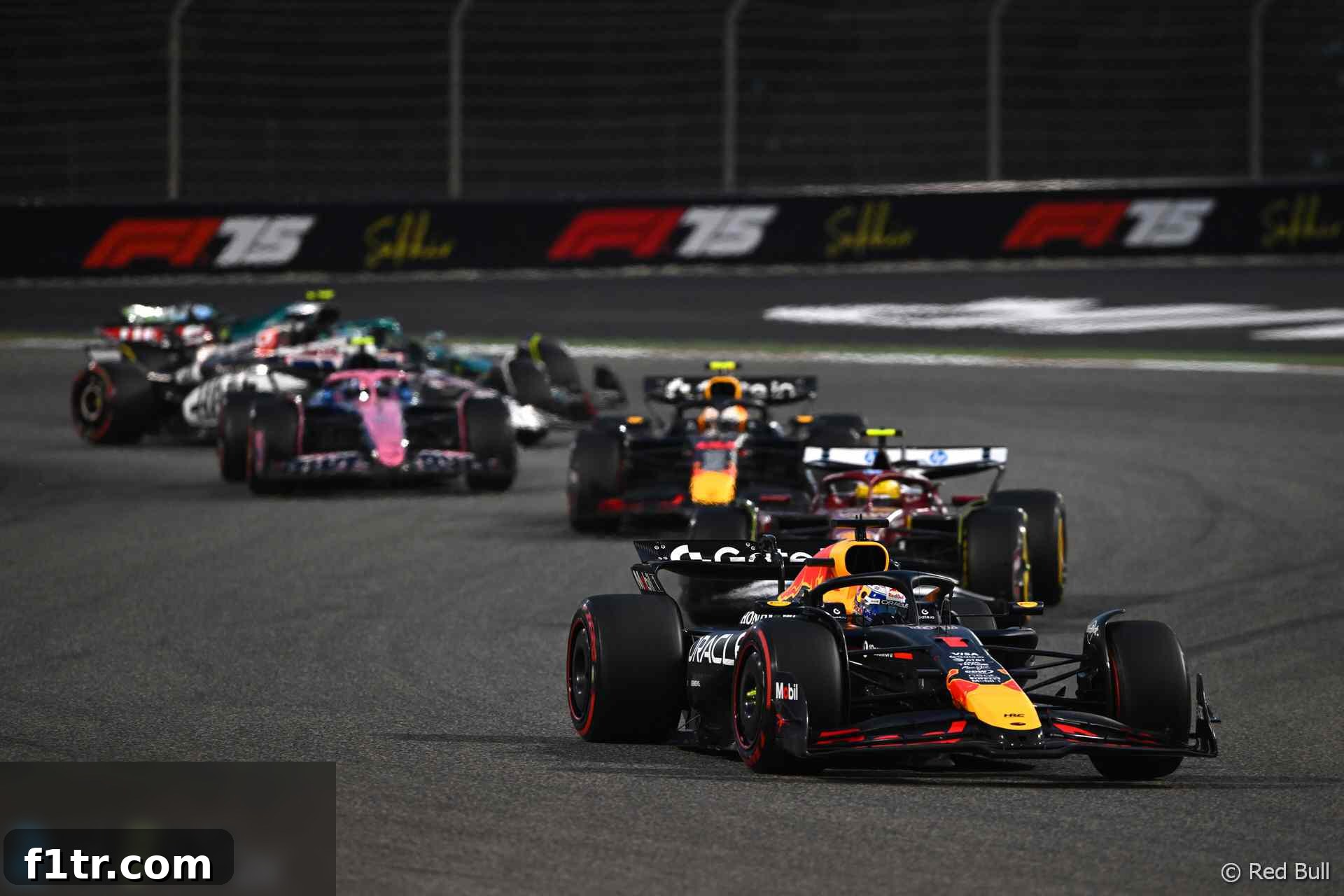
Following a dominant victory at Suzuka just one week prior, Red Bull motorsport consultant Helmut Marko expressed significant dissatisfaction with Max Verstappen’s struggle to a sixth-place finish at the recent Bahrain Grand Prix. The unexpected dip in performance, compounded by critical operational errors, has put the championship-winning team under intense scrutiny as they look ahead to the demanding European leg of the Formula 1 season.
“We have to get, as soon as possible, performance in the car again,” Marko stated emphatically in an interview with Viaplay, highlighting the urgent need for improvements on multiple fronts. His criticism extended beyond the car’s inherent speed, touching upon fundamental team operations. “And also standards, like, a pit stop has to work. If the car is not the fastest and then the pit stops are not working, that is not acceptable.” Marko’s words underscore the high expectations within the Red Bull camp and the immediate pressure to rectify shortcomings.
Pit Stop Nightmares: Costly Errors Undermine Race Strategy
The Bahrain Grand Prix proved to be a particularly vexing experience for the Red Bull pit crew, costing both drivers valuable track position and precious seconds. Both Max Verstappen and his teammate Yuki Tsunoda encountered frustrating delays during their initial pit stops. The team’s exit control lights, crucial for signaling a safe departure, stubbornly remained red even after the mechanics had completed the tyre changes with commendable speed. This electronic glitch created unnecessary bottlenecks, forcing the drivers to wait, losing crucial time to their rivals.
Verstappen’s race was further hampered during his second pit stop when a slow front-right tyre change added insult to injury. These cumulative delays, particularly egregious for a team renowned for its rapid pit stops, were estimated by Marko to have cost Verstappen “maybe two positions.” In the hyper-competitive world of Formula 1, where every tenth of a second is meticulously analyzed, losing entire seconds due to operational mishaps can be the difference between a podium finish and a mid-field struggle. The psychological impact on drivers, who rely on seamless pit operations, cannot be overstated, adding another layer of challenge to an already difficult race.
On-Track Pace Deficit: A Struggle for Overtaking
Beyond the pit lane issues, the RB21 chassis itself appeared to lack the blistering pace that has become synonymous with Red Bull in recent seasons. Marko candidly admitted, “But we were just slow. We could not overtake Gasly, or only with the very last risk from Max. We could not overtake Ocon.” This observation speaks volumes about the car’s underlying performance deficits at Bahrain. Max Verstappen, known for his aggressive and opportunistic overtaking prowess, found himself unusually constrained, forced to take “very last risk” maneuvers or simply unable to make progress against cars that he would typically dispatch with relative ease. The inability to cleanly pass competitors like Pierre Gasly and Esteban Ocon suggested a fundamental lack of straight-line speed, compromised aerodynamic efficiency, or perhaps a struggle with tyre degradation that prevented the team from unleashing the car’s full potential when it mattered most. For a team aiming for championship contention, being “just slow” is an alarming assessment that demands immediate technical solutions.
Christian Horner’s Candid Assessment: Unpacking the Technical Challenges
Team principal Christian Horner provided a more detailed technical breakdown of the issues plaguing Red Bull during the Bahrain Grand Prix. In a statement released by the team, Horner explained, “We’ve been struggling with two issues this weekend, one a braking issue, and secondly an imbalance issue.” These two fundamental problems significantly impacted the car’s behavior and driver confidence.
A braking issue can manifest in various ways, from inconsistent brake bias to overheating components or a lack of overall stopping power. In Formula 1, precise braking is paramount for carrying speed into corners and executing overtakes. Any uncertainty under braking forces drivers to brake earlier, lose entry speed, and compromises their ability to attack or defend. The imbalance issue further compounded the problem. An imbalanced car, whether due to aerodynamic inconsistencies or weight distribution problems, makes it unpredictable through corners, leading to excessive understeer or oversteer. This instability forces drivers to manage the car rather than push its limits, directly impacting lap times and tyre wear.
Horner further elaborated on the cascading effects of these technical problems: “When you have these issues tyre degradation is also highlighted more.” Tyre degradation is a constant battle in modern F1, but a car with braking and imbalance issues puts undue stress on the tyres. Drivers are forced to slide the car more to compensate for instability, leading to increased friction, overheating, and accelerated wear. This significantly shortens the effective life of the tyres, forcing earlier pit stops or compromising pace over a stint. This interplay of technical glitches created a perfect storm for Red Bull, turning what should have been a competitive race into a damage-limitation exercise.
Beyond the car’s intrinsic problems, Horner also acknowledged the operational setbacks. “On top of that we’ve had just a horrible day where we had an issue in the pit gantry that caused a problem with the traffic light. The actual pit stops were actually quite good, but the electric issues definitely impacted our race.” This clarification suggests that the mechanics performed their physical tasks efficiently, but external electronic failures, likely in the automated pit stop system, were the true culprits behind the costly delays. This highlights a different kind of technical challenge, one rooted in operational technology rather than pure vehicle dynamics.
Become a RaceFans supporter and go ad-free
The Road Ahead: Urgent Updates and European Hopes
With the next Grand Prix looming just a week away, the pressure is mounting on the Red Bull technical team to find rapid solutions. Horner conveyed the team’s unwavering focus: “The team are very much focused on developing the car and hopefully over the next few races there are some updates that are introduced that address the issues raised.” This suggests that fixes are in the pipeline, but the short turnaround between races, particularly at the beginning of the season, makes immediate, comprehensive overhauls difficult. Introducing new parts and validating their effectiveness takes time and careful planning.
Horner acknowledged the stark realities exposed by the Bahrain performance. “This race has exposed some pitfalls that we very clearly have that we need to get on top of quickly, we understand where the issues are, but introducing the solutions takes a bit longer.” This admission reveals a clear understanding of the problems within the team, but also a realistic outlook on the timeline for implementing effective countermeasures. The hope is that by the time the European races commence, Red Bull will have sufficiently developed and integrated updates to address the braking, imbalance, and tyre degradation issues, allowing Max Verstappen and Yuki Tsunoda to unleash the full potential of the RB21.
A Glimmer of Positivity Amidst the Turmoil
Despite Horner’s feeling that “nothing went our way from the start of the race” in Bahrain, there was one notable upside amidst the flurry of challenges: Red Bull managed to score points with both cars for the first time this season. In a sport where every point can be crucial in the Constructors’ Championship, this outcome, however modest, provided a small morale boost.
Horner emphasized the importance of damage limitation, particularly for Verstappen. “For Max to come away with a P6 and to limit the deficit to Lando [Norris] this weekend despite the challenges we’ve had is the best we could have hoped for.” This perspective highlights the strategic thinking within the team – even on a bad day, securing solid points and preventing rivals from gaining too much ground is vital for the long game of a championship season.
Yuki Tsunoda also earned praise for his consistent performance. “Yuki has had a very solid weekend. Qualifying in the top 10, finishing in the points today, he drove pretty well here in Bahrain,” Horner stated. Tsunoda’s ability to qualify within the top 10 and convert that into a points finish despite the team’s overall struggles showcases his growing maturity and skill, providing further evidence of his value to the Red Bull family.
The Bahrain Grand Prix served as a stark reminder that even the most dominant teams face unforeseen obstacles. With technical issues to resolve and operational consistency to regain, Red Bull faces a critical period. The team’s ability to quickly implement solutions and restore their benchmark performance will be crucial in defining their championship aspirations as the Formula 1 season progresses towards its highly anticipated European rounds.
For the latest updates and in-depth analysis from the world of Formula 1, consider subscribing to our daily email. Get all our stories directly to your inbox – no marketing, no ads, just pure racing content.
Become a RaceFans supporter and go ad-free
Further Reading: 2025 Bahrain Grand Prix Insights
- Hamilton making “drastic shift” in driving style to master Ferrari’s car
- Leclerc revealed Ferrari strategy details to Gasly before Bahrain Grand Prix
- Lawson made “very significant step forward” in Bahrain – Mekies
- Russell’s transponder was ‘frazzled and charred’ after Bahrain Grand Prix DRS drama
- “Don’t give me too much now”: Hamilton’s search for speed at Ferrari continues
Browse all 2025 Bahrain Grand Prix articles