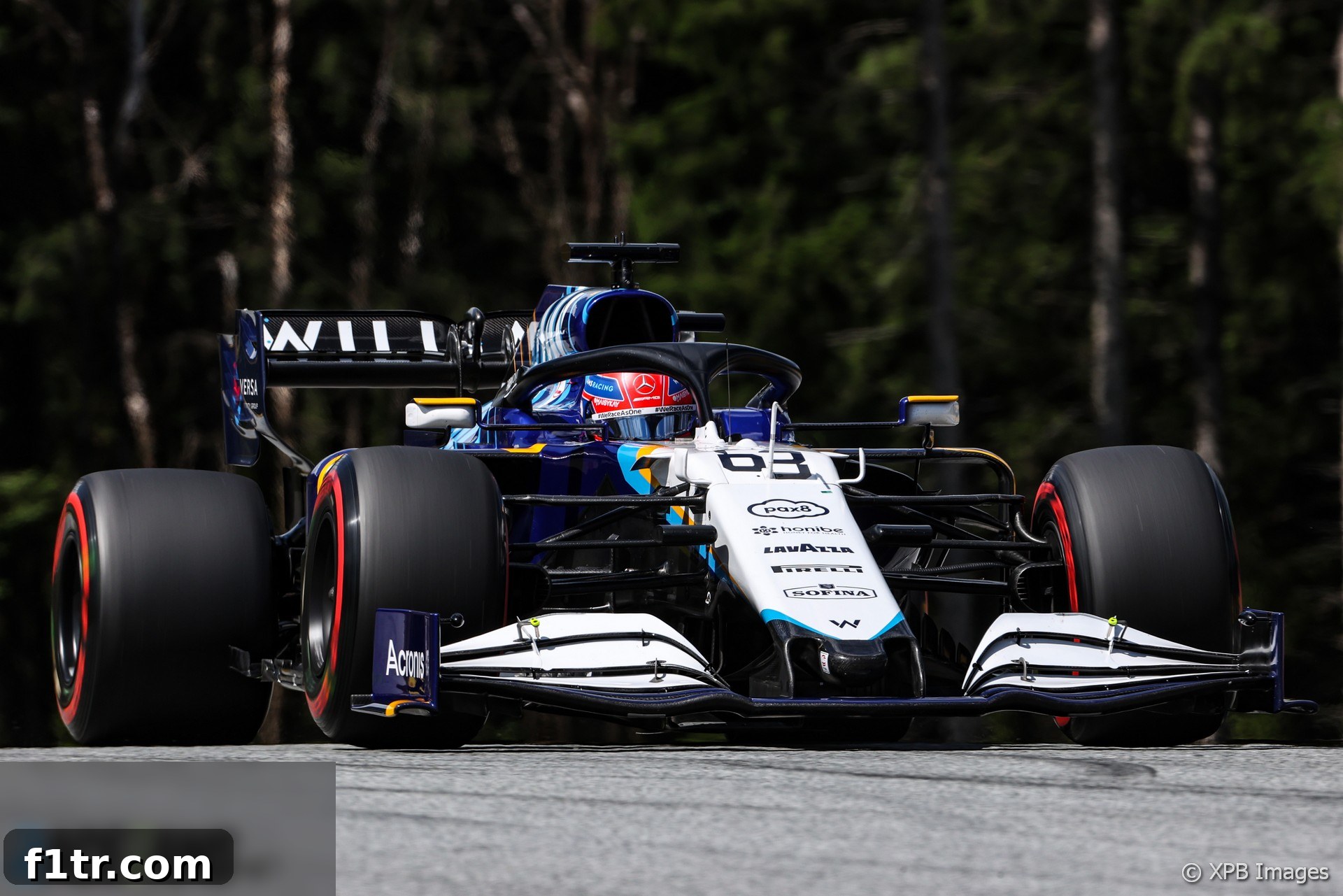
Williams’ Remarkable Resurgence: A Deep Dive into Formula 1’s Evolving Landscape
The world of Formula 1 is perpetually in motion, a testament to relentless innovation and the ebb and flow of team fortunes. Recently, the iconic Williams Racing team delivered a performance that echoed glimmers of their glorious past, showcasing their most competitive form in half a decade at a recent Grand Prix. This significant uplift in performance serves as a powerful indicator of their determined journey back towards the sharp end of the grid, captivating fans and experts alike.
At the heart of this resurgence is the undeniable talent of George Russell. During qualifying, Russell came agonizingly close to making it into Q3, missing out by a mere eight thousandths of a second. His blistering lap time of 1’04.671 was an impressive feat, placing him just 0.83 seconds off the fastest time recorded over the weekend. This wasn’t merely a flash in the pan; it represented the closest Williams had been to the pace-setters in 99 races, a staggering five-year span that underscores the magnitude of their progress.
Williams’ Journey Back: From Doldrums to Promising Heights
To truly appreciate the significance of this achievement, one must recall Williams’ recent history. The last time the team demonstrated such a competitive margin was at the very same venue in 2016, where Valtteri Bottas, then driving for Williams, set a Q2 lap time just 0.683 seconds behind Nico Rosberg’s Mercedes. It’s no coincidence that these closest margins in absolute terms occurred at a track known for its short lap times, which naturally compresses the field. However, even accounting for this track characteristic, the current performance marks a new high watermark in the team’s ongoing journey of improvement.
Two years ago, Williams found themselves firmly entrenched in the doldrums, often struggling to compete with any regularity and consistently finishing at the back of the grid. Their transformation since that grim season is nothing short of remarkable. For perspective, their worst performance this year, being 2.3 seconds off the pace in Bahrain, is notably better than their best performance from two years prior, which saw them 2.4 seconds off the pace in Hungary and Italy. This data vividly illustrates the comprehensive strides made by the team, not just in peak performance but in their overall competitive baseline.
Despite this commendable progress, the harsh reality of Formula 1’s pecking order still dictates that Williams currently possesses only the eighth-quickest car on the grid—a position they’ve consistently held throughout the year. This fact makes George Russell’s starting position of 10th (after Yuki Tsunoda’s grid penalty) all the more extraordinary. It serves as a powerful testament to Russell’s exceptional driving skill, his ability to extract every ounce of performance from his machinery, and perhaps even elevate it beyond its inherent capabilities. His consistently strong qualifying performances, often outperforming the car’s theoretical pace, highlight his potential as a future star and the integral role he plays in Williams’ current narrative.
The strategic changes within Williams, including new ownership and leadership, have clearly begun to bear fruit. Investing in infrastructure, recruiting top talent, and fostering a renewed sense of purpose have collectively contributed to this positive trajectory. While the road to consistently challenging for points and podiums remains long, these recent performances offer a tangible demonstration that Williams is heading in the right direction, providing a much-needed boost of morale and confidence within the team and among their dedicated fanbase.
Ferrari’s Fluctuating Fortunes: One-Lap Speed vs. Race Pace
Beyond the impressive story of Williams, the Grand Prix weekend also offered intriguing insights into the varying fortunes of other prominent teams. Ferrari, a team with its own rich history and championship aspirations, presented a perplexing picture. Following their significant race pace struggles in France, their renowned one-lap speed appeared to have temporarily deserted them in Austria. For only the second time this year, the Scuderia found themselves outside the top four fastest cars in qualifying, a concerning trend for a team aiming for consistent front-running performance.
This dichotomy between qualifying prowess and race day execution has been a recurring theme for Ferrari this season. While Charles Leclerc has demonstrated sensational one-lap speed, securing pole positions in high-downforce, street circuit-heavy tracks like Monaco and Baku, sustaining that performance over a full race distance has proven challenging. The Austrian Grand Prix’s qualifying session hinted at a broader issue, suggesting that their car’s characteristics might be sensitive to specific track layouts and ambient conditions, impacting both their ultimate pace and tyre degradation.
However, the narrative surrounding Ferrari remains dynamic. The prospect of racing on the same circuit next week, but with softer tyre compounds, could be highly revealing. Softer tyres, which enabled Leclerc’s stunning pole positions earlier in the season, could potentially reignite Ferrari’s one-lap magic. This scenario could either confirm the car’s inherent sensitivity to tyre compounds and track conditions or offer a temporary reprieve, providing valuable data for their ongoing development efforts. For fans, it sets up an exciting prospect to see if Ferrari can translate potential qualifying gains into stronger race performances.
The Championship Battle Intensifies: Red Bull vs. Mercedes
At the very pinnacle of Formula 1, the titanic struggle between Red Bull and Mercedes continued to captivate. Red Bull once again out-qualified Mercedes, further cementing their recent advantage on Saturdays. While the margin was smaller than their dominant showing in France, it still underscored Red Bull’s current competitive edge, particularly with Max Verstappen at the wheel. This consistent qualifying performance from Red Bull suggests a significant step forward in their car’s design and setup, allowing them to extract maximum performance from the outset of the weekend.
However, the Grand Prix is not won on Saturday. Mercedes has historically demonstrated superior race pace, often able to manage their tyres more effectively and maintain a stronger rhythm over long stints. This well-established characteristic of the Mercedes car, combined with the strategic brilliance of Lewis Hamilton, strongly suggests that another thrilling showdown between Max Verstappen and Lewis Hamilton was on the cards for Sunday’s race. The difference in qualifying margins, while favoring Red Bull, was sufficiently tight to allow for a compelling strategic battle.
The duel between these two championship protagonists has become the defining narrative of the season. Every qualifying session, every start, and every strategic decision is magnified by the stakes involved. Red Bull’s recent gains indicate a genuine challenge for both the Drivers’ and Constructors’ championships, pushing Mercedes to innovate and adapt at an unprecedented pace. The impending race at the same venue offers a unique opportunity for both teams to refine their strategies, learn from the previous weekend’s data, and potentially swing the momentum in their favor. The tactical decisions around tyre compounds, pit stop windows, and managing track position will be paramount in determining the victor in this high-stakes contest.
Looking Ahead: Implications for the Formula 1 Season
The recent Grand Prix weekend was a microcosm of the exciting and unpredictable nature of modern Formula 1. Williams’ inspiring progress highlights the potential for any team to rise through the ranks with perseverance and strategic investment. Their journey not only injects renewed interest into the midfield battles but also provides a powerful narrative of resilience.
Ferrari’s fluctuating performance underscores the fine margins that define success and struggle in Formula 1, particularly in balancing raw speed with race-long consistency. Their upcoming challenge at the same circuit will be a critical test of their adaptability and understanding of their car’s characteristics under different tyre conditions.
Meanwhile, the championship battle between Red Bull and Mercedes remains as fierce as ever, promising more thrilling wheel-to-wheel action and strategic masterclasses. The slight shifts in qualifying advantage and the ongoing debate over race pace will keep fans on the edge of their seats throughout the season. As Formula 1 continues its high-speed tour, these evolving storylines contribute to a rich tapestry of competition, making every race a must-watch event for motorsport enthusiasts worldwide.