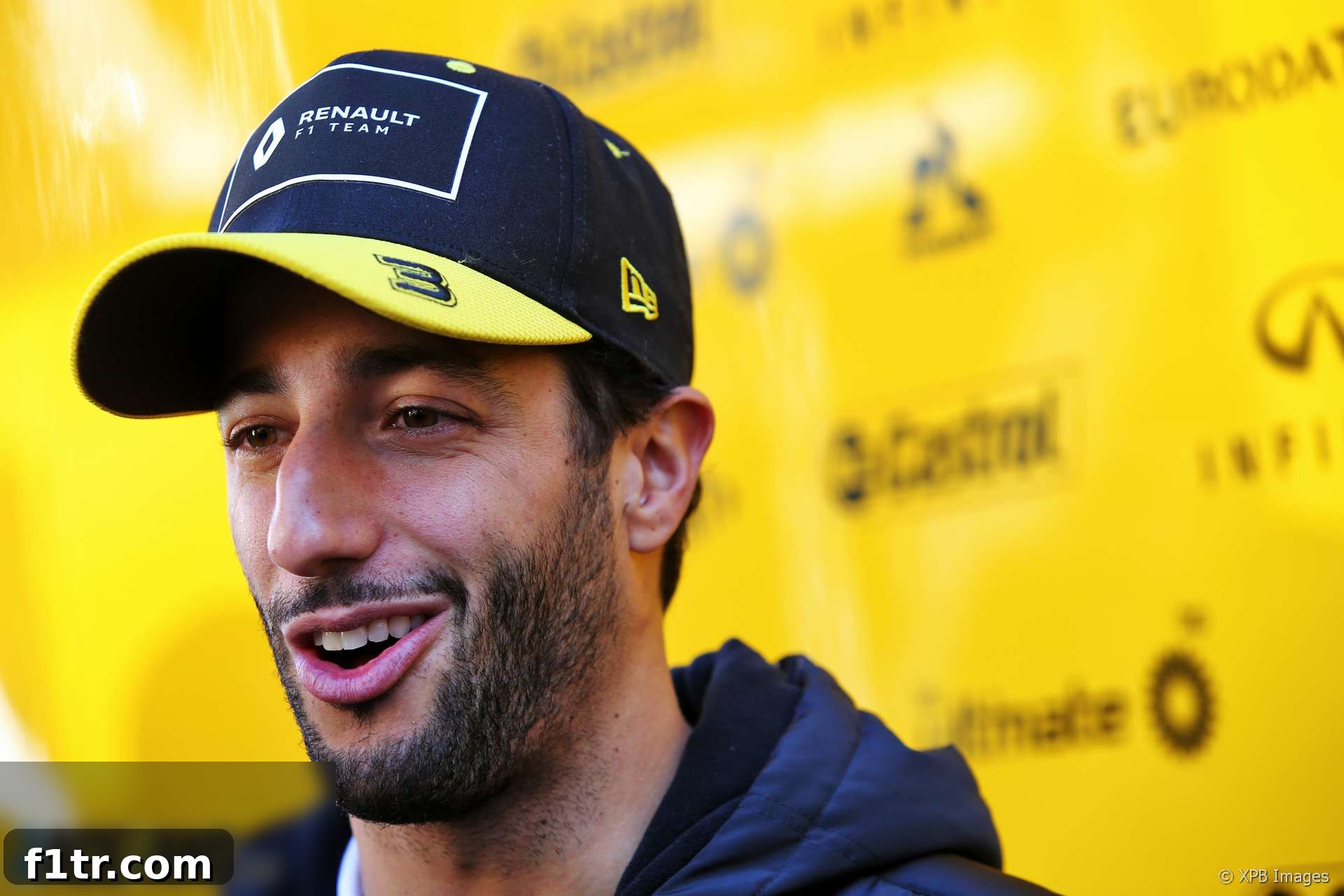
Mercedes’ Dual Axis Steering (DAS): An Innovation Lauded by Daniel Ricciardo
In the fiercely competitive world of Formula 1, where every millisecond counts and technological advancements are relentlessly pursued, Mercedes-AMG Petronas F1 Team has consistently set the benchmark. Their unparalleled dominance throughout the turbo-hybrid era has often been attributed to superior engine power, aerodynamic efficiency, and strategic prowess. However, a significant moment that encapsulated their innovative spirit and relentless pursuit of perfection came with the introduction of their Dual Axis Steering (DAS) system. This ingenious device, which briefly graced the F1 grid, not only sparked widespread debate but also earned the profound admiration of rival drivers, notably Daniel Ricciardo, then racing for Renault.
Ricciardo’s praise for Mercedes’ willingness to push technological boundaries, even while at the pinnacle of the sport, underscored a crucial aspect of their success. It highlighted a mentality that eschewed complacency, continuously sought marginal gains, and, in doing so, inspired both respect and trepidation across the paddock. The DAS system was more than just a piece of engineering; it was a physical manifestation of Mercedes’ unwavering commitment to innovation, demonstrating why they had become such a formidable force in Formula 1.
Understanding the Ingenuity of Dual Axis Steering (DAS)
The Dual Axis Steering system, first publicly unveiled during pre-season testing for the 2020 Formula 1 season, immediately captivated the attention of engineers, drivers, and fans alike. Its operation was deceptively simple yet brilliantly effective. By allowing the driver to push and pull the steering wheel, the system subtly adjusted the toe angle of the front wheels. This meant that the front wheels could be toed-in (pointing inwards) or toed-out (pointing outwards) on demand, dynamically altering the car’s handling characteristics during a lap.
The primary benefit of DAS was believed to be its ability to optimize tyre performance. During straight sections of the track, drivers could use DAS to adjust the toe angle, potentially reducing drag and minimizing tyre wear. More critically, by toing-out the front wheels, drivers could generate more heat into the tyres, particularly the outer edges, which are crucial for cornering performance. This was particularly advantageous during warm-up laps, safety car periods, or even mid-race to ensure tyres were in their optimal operating window when entering corners, enhancing grip and responsiveness. Conversely, adjusting the toe angle could help manage tyre temperatures to prevent overheating on long runs, improving overall tyre longevity and consistency.
This innovative concept represented a significant step forward in F1 car design, offering drivers an additional layer of control and a strategic tool previously unimaginable. It showcased Mercedes’ deep understanding of complex vehicle dynamics and their capacity to translate theoretical advantages into tangible on-track performance, making it a pivotal moment in the ongoing technological arms race within Formula 1.
Daniel Ricciardo’s Unreserved Praise for Mercedes’ Drive
Daniel Ricciardo, known for his infectious smile and fierce competitive spirit, did not shy away from expressing his admiration for Mercedes’ latest technological marvel. In an interview, he articulated a sentiment shared by many within the F1 community, stating, “Hats off to them because they have been dominant this whole turbo era yet they are still the ones pushing everyone else.” This statement was not just a compliment; it was a profound acknowledgement of Mercedes’ unique approach to success.
Ricciardo further elaborated on this mindset, observing, “It should be us and everyone else pushing them and they’re not getting complacent. And I think that’s why they’ve been so dominant.” His words painted a clear picture of a team that, despite enjoying unprecedented success, refused to rest on its laurels. Mercedes’ culture was one of continuous self-improvement, of constantly seeking the next innovation, the next performance advantage, regardless of their position at the top. This relentless drive for perfection, even when already miles ahead of the competition, resonated deeply with Ricciardo, a driver who himself embodies a never-give-up attitude.
As a competitor, Ricciardo openly admitted his respect for Mercedes. “So they’re setting an example right now and as a competitor, I certainly respect that. And it’s good for everyone to see how far they’re willing to go.” This recognition from a rival driver underscored the impact of Mercedes’ innovative spirit. It served as a powerful reminder to other teams that sustained dominance in Formula 1 is not merely about having the best resources but about cultivating a mindset that consistently challenges the status quo and pushes the boundaries of what is possible.
Mercedes’ Dominance: A Testament to Unwavering Innovation
Mercedes’ reign in the turbo-hybrid era has been nothing short of historic. From 2014 onwards, they consistently outperformed their rivals, securing multiple constructors’ and drivers’ championships. While engine superiority initially played a significant role, their ability to maintain this dominance year after year stemmed from a holistic approach to car development, strategy, and team cohesion. The DAS system perfectly illustrated this philosophy.
It wasn’t enough for Mercedes to have the most powerful engine or the most aerodynamic chassis; they continually sought innovative ways to extract even more performance from every component. DAS was a testament to this micro-optimization strategy. It reflected a deep engineering insight that understood the intricate relationship between driver input, tyre dynamics, and vehicle performance. By providing drivers with an additional tool to manage tyre temperatures and contact patch, Mercedes aimed to extend their advantage, however marginal, in races where tyre degradation and strategy often dictated outcomes.
This commitment to pushing the envelope served as a constant motivator for the entire grid. Mercedes’ innovations often forced other teams to rethink their own design philosophies, compelling them to invest heavily in research and development to understand and counter these advancements. The introduction of DAS was a stark reminder that in Formula 1, standing still is akin to falling behind, regardless of how far ahead you might seem.
The Legality and the Ripple Effect Across the Grid
Upon its debut, the Dual Axis Steering system immediately raised questions regarding its legality under Formula 1 regulations. The FIA (Fédération Internationale de l’Automobile), the sport’s governing body, was swift to investigate. Based on the detailed information provided by Mercedes, the FIA indicated that DAS appeared to be legal. This ruling sparked a flurry of activity in every other F1 team’s factories. The initial shock and awe quickly gave way to intense engineering analysis and strategic meetings.
Daniel Ricciardo, reflecting on the immediate aftermath, noted the widespread surprise. “I think everyone up until now – I’ve never heard of a system that talked about, so I don’t think maybe anyone had really thought about it.” This observation highlighted the truly groundbreaking nature of Mercedes’ innovation. It wasn’t an evolution of an existing concept; it was a novel approach that caught everyone off guard. Ricciardo further speculated on the industry-wide reaction: “I don’t want to say anyone, but probably not many people talked about that. So I don’t know if it was ever a conversation had, but I’m sure the conversation’s happening in every team right now.”
His prediction proved accurate. Engineers across the paddock scrambled to understand the intricacies of DAS, to assess its potential performance gains, and to explore how they might replicate or develop similar systems. The legality ruling by the FIA, while affirming Mercedes’ cleverness, also opened a Pandora’s Box of innovation, compelling every team to re-evaluate their design strategies and invest resources into exploring similar dynamic steering or suspension concepts. DAS thus not only gave Mercedes an advantage but also inadvertently stimulated a new wave of innovation and intellectual challenge across the entire Formula 1 grid.
A Legacy of Innovation in Formula 1
The story of Formula 1 is replete with tales of groundbreaking innovations that have redefined the sport. From the revolutionary ground effect aerodynamics pioneered by Colin Chapman’s Lotus in the late 1970s to the active suspension systems of the 1990s that offered unparalleled chassis control, and the controversial double diffuser of 2009, F1 has always been a crucible for technological advancement. These innovations, much like DAS, often emerge from a clever interpretation of the rulebook and a relentless pursuit of performance.
Mercedes’ Dual Axis Steering system firmly positioned itself within this storied lineage. It represented the pinnacle of engineering ingenuity, pushing the boundaries of what was considered permissible and possible within the framework of F1 regulations. The fact that it was deemed legal at the time of its introduction further underscored the brilliance of its conception. Such innovations are crucial for the sport, as they not only enhance performance and spectator interest but also contribute to the broader automotive industry through knowledge transfer and technological refinement.
By constantly challenging conventions and exploring new frontiers, teams like Mercedes ensure that Formula 1 remains the ultimate proving ground for automotive technology, a spectacle where human daring meets engineering brilliance. DAS, therefore, was not merely a performance enhancer for one season; it was another significant chapter in F1’s rich history of technological marvels, reminding everyone of the sport’s core ethos: innovation at all costs.
The Unseen Benefits: Beyond Pure Lap Time
While the tangible benefits of DAS in terms of lap time reduction and tyre management were clear, the system also offered unseen advantages that contributed to Mercedes’ overall dominance. Psychologically, having such a sophisticated and unique system undoubtedly boosted the confidence of the Mercedes drivers and engineering team. Knowing they possessed a tool that no other team had would have instilled a sense of technological superiority and strategic advantage.
Strategically, DAS added another layer of complexity to race management. Engineers could communicate with drivers to utilize the system at specific points on the track or during critical phases of a race, potentially enabling unique tyre strategies or providing an edge during overtakes and defensive driving. This level of dynamic control over the car’s setup during a race was unprecedented and opened up new avenues for strategic thinking.
Moreover, the mere existence of DAS forced rival teams to divert significant resources—intellectual, financial, and temporal—to analyze, understand, and potentially counter it. This meant that while Mercedes was already leveraging their innovation, competitors were spending valuable time and effort playing catch-up, which could have otherwise been directed towards their own car development. Thus, the impact of DAS extended far beyond its direct performance benefits, creating a wider competitive gap in multiple dimensions.
Conclusion: The Unwavering Pursuit of Excellence
Daniel Ricciardo’s praise for Mercedes’ Dual Axis Steering system was more than just a passing comment; it was a testament to the enduring spirit of innovation that defines Formula 1’s most successful teams. Mercedes’ ability to introduce such a groundbreaking system, even amidst a period of overwhelming dominance, perfectly encapsulated their relentless pursuit of excellence and their refusal to succumb to complacency. It demonstrated a championship mindset that continuously sought to push the boundaries of technology and performance.
DAS, in its brief but impactful tenure, served as a powerful reminder to the entire F1 grid that true dominance is not just about winning races but about consistently setting new benchmarks for innovation. It challenged rival teams to elevate their game, fostering an environment where ingenuity is not only rewarded but expected. Ricciardo’s respect for Mercedes was a recognition of this very ethos—an acknowledgement that in Formula 1, the ultimate victor is often the team that never stops learning, never stops evolving, and never stops innovating.
The legacy of DAS, much like other legendary F1 innovations, lies not just in its technical cleverness but in its profound impact on the sport’s competitive landscape and its enduring illustration of what it takes to remain at the pinnacle of motorsport.
Don’t miss anything new from RaceFans
Follow RaceFans on social media:
- Join RaceFans on Facebook
- Follow RaceFans on Twitter
- Get daily email updates from RaceFans
2020 F1 season
- Grosjean to make F1 test return tomorrow for first time since Bahrain horror crash
- Pictures: Wrecked chassis from Grosjean’s Bahrain fireball crash to go on display
- Bottas vs Rosberg: Hamilton’s Mercedes team mates compared after 78 races each
- F1 revenues fell by $877 million in Covid-struck 2020 season
- Hamilton and Mercedes finally announce new deal for 2021 season
Browse all 2020 F1 season articles