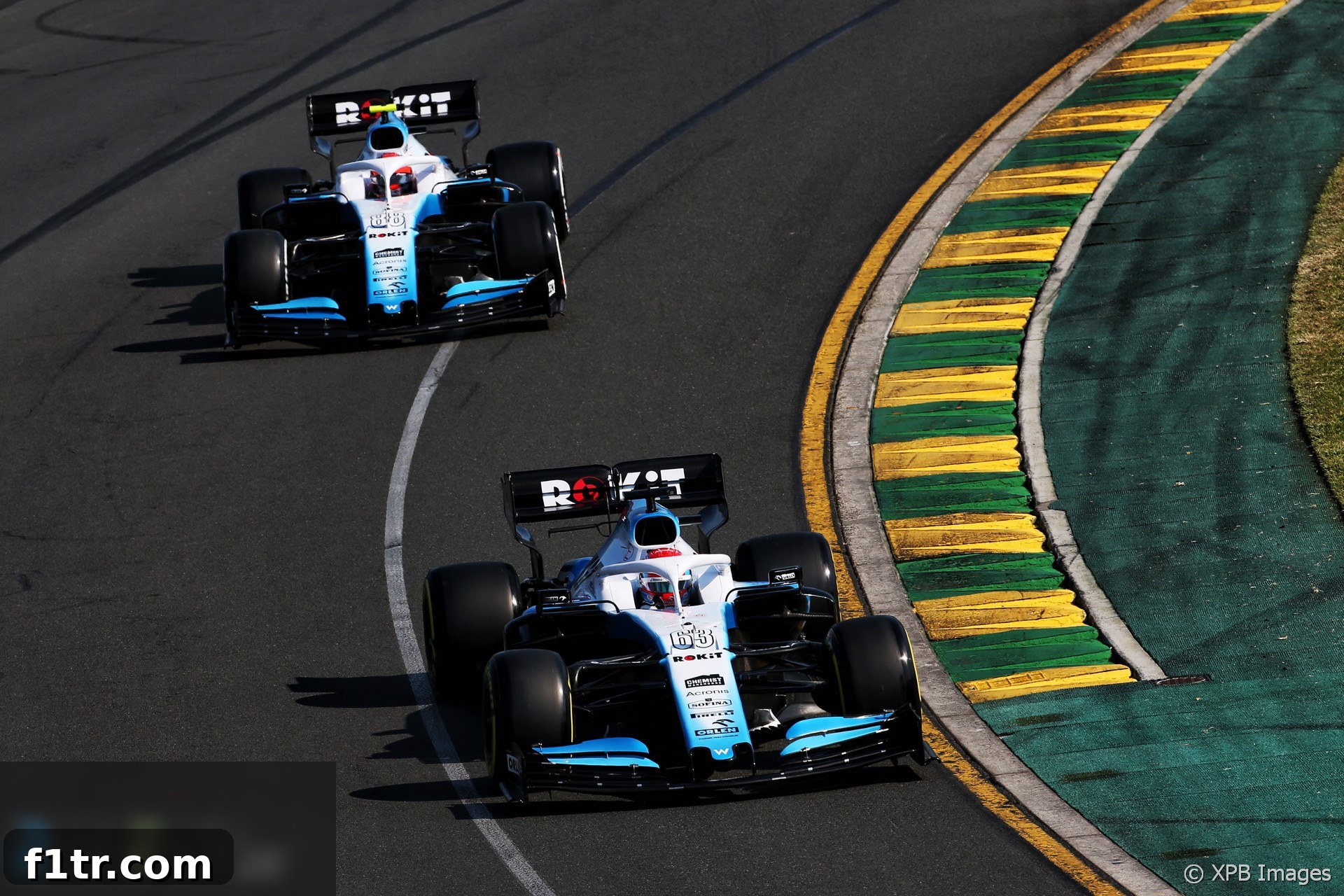
In a special series exploring the intricate dynamics within Formula 1 teams, we delve into the performance battle between each of the 10 pairs of teammates on the F1 grid throughout the current season. This analysis focuses on the Williams Racing duo, offering a comprehensive look at the contrasting fortunes of a seasoned returnee and a rising star.
Advert | Become a Supporter & go ad-free
Few narratives in recent Formula 1 history have been as poignant and inspiring as Robert Kubica’s return to the pinnacle of motorsport. After a career-altering rally crash eight years prior, his sheer determination and resilience earned him a spot back on the F1 grid with Williams Racing. If public goodwill and admiration translated directly into lap time, Kubica’s rivals would undoubtedly face an insurmountable challenge. Indeed, it would require a stony heart to begrudge the Polish driver anything less than a resoundingly successful comeback, given the cruel manner in which his promising career was tragically cut short.
However, the stopwatch, the ultimate arbiter in Formula 1, remains utterly brutal and unsentimental. Its pitiless verdict on Kubica’s performance so far this season is stark: he is consistently falling far short of his rookie teammate, George Russell. The numbers painted a painful picture throughout the first half of the season, showing little to no signs of significant improvement. The 1.293-second deficit Kubica recorded against Russell in Hungary, a track demanding precision and sensitivity, was enormous – marking the second-largest gap of the year. This was only surpassed by the opening round in Melbourne, where the team faced severe challenges including a critical parts shortage that hampered both cars.
The considerable gap between the two Williams drivers has naturally sparked intense debate and speculation. While Kubica’s past injuries have necessitated certain alterations to his driving style and physical approach within the cockpit, neither he nor the Williams team are attributing his substantial deficit to Russell primarily to these factors. Senior Race Engineer Dave Robson offered a more nuanced explanation, suggesting that Russell’s greater familiarity and intrinsic feel for the notoriously complex Pirelli tyres could be a significant differentiator.
“I suspect it will come down to the tyres,” Robson stated definitively after qualifying in Hungary, a session where the performance disparity was particularly glaring. “When the gaps are that big, and the cars are confirmed to be identical in specification, I strongly suspect that’s what it will ultimately come down to.” This highlights the intricate relationship between driver and tyre, a dynamic that has become increasingly critical in modern F1.
The persistent and sometimes yawning performance chasm between Kubica and Russell has, inevitably, led some of Kubica’s most ardent supporters to voice suspicions that Williams might not be providing both drivers with identical equipment. It is a claim that Williams’ Deputy Team Principal, Claire Williams, has robustly and repeatedly denied. In fact, on at least one notable occasion when the team did not supply its drivers with the exact same specification cars, Kubica was arguably the one who benefited. He was the first of the two to receive Williams’ German Grand Prix upgrade package, with Russell not getting his hands on it until Saturday in Hockenheim, underscoring the team’s commitment to rotational upgrades rather than favouritism.
Advert | Become a RaceFans supporter andgo ad-free
In various other crucial respects, Williams has gone to considerable lengths to ensure both of its drivers are treated with unequivocal equality. Unlike previous seasons, where third drivers’ free practice outings were often allocated to just one car, the team has implemented a policy of dividing its third driver’s free practice running between both of its cars. This strategic decision ensures that both Kubica and Russell have equal access to vital track time and development data, reinforcing the team’s commitment to a fair and transparent internal competition.
“It’s a two-car game,” Robson pointed out, emphasizing the collaborative nature of F1 development, even amidst internal rivalries. “We’ve got to go away and understand that [problem] with Robert and see whether we can improve it in a couple of weeks’ time.” This sentiment underscores the team’s collective responsibility to optimize the performance of both drivers, not just one.
While Kubica had opportunities to re-familiarize himself with Pirelli’s tyre characteristics, beginning with his initial return to an F1 car in 2017 testing sessions, Russell’s more recent and continuous ascent through the competitive ranks of GP3 and Formula 2 arguably provided him with a more profound and regular practice on the specific Pirelli rubber used in those feeder series. Crucially, during his junior category tenure, Russell was often deprived of many of the highly advanced measurement and diagnostic tools that F1 teams have at their disposal. This forced him to develop an exceptionally intuitive and nuanced feel for the tyres – a “gut feeling” that Robson suspects may now be making a critical difference in F1.
“The driver is, in effect, the best sensor on the car,” Robson eloquently stated. “Forget about all the electronics, he’s the single most important bit on there.” This philosophy emphasizes the irreplaceable human element in extracting ultimate performance, especially when it comes to managing the highly sensitive F1 tyres. Modern Pirelli tyres operate within incredibly narrow temperature windows, and slight deviations can lead to significant performance losses, making the driver’s ability to “feel” and react paramount.
A substantial amount of lap time can be gained or lost in the seemingly innocuous art of the preparation lap – the critical out-lap before a timed qualifying attempt. Robson suspects that Russell possesses a unique ability to “really feel not so much what the tyre is doing right now, but what it’s going to do when he starts the timed lap – that’s the other difficult bit.” This anticipatory understanding of tyre behaviour, a skill honed through years of competitive racing and limited telemetry, allows Russell to optimize his setup and driving style for peak grip precisely when it matters most.
“Maybe Robert does have a little bit more to understand about how you get the most out of it,” Robson candidly added, acknowledging the learning curve associated with modern F1 tyres. “Undoubtedly these tyres are very different from the ones I remember with Bridgestone and Michelin. They’re not worse, necessarily, just different. You do have to treat them in a profoundly different way, and understanding them is certainly not easy.” This distinction is crucial; the demands placed on drivers by today’s F1 tyres require a specific skillset that takes time and experience to master, especially for a driver returning after a long hiatus.
Advert | Become a RaceFans supporter andgo ad-free
The sole bright spot, and indeed the only tangible reward in Kubica’s challenging season so far, was the unexpected point he scored in the chaotic German Grand Prix. This solitary point was not a direct product of outright pace but rather a testament to his immense experience and unwavering restraint amidst treacherous, ever-changing wet conditions. He had been running consistently behind his teammate when Russell, pushing hard in the slippery environment, unfortunately went off track, paving the way for Kubica to capitalize on the misfortune and secure a valuable championship point for Williams.
Conversely, it must have been an immensely galling experience for George Russell to have missed out on that golden opportunity for points, especially considering his sharp strategic instincts. He had audaciously lobbied the Williams pit wall to adopt a daring slick tyre gamble during the drying stages of the German Grand Prix – a gamble that ultimately paid off handsomely for several of his more experienced rivals who successfully made the switch. This sequence of events may well guarantee that the final championship order of the Williams drivers at the end of the season, with Kubica holding a single point, will not accurately reflect the true, underlying pecking order based on raw performance. Such is the unpredictable nature of Formula 1, where strategic decisions and circumstantial luck can heavily influence the final tally, sometimes overshadowing pure speed.
The ongoing saga at Williams highlights the multifaceted challenges faced by teams at the back of the grid, where every tenth of a second and every strategic decision carries immense weight. For Kubica, it’s a test of adaptation and a battle against time, trying to rediscover the innate feel that once made him a Grand Prix winner. For Russell, it’s a critical proving ground, demonstrating his extraordinary talent even in uncompetitive machinery, all while grappling with the frustrations of missed opportunities. Their contrasting journeys continue to provide a fascinating study in the relentless world of Formula 1.
Kubica vs Russell: Key stats
Kubica vs Russell: Who finished ahead at each round
| AUS | BAH | CHI | AZE | SPA | MON | CAN | FRA | AUT | GRE | GER | HUN | ||
| George Russell | Q | ||||||||||||
| R | |||||||||||||
| Robert Kubica | Q | ||||||||||||
| R |
Kubica vs Russell: Qualifying gap
Times based on the last qualifying round at each race weekend in which both drivers set a time
Quotes: Dieter Rencken
2019 F1 season
- Crying in the Melbourne car park at 2019 grand prix was my career low – Ocon
- McLaren Racing reports reduced £71 million loss in 2019
- Kvyat: Hockenheim podium last year was “my biggest achievement” so far
- How the FIA’s new encrypted fuel flow meter targets Ferrari’s suspected ‘aliasing’ trick
- “He smashed my office door”: 23 must-see moments from ‘Drive to Survive’ season two
Browse all 2019 F1 season articles