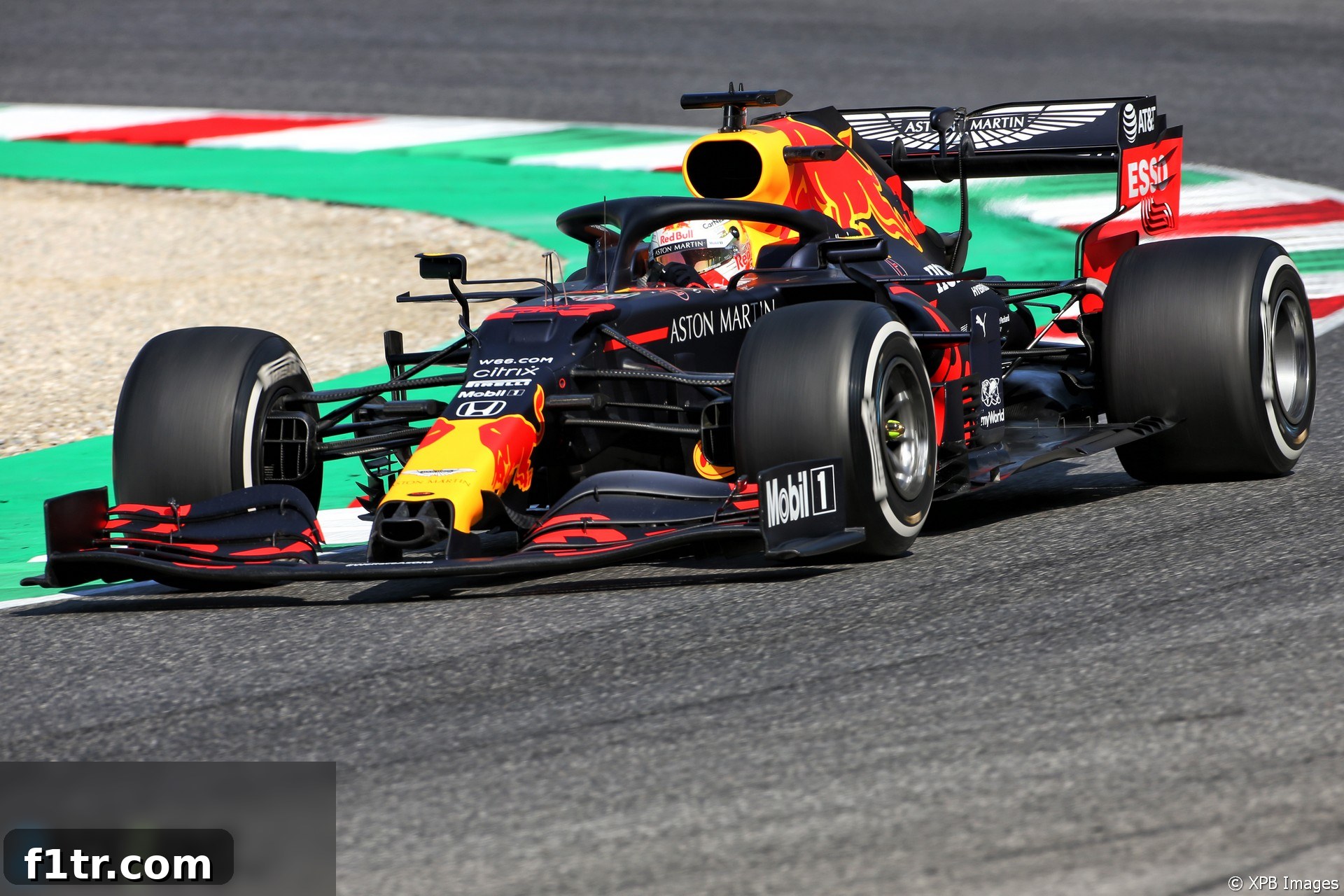
Max Verstappen, the dynamic Red Bull Racing driver, expressed considerable optimism regarding the straight-line speed demonstrated by his car during the qualifying session for the Tuscan Grand Prix. This encouraging performance marked Red Bull’s strongest qualifying showing of the year up to that point, hinting at a potential shift in the competitive landscape.
Verstappen secured a commendable third position on the grid, a result that, while one spot lower than his season-best, placed him remarkably close to pole position. His deficit of merely 0.365 seconds to the front-runner was the smallest gap Red Bull had managed all season, underscoring the significant strides the team had made in optimizing their package for the unique challenges of Mugello. This narrowing of the performance gap to the dominant Mercedes team ignited hopes within the Red Bull camp for a truly competitive race.
Verstappen Confident: Red Bull’s Straight-Line Speed Boosts Tuscan GP Hopes
The 2020 Formula 1 season presented a unique set of circumstances, with a revised calendar introducing new and classic circuits to the roster. Among these was the picturesque Mugello circuit in Italy, hosting its inaugural Formula 1 Grand Prix, also celebrated as Ferrari’s 1000th Grand Prix. Against this historic backdrop, Max Verstappen and Red Bull Racing delivered a standout qualifying performance, suggesting a crucial breakthrough in understanding and maximizing their car’s potential. Verstappen’s assertion about improved straight-line speed, a critical factor at Mugello, provided tangible evidence of their progress, injecting a much-needed dose of confidence into the team as they prepared to challenge the formidable Mercedes duo.
A Significant Leap: Red Bull’s Strongest Qualifying Performance Yet
For much of the 2020 season, Red Bull Racing had struggled to consistently match the blistering pace of Mercedes, often finding themselves several tenths, if not a full second, adrift in qualifying. However, the Tuscan Grand Prix qualifying session presented a different narrative. Verstappen’s third-place grid slot, coupled with the minimal gap to pole, was a clear indicator of a positive turning point. This wasn’t just another top-three finish; it was the closest Red Bull had come to truly challenging for pole position all year, signaling an underlying improvement in the car’s fundamental performance characteristics. This narrowing margin was particularly encouraging given Mercedes’ typical qualifying dominance, and it fueled speculation about Red Bull’s capacity to mount a more consistent challenge in the remaining races.
Verstappen himself was visibly pleased with the team’s efforts. “We did a very good job setting up the car for this weekend compared to some other weekends where we have been a bit further away, where I was not entirely happy with the car,” he stated. This comment highlights the intricate dance of car setup in Formula 1, where small adjustments can yield significant performance gains. Finding the optimal balance and wing level for a specific track is paramount, and it appeared Red Bull had hit the sweet spot at Mugello, enabling Verstappen to extract maximum performance from the RB16.
Unlocking Potential: The Impact of Car Setup and Track Characteristics
The Dutchman elaborated on the factors contributing to their improved form, emphasizing the immediate positive feel of the car. “We started straight away with a positive balance in the car, I think the right wing level for our car, so I guess that explains it a bit,” he explained. Achieving a positive balance from the outset of a Grand Prix weekend is crucial, as it allows the team to focus on fine-tuning rather than fundamental adjustments, saving valuable practice time. The ‘right wing level’ refers to the compromise between generating downforce for cornering grip and reducing drag for straight-line speed. At a track like Mugello, with its blend of high-speed corners and a lengthy main straight, striking this balance is particularly challenging.
Verstappen also pointed to the track’s inherent characteristics as playing a role. “Maybe the track characteristic as well a little bit. We seem to be a bit better on higher downforce tracks with the car. So I think that might explain the four, or whatever, tenths it is.” Mugello is known for its fast, flowing corners that demand a high level of aerodynamic downforce. While some tracks prioritize absolute straight-line speed, Mugello rewards a car that can carry immense speed through its sweeping bends. Red Bull’s RB16, with its design philosophy often geared towards high-downforce configurations, appeared to thrive in this environment. The combination of an optimized setup and the car’s inherent strengths on such circuits provided the foundation for their impressive qualifying performance.
The Mugello Advantage: Straight-Line Prowess in the Final Sector
Crucially, Verstappen highlighted a specific area of strength that could be pivotal for the race: his car’s performance through the final sector of the Mugello circuit. This sector includes two of the longest flat-out sections on the track, where straight-line speed and aerodynamic efficiency are paramount. “For once we have quite decent top speed this year,” he noted, a remark that underscored a consistent challenge Red Bull had faced against Mercedes in previous races. Their improved top speed at Mugello, especially in these high-velocity zones, offered a glimmer of hope that they could directly challenge the Mercedes cars, traditionally known for their power unit advantage.
The ability to carry speed down the straights and through the final sector is not just about raw power; it also involves managing drag efficiently. Red Bull’s optimization efforts seemed to have paid off, allowing them to extract more from their Honda power unit in these critical sections. This newfound straight-line performance could prove vital for both defending positions and attempting overtakes, particularly in a circuit where pure race pace can be augmented by a strategic advantage in specific zones.
Eyeing the Mercedes Challenge: Race Day Strategy and Dynamics
Despite the encouraging qualifying result and improved top speed, Verstappen remained pragmatic about the challenges of race day. “But it won’t be easy to pass,” he cautioned. Mugello, while a spectacular circuit, is notorious for its limited overtaking opportunities due to the high-speed nature of its corners and the relatively narrow track width in many sections. The long main straight offers the primary chance for overtakes, often relying on the drag reduction system (DRS) and superior exit speed from the final corner. Verstappen did find a silver lining in the final few corners, noting they “are a bit wide and long so you can do a few different lines,” which might open up marginal opportunities for attacking or defending.
The Crucial Role of Pace and Tyre Management
Ultimately, Verstappen understood that race success would hinge on fundamental racing elements: “But it’s all going to anyway depend on, firstly, if you have the pace to follow, and second of course tyre degradation.” The ability to follow closely behind another car without losing aerodynamic performance – often referred to as ‘dirty air’ – is a significant challenge in modern Formula 1. If Red Bull could maintain close proximity to the Mercedes cars, their improved straight-line speed might become a more effective weapon. However, this ability is often compromised by tire overheating when running in another car’s turbulent wake.
Tyre degradation, especially at a physically demanding track like Mugello with its high-energy corners, would be another critical factor. Managing tire wear effectively throughout a stint, making the correct strategic calls on pit stops, and ensuring consistent pace without pushing the tires beyond their limits are paramount. Teams with superior car balance and setup often excel in managing tire wear, and Red Bull’s positive setup at Mugello suggested they might have an advantage in this regard. The interplay between maintaining pace, managing tire temperatures, and executing a flawless pit strategy would ultimately determine their fortunes against the fierce competition of Mercedes.
The 2020 Tuscan Grand Prix: A Unique Addition to the F1 Calendar
The 2020 Tuscan Grand Prix at Mugello was a memorable event for several reasons beyond the on-track action. It marked the first time the circuit had hosted a Formula 1 Grand Prix, bringing a fresh challenge to drivers and teams alike. Furthermore, the event was officially titled the “Ferrari 1000 Grand Prix” in celebration of Scuderia Ferrari’s 1000th race in the Formula 1 World Championship. This historic milestone added a layer of prestige and emotion to the weekend, even if Ferrari’s on-track performance during the challenging 2020 season did not match the grandeur of the occasion. For Red Bull and Max Verstappen, delivering a strong performance at such a significant and novel event was a testament to their adaptability and continuous pursuit of improvement.
In conclusion, Max Verstappen’s confident remarks regarding Red Bull’s straight-line speed and optimized car setup for the Tuscan Grand Prix underscored a promising shift for the team. While the ultimate result of the race would be determined by a myriad of factors including tire management and race craft, their strongest qualifying performance of the year, coupled with a newfound advantage in crucial high-speed sections, offered a tantalizing prospect of a closer fight at the front. This progress at Mugello provided Red Bull with valuable data and renewed hope for a more competitive second half of the 2020 F1 season.
2020 Tuscan Grand Prix Ferrari 1000
Explore all articles related to the 2020 Tuscan Grand Prix Ferrari 1000