Williams F1’s 2019 Season Delay: Unpacking the Challenges Behind the FW42’s Late Debut
The highly anticipated 2019 Formula 1 season presented an unexpected hurdle for one of the sport’s most historic teams. Williams Grand Prix Engineering faced a significant delay in the completion of their new challenger, the FW42, missing crucial early days of pre-season testing. This setback, as confirmed by deputy team principal Claire Williams, was primarily attributed to a confluence of factors, including the late issuance of technical clarifications and the inherent complexities of designing and building an F1 car entirely in-house with constrained resources.
For any Formula 1 team, the meticulous planning of a car’s development cycle is paramount. Every design decision, manufacturing process, and assembly step is scheduled with precision, leading up to a designated debut for pre-season testing. However, as Claire Williams explained, the timing of certain technical directives from the sport’s governing body proved particularly disruptive, especially for a smaller, independently financed outfit like Williams.
“There were some technical directives that did come out relatively late which doesn’t help,” Williams stated, elaborating on the impact these late changes had on their operations. “It doesn’t help a particular team like ours when we don’t have the additional budget and therefore resource to throw at something if it comes in late.” In a sport where every fraction of a second and every penny counts, such eleventh-hour rule clarifications can have a cascading effect, forcing teams to reconsider design elements, re-engineer components, and recalibrate manufacturing processes, all under immense time pressure.
The challenge for a team operating on a stringent budget is that any unforeseen change necessitates a re-prioritisation of resources. “We’ve got a very tight plan with very stringently controlled budgets to effect that plan,” Williams continued. “And if something is thrown in at the last minute, you’ve then got to find additional resources to either do a U-turn or whatever you have to do in order to facilitate that change.” This reactive approach strains finite engineering and manufacturing capabilities, diverting attention and funds from other critical areas of development. It’s a delicate balancing act that smaller teams, by their very nature, are more vulnerable to. While top-tier teams might have the luxury of larger departments and deeper pockets to absorb such shocks, Williams must meticulously plan for every contingency, making late curveballs particularly damaging.
Claire Williams acknowledged that while such incidents are unpredictable, they must be factored into future planning. “There were a few incidents like that. You can’t predict that but you should certainly plan for it and build in contingency. So again something that we need to make sure we take into consideration for next year,” she reflected, highlighting the continuous learning process inherent in Formula 1’s relentless development cycle. The experience underscored the need for enhanced foresight and flexibility within the team’s internal processes to mitigate the impact of external regulatory shifts.
The FW42’s Delayed Start and Dispelling Misconceptions
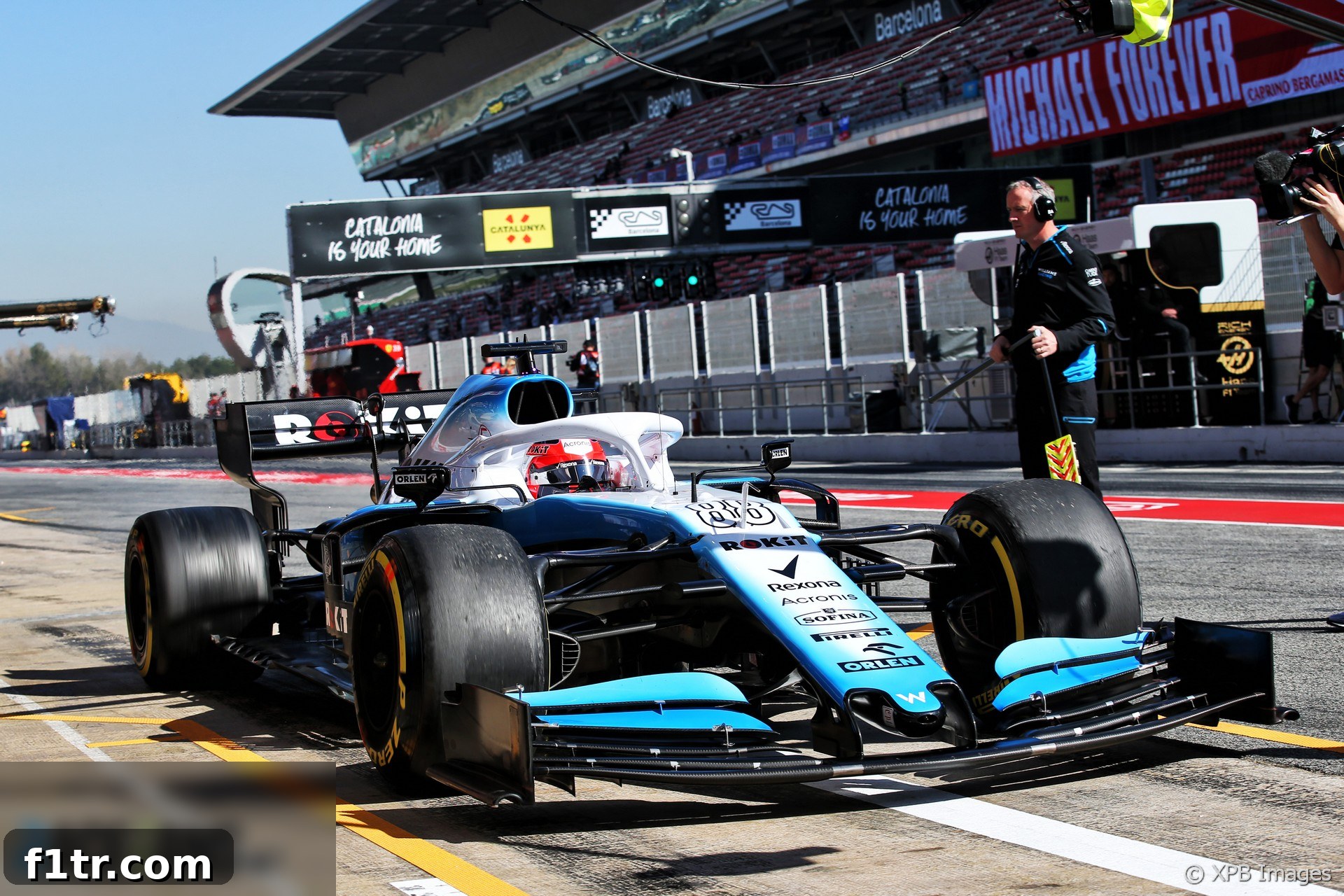
The Williams FW42 finally made its on-track debut on day three of the second pre-season testing week in Barcelona, a full five days after its originally intended unveiling during a private filming session. This significant delay fueled a wave of speculation regarding the underlying causes. Claire Williams took the opportunity to address and clarify these rumors, ensuring the narrative accurately reflected the team’s reality.
“There were many stories around what potentially could have been the cause of it,” Williams observed. “A couple that I read was that there were issues with external suppliers. That wasn’t the case. Or that financially we were in a difficult position and that had an impact on the car build – it didn’t.” These clarifications were crucial in dismissing unfounded concerns about the team’s operational health or its relationships with vital partners. The true reasons, as she explained, were far more intricate and rooted in the monumental task of constructing a Formula 1 car from the ground up.
Williams emphasized the often-underestimated scale of the undertaking, particularly for a team that maintains a high degree of in-house manufacturing. “I think we take for granted sometimes that we’re just going to get one car to the test track and two cars to a race track,” she remarked. “But Williams still designs and builds our race cars in-house in their entirety. There are 22-odd thousand parts to a car which we have to design, which we have to manufacture, which we have to assemble, which we have to put through crash testing, etc… and that’s an enormous job and we just didn’t make it for a number of reasons.”
This statement underscores the unique challenges faced by a team like Williams. Unlike some larger, manufacturer-backed outfits that might outsource a greater proportion of their component production, Williams prides itself on its comprehensive in-house capabilities. This involves not only the conceptual design but also the intricate process of fabricating tens of thousands of individual parts, each requiring precision engineering and rigorous quality control. From the smallest fastener to the most complex aerodynamic surface, every element must be crafted, assembled, and then integrated seamlessly into a cohesive, high-performance machine capable of withstanding the immense forces of Grand Prix racing and passing stringent FIA crash tests. The sheer logistical and operational complexity of this process, especially within a tight development window, makes any unexpected variable, such as late technical directives, a potential critical path blocker.
Acknowledging the severity of the situation, Williams conveyed the team’s deep dissatisfaction with the delay. “I think we’ve seen historically that it can happen. And we need to just make absolutely sure that the situation doesn’t happen again. It’s clearly not what we wanted to happen.” This candid assessment reflects the high standards and expectations within Formula 1, where missing even a single day of testing can have profound implications for a team’s preparation and performance throughout the season.
Recovering Lost Ground: Intense Testing Efforts
The delay undoubtedly compromised Williams’ pre-season testing program to a degree, directly impacting their ability to gather critical data, validate design theories, and allow drivers to familiarize themselves with the new machinery. However, the team immediately shifted focus to an aggressive recovery strategy. “It’s compromised our test program to a degree. We’re obviously trying to make up for the time that we’ve lost and I hope that when we get to Australia or probably a bit further down the line we will have forgotten about it and move forward and when we go to Barcelona next year we’ll have a car to run from nine o’clock on the first morning,” Williams expressed, highlighting their determination to learn from the experience and move forward.
Upon the FW42’s eventual track debut, the team initiated an intensive testing schedule, aiming to minimize the long-term impact of the lost time. “We’ll minimize the amount of time that we’ll lose. Fortunately, the car is – touch wood – proving reliable currently which means that we can recover a lot of the program that we potentially would have lost,” Williams reported, noting a crucial positive aspect. Reliability during testing is paramount, allowing teams to accumulate mileage and data without interruption, which is especially critical when trying to catch up.
The strategy involved maximizing track time for both drivers, George Russell and Robert Kubica. “The car covered with George [Russell] yesterday 119 laps. Robert [Kubica’s] already got a number under his belt today and the targets should match George’s from yesterday. And then the target is even higher tomorrow,” she detailed. This aggressive approach of setting increasingly ambitious lap targets demonstrates the team’s commitment to pushing the FW42’s limits and gathering as much performance and reliability data as possible within the shortened timeframe. By establishing a solid baseline of kilometres, Williams aimed to ensure that their pre-season program, despite the initial setback, would be as least-compromised as possible, providing sufficient data for the crucial development ahead of the opening Grand Prix.
The Road Ahead: Post-Mortem and Future Planning
While immediate efforts were concentrated on maximizing track time and data acquisition during testing, the team understood the critical importance of a thorough internal review to prevent a recurrence of the delays. Claire Williams acknowledged that a comprehensive analysis of the reasons for the late car completion could not fully commence until after the testing period concluded.
“We’re making sure that the efforts are focused currently on making sure that we get the program covered that we need to here,” she explained. “A lot of people that would be involved in any after-action review are clearly busy concentrating on the program here.” This pragmatic approach ensures that current operational priorities are met, safeguarding the immediate performance objectives, while setting the stage for a meticulous examination of past processes.
The post-testing review will be an exhaustive exercise, delving into every aspect of the car’s design, manufacturing, and assembly schedule. “There is some work that’s being started but it will probably take us a few weeks to fully compile that. We have to get it right because if we don’t get the review right then we’re not going to get next year’s program right,” Williams stressed, underlining the gravity of this internal assessment. Identifying bottlenecks, communication breakdowns, resource misallocations, or unforeseen technical challenges will be crucial for refining the team’s internal procedures. The aim is not merely to assign blame but to implement robust changes that enhance efficiency, improve contingency planning, and ultimately ensure that Williams is fully prepared for the 2020 season and beyond. “So we’ve got to take our time and make sure we cover every base off and make sure that we get it right for next year.”
The 2019 season’s delayed start for Williams serves as a powerful reminder of the immense pressures and intricate challenges inherent in Formula 1. It highlights how even a small deviation from plan, particularly for a team with limited resources, can ripple through an entire operation. While the immediate focus was on recovery, the lessons learned from this experience were set to be meticulously integrated into Williams’ long-term strategy, demonstrating their unwavering commitment to overcoming adversity and reclaiming their competitive edge in the pinnacle of motorsport.
2019 F1 season
- Crying in the Melbourne car park at 2019 grand prix was my career low – Ocon
- McLaren Racing reports reduced £71 million loss in 2019
- Kvyat: Hockenheim podium last year was “my biggest achievement” so far
- How the FIA’s new encrypted fuel flow meter targets Ferrari’s suspected ‘aliasing’ trick
- “He smashed my office door”: 23 must-see moments from ‘Drive to Survive’ season two
Browse all 2019 F1 season articles