The Unsung Heroes: Inside Formula 1 Driver-Engineer Partnerships
In the high-octane world of Formula 1, where milliseconds define victory and defeat, the spotlight often shines brightest on the drivers and their marvelously engineered machines. Yet, beneath the glamour and speed, an intricate network of expertise works tirelessly to maximize every ounce of performance. At the heart of this network lies the Formula 1 race engineer – a pivotal figure whose technical acumen, strategic insight, and unparalleled communication skills are as crucial as the driver’s talent or the car’s speed. This deep dive explores the indispensable role of the race engineer, shedding light on the vital partnerships that shape championship dreams and define racing legacies.
A Formula 1 driver requires an abundance of skill, a cutting-edge car, and sometimes a dash of luck to triumph. But their ultimate ability to extract maximum performance from themselves and their vehicle often hinges on the unique bond they share with their race engineer. This dynamic relationship is built on unwavering trust, crystal-clear communication, and an almost telepathic understanding forged over countless hours of collaboration, both on and off the track.
The responsibilities of a modern F1 race engineer are vast and multifaceted. During intense race weekends, a significant portion of their time is spent on the radio, either receiving vital feedback from their driver or relaying crucial information and strategic directives. Their primary task during track sessions involves translating the driver’s raw thoughts, nuanced feedback, and immediate concerns about the car’s behavior into actionable insights for the wider technical team. For instance, a driver’s complaint about persistent understeer in a particular corner demands a specific, data-driven solution that a colleague analyzing real-time telemetry might hold the key to. The engineer acts as the critical bridge, ensuring that subjective driver feel is swiftly converted into objective engineering adjustments.
Beyond the track, once the driver steps out of the cockpit, the race engineer—often supported by a performance engineer—dedicates even more time. They meticulously combine the driver’s qualitative comments with quantitative data gleaned from the car’s telemetry. This exhaustive analysis aims to pinpoint areas for improvement, ranging from subtle setup tweaks to fundamental strategic shifts. This symbiotic process of human input meeting technological data is the bedrock of continuous performance enhancement in Formula 1.
While some purists might view it as controversial, a contemporary Formula 1 engineer also bears the significant responsibility of motivating their driver, acting as both a mentor and a confidant. They actively guide the driver, effectively instructing them on how to extract more speed, or sometimes how to manage their pace, especially when navigating the myriad of settings and parameters adjustable from within the car’s cockpit. This extends to tire management, fuel conservation, and intricate hybrid system deployment, all of which require precise, timely instructions delivered with absolute clarity. The blend of technical mastery and psychological support makes the race engineer truly indispensable.
Given the immense pressure and complexity, clear communication and mutual trust are paramount, perhaps even as important as the ability to engineer a car. This profound dependency explains why successful driver-engineer pairings tend to endure for many seasons, evolving into some of the sport’s most iconic partnerships. These relationships are the silent engines behind many of F1’s greatest moments, influencing race outcomes and championship battles alike. Let’s delve into the current landscape of these crucial pairings across the Formula 1 grid, exploring who is engineering whom, and the history behind their collaborations.
Red Bull Racing
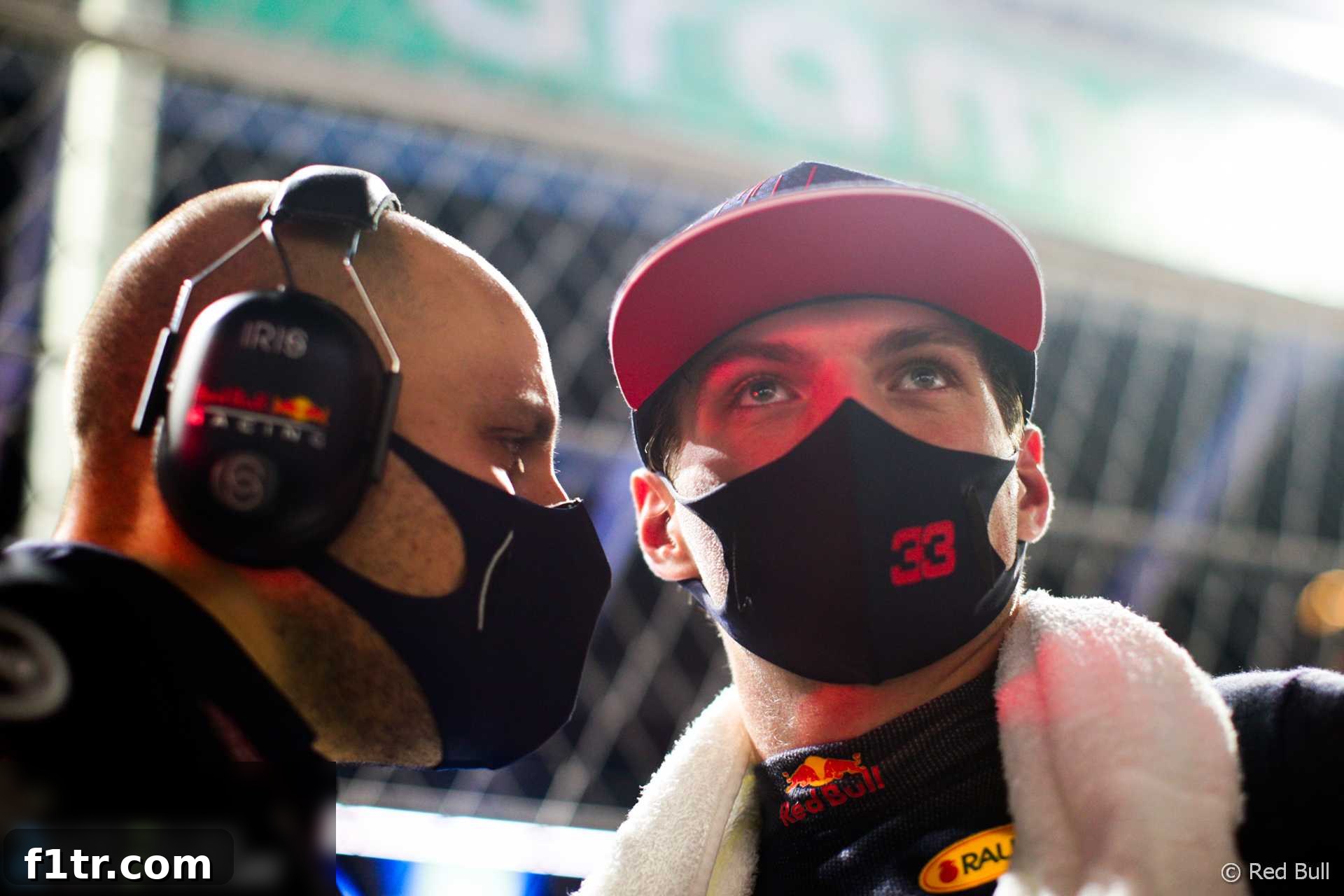
The formidable, title-winning partnership between two-time World Champion Max Verstappen and his long-standing race engineer Gianpiero Lambiase continues into its eighth year, a testament to their exceptional synergy. Having commenced their journey together in 2016, this pairing has matured into one of the most successful and longest-lasting combinations on the current F1 grid, boasting over 140 races together. Their dynamic is famously direct, with Verstappen often “not holding back” on the radio, a trait Lambiase expertly manages, translating the raw intensity into precise engineering adjustments. The 2022 season saw them achieve a record-breaking 15 victories, a benchmark that highlights their unparalleled effectiveness. Their consistent performance and ability to adapt to varying race conditions underscore the profound trust and mutual respect that underpins their partnership, making them a formidable force in the paddock.
Meanwhile, Sergio Perez continues to collaborate with Hugh Bird, who has served as his race engineer throughout his tenure at Red Bull Racing. This partnership has proven fruitful, yielding three Grand Prix victories and navigating some of the sport’s most challenging moments, including intricate team orders discussions. Bird’s steady presence and technical guidance have been crucial in helping Perez integrate into the championship-contending team and deliver consistent results. Their ongoing collaboration is vital for Red Bull, ensuring both cars are performing at their peak and contributing to the team’s overall strategic objectives in the constructors’ championship.
Ferrari
At the Scuderia, Xavier Marcos Padros has been the voice in Charles Leclerc’s ear for the entirety of his Ferrari career, a partnership that has seen both significant successes and occasional challenges. Despite facing scrutiny at times, particularly concerning strategic decisions, their collaboration has endured, highlighting a deep-seated trust and understanding. Marcos Padros, a Spaniard, consistently communicates with Leclerc in English, drawing upon his extensive experience in junior single-seater categories before joining the iconic Italian team. Their ability to work through high-pressure situations and maintain focus is essential for Ferrari’s championship aspirations.
Across the garage, Riccardo Adami embarks on his third season engineering Carlos Sainz Jnr. This pairing inherited the established trackside setup from Ferrari’s former driver, Sebastian Vettel, meaning the engineering team on that side of the garage remained unchanged when Sainz joined in 2021. This continuity provided Sainz with a stable environment, allowing him to quickly adapt and build a strong rapport with Adami. Their partnership has seen notable race wins and consistent points finishes, demonstrating the value of a pre-existing, well-oiled engineering unit in supporting a new driver’s integration and performance.
Mercedes-AMG Petronas F1 Team
Few partnerships in Formula 1 history are as celebrated and enduring as that between Lewis Hamilton and Pete Bonnington, affectionately known as ‘Bono’. Their collaboration spans an incredible 11 seasons, dating back to Hamilton’s arrival at Mercedes in 2013. Bonnington, who honed his skills working as Michael Schumacher’s race engineer in 2012, was entrusted with engineering Hamilton in only his second year in such a senior F1 role. This foundational period laid the groundwork for an era of unprecedented success.
Together, Hamilton and Bonnington have amassed an astonishing 82 race victories and six World Championship titles, cementing their status as one of the sport’s most dominant duos. Their radio exchanges, including iconic phrases like “hammer time,” have become legendary, symbolizing their deep understanding and shared pursuit of excellence. Bono’s calming presence and precise instructions have been instrumental in guiding Hamilton through countless high-pressure scenarios, contributing significantly to his unmatched career achievements. His consistent presence on the podium, often standing alongside Hamilton, speaks volumes about the integral nature of his contribution, surpassing the number of podiums achieved by many drivers themselves. This decade-long partnership is a prime example of how continuity and unwavering trust can propel a team to sustained greatness.
George Russell, who famously made his Mercedes debut with Bonnington in his ear as a stand-in for Hamilton at the 2020 Sakhir Grand Prix, joined the team full-time in 2022. He was paired with Riccardo ‘Riki’ Musconi, an experienced engineer who previously guided Valtteri Bottas from 2019 to 2021. Musconi’s promotion to race engineer followed Tony Ross’s move to Mercedes’ Formula E program. The Russell-Musconi pairing quickly gelled, culminating in their maiden Grand Prix victory together at the Brazilian Grand Prix in November 2022. This early success highlighted Musconi’s ability to nurture talent and Russell’s swift adaptation to the demands of a top-tier team. The consistent performance of both engineering teams is a hallmark of Mercedes’ operational strength.
BWT Alpine F1 Team
Esteban Ocon’s journey with Josh Peckett began subtly during his rookie F1 season with Manor in 2016, where Peckett was initially working with Ocon’s then-teammate Pascal Wehrlein. Despite this, the two formed an initial connection and were fortuitously reunited in 2020 when Ocon joined Renault (now Alpine). At that time, Peckett served as a performance engineer, but his talents were soon recognized, leading to his promotion as Ocon’s race engineer the following year. This career progression was met with great satisfaction by Ocon, who appreciated Peckett’s insights and support. The pinnacle of their collaboration to date was Ocon’s stunning victory at the 2021 Hungarian Grand Prix. As they continue their partnership, both driver and engineer are focused on replicating that success and aiming for more podium finishes.
Pierre Gasly, joining Alpine, inherits a highly experienced figure in Karel Loos. Loos has a remarkable track record, having engineered a diverse array of drivers including Kevin Magnussen, Jolyon Palmer, Carlos Sainz, Daniel Ricciardo, and most recently, Fernando Alonso. This continuity of expertise within the garage is a significant asset for Gasly as he adapts to his new team and car. Loos’s deep understanding of Alpine’s operational philosophy and his ability to work effectively with different driving styles will be crucial in helping Gasly maximize his potential and contribute to Alpine’s goals. The blend of Gasly’s ambition and Loos’s vast experience sets the stage for a promising new partnership.
McLaren Formula 1 Team
Lando Norris has enjoyed a consistent and highly effective partnership with his race engineer, William Joseph, since his Formula 1 debut in 2019. Their collaboration is known not only for its technical prowess but also for their occasionally comedic radio exchanges, which offer a glimpse into their relaxed yet focused dynamic. Beyond the lighthearted moments, Joseph has played a critical role in Norris’s ascent through the F1 pecking order, providing the technical guidance and strategic support necessary for his impressive performances. This long-standing alliance is a cornerstone of Norris’s success at McLaren.
On the other side of the McLaren garage, the experienced figure of Tom Stallard continues his vital work. An Olympic medal-winning former rower, Stallard has been a constant presence since 2014, engineering a series of notable drivers including Jenson Button, Stoffel Vandoorne, Carlos Sainz, and Daniel Ricciardo. This season, he returns to the challenge of working with a rookie, much as he did with Vandoorne in 2017, as he engineers the highly anticipated 2021 Formula 2 champion, Oscar Piastri. The unique circumstances of Piastri’s contractual disputes meant he could only begin working with McLaren towards the end of the previous year. Therefore, the relationship and trust they were able to quickly cultivate during the off-season will be profoundly critical to how Piastri performs in his inaugural F1 campaign, highlighting Stallard’s crucial role in his adaptation and development.
Stake F1 Team Kick Sauber (Alfa Romeo)
Valtteri Bottas was partnered with Alex Chan upon his arrival at Alfa Romeo. Chan brought significant experience to the role, having previously served as a performance engineer on Kimi Raikkonen’s side of the garage, making Bottas the second Finn he had worked closely with. When Bottas joined, Chan was deservedly promoted to the more senior position of race engineer, a transition that proved successful in their inaugural season. Their collaboration initially worked well, leading to a strong start where they scored points in seven of the first nine races. However, as the season progressed and Alfa Romeo’s competitiveness waned, they only managed two more top-ten finishes. This scenario underscores how an engineer’s role extends to managing performance fluctuations and supporting the driver through challenging periods.
Zhou Guanyu began his Formula 1 career, and his journey with the team, under the expert guidance of Jorn Becker. Becker, who previously engineered Antonio Giovinazzi, was instrumental in facilitating Zhou’s adaptation to the demanding environment of F1. His experience and steady hand were crucial for the rookie driver’s steep learning curve. Recognizing the importance of continuity for a developing talent, Alfa Romeo made the sensible decision to maintain their partnership for the upcoming season, aiming to build on Zhou’s foundational year and push for further progress.
Aston Martin Aramco F1 Team
Lance Stroll’s race engineer, Ben Michell, took on his role in September 2021, being promoted from his position as senior performance engineer. This change occurred after Stroll’s previous race engineer, Brad Joyce, moved into a more senior capacity as Aston Martin’s head of trackside engineering. Michell has remained with the Canadian driver since then, navigating the team’s often fluctuating form. Their partnership has seen them score points in 10 of the 29 races since it began, highlighting the challenge of consistent performance in the midfield. Aston Martin expressed confidence in their trajectory, and the organizational change was made with the belief that Joyce, in his expanded role, could help propel the team further up the grid, emphasizing the strategic importance of engineering leadership.
Chris Cronin continues in his role engineering the sister car, which now sees the arrival of the two-time World Champion, Fernando Alonso. Cronin boasts an impressive resume, having worked with Sergio Perez until his departure from the team at the end of 2020. He then guided Sebastian Vettel for two seasons, experiencing the highs and lows with another multiple F1 champion. Now, with Vettel’s retirement, Cronin embarks on an exciting new chapter, taking charge of Alonso’s car. His extensive experience with top-tier drivers and his deep understanding of the team’s operations will be invaluable in forging a strong and effective partnership with the highly demanding and experienced Spaniard, aiming to capitalize on Aston Martin’s ambitious plans.
Haas F1 Team
Kevin Magnussen and his new race engineer, Mark Slade, have already made headlines with their immediate impact. Their partnership, which began towards the end of the previous season, delivered a stunning pole position at the Brazilian Grand Prix, a breakthrough moment for the team. Team Principal Guenther Steiner openly credited the strength of this driver-engineer relationship for producing such an unexpected and significant result. Magnussen and Slade have a history, having previously worked together at Renault in 2016. Magnussen started the 2022 season with Ed Regan as his engineer, but Regan later transitioned into an office-based role. Dominic Haines served as an interim replacement before the highly experienced Slade—renowned for his work with legendary drivers like Kimi Raikkonen at McLaren in the 2000s—took over. Slade’s arrival brought a wealth of knowledge and a calming presence that clearly resonated with Magnussen, unleashing previously untapped performance.
Magnussen’s new teammate, Nico Hulkenberg, will be engineered by Gary Gannon. Gannon is a long-serving and familiar face at Haas, having worked with Romain Grosjean and Kevin Magnussen from the team’s entry into F1 in 2016 through to the end of 2020. Following that, he engineered Mick Schumacher for two seasons. Gannon’s extensive experience with the Haas team, its cars, and its operational procedures will be invaluable for Hulkenberg’s return to a full-time F1 seat. This existing familiarity should allow Hulkenberg to quickly integrate and collaborate effectively, benefiting from Gannon’s deep institutional knowledge and consistent approach.
Scuderia AlphaTauri
Yuki Tsunoda and Mattia Spini enter their third year of collaboration at AlphaTauri, a crucial period for the Japanese driver. Beyond aiming for a maiden podium finish, their primary objective is to deliver performances compelling enough to secure Tsunoda’s retention within the Red Bull program for 2024. Spini brings a wealth of experience, having previously engineered Pierre Gasly before his move to Alpine. This long-standing partnership provides Tsunoda with stability and a deep understanding of his driving style, which is vital for a young driver seeking to establish himself firmly in Formula 1. Spini’s ability to extract the best from his drivers, coupled with Tsunoda’s raw talent, offers promising prospects for their continued development.
F1 rookie and reigning Formula E World Champion Nyck de Vries begins his Formula 1 journey with Pierre Hamelin as his race engineer. Hamelin is a highly experienced figure within AlphaTauri, having spent the last two seasons engineering Gasly and contributing to the team’s driver development for a decade. De Vries will also benefit from inheriting Gasly’s performance coach, Pyry Salmela, creating a comprehensive support structure for his transition into F1. Hamelin’s extensive knowledge of the team’s operational procedures and his proven track record in guiding drivers will be instrumental in helping de Vries adapt quickly to the intricacies of Formula 1 and harness his championship-winning potential.
Williams Racing
At Williams Racing, a team committed to climbing the grid after finishing last in 2022, there is a strong emphasis on engineering continuity. James Urwin enters his second season leading the charge for Alexander Albon’s car. Urwin brings a wealth of experience to the role, having spent three successful years engineering George Russell and two campaigns with Lance Stroll prior to that. His consistent presence and in-depth understanding of the Williams car, combined with his experience working with different driving styles, provide Albon with a crucial stable foundation as the team strives for improved performance and development.
The team’s rookie driver, Logan Sargeant, has been partnered with Gaetan Jego. Jego is a seasoned engineer who was the voice in Nicholas Latifi’s ear at Williams from the middle of the 2020 season through to the Canadian driver’s final race with the team at the end of 2022. This pairing of an experienced engineer with a fresh rookie is a strategic move by Williams, aiming to provide Sargeant with the best possible support as he navigates his inaugural season in Formula 1. Jego’s familiarity with the team’s processes and his ability to mentor new drivers will be key to Sargeant’s rapid learning and adaptation in the elite motorsport category.
Become a RaceFans Supporter
RaceFans thrives thanks to the generous support of its dedicated readers. By contributing a nominal amount monthly or annually, you can help sustain the creation of high-quality content, ensure robust hosting, and facilitate the ongoing development of RaceFans, securing its future in Formula 1 journalism.
Join the RaceFans Supporter community today and enjoy an ad-free browsing experience. Discover more or sign up via the links provided below:
- Become a RaceFans Supporter
- RaceFans Supporter FAQ
The role of the Formula 1 race engineer has evolved dramatically, moving far beyond mere technical adjustments to encompass strategic direction, psychological support, and critical real-time decision-making. These partnerships are the unsung heroes of Formula 1, blending cutting-edge engineering with profound human connection. They demonstrate that while drivers are the face of the sport, the voices in their ears are equally vital, guiding them through every lap, every challenge, and every triumph. The intricate dance between driver and engineer remains a cornerstone of success, shaping the narrative of F1 season after season and solidifying their place in motorsport history.